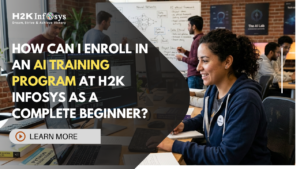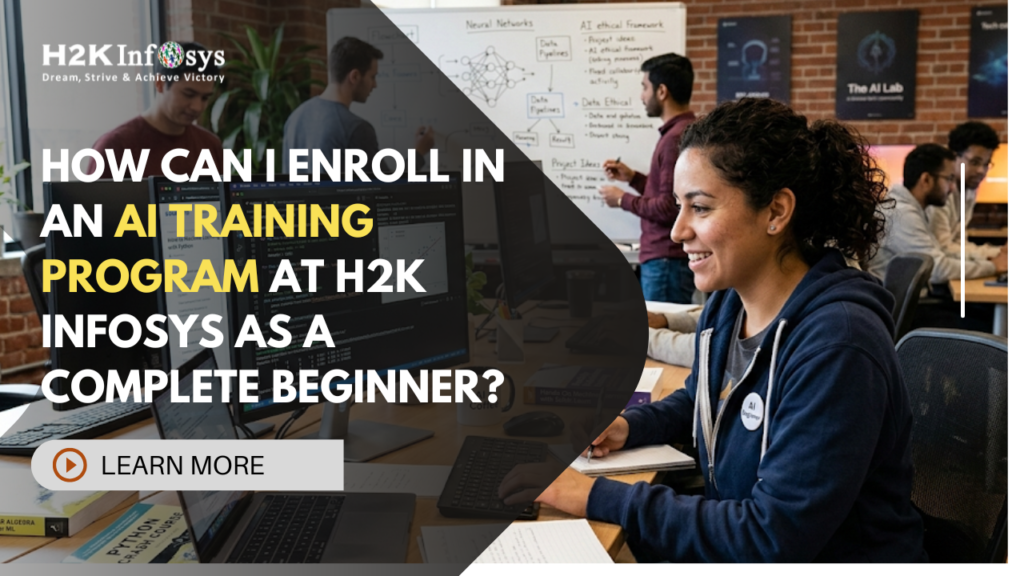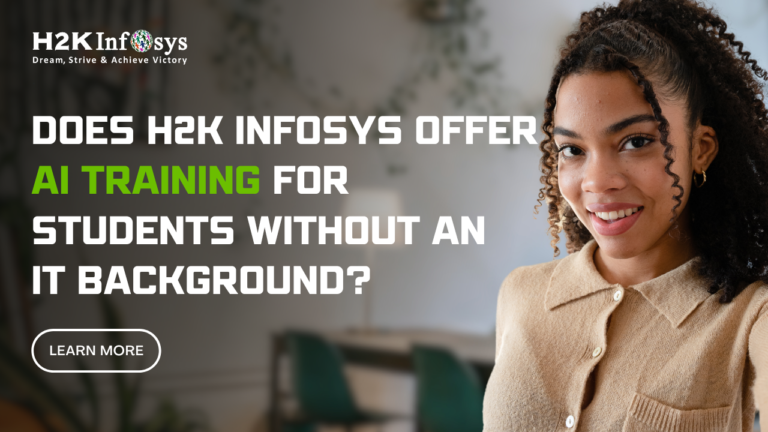
Yes, H2K Infosys does offer AI training program designed specifically for students without an IT background, and honestly, that’s one of the reasons it’s been getting attention lately. Their approach isn’t just learn AI, it’s more like learn AI even if you’re starting from zero.
So… can a non-IT student really learn AI?
yes. Realistically? It depends on how it’s taught.
A few years ago, AI felt locked behind heavy programming knowledge. You needed Python, math, stats the whole package. But things have shifted fast. With tools evolving (think no-code AI platforms, simplified ML frameworks), training providers have had to adapt.
That’s exactly where programs like AI Training Courses from H2K Infosys come in.
Instead of throwing you into deep technical waters, they start with:
- Basics of AI concepts
- Gradual introduction to tools like Python
- Real-world use cases before theory overload
I’ve seen a few learners from non-tech backgrounds finance, healthcare, even retail who managed to transition into AI-related roles by following this kind of structured path. It’s not magic. It’s just good sequencing.
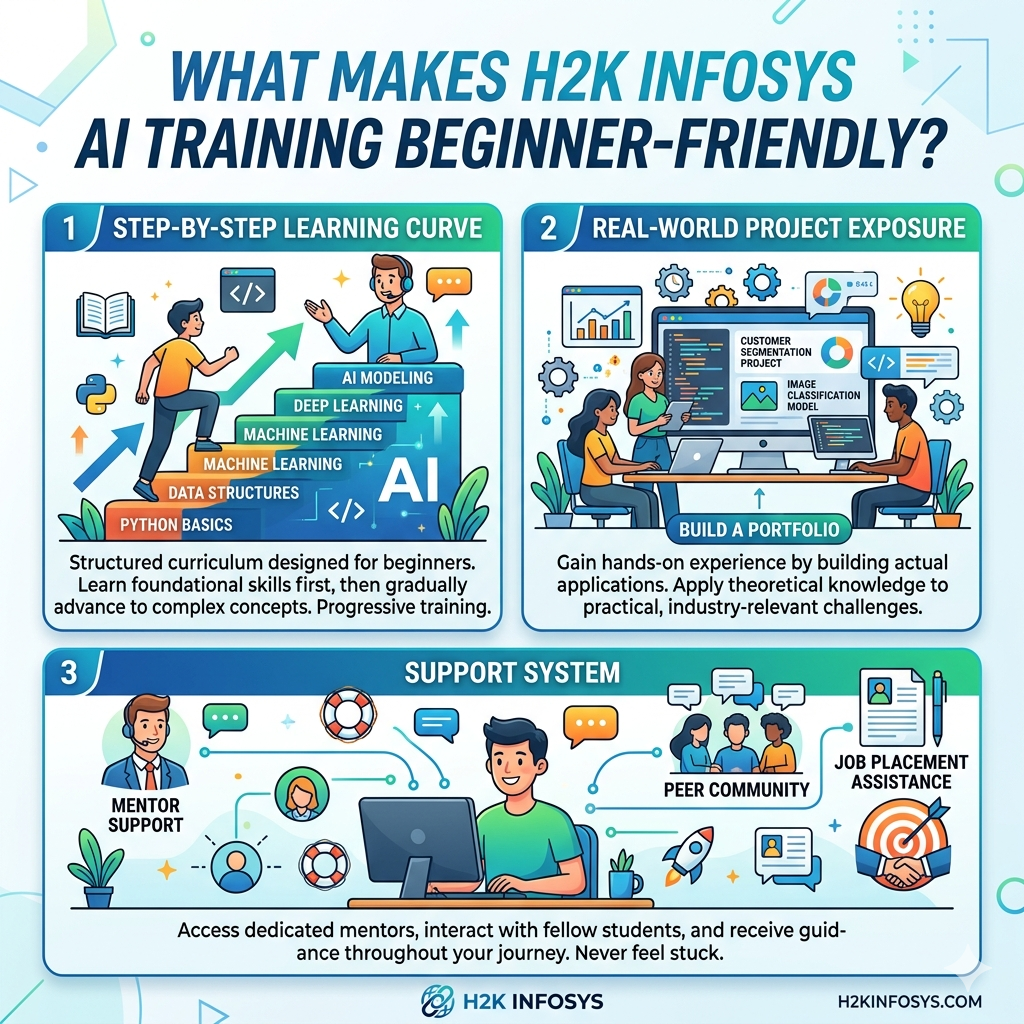
What makes their AI training beginner-friendly?
Here’s where things get a bit more practical.
From what I’ve observed, the biggest barrier for non-IT students isn’t intelligence it’s intimidation. Courses that assume prior coding experience tend to lose people quickly.
H2K Infosys seems to address that in a few ways –
1. Step-by-step learning curve
Their AI Training Program doesn’t jump straight into machine learning algorithms. It builds up gradually –
- Intro to data concepts
- Basic programming
- Then moving into AI models and applications
Kind of like learning to drive in an empty parking lot before hitting the highway.
2. Real-world project exposure
This part matters more than most people realize.
Instead of just theory, learners work on –
- Data analysis case studies
- AI model simulations
- Business-related problem-solving scenarios
For example, a beginner might work on a simple customer prediction model rather than something overly academic. It feels more relevant and honestly, less scary.
3. Support system
Non-IT learners usually need more guidance early on.
From what I’ve heard, they offer:
- Instructor-led sessions
- Doubt-clearing support
- Resume and interview preparation
And that last part ties into their AI Training and Placement focus.
About placement – is it actually helpful?
Let’s be real for a second “Placement support” is one of those phrases every training institute uses.
But here’s the difference programs that integrate placement preparation during training tend to work better.
H2K Infosys includes:
- Mock interviews
- Resume building tailored to AI roles
- Guidance on transitioning from non-IT to tech profiles
A practical example? Someone from a business background might position themselves for roles like:
- AI Business Analyst
- Data Analyst with AI tools
- Entry-level Machine Learning support roles
Not everyone becomes a hardcore AI engineer and that’s okay.
Is this aligned with current AI trends?
Actually, yes.
If you’ve been following the AI space lately (especially after the explosion of tools like generative AI platforms), there’s a growing demand for applied AI skills, not just deep technical expertise.
Companies now want people who can:
- Understand AI tools
- Apply them to business problems
- Interpret results
That’s why beginner-friendly AI Training Courses are becoming more relevant than ever.
It’s less about “coding everything from scratch” and more about “using AI effectively.”
A small reality check (worth mentioning)
Alright, quick honest note because this matters.
Even with the best AI Training Program, you’ll still need:
- Consistency
- Practice outside sessions
- Some patience with technical concepts
There will be moments where things don’t click immediately. That’s normal. Everyone hits that wall.
Final thoughts
If you’re coming from a non-IT background and wondering whether AI is out of reach it’s really not anymore.
Programs like H2K Infosys are designed with that exact transition in mind:
- Start from basics
- Build practical skills
- Support you toward job readiness
And with the way AI is shaping industries right now, getting into it even from a non-tech starting point actually makes a lot of sense.
If anything, the bigger question isn’t “Can I learn AI?”
It’s more like… “Am I ready to stick with it long enough to make it work?”