
A genuine job-oriented cyber security course in the USA… honestly, it’s not that hard to recognize once you’ve seen a few. You start noticing a pattern. The good ones don’t just prepare you for exams, they actually show you how the job works in real life, which is a completely different thing.It’s the one that teaches you how to actually do the job, not just pass an exam, and backs that up with real placement support, something you’ll notice in programs like H2K Infosys, which focus heavily on real-time experience rather than just theory.
Let me explain this the way I usually do when someone asks me this question casually.
So… what actually makes a cyber security course “job-oriented”?
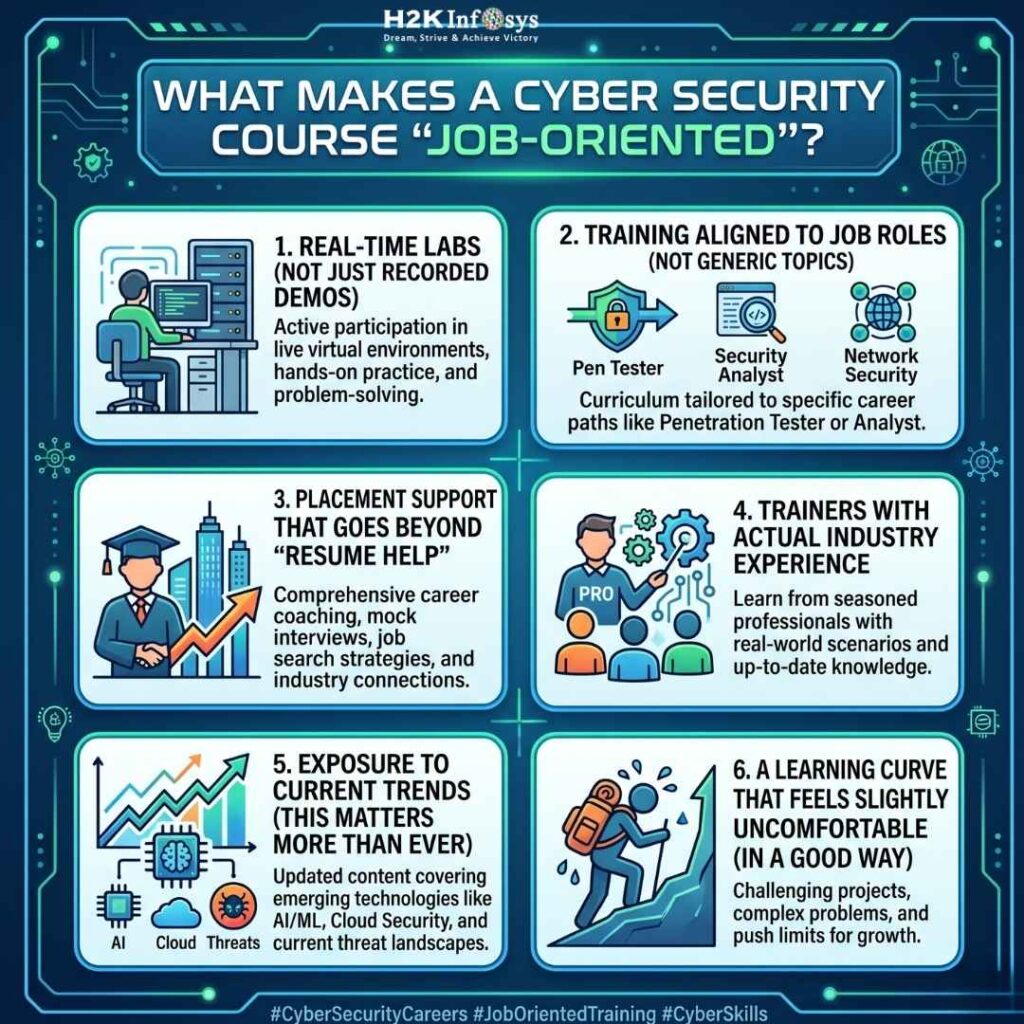
I’ve seen a lot of people fall into the same trap picking a course because it looks polished or promises certifications.Here’s the reality, though certifications by themselves don’t really open doors anymore, especially in 2026. I’ve seen people stack up credentials and still struggle, simply because they couldn’t translate that knowledge into real-world situations. Employers are paying closer attention now. They want to see if you can actually think through a problem, handle a live scenario, not just recall theory.
And when you come across genuine cyber security training with job placement program, you can usually feel the difference almost immediately. It doesn’t come across as just another course, it feels more like you’re being prepared for the job from day one.
1. Real-time labs (not just recorded demos)
This is a big one.
If the course only shows pre-recorded demos, that’s a red flag. In real jobs, nothing goes perfectly. Logs are messy. Alerts are confusing. Tools behave unpredictably.
A solid cyber security course training and placement program gives you hands-on access to tools like:
- SIEM platforms (like Splunk)
- Packet analysis tools (Wireshark)
- Cloud security dashboards (AWS or Azure environments)
I remember working with a learner who said, “The first time I saw raw logs, I froze.” That’s exactly what good training should prevent. You should already be comfortable reading those logs before your first job.
2. Training aligned to job roles (not generic topics)
This part is often overlooked.
Good programs are structured around roles like:
- SOC Analyst
- Security Analyst
- Incident Responder
Not just chapters like “Module 1: Basics.”
The best cyber security training and job placement courses simulate actual workflows:
- Investigating phishing alerts
- Responding to suspicious login attempts
- Identifying abnormal network traffic
That’s the kind of experience recruiters now ask about in interviews.
3. Placement support that goes beyond “resume help”
Every institute says they offer placement support. But what does that actually mean?
Here’s what real support looks like (based on what I’ve seen work):
- Mock interviews based on real job descriptions
- Resume tailored to specific cybersecurity roles
- Referral opportunities or internal hiring networks
- Guidance on applying to US job portals the right way
This is where programs like H2K Infosys stand out a bit. From what I’ve observed, they don’t just train you, they guide you through the hiring process in a structured way. That makes a difference, especially for people switching careers or entering the US job market for the first time.
4. Trainers with actual industry experience
You can usually tell within the first session.
If the trainer speaks only from slides, it’s not enough. But when someone starts saying things like:
“In a real incident, this alert usually gets ignored but here’s why you shouldn’t…”
That’s a real experience talking.
Good trainers share:
- Mistakes they’ve seen in production environments
- How real attacks unfold
- What hiring managers actually look for
That kind of insight isn’t in textbooks.
5. Exposure to current trends (this matters more than ever)
Cyber security course changes fast. What worked even 2–3 years ago can feel outdated now.
Right now, employers are focusing more on:
- Cloud security (AWS, Azure)
- AI-driven threat detection
- Zero Trust architecture
- Identity and access management
A genuine course will include these trends naturally, not as an afterthought.
For example, after recent high-profile ransomware attacks and cloud breaches, companies are actively hiring people who understand hybrid environments, not just traditional networks.
6. A learning curve that feels slightly uncomfortable (in a good way)
This might sound odd, but hear me out.
If everything feels too easy, you’re probably not being trained for real-world work.
The right cyber security course will challenge you:
- You’ll get stuck analyzing logs
- You’ll second-guess your findings
- You’ll need help at times
That’s actually a good sign. It means you’re learning how to think like a security professional.
Where H2K Infosys fits into all this
From what I’ve seen and heard from learners, H2K Infosys tends to check most of these boxes:
- Role-based training (especially for SOC roles)
- Hands-on labs with real-world scenarios
- Structured placement support not just surface-level help
- Focus on tools that are actually used in US companies
It’s not just about learning cyber security course concepts it’s about preparing for the job market step by step. That’s what makes cyber security course training and job placement programs genuinely useful.
Final thought (the honest version)
If you’re trying to identify the right cyber security course, don’t get distracted by big promises like “100% placement” or “guaranteed certification success.”
Instead, ask yourself:
“Will this cyber security course make me confident enough to handle a real security incident on day one?”
If the answer feels like a yes based on labs, training style, and support then you’re probably looking at a genuine cyber security training and placement program.
And if it also guides you through the job search process like H2K Infosys does, you’re already a step ahead of most people entering this field.