
You can start a cybersecurity career with zero experience by focusing on practical skills, building small real-world projects, and choosing the right cyber security training and placement support that actually prepares you for job scenarios, not just exams.
Let me be honest for a second… Most people think cybersecurity career is this “you need years of IT background” kind of field. That used to be somewhat true. In 2026? Not really. Somewhere in the middle of all this confusion, platforms like H2K Infosys have started shaping more practical, job-focused learning paths that help beginners understand what actually matters in real-world roles.
I’ve seen people switch from completely unrelated fields finance, customer support, even fresh graduates with no tech exposure and land entry-level security roles. The difference wasn’t talent. It was how they approached learning.
Start with the basics (but don’t get stuck there)
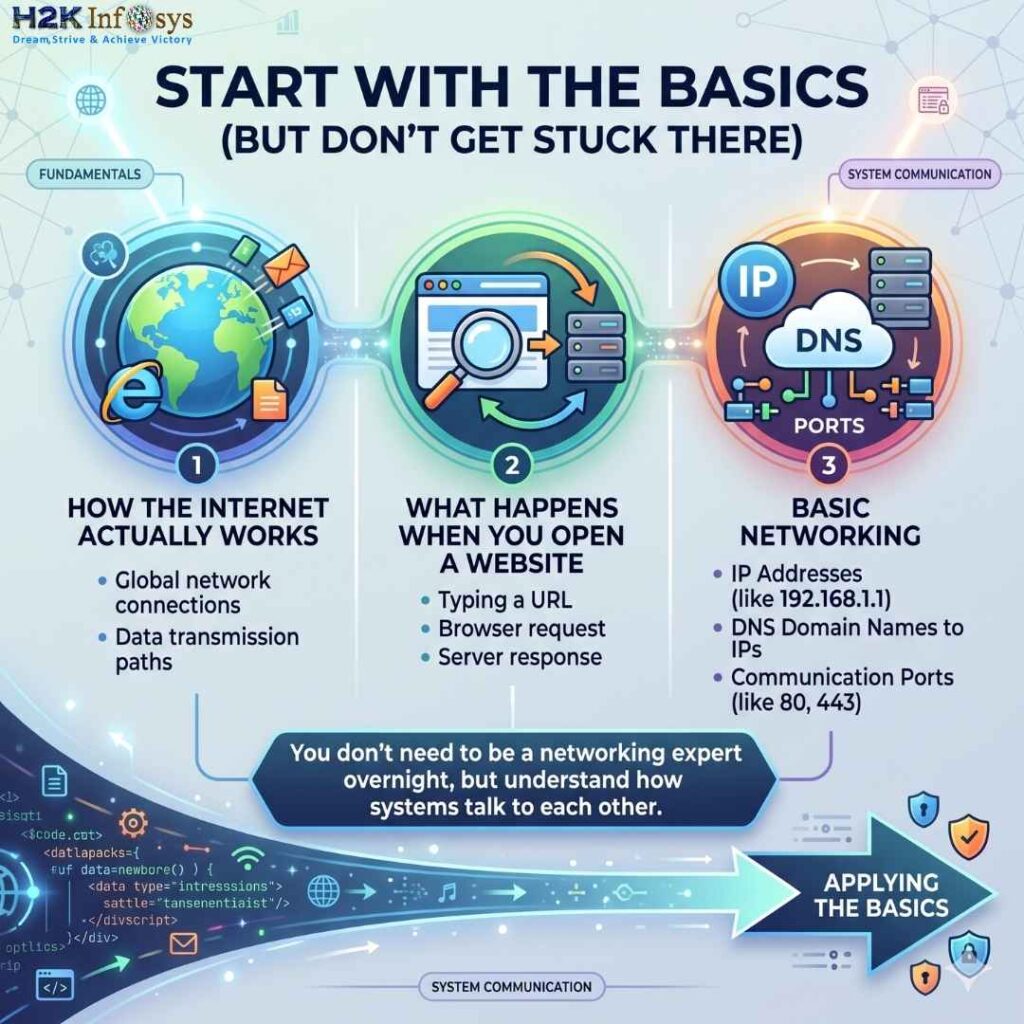
You don’t need to become a networking expert overnight, but you do need to understand how systems talk to each other.
Think:
- How the internet actually works
- What happens when you open a website
- Basic networking (IP, DNS, ports nothing too deep initially)
A lot of beginners make the mistake of staying in “learning mode” forever. Watching videos, taking notes… but never doing anything.
That’s where things fall apart.
Get hands-on early even if it feels messy
Cybersecurity career is one of those fields where doing beats knowing.
Set up a small lab:
- Install VirtualBox
- Run a Linux machine
- Try basic tools like Wireshark or Nmap
The first time you see network packets moving, it clicks differently. It’s not a theory anymore.
Honestly, your first attempts will feel confusing. That’s normal. Everyone goes through that “what am I even looking at?” phase.
Follow a role-based path (this matters more than people think)
“Cybersecurity career” is a huge umbrella.
If you don’t pick a direction early, you’ll end up overwhelmed.
For beginners, a good entry point is:
- SOC Analyst (Security Operations Center)
Why? Because it teaches you how real threats are monitored and handled.
A structured cyber security training with job placement program usually focuses on this path because companies are actively hiring for it.
Build proof, not just knowledge
Here’s something most courses won’t tell you clearly:
Recruiters don’t care about how many courses you’ve completed. They care about what you can show.
So instead of saying:
“I learned cybersecurity career basics”
Show:
- A small incident analysis you did
- A log investigation example
- A GitHub project with your lab work
Even something simple like analyzing suspicious traffic can make a difference.
Stay updated with what’s happening right now
Cybersecurity career changes fast. Like… really fast.
In 2026, we’re seeing:
- AI-generated phishing attacks that look incredibly real
- Ransomware targeting small businesses, not just big enterprises
- Identity-based attacks increasing due to remote work setups
If you casually follow these trends and understand how attacks happen, you’ll already stand out.
I usually tell beginners to just spend 10 minutes a day reading security news. It builds context over time.
Don’t ignore placement support (this is where many struggle)
Learning is one thing. Getting hired is another.
A lot of people complete courses and then… get stuck.
That’s why choosing a program that includes cyber security training and job placement support actually matters.Resume guidance, mock interviews, real-world scenarios… These aren’t just “nice-to-have” add-ons anymore. They’ve pretty much become non-negotiable.
Some structured platforms, like H2K Infosys, focus on simulating real SOC environments and guiding learners through job readiness, not just course completion. That kind of exposure can shorten the “confused beginner” phase quite a bit for cybersecurity career.
Be okay with slow progress at first
This part isn’t talked about enough.
The first few weeks? You might feel like nothing is sticking.
Then suddenly, one day, things start connecting:
- Logs make sense
- Alerts don’t feel random
- Tools feel familiar
That shift happens quietly, but it does happen if you stay consistent.
A simple roadmap for cybersecurity career (if you’re starting today)
If I had to simplify everything:
- Learn basic networking + OS fundamentals
- Set up a small lab and start experimenting
- Choose a beginner-friendly role (SOC Analyst is a good start)
- Practice real scenarios (logs, alerts, tools)
- Build small proof-based projects
- Join a cyber security training and placement program that supports job readiness
- Apply consistently even before you feel “fully ready”
Starting from zero isn’t the disadvantage people think it is. Sometimes it’s actually better if you don’t carry outdated assumptions.
What matters more is momentum.
Start small, stay consistent, and focus on real skills. That’s what gets people hired now.