What is the Difference Between AI and Machine Learning?
In 2026, the fields of Artificial Intelligence (AI) and Machine Learning (ML) continue to evolve rapidly, with both technologies driving innovation in industries like healthcare, finance, and cybersecurity. AI refers to the broader concept of machines or systems simulating human intelligence, while machine learning, a subset of AI, involves algorithms that allow machines to learn from data and make predictions without explicit programming.
Key Differences:
- AI: Encompasses a wide range of technologies that aim to create intelligent systems capable of performing tasks typically requiring human-like reasoning, such as decision-making, language processing, and visual recognition.
- Machine Learning (ML): Focuses specifically on algorithms that learn from and make predictions based on data. ML is a key enabler of AI systems but is more focused on predictive analytics, pattern recognition, and data-driven decision-making.
How Does AI Work in Real-World IT Projects?
AI is commonly used in various enterprise IT environments to automate processes, enhance decision-making, and drive efficiency. For example, AI is integrated into customer service through chatbots, enabling businesses to provide instant support to customers. AI algorithms are also leveraged in predictive analytics to forecast trends and outcomes, helping businesses optimize operations.
Common AI Applications in Enterprises:
- Natural Language Processing (NLP): Used in chatbots, voice assistants, and sentiment analysis to understand and generate human language.
- Computer Vision: Deployed in image recognition systems for industries like manufacturing, healthcare (medical imaging), and retail (product recognition).
- Robotic Process Automation (RPA): Uses AI to automate repetitive tasks in fields like finance, HR, and IT support.
How Does Machine Learning Work in Real-World IT Projects?
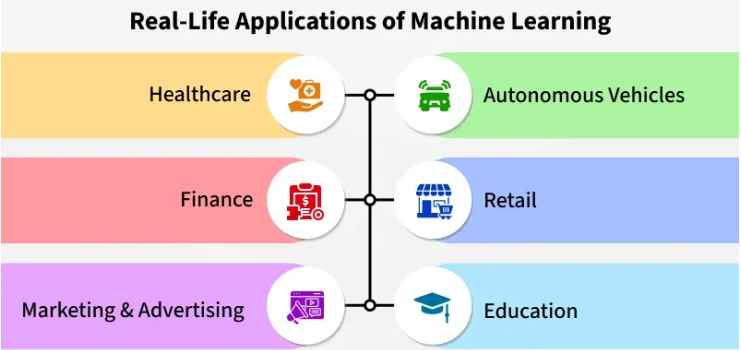
Machine learning is primarily used in IT projects to derive insights from large datasets. Its applications are widespread, ranging from predictive analytics in finance to recommendation systems in e-commerce. By using ML algorithms, businesses can predict customer behavior, optimize operations, and automate decision-making.
Common ML Use Cases:
- Predictive Analytics: In finance, ML models are used to predict market trends and assess investment risks.
- Recommendation Systems: In e-commerce, ML algorithms suggest products based on user preferences and browsing history.
- Fraud Detection: In banking, ML is used to detect fraudulent transactions by analyzing transaction patterns in real time.
Why Are AI and Machine Learning Important for Working Professionals in 2026?
As AI and ML technologies continue to advance, professionals across industries need to understand these concepts to remain competitive in the job market. Both AI and machine learning have become integral to digital transformation strategies, with companies seeking skilled professionals who can leverage these technologies to improve operational efficiency, enhance customer experiences, and drive business growth.
Importance for Professionals:
- In-demand Skills: AI and ML skills are essential for roles in data science, software development, and systems engineering.
- Career Advancement: Professionals with AI/ML expertise are positioned for leadership roles as organizations adopt these technologies to maintain a competitive edge.
- Industry Relevance: Almost every sector, from finance to healthcare, is integrating AI and ML to improve efficiency and outcomes.
What Skills Are Required to Learn AI?
For professionals aiming to dive into AI, certain foundational skills are necessary to be effective. These skills form the basis for understanding how AI technologies work and how they can be applied in real-world projects.
Core Skills for Learning AI:
- Programming: Proficiency in languages like Python, R, and Java, which are commonly used in AI development.
- Mathematics and Statistics: A solid understanding of linear algebra, calculus, probability, and statistics to build and understand algorithms.
- Machine Learning Algorithms: Knowledge of supervised and unsupervised learning algorithms such as decision trees, neural networks, and support vector machines (SVM).
- Data Preprocessing: Skills in cleaning, normalizing, and transforming data to ensure high-quality inputs for AI models.
- Deep Learning: Familiarity with deep learning techniques, particularly neural networks, which are crucial for AI in areas like image and speech recognition.
What Skills Are Required to Learn Machine Learning?
Machine learning, while closely related to AI, has a distinct focus. To learn ML, professionals must be comfortable with a different set of technical skills that revolve around data analysis, algorithm design, and statistical modeling.
Core Skills for Learning ML:
- Programming: Python is widely used in ML for developing algorithms and models, along with libraries like TensorFlow, Keras, and Scikit-learn.
- Data Science: A deep understanding of data collection, cleaning, and exploration is critical, as machine learning relies heavily on data.
- Algorithms and Models: Familiarity with ML algorithms (linear regression, k-means clustering, etc.) and their applications in solving business problems.
- Big Data: Knowledge of handling large datasets using tools like Hadoop, Spark, or SQL databases, as machine learning models often require extensive data.
- Model Evaluation: Skills in model evaluation techniques like cross-validation, confusion matrices, and A/B testing to ensure that models are performing optimally.
What Job Roles Use AI and Machine Learning Daily?
In 2026, both AI and machine learning are expected to continue shaping job roles across various industries. Professionals specializing in AI and Machine Learning Courses can expect to work in various fields, from research and development to implementation and optimization in production environments. These courses equip learners with the skills needed to stay competitive in the evolving tech landscape, enabling them to contribute to cutting-edge projects across multiple sectors.
Common Job Roles for AI Professionals:
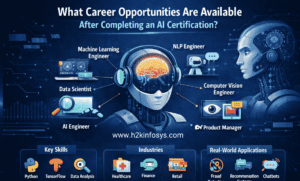
- Data Scientist: Works with large datasets, applying AI algorithms to extract insights, create predictive models, and make data-driven decisions.
- AI Researcher: Focuses on developing new AI algorithms, exploring theoretical aspects of AI, and pushing the boundaries of what AI systems can do.
- AI Engineer: Designs, develops, and implements AI systems for businesses to automate tasks, enhance decision-making, or improve customer experience.
Common Job Roles for Machine Learning Professionals:
- Machine Learning Engineer: Designs, builds, and deploys machine learning models, optimizing them for performance in production environments.
- Data Analyst: Uses machine learning models to analyze data, uncover patterns, and generate insights that guide business decisions.
- ML Research Scientist: Works on cutting-edge ML technologies, developing new models, and contributing to advancements in ML theory and practices.
What Careers Are Possible After Learning AI and Machine Learning?
As AI and machine learning technologies continue to grow in importance, professionals with the necessary skills are well-positioned for long-term career growth. Both fields offer diverse career paths across various industries, from tech startups to established corporations.
AI Career Paths:
- AI Consultant: Advises businesses on how to implement AI strategies, optimize processes, and solve complex problems.
- Robotics Engineer: Designs robots and automated systems powered by AI for industries like manufacturing, healthcare, and logistics.
- Business Intelligence Analyst: Uses AI tools to analyze business data and provide insights to help companies make informed decisions.
Machine Learning Career Paths:
- ML Software Developer: Creates software products that incorporate machine learning algorithms to enhance functionality.
- Predictive Modeler: Develops and applies statistical models to predict outcomes based on historical data, often used in fields like marketing and insurance.
- ML Operations Specialist: Focuses on the operationalization of ML models, ensuring they run efficiently in production environments.
Frequently Asked Questions
Q1: What is the salary difference between AI and machine learning roles?
The salaries for AI and machine learning professionals vary depending on the role, experience, and location. Generally, AI roles tend to command higher salaries due to their broader scope and the complexity of AI systems. However, machine learning engineers, especially those working with large datasets and deep learning algorithms, can also earn competitive salaries.
Q2: Can I transition from a non-technical background into AI or machine learning?
Yes, transitioning from a non-technical background into AI or machine learning is possible with the right learning path. Many online courses and boot camps are available to help beginners develop the foundational skills needed, such as programming and mathematics. Start with introductory courses and gradually work your way up to more advanced topics.
Q3: How long does it take to learn AI or machine learning?
The time required to learn AI or machine learning depends on your prior experience and the depth of knowledge you aim to achieve. A typical learning path could take anywhere from 6 months to 2 years, depending on whether you are pursuing full-time study or learning part-time alongside other responsibilities.
Conclusion
In 2026, both AI and machine learning continue to offer significant career growth opportunities. While AI encompasses a broader range of technologies aimed at mimicking human intelligence, machine learning focuses on data-driven decision-making through algorithms.
Key Takeaways:
- AI and machine learning are closely related but differ in their scope and applications.
- Both fields require proficiency in programming, mathematics, and data science.
- AI professionals can pursue roles in AI research, engineering, and consulting.
- Machine learning professionals are in demand as ML engineers, software developers, and predictive modelers.
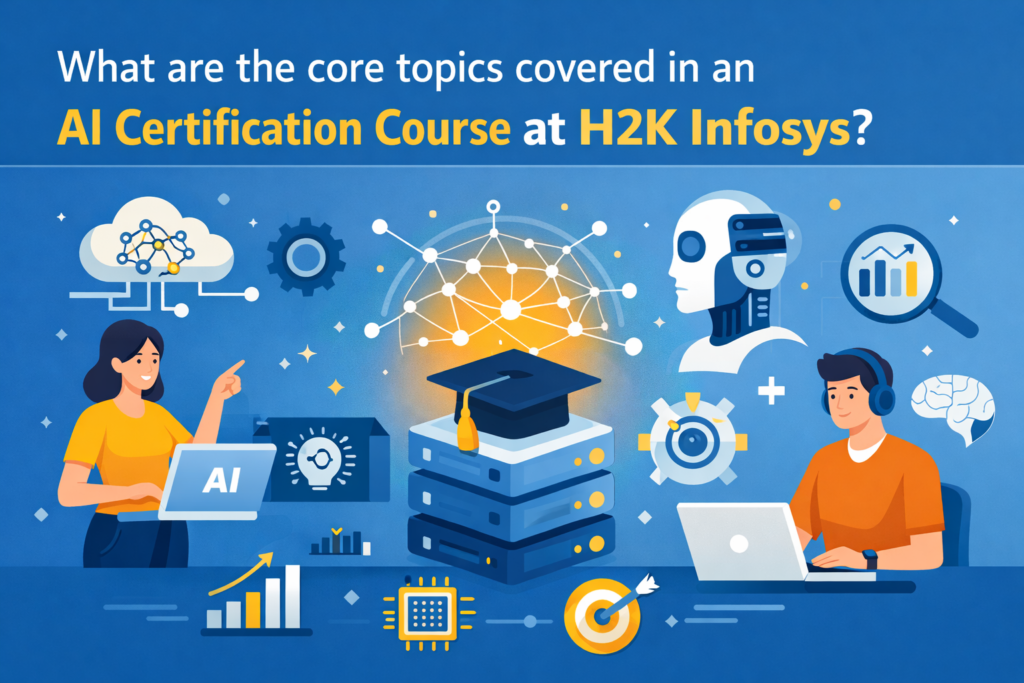
For professionals looking to build a career in AI and machine learning, enrolling in a comprehensive course like the Artificial Intelligence Certification Online programs offered at H2K Infosys can help provide the necessary skills and hands-on experience for success.