Pursuing a focused interest (even if it doesn’t seem to have anything to do with data) is one of the tenets of Data Community Building. The key to entering a group is to make sure your niche, goal, or agenda is super clear. Conversely, reaching out and establishing relationships may be extremely helpful whether starting a new community or growing an old one. There are a number of ways to go about attracting people who are interested in these topics if you want to build a data community building. The practice of creating and disseminating content is essential to establishing a data community. To learn more about Data science, check out our Data science online training.
When you produce, distribute, and respond to information pertaining to data science, there are more opportunities for people to want to follow you. This also makes it easier for people with different backgrounds and skill levels to interact with one another in the field generally. Under the umbrella of the data science community, it’s a benefit because there will be more like-minded people in the same space talking about different things and different opportunities. The process of creating a diverse data science community that centres on content generation and syndication involves a methodical progression through the following five steps Data Community Building:
- Choose an interest or “niche” that has potential connections to data science applications.
- Make direct contact with the right audience by using social media or networking resources.
- Take in relevant knowledge related to your interests or career aspiration.
- Create original content for social media platforms.
- Maintain your contact with the community.
Taking these actions will create a committed and engaged data science community. A learning curve is to be expected from anyone interested in implementing these recommendations, as this process takes time to complete. However, the benefits of a quantifiable return on investment make the time and effort invested in this process worthwhile due to the possibilities to gain new technical skills and create relationships with a new Data Community Building.
What Is Data Literacy?
There is still a technical barrier that may discourage some people from entering the profession of data science, despite the fact that it is becoming more accessible and inclusive. Newcomers will be able to interact with new communities and pick up new skills once they can comprehend data and become data literate. Becoming data literate is a crucial prerequisite for community participation. Data Literacy is the ability to read, work with, analyse, and communicate with data. The only prerequisite for data literacy is that individuals who are interested know how to understand data and can talk about data, not that they must be highly skilled in the technical aspects of the area.
Researchers in the field are starting to look into how data and the development of data literacy might help community-based organisations become more inclusive. Two scholars collaborated with community-based organisations in multiple American cities, as detailed in an academic paper that was published in the Journal of the Association for Information Science and Technology. They discovered that a number of obstacles prevent communities from making efficient use of data. Among these obstacles are Data Community Building:
- The limitations or accessibility of particular data sets.
- The unlocal and decentralised disadvantages of open data.
- A restricted comprehension of data and insufficient data literacy abilities.
- Working with pre-existing data structures presents obstacles.
Researchers have highlighted possible opportunities to help democratise the use of data across communities, particularly those that are underrepresented and underprivileged in digital environments. They suggest that effective data community building and data literacy learning can be achieved by:
- Creating Educational Content
- Building Partnerships in Data Ecosystems
- Increasing Community Input in Current Data Ecosystems
Becoming data literate opens doors into the broader data science industry. In this sector, learning and skill-building are cyclical, as he notes: When you know more about data, you can begin to speak about data, and you can learn data.
How Networking Impacts Data Community Building
The networking opportunity that data community building offers is among its most important aspects. Professionals fresh to the area as well as seasoned industry veterans can learn about the latest developments in data science and form new contacts through conferences, networking events, and live webinars.
There are several places where networking can take place. Discord servers and Slack channels offer one way of networking, but there are other ways of networking like conferences and events. Members of the data community now have the opportunity to listen to leaders who are the real creators in this space and learn from them in these kinds of situations.
Check out our Data science certification online free course to learn more about the Data science community.
Best Practices for Successful Data Community Building
Successful Data Community Building requires more than attracting members. A community must continue providing value and creating opportunities for participation. Community organisers should maintain a regular schedule of discussions, webinars, workshops and knowledge-sharing activities.
It is also important to create an inclusive environment where beginners and experienced professionals feel comfortable contributing. Data Community Building guidelines, beginner-friendly resources and respectful discussions can encourage more people to participate.
Some useful practices include Data Community Building:
- Welcoming and introducing new members
- Organising regular online or offline events
- Sharing tutorials, case studies and industry updates
- Encouraging members to ask and answer questions
- Recognising active contributors
- Collecting feedback from community members
- Creating mentorship and collaboration opportunities
Measuring the Success of a Data Community
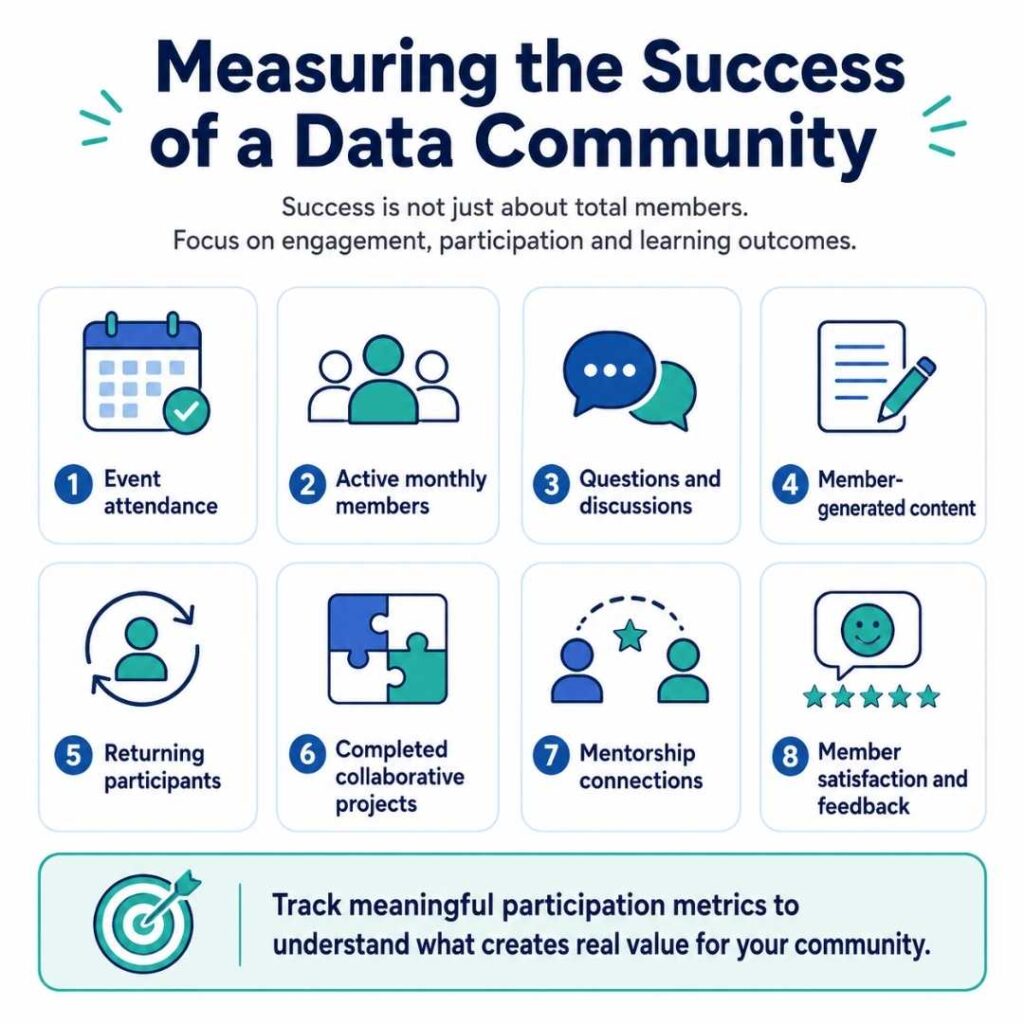
The success of a Data Community Building should not be measured only by the total number of members. Engagement, participation and learning outcomes are more meaningful indicators.
Data Community Building organisers can monitor:
- Event attendance
- Active monthly members
- Questions and discussions
- Member-generated content
- Returning participants
- Completed collaborative projects
- Mentorship connections
- Member satisfaction and feedback
These measurements can help organisers understand which activities are valuable and where improvements are required.
Common Challenges in Data Community Building
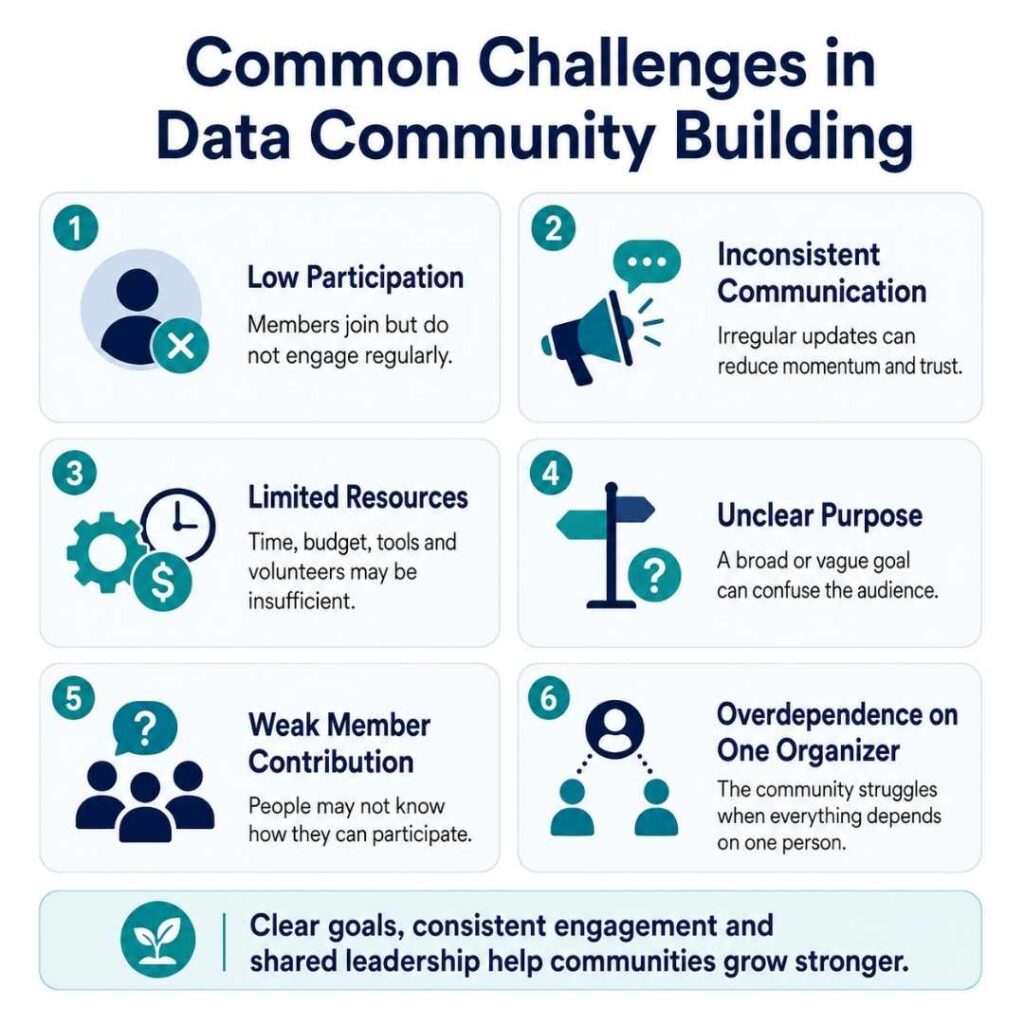
Data communities may face challenges such as low participation, inconsistent communication and limited resources. Some communities also struggle because their purpose is too broad or members do not clearly understand how they can contribute.
These challenges can be reduced by maintaining a clear community goal, creating a consistent content schedule and giving members different ways to participate. Shared leadership is also important because depending on one organiser can make long-term community management difficult.
Effective Data Community Building is a continuous process. Communities grow when members regularly receive useful information, develop new skills and build meaningful professional relationships.
Conclusion
Effective Data Community Building depends on a clear purpose, consistent content, strong networking and inclusive participation. A successful community gives members opportunities to learn, share knowledge, build professional relationships and improve their data literacy.
Data Community Building growth does not happen immediately. Organisers must regularly engage members, respond to their needs and create useful learning and collaboration opportunities. By focusing on long-term value rather than only increasing membership numbers, data communities can become supportive spaces for beginners, professionals and organisations.
To strengthen your knowledge and participate more confidently in the Data Community Building, explore our Data Science online training and certification courses.
FAQs: about Data Community Building
What is Data Community Building?
Data Community Building is the process of creating and maintaining a group where people can share data-related knowledge, resources, experiences and professional opportunities.
How can I start a data community?
Begin by selecting a clear niche, identifying your target audience, choosing a suitable platform and consistently sharing useful content or organising relevant activities.
Which platforms are suitable for building a data community?
LinkedIn, Slack, Discord, GitHub, Meetup and online forums are commonly used for data communities. The right platform depends on your audience and the type of interaction you want to encourage.
What is the role of data literacy in community building?
Data literacy helps members understand, analyse and communicate with data. It allows beginners and non-technical participants to contribute more confidently to discussions and activities.
How can the success of a data community be measured?
Success can be measured through active participation, event attendance, member feedback, returning participants, collaborative projects and learning outcomes.