Introduction: Why Salesforce Dominates the CRM Market
In today’s competitive business landscape, organizations succeed or fail based on how well they manage customer relationships. Customers expect quick responses, personalized experiences, and seamless service across channels. Traditional tools often fail to deliver this, which is why businesses turn to Salesforce the World’s #1 CRM.
Salesforce is more than just a software application; it’s an innovation ecosystem. It connects sales, marketing, service, analytics, and applications into a single platform. From startups to multinational corporations, companies rely on Salesforce to improve customer engagement, drive revenue growth, and scale operations.
For professionals, this dominance creates a powerful career path. Completing a Salesforce Admin Course Online, enrolling in salesforce admin training, or joining salesforce classes equips learners with high-demand skills for one of the fastest-growing job markets in the world.
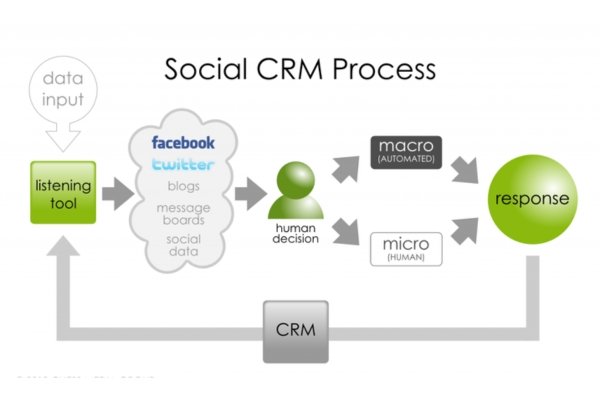
Social CRM (Customer Relationship Management) integrates social media platforms such as Facebook, Twitter, LinkedIn, and Instagram with traditional CRM systems. This integration enables businesses to engage customers directly on the channels they use most, listen to conversations in real time, analyze sentiment, and deliver personalized interactions. Unlike traditional one-way communication, Social CRM supports dynamic, two-way engagement, helping sales, marketing, and customer service teams build stronger, long-lasting customer relationships.
Key Aspects and Benefits
Unified Customer View
Social CRM consolidates social interactions with emails, phone calls, and support tickets, creating a complete and accurate customer profile.
Social Listening and Monitoring
It tracks brand mentions, customer feedback, competitor activity, and industry trends across social platforms to understand public sentiment and emerging needs.
Real-Time Customer Engagement
Teams can respond quickly to questions, complaints, or feedback, improving response times and overall customer satisfaction.
Actionable Customer Insights
Social data reveals customer behavior patterns, preferences, and pain points, enabling smarter decision-making.
Stronger Customer Loyalty
Consistent, meaningful engagement builds trust, enhances brand reputation, and encourages long-term loyalty.
Targeted and Personalized Marketing
Social insights help identify high-quality leads and deliver relevant, personalized marketing campaigns.
How Social CRM Works
Social CRM tools connect directly to social media networks, allowing organizations to:
- Track customer conversations and activities across multiple platforms
- Route social interactions to the appropriate sales, marketing, or support teams
- Use social intelligence to guide campaigns, sales outreach, and service strategies
- Deliver personalized experiences that turn satisfied customers into brand advocates
By combining social engagement with traditional CRM data, Social CRM helps businesses better understand their customers and build meaningful relationships in a digitally connected world.
HubSpot vs Salesforce: Quick Comparison
HubSpot is ideal for small to mid-sized businesses (SMBs) that want an easy-to-use, all-in-one CRM with strong marketing automation and a free starting tier. It’s quick to set up, intuitive, and great for teams that value simplicity and fast growth.
Salesforce is built for mid-market to large enterprises that need deep customization, complex sales workflows, and enterprise-scale automation. It’s extremely powerful and scalable but comes with a steeper learning curve and higher cost.
At a Glance
- Ease of Use: HubSpot is simpler and faster to adopt; Salesforce is more complex but more powerful
- Customization: Salesforce offers deep, code-level customization; HubSpot provides easier UI and workflow customization
- Focus: HubSpot excels in inbound marketing and unified tools; Salesforce is a full enterprise ecosystem
- AI: Both offer strong AI features, with Salesforce Einstein and HubSpot’s built-in AI
- Pricing: HubSpot offers free tools and tiered pricing; Salesforce uses per-user pricing with add-ons
Which Should You Choose?
- Choose HubSpot if you’re an SMB looking for simplicity, quick setup, and integrated marketing.
- Choose Salesforce if you’re a large organization needing advanced automation, scalability, and full customization.
In short: HubSpot = simplicity and speed. Salesforce = power and flexibility.
Best CRM Software: Quick Overview
The best CRM depends on your business size and goals. Top platforms include Salesforce for enterprise-level customization, HubSpot for its powerful free CRM and marketing tools, and Zoho CRM for affordability and built-in AI features. For sales-driven teams, Pipedrive offers a simple, visual pipeline, while tools like Microsoft Dynamics 365, Freshsales, and Monday.com support specific workflows and integrations.
Top CRMs by Use Case
- Enterprise & Customization: Salesforce
- Marketing & Free CRM: HubSpot
- Affordable with AI: Zoho CRM
- Sales Pipeline Focus: Pipedrive
- Microsoft Integration: Dynamics 365
- Small Businesses & Startups: Freshsales, EngageBay, Bitrix24
How to Choose the Right CRM
Focus on your primary need (sales, marketing, or support), team size, budget, and required integrations. Many CRMs offer free or low-cost plans, making it easy to start small and scale later.
1. The Journey of Salesforce: From Startup to the World’s #1 CRM
When Salesforce launched in 1999, the CRM industry was dominated by on-premise systems like Siebel and Oracle. These platforms required heavy installations, large budgets, and IT support. Salesforce disrupted the model with a bold idea deliver CRM entirely on the cloud.
Key Milestones in Salesforce’s Rise
- 1999: Founded by Marc Benioff with a vision of “no software.”
- 2000s: Introduced Software-as-a-Service (SaaS) subscriptions.
- 2010s: Expanded into AI, integration, and analytics.
- Today: Holds over 23% global CRM market share, securing its place as the World’s #1 CRM for over a decade.
This disruptive approach not only changed #1 CRM it shaped the entire SaaS industry.

2. Core Features That Make Salesforce Unbeatable
Salesforce stands tall because it constantly evolves. Let’s break down the features that make it the World’s #1 CRM.
a) Cloud-Based Flexibility
No physical servers, no complicated upgrades just login and start working. Salesforce updates automatically three times a year, ensuring users always have access to the latest features.
b) Extreme Customization
Using point-and-click tools like Lightning App Builder, admins can tailor Salesforce to any business. For more advanced needs, developers use Apex (Salesforce’s programming language) and Visualforce.
c) Artificial Intelligence (AI) with Einstein
Einstein AI predicts which leads will close, suggests next steps for sales reps, and automates manual tasks. This makes customer interactions smarter and more efficient.
H2Kinfosys Offers Flexible online Salesforce training with placement and 100% job-oriented approach.
d) AppExchange Ecosystem
With over 7,000 apps on the Salesforce marketplace, businesses can extend their #1 CRM with accounting, HR, or industry-specific solutions.
e) Data Security and Compliance
Salesforce adheres to GDPR, HIPAA, and other global compliance standards, making it a trusted choice for industries like healthcare and finance.
f) Mobile-First Access
The Salesforce mobile app ensures that sales teams can manage leads, opportunities, and customer service from anywhere.
These features explain why businesses continue to crown Salesforce as the World’s #1 CRM.
3. Real Business Benefits of Using Salesforce
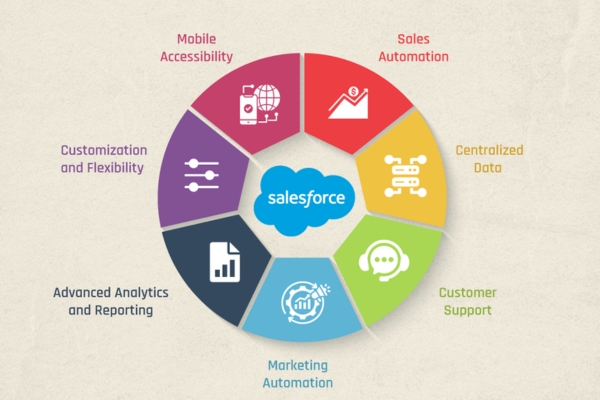
Companies don’t just adopt Salesforce for its name they see tangible results.
- Revenue Growth: Businesses using Salesforce report a 37% increase in sales revenue.
- Customer Retention: Service Cloud users improve customer satisfaction scores by up to 45%.
- Efficiency Gains: Automation tools reduce manual tasks, allowing teams to focus on strategy.
- Faster Decision-Making: Dashboards and analytics provide real-time insights.
Case Example: American Express uses Salesforce to track customer engagement, improving upsell opportunities by 25%. This real-world impact is a strong reason Salesforce is still the World’s #1 CRM.
4. The Career Advantage: Why Learn Salesforce Now?
Beyond business benefits, Salesforce has created one of the largest IT job markets.
Demand in Numbers
- Over 9.3 million jobs will be created in the Salesforce ecosystem by 2026.
- Salesforce admins earn an average of $85,000–$110,000 annually in the U.S.
- Certified professionals are 2x more likely to land job interviews.
Popular Roles After Training
- Salesforce Administrator – Manage users, permissions, workflows.
- Salesforce Developer – Build custom apps using Apex and Lightning Web Components.
- Salesforce Consultant – Guide companies through implementation.
- Salesforce Architect – Design scalable enterprise solutions.
This is why joining a Salesforce admin course online, starting Salesforce admin training, or taking salesforce classes is not just learning it’s career building.
5. Salesforce Administrator Training: Your Gateway to Certification
The Salesforce System Administrator Certification is often the first step into this career. It proves your ability to manage Salesforce efficiently and helps employers trust your skills.
What Training Covers:
- User Management: Setting up users, profiles, and roles.
- Security: Permission sets, field-level security, and data visibility.
- Customization: Creating custom objects, fields, and page layouts.
- Automation: Building workflows, validation rules, and process builders.
- Analytics: Designing reports and dashboards.
- Data Management: Importing/exporting, backups, and deduplication.
At H2K Infosys, we deliver this training with real-world projects and job placement support, bridging the gap between learning and employment.
6. Step-by-Step Salesforce Admin Tutorial Example
Let’s take a simple hands-on task you’d learn in training.
Scenario: Automating email notifications for high-value opportunities.
Steps:
- Go to Setup > Process Builder.
- Create a new process: Send Email for High-Value Opportunity.
- Define the trigger: When an Opportunity is created or edited.
- Add criteria: Opportunity Amount > $100,000.
- Create an action: Send an email template to the Sales Manager.
- Activate the process.
This simple automation saves hours of manual monitoring and ensures managers never miss important deals. Training in Salesforce prepares you for these real-world tasks.
7. Industry-Wise Use Cases of Salesforce
The versatility of Salesforce as the World’s #1 CRM comes from its ability to adapt across industries.
- Retail: Adidas uses Marketing Cloud for personalized campaigns.
- Healthcare: Mayo Clinic tracks patient data securely with Health Cloud.
- Education: Harvard University uses Salesforce to engage students and alumni.
- Finance: Barclays leverages Financial Services Cloud for wealth management.
Each of these industries has one thing in common Salesforce as the World’s #1 CRM.
8. The Broader Salesforce Ecosystem
Salesforce is more than CRM it’s a connected ecosystem.
- Slack + Salesforce: Enhances collaboration for hybrid teams.
- Tableau Analytics: Turns raw data into actionable dashboards.
- MuleSoft: Connects apps, systems, and devices.
- Heroku: Lets developers deploy apps with ease.
Learning Salesforce administration gives you a foundation to explore these tools and broaden your career path.
9. Why Choose H2K Infosys for Salesforce Classes?
There are many ways to learn Salesforce, but H2K Infosys offers advantages that matter:
- Certified Instructors: Industry experts lead every session.
- Hands-On Training: Real-world projects, not just theory.
- Flexible Schedules: Evening and weekend batches for working professionals.
- Job Placement Assistance: Resume help, interview prep, and referrals.
Our Salesforce admin course online, salesforce admin training, and advanced salesforce classes are tailored for students, IT professionals, and career changers.
10. Long-Term Career Growth with Salesforce
The Salesforce journey doesn’t stop at admin training. Here’s how you can grow:
- Administrator Certification → Entry point for managing Salesforce.
- Advanced Admin Certification → Prove mastery in automation and analytics.
- Developer Certification → Learn Apex, APIs, and Lightning Components.
- Consultant Certifications → Specialize in Sales Cloud, Service Cloud, or Marketing Cloud.
- Architect Path → Senior-level expertise for enterprise design.
This progressive path ensures you always stay relevant in the Salesforce ecosystem, the World’s #1 CRM.
11. Key Takeaways
- Salesforce has been the World’s #1 CRM for over a decade.
- It is trusted for cloud flexibility, AI, scalability, and ROI.
- Companies across industries from healthcare to finance rely on Salesforce.
- Career opportunities are booming, making training in Salesforce highly valuable.
- Enrolling in a Salesforce admin course online, salesforce admin training, or salesforce classes prepares you for in-demand jobs.
Conclusion: Your Next Step
Salesforce is not just a CRM it’s a platform that transforms businesses and careers alike. As the World’s #1 CRM, it empowers professionals who are ready to embrace its potential.
If you want to secure a future-proof career in technology, this is your opportunity. Join H2K Infosys Salesforce admin training today and master the skills employers are hiring for.
Take the next step with H2K Infosys your Salesforce journey starts here.