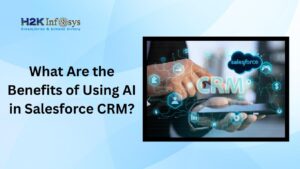
The biggest benefit of using AI in Salesforce CRM is simple: it helps businesses make faster, smarter decisions by analyzing data automatically and suggesting the next best action. Companies that combine Salesforce CRM with AI tools like Salesforce Einstein often see better customer insights, higher sales productivity, and far more personalized customer experiences. And yes, this is exactly why so many professionals are now exploring Salesforce administrator classes and Salesforce certification courses to stay competitive.
Let’s break it down in a practical, real-world way.
Why AI Is Becoming Essential in Salesforce CRM
A few years ago, Salesforce CRM was mainly about tracking leads, deals, and customer interactions. Useful? Definitely. But still very manual.
AI changed that.
Today, AI Salesforce tools can scan thousands of records inside Salesforce CRM, recognize patterns, and give recommendations instantly. Think of it as having a data analyst quietly working behind the scenes all day.
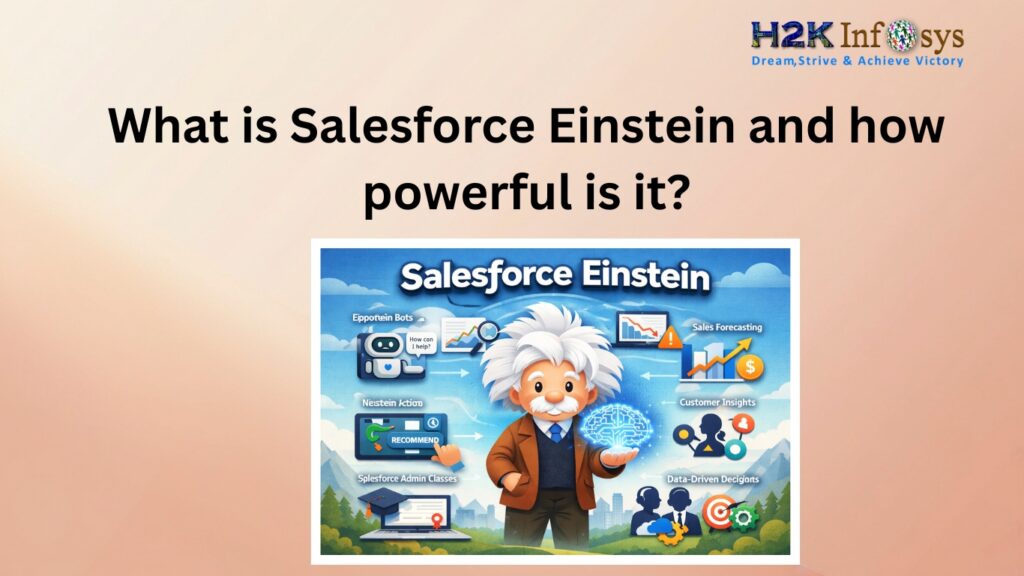
When businesses integrate Einstein AI Salesforce capabilities, the system doesn’t just store customer information it interprets it.
For example:
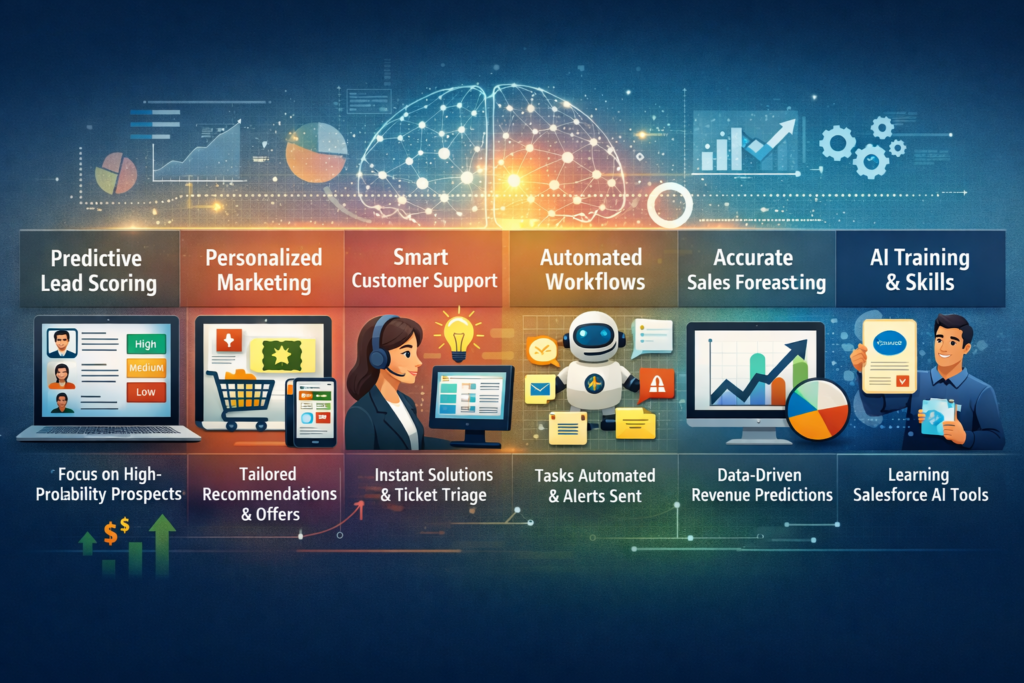
- It predicts which leads are most likely to convert
- Suggests the best time to contact a customer
- Automatically prioritizes sales opportunities
Sales teams that rely heavily on Salesforce CRM suddenly spend less time guessing and more time closing deals.
Predictive Insights That Actually Help Sales Teams
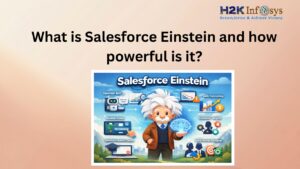
One of the most noticeable advantages of Salesforce Einstein is predictive analytics.
Instead of manually sorting through hundreds of leads in Salesforce CRM, Einstein AI assigns lead scores automatically. Higher scores usually indicate a higher chance of conversion.
I remember talking with a SaaS sales manager last year who said something interesting: before using Einstein AI Salesforce, their team would chase leads almost randomly. After implementing AI within Salesforce CRM, they focused only on high-probability prospects, and their conversion rate jumped noticeably within a quarter.
That’s the kind of small operational shift that makes a big difference.
It’s also why many professionals enroll in Salesforce certification courses. Companies want admins who understand how to configure AI inside Salesforce CRM effectively.
Personalized Customer Experiences at Scale
Another benefit of AI in Salesforce CRM is personalization.
Customers today expect brands to understand what they want, when they want it, and how they prefer to interact.
With Einstein AI, Salesforce CRM can analyze purchase history, behavior patterns, and engagement signals. Based on that data, it can suggest tailored offers or marketing messages.
For instance:
- A retail company using Salesforce CRM might send personalized product recommendations.
- A financial services company might use Einstein AI Salesforce to suggest the next financial product a customer might need.
And the impressive part? Most of this happens automatically within Salesforce CRM.
Smarter Customer Support with AI
Customer support teams benefit a lot from AI-driven Salesforce CRM tools too.
Support agents often spend valuable time searching through knowledge bases or previous case histories. Salesforce Einstein speeds this up.
With Einstein AI Salesforce, the system can:
- Suggest solutions to support agents in real time
- Automatically categorize support tickets
- Predict customer satisfaction levels
Imagine a customer complaint coming into Salesforce CRM, and the AI already recommending the most likely solution before an agent even reads the case. That’s becoming increasingly common.
In fact, many companies adopting AI Salesforce tools report reduced response times and improved customer satisfaction.
Automation That Saves Hours Every Week
Here’s something people often underestimate: automation.
AI inside Salesforce CRM doesn’t just analyze data it also triggers automated workflows.
For example:
- Automatically assigning leads to the right sales reps
- Sending follow-up emails
- Alerting managers when deals are at risk
A marketing team using Salesforce CRM recently shared that after enabling Einstein AI, they reduced manual campaign management by nearly 40%. That’s a lot of time saved.
These capabilities are exactly why training programs like Salesforce administrator Courses are gaining popularity. Admins today are expected to understand not just the platform, but also how to configure AI workflows inside Salesforce CRM.
Better Forecasting and Decision Making
Forecasting used to be. Well a bit of a guessing game.
Sales leaders would open their Salesforce CRM dashboards, look at pipeline numbers, and estimate future revenue. But human forecasts often miss subtle trends hidden in the data.
With Einstein AI, Salesforce CRM analyzes historical deals, customer engagement patterns, and sales activity to generate far more accurate forecasts.
That’s a big deal for executives making strategic decisions.
Companies increasingly rely on Einstein AI Salesforce insights from Salesforce CRM to guide hiring plans, expansion strategies, and marketing budgets.
Why AI Skills Are Becoming Critical for Salesforce Professionals
If you follow the Salesforce ecosystem even casually, you’ll notice something: AI skills are quickly becoming essential.
More organizations are upgrading their Salesforce CRM environments with AI Salesforce capabilities. So, administrators and consultants need to learn how to use Salesforce Einstein.
This is why training is essential.
Today, many professionals begin with classes for Salesforce administrators, and then progress to specific Salesforce certification courses targeting areas like automation, AI, and advanced CRM configuration.
Organizations like H2kinfosys have also begun integrating practical Einstein AI Salesforce training into their Salesforce learning paths, which makes sense given how deeply AI is now embedded in Salesforce CRM.
The Future of AI in Salesforce CRM
AI in Salesforce is still evolving, and honestly, the pace of change has been surprising.
Salesforce is incorporating Einstein AI into its CRM systems, which are now able to complete much more sophisticated tasks than simple automation. Businesses can now use AI to respond to emails, analyze sales trends, and even predict future moves in the customer journey.
If the current trends continue, Salesforce may become an AI-driven decision-making platform.
For anyone in the ecosystem, especially developers and admins, the use of Einstein AI Salesforce tools becomes imperative.
Final Thoughts
The CRM system now offers an advanced business assistant rather than being just a simple system used to keep records. Businesses now have add-ons that make Salesforce Einstein an automated assistant and a business assistant that offers personalized customer experiences.
For those wanting to remain relevant in the ecosystem, understanding the AI tools integrated into Salesforce CRM via the Salesforce certification courses and Salesforce administrator classes is becoming necessities.
It is not difficult to see that opening Salesforce CRM and using Einstein AI is far better than using older systems used to enter and manage customer data.