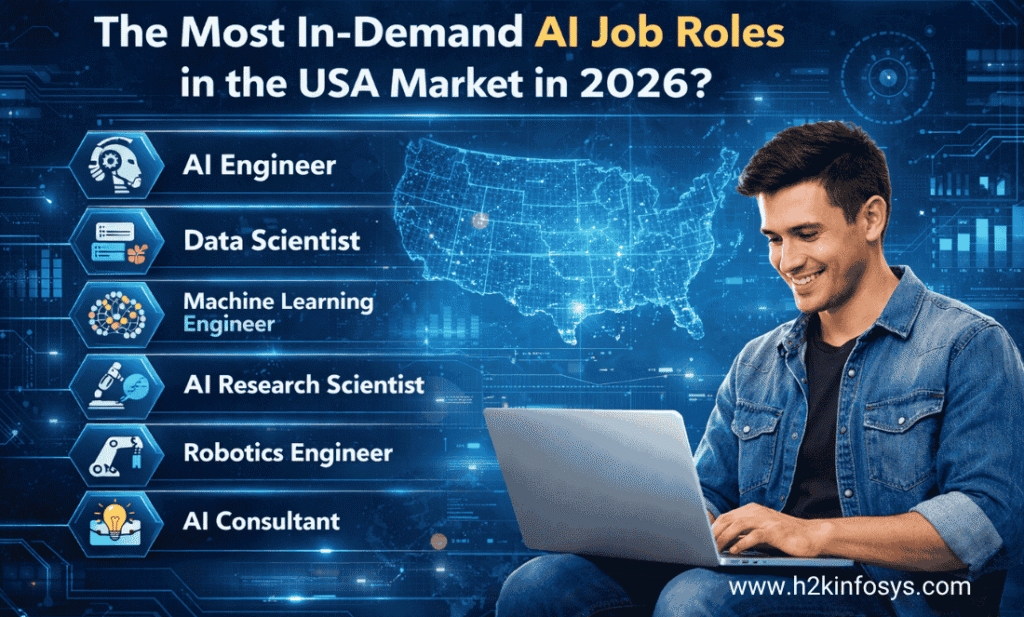
Artificial intelligence (AI) has rapidly evolved from an emerging technology to a critical component of modern IT infrastructures. As AI continues to influence industries across the globe, it is also reshaping the job market. In the USA, numerous AI roles are anticipated to be in high demand by 2026, driven by the growing adoption of AI technologies across sectors like healthcare, finance, retail, and manufacturing. These roles are range from technical positions focused on developing and optimizing AI algorithms to business-oriented positions that bridge AI innovations with organizational strategies. H2K Infosys, with its cutting edge Artificial Intelligence Training Program, plays a key role in equipping professionals with the necessary skills to excel in these rapidly evolving roles.
This explores the AI job roles likely to see the most demand in the USA market by 2026, along with the skills and qualifications required for each. It also provides guidance on how professionals can position themselves to take advantage of these opportunities.
What Are the Most In-Demand AI Job Roles in 2026?
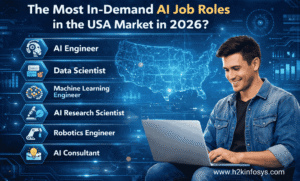
By 2026, the job market for AI professionals in the USA is expected to be robust, driven by widespread AI adoption across various industries. Some of the most in-demand AI job roles in 2026 will include:
- AI Research Scientist
- AI/ML Engineer
- Data Scientist
- AI Product Manager
- AI Ethics Specialist
- Robotics Engineer
- AI Business Analyst
- AI Cloud Architect
- Natural Language Processing (NLP) Engineer
- AI Solutions Architect
These roles are varied, and each requires specific skills, knowledge, and expertise. However, there is a general trend of AI-driven roles combining technical expertise with business acumen, as organizations increasingly seek to leverage AI to drive business outcomes.
What Skills Are Required to Learn AI?
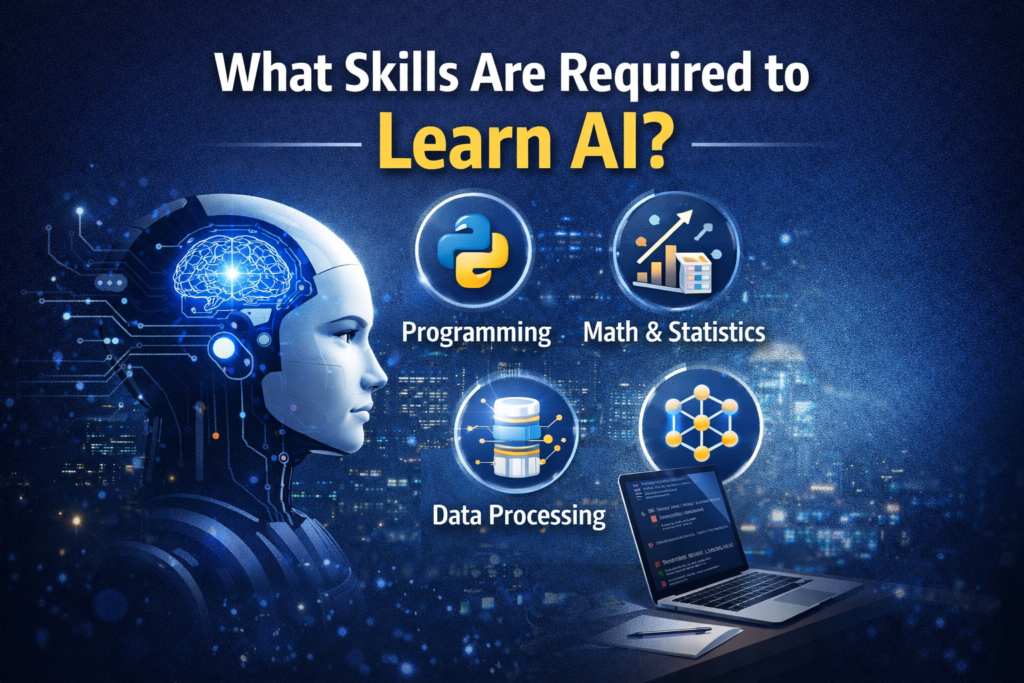
AI professionals must possess a unique blend of technical skills, problem-solving capabilities, and domain knowledge. Key skills for those pursuing careers in AI include:
- Programming Languages: Proficiency in Python, R, and other programming languages is essential for developing AI models and solutions.
- Machine Learning Algorithms: Knowledge of algorithms like decision trees, random forests, k-means clustering, and deep learning frameworks (TensorFlow, PyTorch).
- Data Handling and Analysis: Understanding how to manipulate and analyze large datasets using tools like SQL, pandas, NumPy, and Apache Spark.
- Mathematics and Statistics: A strong grasp of linear algebra, calculus, probability theory, and statistics is essential for creating and optimizing machine learning models.
- Cloud Computing: Familiarity with cloud platforms like AWS, Azure, and Google Cloud for deploying and scaling AI models.
- AI Frameworks and Libraries: Hands-on experience with frameworks like TensorFlow, PyTorch, Keras, and Scikit-learn.
- Business Acumen: Understanding how AI technologies can solve real-world business problems is increasingly important.For professionals looking to expand their knowledge, an Online AI program can provide a structured, hands-on approach to mastering these skills.
How Is AI Used in Enterprise Environments?
AI technologies are transforming enterprises in multiple ways, from automating routine processes to improving decision-making. Common enterprise applications of AI include:
- Predictive Analytics: AI algorithms analyze historical data to predict future trends, allowing businesses to make informed decisions in areas like marketing, finance, and customer service.
- Automation of Routine Tasks: Robotic Process Automation (RPA) uses AI to automate repetitive tasks such as data entry, invoice processing, and customer queries.
- Natural Language Processing (NLP): NLP is used in chatbots, virtual assistants, and sentiment analysis to improve customer experiences and operational efficiency.
- Supply Chain Optimization: AI is used to optimize inventory management, delivery routes, and demand forecasting.
- Fraud Detection: AI systems are used in financial institutions to detect fraudulent activities and secure transactions.
- Image Recognition: AI-based computer vision is applied in sectors like healthcare for diagnostics (e.g., detecting tumors in medical imaging) and manufacturing (e.g., quality control).
These applications require AI professionals to have domain-specific expertise, alongside a deep understanding of the underlying AI technologies.
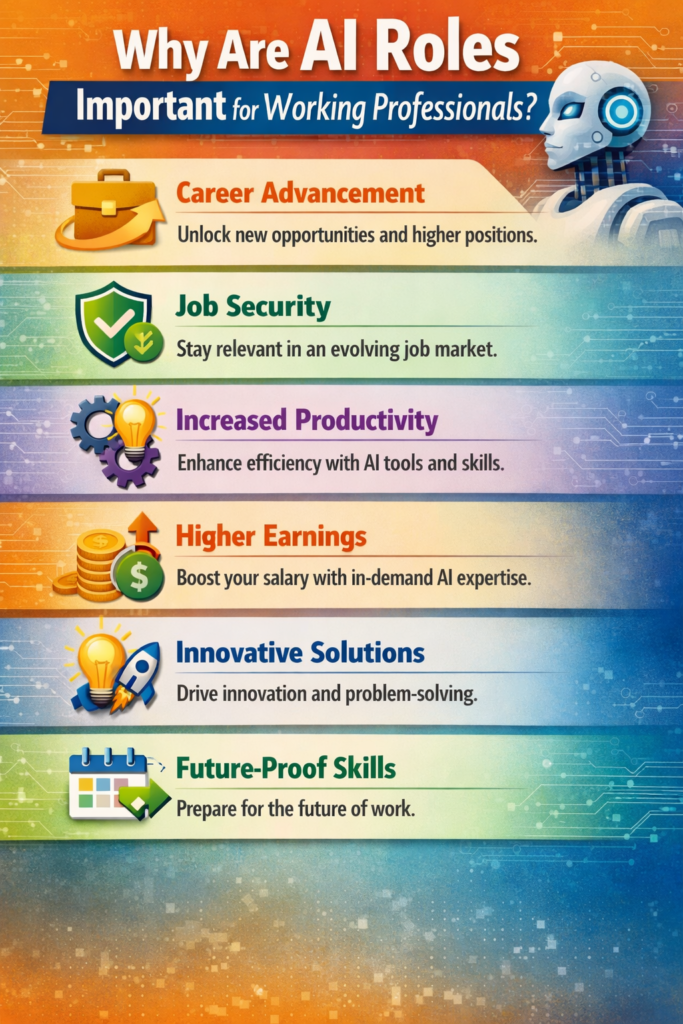
The increasing reliance on AI in business strategies means AI professionals are more crucial than ever. Here’s why AI roles are critical for working professionals:
- Career Advancement: AI is no longer limited to research labs and tech companies. Professionals with AI skills are in high demand across industries, making it an essential area for career growth.
- High Salary Potential: Due to the specialized knowledge required, AI professionals command high salaries compared to other IT roles.
- Industry Disruption: As AI continues to disrupt traditional industries, professionals with expertise in AI will be in the driver’s seat for shaping the future of work.
- Job Security: As AI-driven transformation becomes ubiquitous, professionals with AI expertise will continue to be indispensable to organizations across various sectors.
Investing time in acquiring AI skills through online AI programs or training programs can provide professionals with a competitive edge in the job market.
What Are the Different AI Job Roles and Their Responsibilities?
Each AI role has its own set of responsibilities. Here’s a breakdown of some of the most common AI job roles expected to be in high demand:
1. AI Research Scientist
Responsibilities:
- Conduct research to advance the field of AI and machine learning.
- Develop new algorithms and methodologies for specific AI applications.
- Publish research papers in conferences and journals.
Skills Needed:
- Strong background in mathematics, computer science, and research methodologies.
- Proficiency in machine learning, deep learning, and neural networks.
- Ability to write complex algorithms and programs.
2. AI/ML Engineer
Responsibilities:
- Develop and deploy machine learning models.
- Implement AI algorithms for business applications.
- Optimize models for performance and scalability.
Skills Needed:
- Advanced programming skills in Python, Java, and C++.
- Expertise in ML frameworks like TensorFlow and PyTorch.
- Experience with cloud technologies and deployment.
3. Data Scientist
Responsibilities:
- Analyze and interpret complex datasets.
- Use statistical methods and machine learning to extract insights.
- Develop predictive models and support data-driven decision-making.
Skills Needed:
- Expertise in statistical analysis, data wrangling, and machine learning.
- Proficiency in programming languages such as Python and R.
- Familiarity with big data technologies like Hadoop and Spark.
4. AI Product Manager
Responsibilities:
- Manage AI product development from ideation to launch.
- Coordinate with engineering, design, and business teams.
- Ensure AI solutions meet business objectives and user needs.
Skills Needed:
- Strong understanding of AI technologies and business applications.
- Experience in product management and project management tools.
- Excellent communication and leadership skills.
5. AI Ethics Specialist
Responsibilities:
- Ensure AI systems are designed and deployed ethically.
- Address concerns related to bias, privacy, and transparency in AI models.
- Develop frameworks and guidelines for ethical AI usage.
Skills Needed:
- Knowledge of AI ethics, fairness, and privacy concerns.
- Familiarity with legal and regulatory frameworks for AI.
- Ability to analyze and mitigate ethical risks in AI applications.
What Careers Are Possible After Learning AI?
AI offers various career paths that cater to different skill sets and interests. Some of the career opportunities available after learning AI include:
- AI Developer: Develop AI applications and systems using machine learning algorithms.
- Data Analyst: Analyze large datasets to derive insights and support decision-making.
- AI Consultant: Advise businesses on implementing AI solutions to solve specific problems.
- AI Architect: Design the architecture of AI systems, ensuring they meet scalability and performance needs.
- Business Intelligence Analyst: Use AI to enhance business decision-making by analyzing trends and data.
By developing the skills necessary to work in these roles, professionals can advance their careers and take on leadership positions in AI-driven projects.
FAQ: Frequently Asked Questions
Q1: What qualifications do I need to pursue a career in AI?
A1: A strong background in computer science, mathematics, or related fields is essential. Most roles require proficiency in programming languages such as Python and R, as well as knowledge of machine learning algorithms. Specialized certifications or degrees in AI are also beneficial.
Q2: How long does it take to become proficient in AI?
A2: The timeline depends on your background. Professionals with prior experience in programming or data science may require 6-12 months of focused training to become proficient. Beginners may take longer.
Q3: Are AI roles available in all industries?
A3: Yes, AI roles are available across a wide range of industries, including healthcare, finance, retail, and manufacturing, as companies increasingly look to leverage AI for innovation and efficiency.
Conclusion
Key Takeaways:
- AI job roles in the USA market are expected to grow rapidly by 2026.
- In-demand roles include AI Research Scientist, Machine Learning Engineer, and AI Product Manager.
- Skills required for these roles include proficiency in programming, machine learning, and data analytics.
- AI professionals can expect high salary potential and career advancement opportunities.
For professionals looking to enhance their AI skills and stay ahead in the competitive job market, exploring AI training programs and courses is a valuable next step. Consider enrolling in an Artificial Intelligence training program to gain hands-on experience and prepare for the in-demand AI roles of 2026