Companies across tech, finance, e-commerce, healthcare, and consulting are consistently bringing in fresh data analysts these days. You’ll see names like Amazon, Accenture, Tata Consultancy Services, and Infosys popping up often and it’s not случай. These organizations run massive data operations, so they almost always need entry-level talent to keep things moving.
Why fresh data analysts are suddenly everywhere
If you’ve been scrolling through job portals lately, you might’ve noticed a shift. It’s not just senior roles anymore. There’s a steady stream of openings for junior data analysts, and honestly… it makes sense.
Everything runs on data now. Customer behavior, delivery timelines, marketing campaigns you name it. Someone has to clean, track, and interpret all that. That’s where fresh Data analysts come in. The work might start with reports, dashboards, or basic insights not exactly glamorous but it’s real, hands-on work. And that’s how most solid careers begin anyway.
Lately, even smaller startups are hiring Data analysts much earlier than before. Earlier, they’d wait. Now? Not really.
Where companies are hiring the most
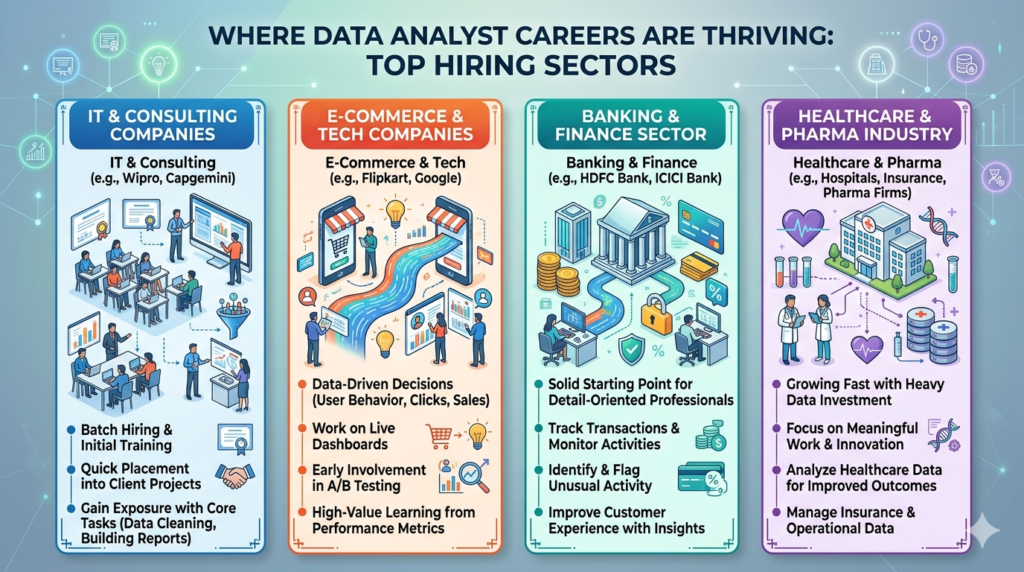
IT & consulting
Companies like Wipro and Capgemini tend to hire in batches. They usually train you first and then place you into client projects pretty quickly.
At the beginning, you might be doing data cleaning or building reports. It sounds basic, but that exposure stacks up fast.
E-commerce & tech
Think Flipkart or Google. These companies live and breathe data user behavior, clicks, sales, performance metrics.
Even as a beginner, you might get to work on live dashboards or A/B tests. That kind of exposure early on? Pretty valuable.
Banking & finance
Banks don’t always get talked about in this context, but they hire a lot. HDFC Bank and ICICI Bank, for example, need Data analysts to track transactions, flag unusual activity, and improve customer experience.
If you’re detail-oriented, this space can actually be a solid starting point.
Healthcare & pharma
Post-pandemic, this sector has been leaning heavily into data. Hospitals, insurance companies, pharma firms they’re all investing more.
It’s a quieter space compared to tech, but it’s growing fast and there’s meaningful work involved.
Startups & SaaS
Startups are a different story. Less structure, more chaos but you learn a lot, quickly. You might juggle multiple tools at once, switch contexts often… not easy, but very effective for building real skills.
What companies expect (not as scary as it sounds)
Let’s be honest no one expects you to know everything on day one. But there are a few basics most employers look for:
- SQL for pulling data
- Excel for quick analysis
- Some Python or R
- Tools like Power BI or Tableau
- And… a bit of problem-solving instinct
From what I’ve seen, people who’ve actually worked on projects even small ones tend to stand out more than those who’ve just studied theory.
Where many people get stuck
This part doesn’t get said enough having a degree alone isn’t cutting it anymore.
A lot of fresh data analysts struggle because they haven’t worked on real datasets. They know the concepts, sure, but applying them? That’s where things get shaky.
That’s why structured training can help, especially when it includes hands-on work.
A quick note on training (and what actually helps)
Programs that focus on practical learning tend to make a difference. H2K Infosys, for example, has been getting some attention for how it approaches data analytics training.
Instead of just going through theory, the focus is more on real-time projects things that actually resemble job tasks. You’re not just learning SQL or Python in isolation; you’re using them in scenarios that feel… real.
They also offer an online data analytics certificate that’s designed for beginners. It’s flexible, which helps if you’re balancing other things at the same time.
From what I’ve noticed, people who go through structured, project-based training usually transition into Data analysts jobs more smoothly than those trying to piece everything together on their own.
A few hiring trends worth knowing
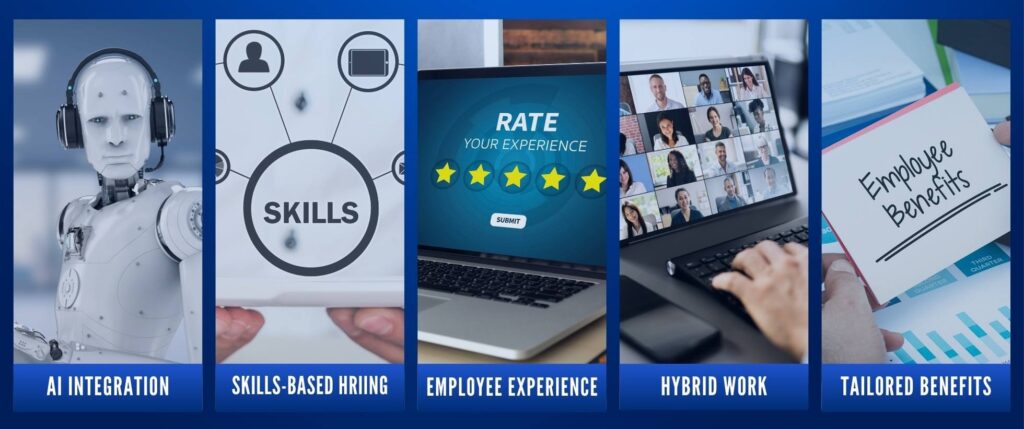
Things are changing a bit in how companies hire:
- Skills are starting to matter more than degrees
- Interviews often include practical tasks
- Training projects can count as “experience”
- Remote roles are becoming more common
So yeah, if you’ve actually worked with data even during training you’re already in a better position than you might think.
A small reality check
Getting that first job isn’t instant. Most people apply to a lot of roles before something clicks. That’s normal.
What tends to make the difference is consistency… and how well you can explain what you’ve done. Not just what tools you know, but how you’ve used them.
Sometimes it’s less about knowing more and more about showing what you already know clearly.
Final thoughts
There are definitely more opportunities for fresh data analysts right now. But at the same time, competition is real.
If you focus on building practical skills, work on projects, and maybe go for structured data analytics training (something like an Online data analytics certificate), your chances improve quite a bit.
And once that first opportunity comes through… things usually start to move from there.