H2K Infosys AI online training is preparing specialists in practical machine learning, generative AI, data analysis, automation, and AI-driven software development that are increasingly in demand across the USA technology sector. A structured Artificial Intelligence Certificate Online from H2K Infosys can offer the technical knowledge, project experience, and industry-relevant skills that employers typically look for when hiring for AI-related employment.
With organizations AI Online Training Help Me Secure Opportunities adding AI to products, business processes, cloud platforms and analytics systems, those with certified AI knowledge may be eligible for a greater range of technology opportunities. Working professionals can take up such courses online and continue with their jobs and other responsibilities.
What Is AI Online Training?
AI Online Training Help Me Secure Opportunities is an organised education program to acquire Artificial Intelligence principles, tools, methodology, and practical applications through virtual learning environments.
These programs often include:
- Fundamentals of Machine Learning
- Deep Learning ideas
- Natural Language Process (NLP)
- Generative AI technology
- Large Language Models (LLMs)
- Data preprocessing & feature engineering
- Deployment of AI model
- AI Ethics & Governance
- Cloud AI Services
A good AI Online Training Help Me Secure Opportunities mixes theoretical study and practical assignments to emulate a real-world company environment.
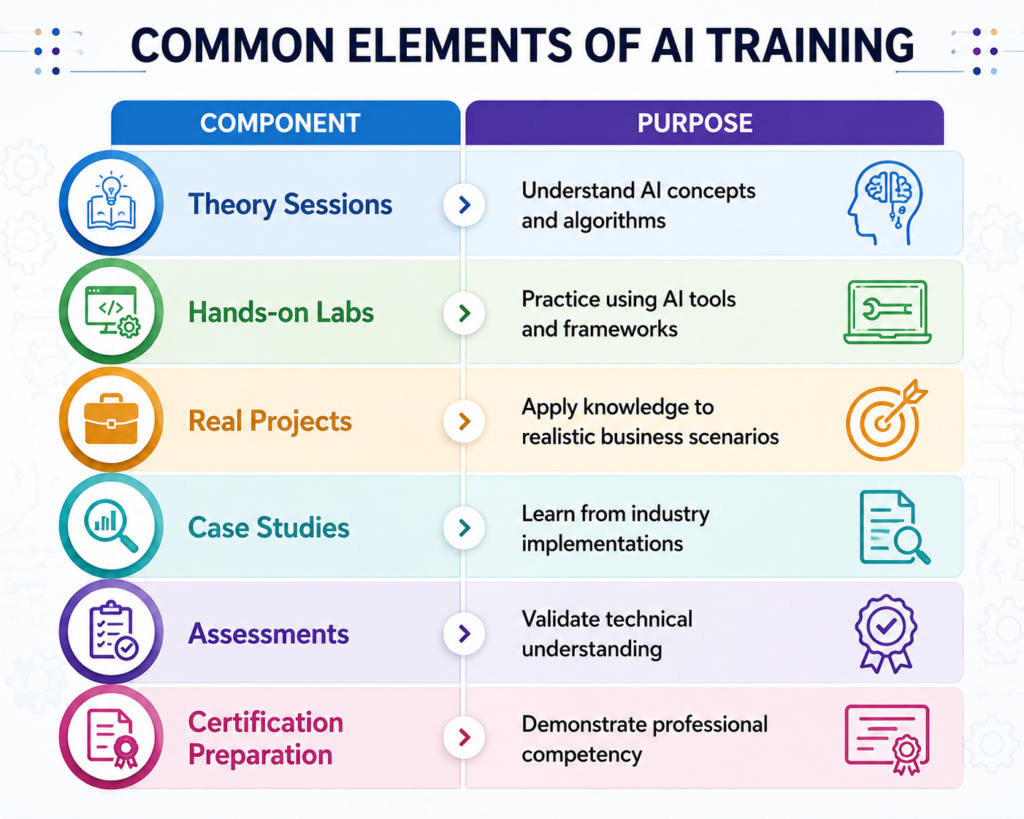
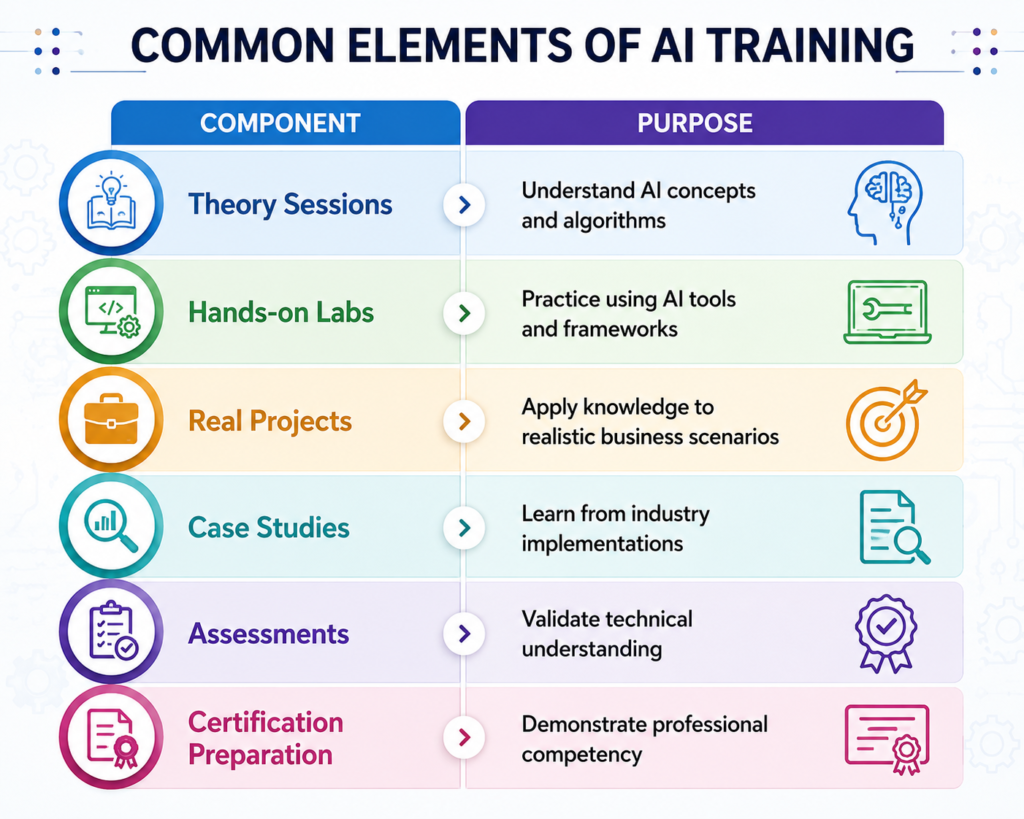
Common Elements of AI Training Element Purpose
| Component | Purpose |
|---|
| Theory Sessions | Understand AI concepts and algorithms |
| Hands-on Labs | Practice using AI tools and frameworks |
| Real Projects | Apply knowledge to realistic business scenarios |
| Case Studies | Learn from industry implementations |
| Assessments | Validate technical understanding |
| Certification Preparation | Demonstrate professional competency |
Why is Online AI Training important for working professionals?
Professionals working in technology AI Online Training Help Me Secure Opportunities contexts often need to upgrade their technical abilities to stay relevant in fast growing environments.
AI has been introduced into:
- Software development
- Cloud Computing & Security
- Business intelligence
- Data analytics
- Customer experience platforms
- Business Automation
Professionals who grasp AI ideas are frequently more equipped to contribute to today’s digital transformation initiatives.
Key: Why Professionals Pursue AI Training
Growing Use of Technolog
Capabilities from AI have become embedded in many cases out of sight into enterprise software platforms, cloud ecosystems and business operations.
Here are several examples:
- Smart document processing
- Automated customer service
- Predictive analytics •
- Fraud detection system
- Recommendation Systems
Cross-functional need
AI abilities are relevant beyond the specific AI team.
Occupations like: professionals
- Software Engineering
- DevOps
- Business Analysis
Data Engineering - Cloud Architecture
- Product Management
may increasingly engage with AI-enabled products.
Ongoing Skills Developmen
Tech professionals are often upskilling to stay relevant to industry trends and employer requirements.
How do AI works in Real Life IT Projects?
The AI systems discover patterns from the data and apply these patterns for prediction, content generation, classification or decision making automation.
Typical enterprise AI workflow includes:
Step 1: Gathering the Data
Organisations collect data from:
- Databases
- Applications
- APIs Sensors
- corporate systems’
Step 2: Preparing the Data
Teams tidy up and organise data to increase model performance.
Some common activities are:
- Deleting duplicates
- Missing Values Handling
- Normalising data
- Feature selection
Step 3 : Model Training
Machine learning algorithms discover the associations from the previous data.
Shared frameworks:
- TensorFlow
- PyTorch
- Scikit-learn
Step 4: Assessment
The models are tested on validation datasets.
Metrics often consist of:
- Accuracy Precision
- Remember
- Score F1
- ROC AUC
Step 5: Deploying
Models are deployed to production systems.
Common deployment platforms:
- AWS Sage Maker
- Microsoft Azure AI
- Google Vertex AI
Kubernetes environments
Step 6: Monitoring
Teams are always watching:
- Performance
- Bias Drift
- Security
- Scalability
How Companies Are Using Artificial Intelligence
Organisations utilise AI to increase efficiency, decision making, customer experience, and operational effectiveness.
Automation of customer service:
How AI Chatbots Help Customers:
- Frequently asked questions
- Routing Requests (http://www.)
- Offering 24/7 support
Predictive Analytics
Historical data analysis helps to predict:
- Sales trends
- Customer Action
- Demand swings
- Operational risk
Smart document processing
AI pulls information from:
- Contracts
- Insurance
- forms Invoices
Financial statements
Cybersecurity
Security teams utilise AI to:
- Detection of threats
- Anomaly Detection
- Anti-fraud
- Risk Management and Assessment
Software Dev.
Developers used AI-assisted technologies for:
- Codegen
- Automating Tests
- Finding bugs
- Documentation support
What Skills Do You Need To Learn Artificial Intelligence Training Program
Technical Foundation
Recommended skills:
- Basic programming skills
- Logical problem-solving
- Understanding databases
- Knowledge of software systems
Programming Languages
Python
- Deep Learning
- Machine Learning
SQL
- Data Analysis
R
- Statistical Modelling
Java
- Enterprise AI Applications
Mathematics Concepts
- Statistics
- Probability
- Linear Algebra
- Optimisation approaches
Data Skills
Key areas include:
- Data cleaning
- Data visualisation
- Data transformation
- Feature engineering
What Tools Are Covered in an Artificial Intelligence Certified Course?
AI Development Tools
- TensorFlow
- PyTorch
- Scikit-learn
- Pandas
- NumPy
- Jupyter Notebook
- OpenAI API
- LangChain
- Hugging Face
Cloud AI Platforms
AWS
- Artificial Intelligence Services
- AI rollout at scale
Azure
- Enterprise AI integration
Databricks
- Data & AI workflows
Google Vertex AI
- Model development
How May AI Online Training Help Professionals Grab Opportunities in the US Technology Sector?
Industries Hiring AI Professionals
- Healthcare
- Financial Services
- Retail
- Manufacturing
- Telecom
- Software Development
- Cloud Computing
Advantages of Structured AI Training
Industry-Specific Knowledge
Learn:
- Enterprise AI architecture
- Information channels
- Machine learning pipelines
- AI deployment processes
Hands-On Project Experience
Projects may include:
- Customer churn forecasting
- Opinion extraction
- Recommendation systems
- Prediction models
- Generative AI use cases
Technical Portfolio Creation
Projects help demonstrate competence during:
- Interviews
- Technical discussions
- Portfolio reviews
Certification Validation
Certification demonstrates:
- Knowledge
- Professional commitment
- Continuous learning
What Jobs Use Artificial Intelligence Every Day?
Common AI-Related Roles
- Machine Learning Engineer
- Data Scientist
- AI Engineer
- Data Engineer
- Business Intelligence Analyst
- Cloud Engineer
- Software Developer
- NLP Engineer
- MLOps Engineer
- AI Product Manager
What Kind of Jobs Can You Get After Completing an Artificial Intelligence Certification Course?
Entry-Level Roles
- Junior Data Analyst
- AI Support Technician
- Business Intelligence Analyst
- Data Associate
Mid-Level Roles
- Data Scientist
- AI Developer
- Data Engineer
Advanced Roles
- Machine Learning Engineer
- AI Architect
- Lead Data Scientist
- MLOps Architect
- AI Solutions Consultant
- AI Program Manager
What Is the Usual AI Learning Path?
Beginner Level
Focus Areas:
- Python Programming
- Data Fundamentals
- Statistics Basics
Intermediate Level
Focus Areas:
- Machine Learning
- Feature Engineering
- Model Evaluation
Advanced Level
Focus Areas:
- Deep Learning
- Generative AI
- MLOps
- AI Deployment
Enterprise Level
Focus Areas:
- Production Deployment
- Governance
What Challenges Do Organisations Encounter in Implementing AI?
Data Quality Challenges
- Incomplete data
- Irregular formats
- Data silos
Model Governance
- Compliance requirements
- Ethical concerns
- Auditability
Scalability
- High-volume transactions
- Multiple users
Security
- Confidential information protection
- Intellectual property protection
- AI model security
What Are Best Practices for Enterprise AI Projects?
Define Clear Business Goals
- Start with measurable objectives
Prioritise Data Quality
- Model quality depends on training data quality
Implement Monitoring
Monitor:
- Reliability
- Drift
- Precision
Focus on Governance
- Responsible AI policies
- Security controls
- Regulatory frameworks
Version Control
Common tools:
- Git
- MLflow
- Model Registry
Frequently Asked Questions (FAQ)
Can novices benefit from online AI training?
Yes. AI Online Training Help Me Secure Opportunities begin with Python, statistics, and machine learning fundamentals.
Do I need a degree in computer science to learn AI?
No. Many learners come from IT support, software development, business analysis, engineering, and data analytics backgrounds.
How long will it take to learn AI?
Learning time varies depending on experience and study schedule.
Which programming language is most used in AI?
Python is the most popular language.
Are certifications relevant for AI jobs?
Certifications can validate knowledge, but employers also evaluate projects, skills, and experience.
Can AI abilities be used outside tech companies?
Yes. Industries including healthcare, finance, manufacturing, retail, logistics, and education use AI solutions.
Machine Learning vs Artificial Intelligence: What’s the Difference?
- Artificial Intelligence is the broader field.
- Machine Learning is a subset of AI that learns from data.
Do today’s AI training programs cover Generative AI?
Yes. Topics often include:
- Large Language Models (LLMs)
- Prompt engineering
- Retrieval-Augmented Generation (RAG)
- AI application development
Conclusion
AI Online Training Help Me Secure Opportunities professionals with practical knowledge in:
- Machine learning
- Data analysis
- Generative AI
- Enterprise AI deployment
A structured Artificial Intelligence Training Program can help learners build skills aligned with modern technology environments.
Key Takeaways
- AI skills are increasingly important across technology roles.
- Enterprise AI projects require data, modelling, deployment, and governance expertise.
- Practical projects demonstrate real-world competence.
- Generative AI and machine learning are core parts of modern IT ecosystems.
- AI Online Training Help Me Secure Opportunities supports professional growth across industries in the USA.
- Employers value technical skills, certifications, and hands-on experience.
Get Started with H2K Infosys AI Training Programs
- Gain practical exposure with cutting-edge AI tools.
- Work on real-world projects.
- Build industry-ready AI skills.
- Advance your career in today’s AI-driven workplace.