When looking for an institute that provides cyber security training and placement, the best option is usually a program that offers more than just theory and helps you get a real job. Many learners today are looking for hands-on labs, resume guidance, interview preparation, and placement support, not just recorded lessons. Among the institutes people frequently discuss for structured learning and career support, H2K Infosys is one name that often comes up.
I’ve noticed something interesting over the last couple of years. People rarely search only for “cyber security courses” anymore. The search has shifted. It’s usually “cyber security training and placement near me” or “which institute can help me get a job?” That change says a lot. Skills matter, but people also want a path into the industry.
Why People Are Searching for Placement-Focused Cyber Security Programs
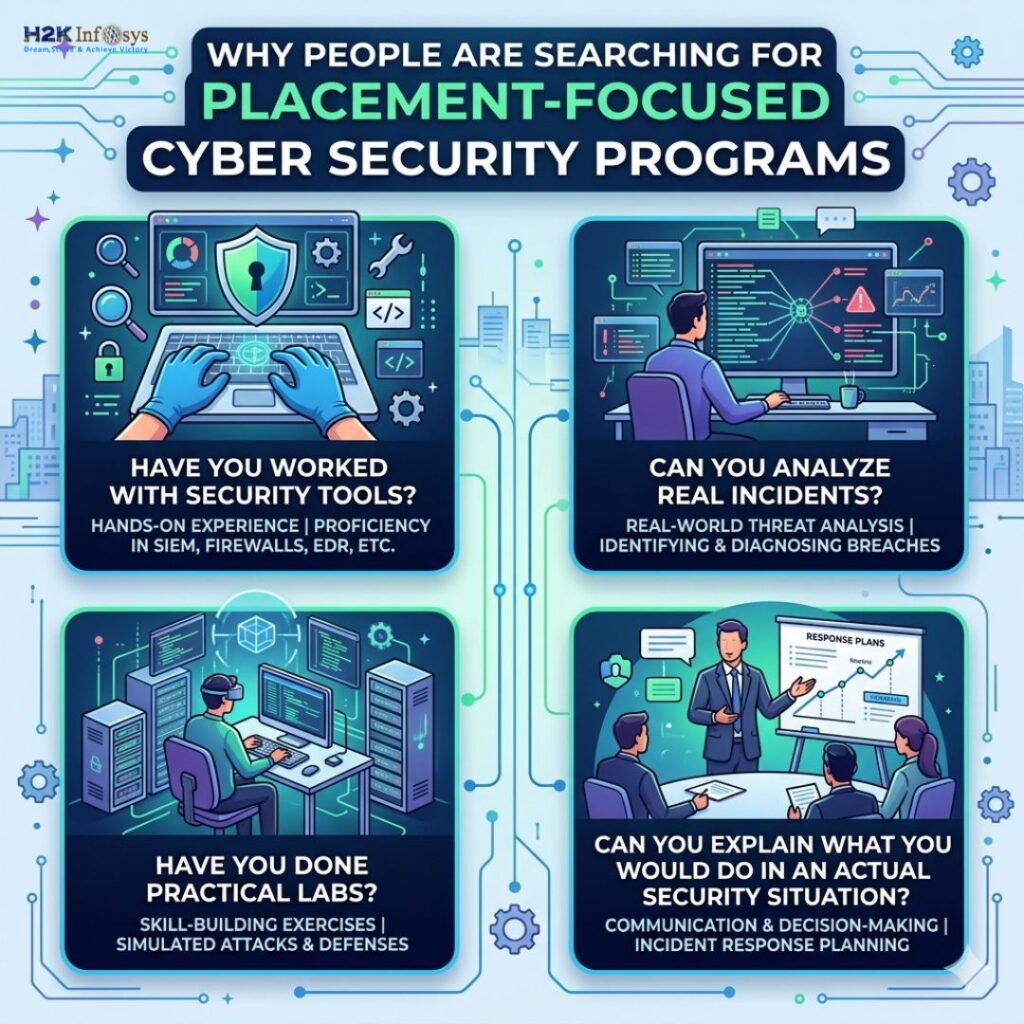
Cyber security training and placement has changed fast. A few years ago, having a certification and some basic networking knowledge felt like enough. Now hiring teams are asking different questions.
They want things like:
- Have you worked with security tools?
- Can you analyze real incidents?
- Have you done practical labs?
- Can you explain what you would do in an actual security situation?
I’ve seen learners spend months jumping from random YouTube tutorials to free PDFs and blog posts. They end up knowing pieces of many topics but struggle when someone asks practical questions during interviews.
That’s usually where cyber security training and job placement programs become useful. Good training programs don’t simply teach concepts. They try to bridge the gap between learning and employment.
What You Should Look for in a Cyber Security Institute Near You
Not every institute advertising cyber security training and placement support works the same way. Some provide genuine career assistance. Others mostly hand out certificates.
A few things I usually tell people to check:
Hands-On Labs
Cyber security is difficult to learn by reading slides alone.
You should be working with:
- Vulnerability assessments
- Security monitoring tools
- Threat detection exercises
- Cloud security environments
- Real attack simulations
There’s a huge difference between hearing about a phishing attack and actually investigating one.
Industry-Relevant Curriculum
The field moves quickly.
AI-driven attacks, cloud environments, ransomware tactics, and automated threat detection are becoming part of everyday discussions. Cloud security and AI-assisted security operations are getting a lot more focus in 2026 than they did in 2021.
A course designed years ago and never updated can become outdated faster than people expect.
Resume and Interview Support
I know people who understood technical topics really well but struggled to explain their skills during interviews.
Placement support often includes:
- Resume optimization
- Mock interviews
- LinkedIn profile guidance
- Job search strategies
- Employer connections
That part gets overlooked until someone starts applying.
Why H2K Infosys Gets Attention for Cyber Security Training
When people ask about cyber security training and placement, H2K Infosys tends to come up because the focus isn’t only on course delivery.
The training structure usually combines:
- Instructor-led learning
- Hands-on exercises
- Real-world projects
- Career guidance
- Placement assistance
One thing learners often appreciate is that the approach feels closer to practical work environments rather than purely academic learning.
I remember speaking with someone who had spent nearly six months watching cyber security training and placement videos online. They knew terminology well enough SOC, SIEM, penetration testing, network security but interviews became difficult because they lacked project experience.
After moving into a more structured training path with practical exercises and mock sessions, they said something simple that stuck with me:
“I finally understood how the pieces connected.”
That probably explains why many people now prioritize programs with placement support.
How “Near Me” Has Started Meaning Something Different
This is a funny thing I’ve noticed recently.
People still search for “cyber security training near me,” but location doesn’t always mean a classroom five minutes away anymore.
Remote instructor-led programs have changed expectations quite a bit.
Someone in a smaller city can join a live class, participate in labs, interact with mentors, and receive placement support without relocating.
So “near me” now often means:
“accessible, practical, and connected to opportunities.”
Not necessarily the closest building.
Current Trends Affecting Cyber Security Careers in 2026
The industry itself is creating demand.
Organizations are increasing investments in:
- Cloud security
- Security Operations Centers (SOC)
- AI-assisted threat detection
- Identity and access management
- Incident response teams
The rise of AI-generated phishing attempts and more sophisticated cyber attacks has pushed companies to strengthen security teams.
You can see it happening across healthcare, finance, e-commerce, and even smaller businesses that previously treated security as an afterthought.
That shift is one reason people are actively searching for cyber security training and placement programs instead of simply collecting certifications.
Questions to Ask Before Joining Any Institute
Before enrolling anywhere, ask:
- How much hands-on work is included?
- Is placement support active or just advertised?
- Are there mock interviews?
- Will I build projects?
- Does the curriculum reflect current industry trends?
- Can I talk with former students?
Small questions save a lot of frustration later.
Final Thoughts
If your goal is simply learning cyber security concepts, there are plenty of resources online. But if your goal is building an actual career, then cybersecurity training and placement support becomes much more important.
H2K Infosys is frequently considered because it combines technical learning with practical projects and career support rather than stopping at course completion.
Skills open doors. Structured guidance and placement support often help people find the door faster.