Introduction
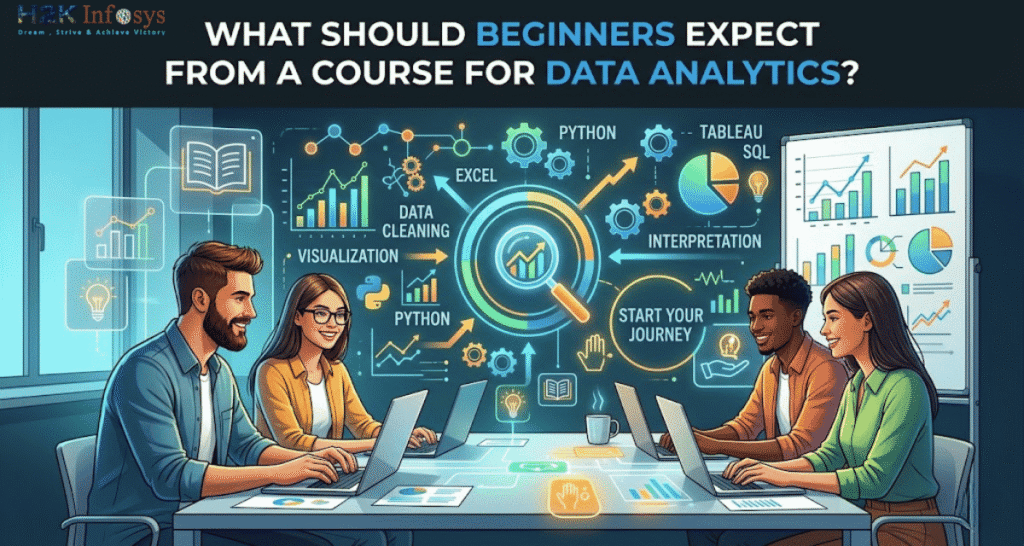
If you’re starting a Course for Data Analytics, expect a mix of practical problem-solving, hands-on tools, and business thinking not just spreadsheets and charts. Most beginners are surprised by how quickly they move from basic Excel work to analyzing real datasets, building dashboards, and understanding how companies actually use data to make decisions.
The demand for data professionals has exploded over the last few years, and honestly, it’s not slowing down in 2026. Businesses everywhere from healthcare startups to banks and even sports teams, are leaning heavily on analytics to predict customer behavior, reduce costs, and automate decisions. That’s exactly why more people are searching for Course for Data Analytics that can help them build job-ready skills without spending years in a traditional degree program.
Why So Many Beginners Are Choosing Data Analytics Right Now
A few years ago, data analytics sounded like something only tech companies cared about. Now? Even retail stores, logistics companies, and hospitals are hiring analysts.
One thing I’ve noticed lately is how many career-switchers are entering the field. Teachers, accountants, support executives, and even fresh graduates from non-technical backgrounds are joining Course for Data Analytics because the entry barrier is lower than people think.
The reason is simple:
- Companies need people who can interpret data.
- Tools are becoming more user-friendly.
- Remote analytics jobs are increasing.
- Salaries remain competitive
In India and the U.S., entry-level data analysts are still among the most in-demand roles according to recent hiring trends from LinkedIn and major job boards. AI tools are growing fast too, but interestingly, they’re increasing demand for analysts who can validate insights not replacing them entirely.
That part gets overlooked a lot.
What You Actually Learn in a Course for Data Analytics
A good Course for Data Analytics usually starts with fundamentals before moving into advanced analytics concepts. Beginners don’t start with machine learning on day one.
That would be chaos.
Instead, most structured programs gradually introduce concepts in a way that feels manageable.
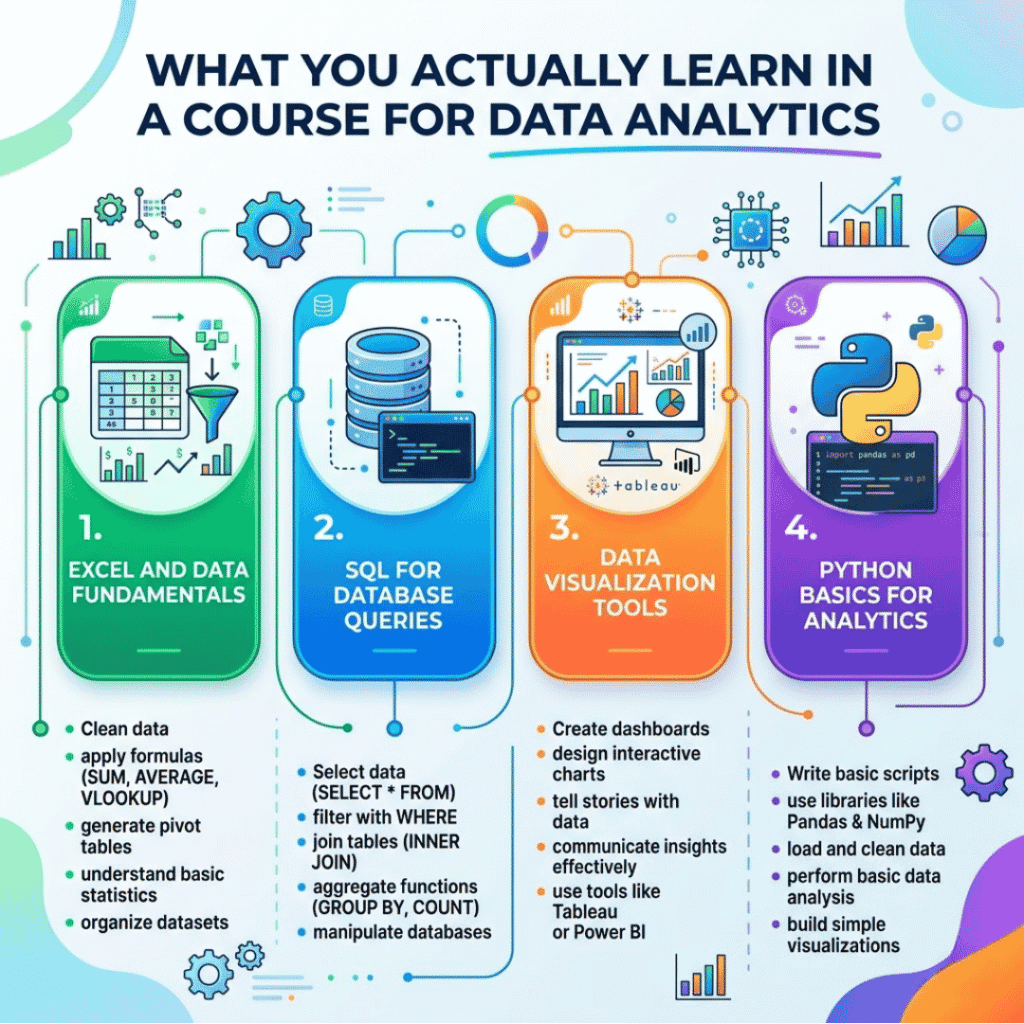
1. Excel and Data Fundamentals
Yes, Excel still matters. A lot.
Many new office workers believe Excel is outdated due to the rising popularity of AI and Python, yet businesses still rely heavily on it for reporting and operational analysis.
There are five introductory data analysis skills in total: data cleaning and organization, data screening and sorting, data pivoting, formula application, and report generation.
- We have established a pre-transition phase to help learners gradually advance from low-complexity tasks to using professional tools.
- Sorting and filtering
- Pivot tables
- Basic formulas
- Reporting techniques
This stage helps people become comfortable working with raw information before moving to more technical tools.
2. SQL for Database Queries
This is where things start feeling “real-world.”
SQL is used to pull data from databases, and almost every analyst role expects at least basic SQL knowledge.
You’ll learn how to:
- Retrieve data
- Filter records
- Join tables
- Aggregate information
- Generate reports
A beginner-friendly instructor usually explains SQL through practical business examples instead of abstract syntax drills. That makes a huge difference.
3. Data Visualization Tools
Most modern Analytics online classes include visualization platforms like:
- Tableau
- Power BI
- Google Looker Studio
This is honestly the part many students enjoy most because you finally see data turn into dashboards and business stories.
One student example I came across recently involved analyzing food delivery trends during weekend cricket matches. Simple idea, but it showed how analytics connects directly to customer behavior.
That’s the kind of project employers remember.
4. Python Basics for Analytics
Not every beginner becomes a programmer overnight, and good courses understand that.
Python is usually introduced slowly through:
- Data manipulation
- Visualization libraries
- Simple automation
- Exploratory analysis
The focus is less on software engineering and more on solving data problems efficiently.
And yes, beginners struggle here occasionally. Completely normal.
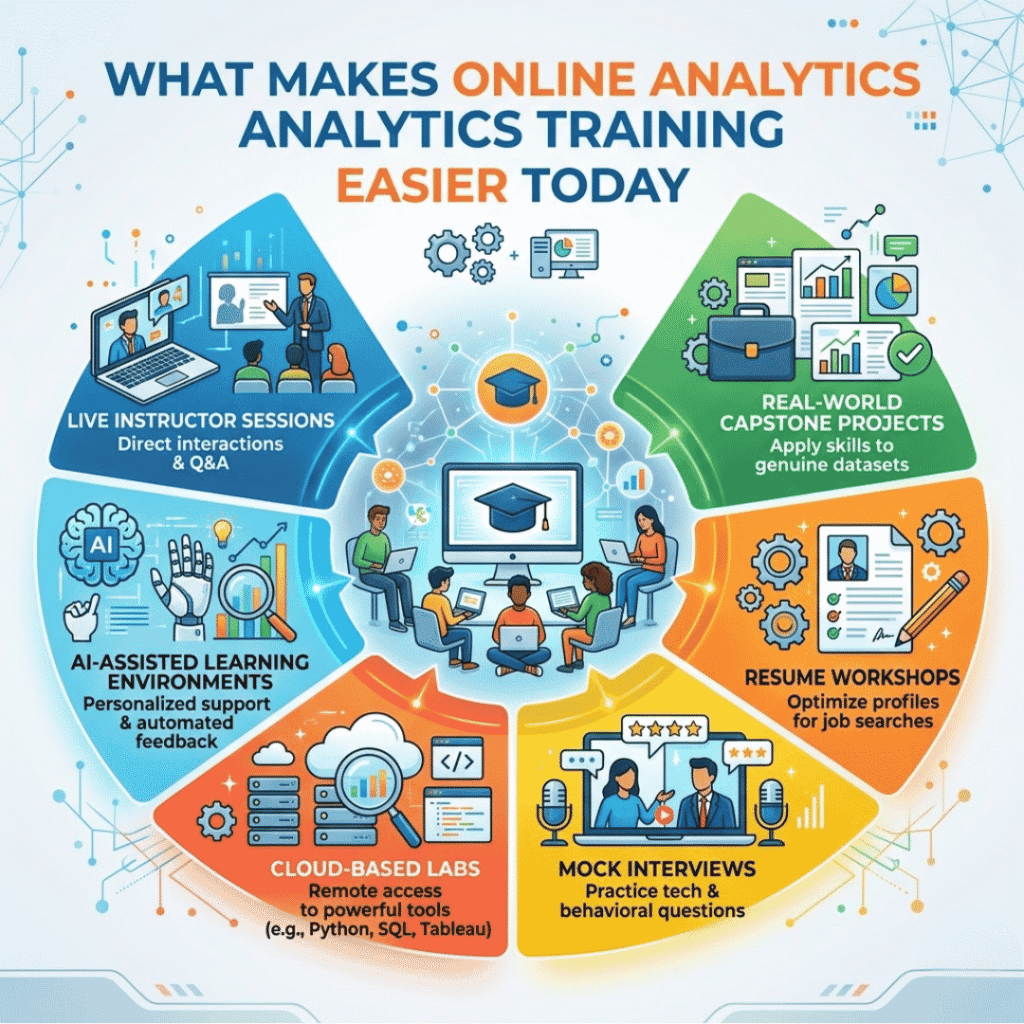
What Makes Online Analytics Training easier today.
A few years back, online learning felt disconnected. Recorded videos, outdated forums, little interaction.
That’s changed a lot.
Modern Analytics online classes now include:
- Live instructor sessions
- Real-world capstone projects
- Resume workshops
- Mock interviews
- Cloud-based labs
- AI-assisted learning environments
Some training providers also simulate workplace analytics scenarios, which helps students understand how analysts actually communicate findings to business teams.
That practical exposure matters more than people realize.
Common Challenges Beginners Face
Nobody talks enough about the awkward middle stage.
You know that point where you understand concepts individually but struggle to connect them all together.
That’s probably the hardest part of learning analytics.
Here are the most common beginner struggles:
Feeling Overwhelmed by Tools
Excel, SQL, Python, Tableau it can feel like too much at first.
The trick is not mastering everything immediately. Strong programs focus on workflow understanding rather than tool memorization.
Lack of Business Context
Many beginners learn formulas without understanding why businesses need the analysis.
Good instructors bridge this gap using practical examples like:
- Customer churn prediction
- Sales trend analysis
- Fraud detection
- Marketing campaign performance
Portfolio Anxiety
A lot of students worry they have “nothing to show” employers.
That’s why project-based learning is critical. A structured Course for Data Analytics should help students build a portfolio gradually instead of dumping theory endlessly.
Skills You’ll Gain Beyond Technical Knowledge
This surprises many people.
Analytics isn’t just technical work it’s communication too.
You’ll develop:
- Problem-solving ability
- Business thinking
- Data storytelling
- Presentation skills
- Decision-making confidence
One hiring manager recently mentioned that junior analysts often fail interviews not because they lack technical knowledge, but because they can’t explain insights clearly.
That’s an underrated skill.
Career Opportunities After Completing a Data Analytics Course
This is usually the biggest question beginners ask.
Typical entry-level roles include:
- Data Analyst
- Business Analyst
- Reporting Analyst
- Junior BI Developer
- Operations Analyst
- Marketing Analyst
Depending on location, experience, and specialization, salaries can vary quite a bit. Still, analytics continues to offer strong earning potential compared to many other entry-level tech paths.
Companies hiring analysts today include:
- Healthcare firms
- Financial institutions
- E-commerce platforms
- SaaS companies
- Government organizations
- Manufacturing businesses
And increasingly, startups.
Why Structured Training Matters More Than Random Tutorials
There’s a huge difference between watching scattered YouTube videos and following a guided learning roadmap.
Free resources help, absolutely. But many beginners lose momentum because they don’t know what to learn next.
A structured provider like H2K Infosys typically combines:
- Industry-aligned curriculum
- Instructor guidance
- Hands-on assignments
- Real-time project experience
- Placement support
That combination tends to accelerate learning much faster than trying to piece together random tutorials late at night after work.
If you’re serious about building a career in this, structured training can really help shorten the learning curve.
What to Look for Before Joining Analytics Online Classes
Not all programs are equal.
Before enrolling, check whether the course includes:
- Real projects
- SQL and visualization training
- Interview preparation
- Resume guidance
- Internship opportunities
- Updated curriculum for AI-driven analytics
- Mentor support
Also check if the instructors have actual industry experience, not just teaching backgrounds.
That detail matters more than flashy marketing pages.
Real-World Analytics Trends Beginners Should Know in 2026
The analytics field is changing quickly.
A few major trends shaping the industry right now:
AI-Augmented Analytics
Companies increasingly use AI tools to automate reporting, but analysts are still needed to interpret and validate outputs.
Cloud Analytics Platforms
Businesses are moving data systems to cloud platforms like AWS, Azure, and Google Cloud.
Data Privacy and Governance
With stricter privacy regulations expanding globally, analysts now need awareness of ethical data usage too.
Self-Service BI
Non-technical teams increasingly use dashboards independently, meaning analysts must design reports that are easy for everyone to understand.
Good training programs are already adapting their curriculum around these shifts.
Related Topics You Can Also Explore
To build stronger topical knowledge, you can also explore:
- How to Build a Data Analyst Portfolio Without Experience
- SQL Interview Questions for Beginner Data Analysts
- Difference Between Data Analytics and Data Science
- Best Business Intelligence Tools for Beginners
- How AI Is Changing Data Analytics Careers
These topics fit naturally into a broader analytics learning path and help create a stronger career foundation.
FAQs
Do beginners need coding experience for a Course for Data Analytics?
No. Most beginner-friendly courses start from scratch. SQL and Python are usually introduced gradually with practical exercises.
How long does it take to learn data analytics?
Most learners can develop job-ready foundational skills within 4–8 months, depending on consistency, practice time, and course structure.
Are Analytics online classes worth it in 2026?
Yes, especially when they include projects, mentoring, and career support. Companies still actively hire analysts across industries.
What tools should beginners focus on first?
Start with Excel and SQL. Then move into visualization tools like Power BI or Tableau before learning Python.
Can non-IT students become data analysts?
Absolutely. Many successful analysts come from finance, business, healthcare, or completely non-technical backgrounds.
Final Thoughts
Starting a Course for Data Analytics can feel intimidating at first, mostly because the field sounds more technical than it actually is. But once beginners begin working with real datasets and practical business scenarios, things start clicking surprisingly fast.
The biggest advantage today is accessibility. You no longer need a computer science degree to enter analytics. With the right guidance, consistent practice, and exposure to real projects, it’s possible to transition into this field much faster than many people expect.
And honestly, the people who do best are rarely the ones who memorize the most syntax. They’re the ones who stay curious, keep practicing, and learn how to turn raw data into useful decisions.
If you’re considering Analytics online classes, focus on programs that emphasize practical experience, mentorship, and career readiness not just theory slides. That approach tends to make the journey smoother and far more valuable in the long run.