
The fastest way to start your career as a Business Analyst is by joining the right IT business analyst course that teaches practical skills, real project experience, and job-ready training, not just theory. If your goal is to move into IT, understand business processes, and work with teams that solve real problems, the right learning path makes a huge difference.
A lot of people assume Business Analysis is only for people with years of tech experience. Honestly, that’s not true. I’ve seen fresh graduates, support professionals, QA testers, and even people from non-IT backgrounds successfully move into BA roles because they picked the right business analyst class and focused on practical learning.
Why Business Analysis Is a Strong Career Choice in 2026
Business Analysts sit in the middle of business needs and technical solutions. Companies need people who can understand requirements, improve workflows, and help teams make better decisions.
And right now, demand is strong.
With companies investing more in automation, data-driven decisions, and digital transformation, BA roles are growing across healthcare, banking, retail, insurance, and tech. Even mid-sized companies are hiring analysts now, not just big enterprise firms.
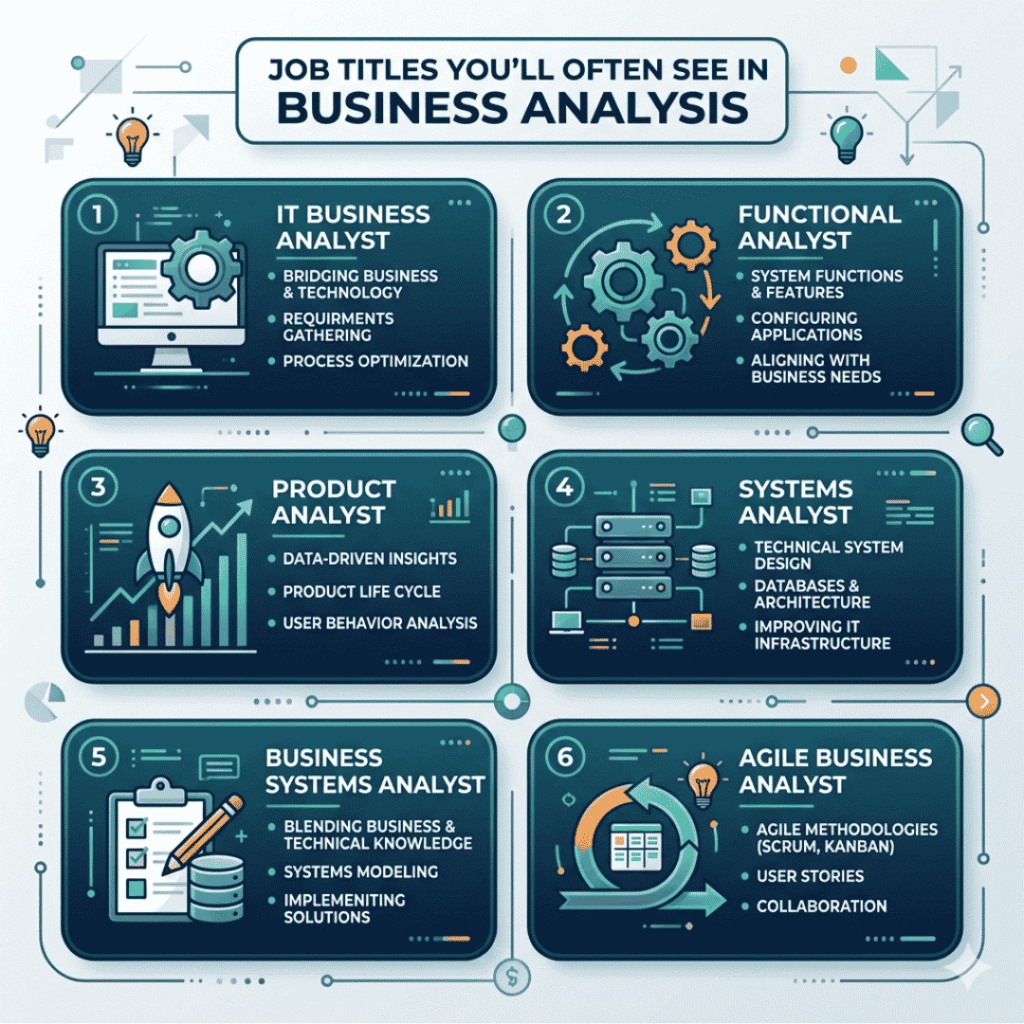
You’ll often see job titles like:
- IT Business Analyst
- Functional Analyst
- Product Analyst
- Systems Analyst
- Business Systems Analyst
- Agile Business Analyst
The interesting part? Many of these roles don’t require heavy coding. They require problem-solving, communication, documentation, and understanding how business and technology connect.
That’s exactly where good business analyst training matters.
Step 1: Understand What an IT Business Analyst Actually Does
Before joining any course, it helps to know what the job looks like.
An IT Business Analyst Course typically works on:
- Gathering business requirements
- Writing BRD and FRD documents
- Creating use cases and user stories
- Working with stakeholders and development teams
- Supporting Agile and Scrum environments
- Using tools like Jira, SQL, Excel, Visio, Tableau, and sometimes Power BI
It sounds like a lot, and yes, at first it can feel like alphabet soup. BRD, FRD, UAT, BPMN… I remember people getting overwhelmed just hearing the terms.
But once you see how projects work in real scenarios, it starts making sense quickly.
That’s why theory-only courses usually fail people.
Step 2: Choose an IT Business Analyst Course That Focuses on Real Work
This is where many learners make mistakes.
They join a random certification course, watch recorded videos for weeks, and still don’t feel ready for interviews.
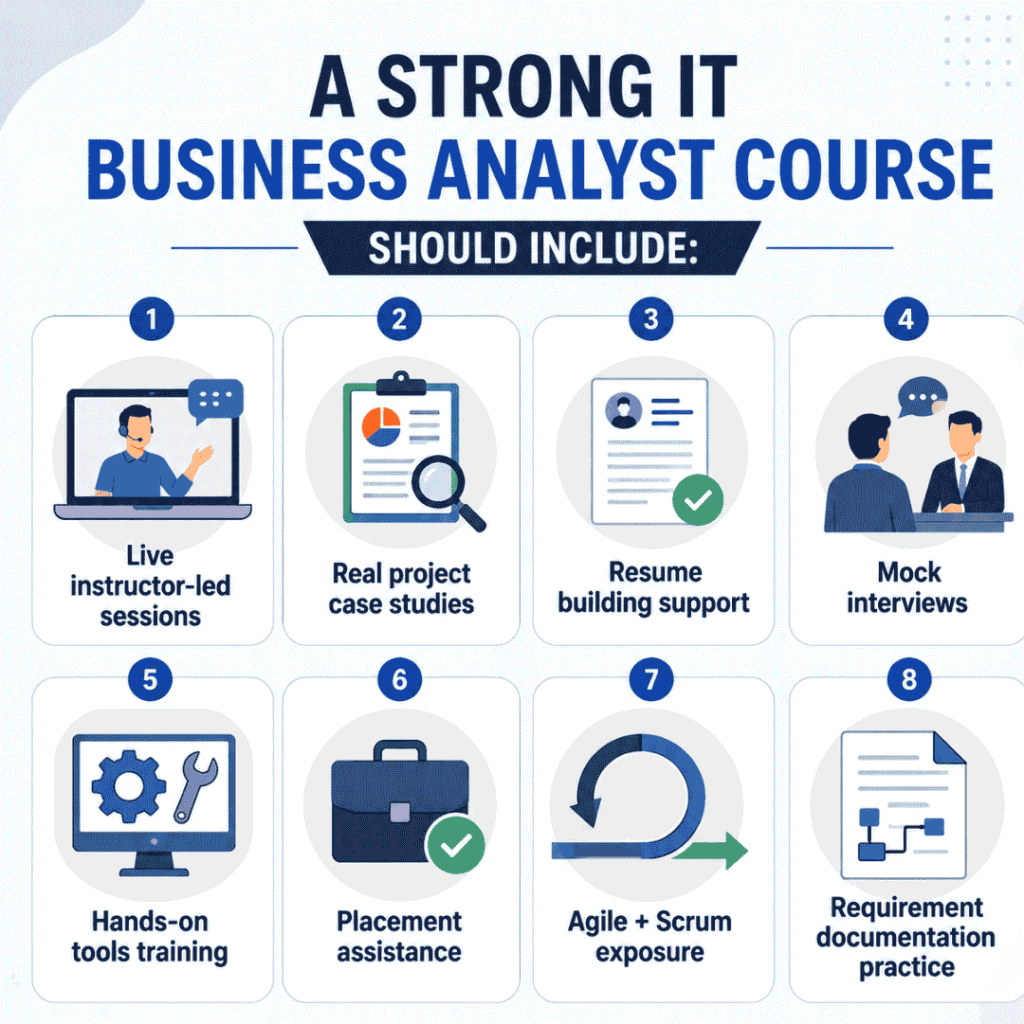
A strong IT business analyst course should include:
- Live instructor-led sessions
- Real project case studies
- Resume building support
- Mock interviews
- Hands-on tools training
- Placement assistance
- Agile + Scrum exposure
- Requirement documentation practice
This is one reason many learners look toward structured programs like H2K Infosys.
Instead of only explaining concepts, the focus is on helping students become job-ready. That matters because employers are not hiring based on theory they want people who can actually work on projects from day one.
And honestly, that gap between “I learned it” and “I can do it” is where most people get stuck.
Step 3: Build Strong Core Skills During Your Business Analyst Class
A good business analyst class should help you strengthen three major areas:
Communication Skills
You’ll spend a lot of time talking to stakeholders, developers, testers, and managers. Clear communication is a huge part of the job.
Sometimes people ignore this because they think tools matter more. They do matter but poor communication can break an entire project.
Documentation Skills
Writing clear requirements is a real BA skill.
This includes:
- BRD
- FRD
- Functional specs
- User stories
- Acceptance criteria
- Gap analysis reports
This gets better with practice, not just reading definitions.
Analytical Thinking
You need to ask better questions.
Not just “what do you need?” but “why is this needed?” and “what problem are we solving?”
That mindset is what separates a good BA from someone just filling templates.
Step 4: Learn the Tools Recruiters Actually Ask For
A lot of job postings in the U.S. now expect familiarity with:
- Jira
- Confluence
- SQL
- Microsoft Excel
- Tableau
- Power BI
- Visio
- Azure DevOps
- Salesforce (in some domains)
Not every company requires all of them, but knowing the basics helps a lot.
Good business analyst trainings should include tool exposure because interviews often include scenario-based questions like:
“How would you track requirements in Jira?”
“How would you validate business data using SQL?”
That’s where practical training gives confidence.
Step 5: Prepare for Interviews Like You’re Already on the Job
This part is underrated.
Many students complete the course but struggle in interviews because they prepare like exam students instead of professionals.
Recruiters ask things like:
- Tell me about your recent BA project.
- How do you handle conflicting stakeholder requirements?
- Explain Agile vs Waterfall from project experience.
- How do you write user stories?
- What happens during UAT?
You need answers based on experience, even if that experience comes from training projects.
That’s why placement-focused programs like H2K Infosys stand out for many learners. Mock interviews, project walkthroughs, and resume support help bridge that final step between learning and hiring.
Because honestly, knowledge alone doesn’t always get the offer.
Presentation matters too.
Step 6: Get Certified, But Don’t Depend Only on Certification
Certifications help, but they shouldn’t be your entire strategy.
Popular options include:
- ECBA
- CCBA
- CBAP
- Agile certifications
- Scrum-related certifications
For beginners, ECBA is often a good starting point. It adds credibility and helps employers see your commitment.
But here’s the truth: people don’t say enough: certification without practical skill doesn’t carry much weight.
A strong course + hands-on project work usually performs better than certification alone.
Real Example: Career Switch Success
I recently came across a case where someone moved from customer support into a Business Analyst role after completing structured BA training with live projects and interview prep.
They didn’t have a strong technical background.
What changed things was learning how to explain project work confidently during interviews. Once they could talk through requirements, user stories, stakeholder communication, and testing support, recruiters saw them differently.
That’s the real transformation.
Not “learning a course.”
Becoming someone who can solve business problems.
Final Thoughts
Starting a BA career is less about having the perfect background and more about choosing the right learning path.
The right IT business analyst course helps you build confidence, practical skills, and real interview readiness. A strong business analyst class should prepare you for actual project environments, not just exam questions.
And that’s why many professionals prefer structured business analyst trainings from providers like H2K Infosys because the goal is not just learning Business Analysis, but becoming employable in it.
If you’re serious about entering the BA field in 2026, focus on job-ready training first.
Everything else becomes much easier after that.