
If you’re trying to understand what kind of support you really get during online cyber security training, the honest answer is… it can be surprisingly good but only if you end up in the right program. Some courses go beyond just dumping information on you. They sort of guide you through mentors checking in, hands-on labs, even help with getting job-ready. It’s not perfect, but it feels a lot more like someone’s actually helping you move forward rather than just “teaching.”
Now, to be fair, not every program gets this right. Some are still very basic recorded videos, minimal interaction, and you’re mostly on your own. That can get frustrating faster than people expect. On the other hand, programs built around cyber security training with job placement usually try to create a full support system. While exploring options, you’ll probably come across names like H2K Infosys platforms that lean more toward structured, career-focused learning instead of just theory.
Anyway, let me walk you through what support actually looks like in practice based on what learners tend to experience now.
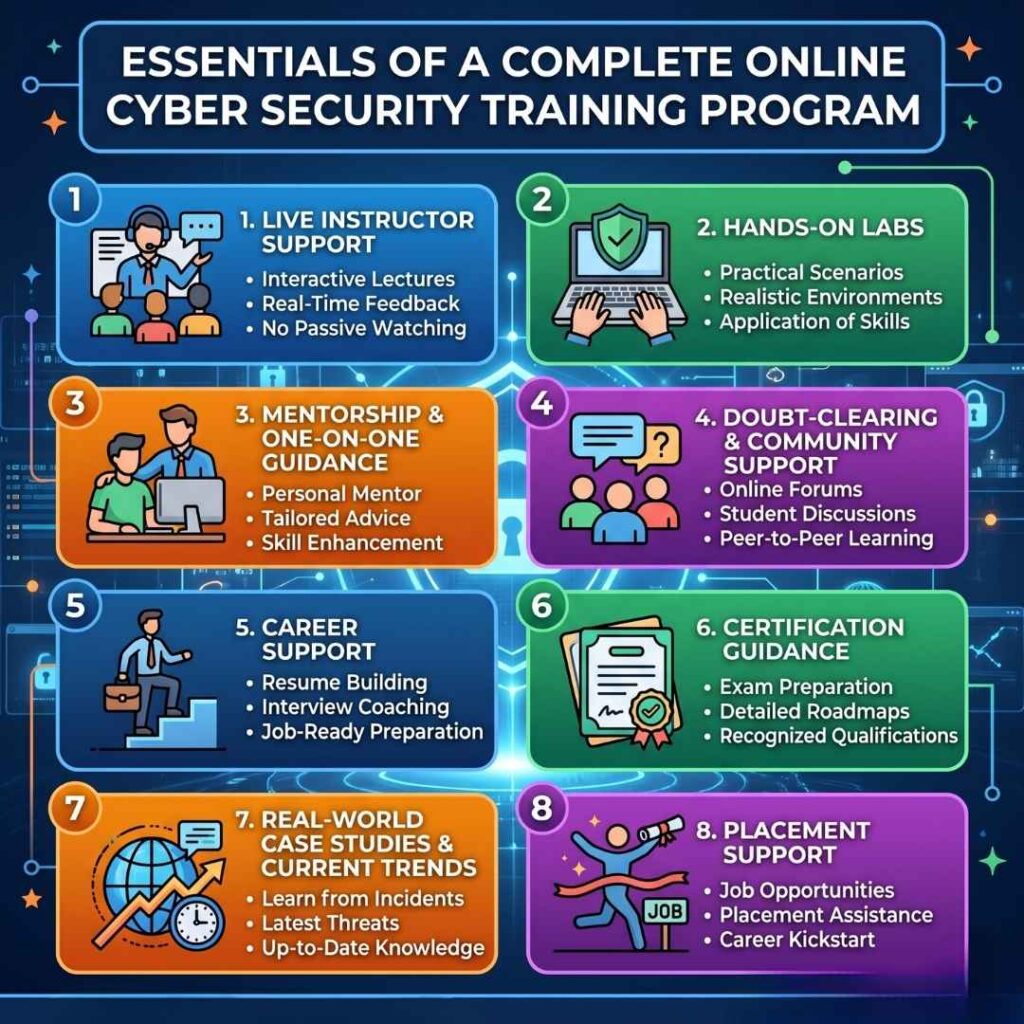
1. Live Instructor Support (Not Just Watching Videos)
One thing that really separates programs is whether you can talk to a real person when you’re stuck. Sounds simple, but it matters a lot.
The better platforms run live sessions where you can ask questions, get unstuck, and see how someone experienced approaches a problem. And that’s key because tools like SIEM or threat detection systems aren’t always intuitive.
Watching a recording is one thing. Hearing someone explain why an alert matters that’s different.
And honestly, this is usually where people either stay engaged… or slowly lose interest.
2. Hands-On Labs That Actually Feel Useful
online Cyber security training has shifted a lot. It’s not just theory anymore companies expect you to handle real scenarios.
So good cyber security training and placement programs focus heavily on labs. Not the boring kind, but ones where you’re actually doing things like:
- Investigating simulated cyber attacks
- Running vulnerability scans
- Responding to incidents in a controlled setup
At first, tools like Splunk or Wireshark can feel overwhelming. I’ve seen people get stuck for days. But once they start using them regularly in guided labs, something clicks. It becomes less intimidating.
That confidence tends to show up later especially during interviews.
3. Mentorship & One-on-One Guidance in Online Cyber Security Training
This part often gets overlooked, but it’s huge.
Having someone you can reach out to when you’re stuck even for small doubts makes the whole process less overwhelming. Good programs usually include:
- Resume reviews tailored to cybersecurity roles
- Interview prep sessions
- Advice based on your background and goals
For someone coming from a non-IT field, this kind of guidance can be the difference between feeling lost… and having a clear path forward.
4. Doubt-Clearing & Community Support
A lot of real learning happens outside the main sessions. That’s just how it works.
Strong programs build communities Slack groups, Discord channels, discussion forums where people share ideas, ask questions, and sometimes just vent when things get confusing.
And interestingly, many learners say they pick up just as much from peers as they do from instructors. You’ll see people discussing interview questions, sharing lab approaches, even talking about recent cyber incidents like those ransomware attacks that hit healthcare systems not too long ago.
It keeps things grounded in reality.
5. Career Support (Where Things Get Serious)
This is where online cyber security training and job placement really comes into play.
The better programs don’t just stop at teaching. They help you figure out how to actually get hired:
- Mock interviews based on real scenarios
- Resume tweaks for ATS systems
- LinkedIn profile optimization
- Sometimes even referrals
Some programs go a step further and simulate hiring processes. It can feel a bit intense at first but it prepares you well.
I’ve personally seen candidates with average technical skills do well simply because they were prepared and confident in interviews.
6. Certification Guidance (Without the Guesswork)
Certifications still matter but choosing the right one can be confusing.
During online cyber security training, you’ll usually get guidance on options like:
- CompTIA Security+
- CEH
- CISSP (for more experienced learners)
But good trainers don’t just say “go study this.” They explain what fits your level, how to approach exams, and what actually matters to recruiters.
That alone can save a lot of time and effort.
7. Real-World Case Studies & Current Trends
online Cyber security training doesn’t sit still. What worked a couple of years ago might already feel outdated.
That’s why strong programs bring in real-world context:
- Case studies of recent attacks
- Discussions around zero-day vulnerabilities
- Trends like AI-driven threats
For example, AI-generated phishing has been getting a lot of attention recently. Some training programs have already started including modules around detecting those. That kind of update matters.
8. Placement Support (The Part Everyone Cares About)
Let’s be real, most people join with the goal of getting a job.
That’s why online cyber security training and placement programs emphasize:
- Job referrals
- Company connections
- Internship opportunities
- Ongoing placement support
Some even stick with you until you land your first role, which honestly makes a big difference.
From what I’ve seen, this continued support often separates those who move forward from those who stall after finishing the course.
Final Thoughts
So, what kind of support is actually available during online cyber security training?
In a good program, you’re not just learning, you’re being guided through the whole journey. Live sessions, labs, mentorship, career prep… it’s all there, if you choose wisely.
That said, none of it replaces effort. You still have to show up, practice, and stay consistent.
Even the best online cyber security training with job placement won’t guarantee a job but it definitely stacks the odds in your favor.
And honestly? That mix of structured support and steady effort that’s what seems to be working for people breaking into online cyber security training right now.