
Introduction: What Does a Business Analyst Really Do All Day?
Imagine starting your workday knowing that your insights will help a business make better decisions, save costs, and improve customer experience. That is the daily reality of a Business Analyst (BA). From working with stakeholders to analyzing data and defining requirements, the role blends communication, logic, and problem-solving.
For learners exploring a business analyst course, business analyst courses, or structured business analyst training, understanding a real working day is critical. This blog walks you through a complete, realistic day in the life of a Business Analyst, supported by industry practices, examples, and practical skills used in real projects.
Whether you are considering business analyst classes, business analysis training, or a Business Analyst Certification Online, this guide will help you see how theory turns into daily work.
Who Is a Business Analyst?
A Business Analyst acts as a bridge between business needs and technical solutions. The BA ensures that problems are clearly defined and that solutions align with business goals.
Key responsibilities include:
- Understanding business processes
- Identifying gaps and problems
- Gathering and documenting requirements
- Supporting solution design and delivery
- Validating outcomes against goals
According to global hiring reports, BA roles continue to grow across IT, finance, healthcare, retail, and digital transformation projects. Many organizations now require formal business analysis training to ensure job readiness.

9:00 AM – Starting the Day With Context and Planning
Most Business Analysts begin their day by reviewing:
- Emails from stakeholders
- Project dashboards
- Pending requirements or open questions
This time helps the BA understand priorities and blockers.
Common Morning Tasks
- Review project status updates
- Check requirement change requests
- Prepare for stakeholder meetings
In agile projects, the day often starts with a short stand-up meeting where the BA shares:
- What was completed
- What is planned next
- Any issues affecting progress
This routine is a core part of what learners practice in business analyst training programs.
10:00 AM – Stakeholder Meetings and Requirement Discussions
Stakeholder interaction is central to a BA’s role. Meetings may involve:
- Business users
- Product owners
- Project managers
- Developers
- Testers
The BA asks clear questions to understand needs.
Example Questions a BA Asks
- What problem are we solving?
- Who will use this feature?
- What does success look like?
- What constraints exist?
This skill is emphasized in structured business analyst classes, where learners practice requirement elicitation using role-play and case studies.
11:30 AM – Requirement Documentation and Analysis
After meetings, the BA documents what was discussed. Clear documentation reduces confusion and rework.
Common Documents Created
- Business Requirement Document (BRD)
- Functional Requirement Document (FRD)
- User stories
- Acceptance criteria
- Process flow diagrams
Example: Simple User Story
As a customer,
I want to track my order status,
So that I know when my delivery will arrive.
This style is widely taught in business analysis training because it improves clarity for development and testing teams.
1:00 PM – Lunch and Informal Collaboration
Many insights come from informal conversations. During breaks, BAs often:
- Clarify doubts with developers
- Discuss edge cases with testers
- Review feedback from users
This collaboration helps avoid misunderstandings later.
2:00 PM – Data Review and Process Analysis
In many projects, a BA works with data to support decisions.
Typical Data Tasks
- Review reports and dashboards
- Analyze trends and patterns
- Validate assumptions with numbers
For example, a BA may analyze:
- Customer drop-off rates
- Order processing time
- Error frequency in workflows
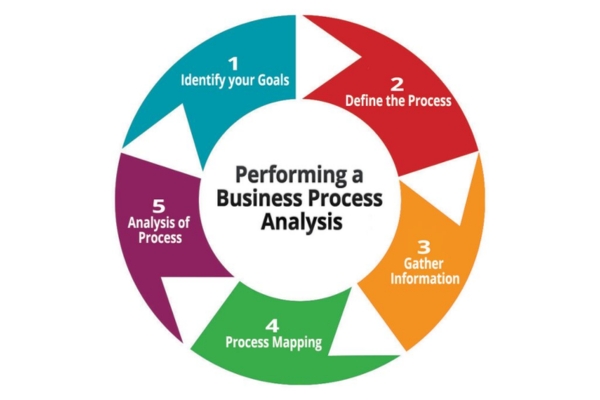
This is why modern business analyst courses include basics of SQL, Excel, and data interpretation.
3:30 PM – Supporting Development and Testing Teams
Once requirements are approved, development begins. The BA supports teams by:
- Clarifying requirements
- Answering functional questions
- Reviewing implemented features
During testing, the BA helps confirm that:
- Features meet business intent
- Acceptance criteria are satisfied
This phase shows why practical exposure is essential in business analyst certification online programs.
4:30 PM – Change Requests and Impact Analysis
Change is common in real projects. A Business Analyst evaluates:
- What is changing
- Why it is changing
- How it affects scope, cost, and timeline
Example
If a client requests a new payment option:
- BA analyzes system impact
- Updates requirements
- Communicates changes to teams
This structured thinking is a core outcome of professional Business analysis training.
5:30 PM – End-of-Day Review and Planning
Before ending the day, a Business Analyst:
- Updates requirement trackers
- Notes pending questions
- Prepares for next-day meetings
This habit ensures continuity and accountability.
Tools a Business Analyst Uses Daily
A typical BA works with several tools:
Documentation Tools
- Microsoft Word
- Confluence
- Google Docs
Analysis and Modeling Tools
- Excel
- Visio
- Lucidchart
Agile and Project Tools
- JIRA
- Azure DevOps
- Trello
Hands-on tool exposure is a major focus of job-oriented business analyst classes.
Skills Applied Throughout the Day
A BA uses multiple skills daily:
Core Skills
- Communication
- Logical thinking
- Problem analysis
- Documentation
Technical Awareness
- Understanding system behavior
- Reading basic queries
- Knowing software workflows
These skills are built step by step in structured business analyst training programs.
Real-World Example: BA in an E-Commerce Project
Scenario: Improving checkout conversion
BA Activities
- Analyze drop-off data
- Interview users and business teams
- Identify friction points
- Define new checkout flow
- Validate solution with testing
Outcome:
- Reduced checkout time
- Improved customer satisfaction
Such case studies are standard in advanced BA courses.
Why Business Analyst Roles Are in High Demand
Industry reports show that organizations value BA because they:
- Reduce project failure rates
- Improve requirement clarity
- Align business and technology
As digital transformation increases, the demand for trained BA’s continues to grow. This drives interest in business analyst certification online and professional training paths.
How Business Analyst Training Prepares You for the Role
A structured BA course prepares learners for daily responsibilities by covering:
- Requirement elicitation techniques
- Documentation standards
- Agile and waterfall models
- Real-world project simulations
At H2KInfosys, training focuses on hands-on practice, real project scenarios, and career readiness aligned with industry expectations.
Key Takeaways From a Day in the Life of a Business Analyst
- The BA role combines people skills and analytical thinking
- Every day involves communication, documentation, and validation
- Real projects demand structured analysis and flexibility
- Formal BA training improves confidence and job performance
- Practical exposure bridges the gap between learning and working
Conclusion: Ready to Start Your Business Analyst Journey?
A day in the life of a BA is dynamic, structured, and impactful.
Enroll in H2KInfosys business analyst training to gain hands-on skills, real project exposure, and career-ready confidence.