In 2026, Business Analysts are expected to evolve beyond traditional reporting responsibilities and function more like strategic advisors within organizations. Employers increasingly value professionals who can interpret data insights and convert them into actionable business decisions.
Online Business Analyst Training in 2026, including programs from H2kinfosys, is designed to help professionals understand business challenges, convert them into technical requirements, and effectively support IT teams during project execution. Modern training programs combine theoretical concepts with practical workflow exposure. Typically, Business Analyst Training covers requirement gathering, stakeholder communication, data analysis, Agile documentation practices, and real-world collaboration techniques used in today’s enterprise environments.
What is Online Business Analyst Training in 2026?
In short, Online Business Analyst Training is about studying how firms really work and how technology helps them accomplish their jobs. It’s not simply about tools or papers. It’s about being able to think like someone who knows both the business and the technical sides of things.
Most business analyst courses in 2026 are based on real-life situations instead of just reading from a textbook. You will usually see:
- Live sessions with a virtual teacher
- Use real-life forms for your practice documents.
- Using business tools in real life exercises
- Project simulations based on real-world delivery cycles
Most Business Analyst Training programs today strive to show how teams work in real life, not just how things seem on paper. A lot of students also get certified as business analysts.
How Does Business Analyst Work in Real-World IT Projects?
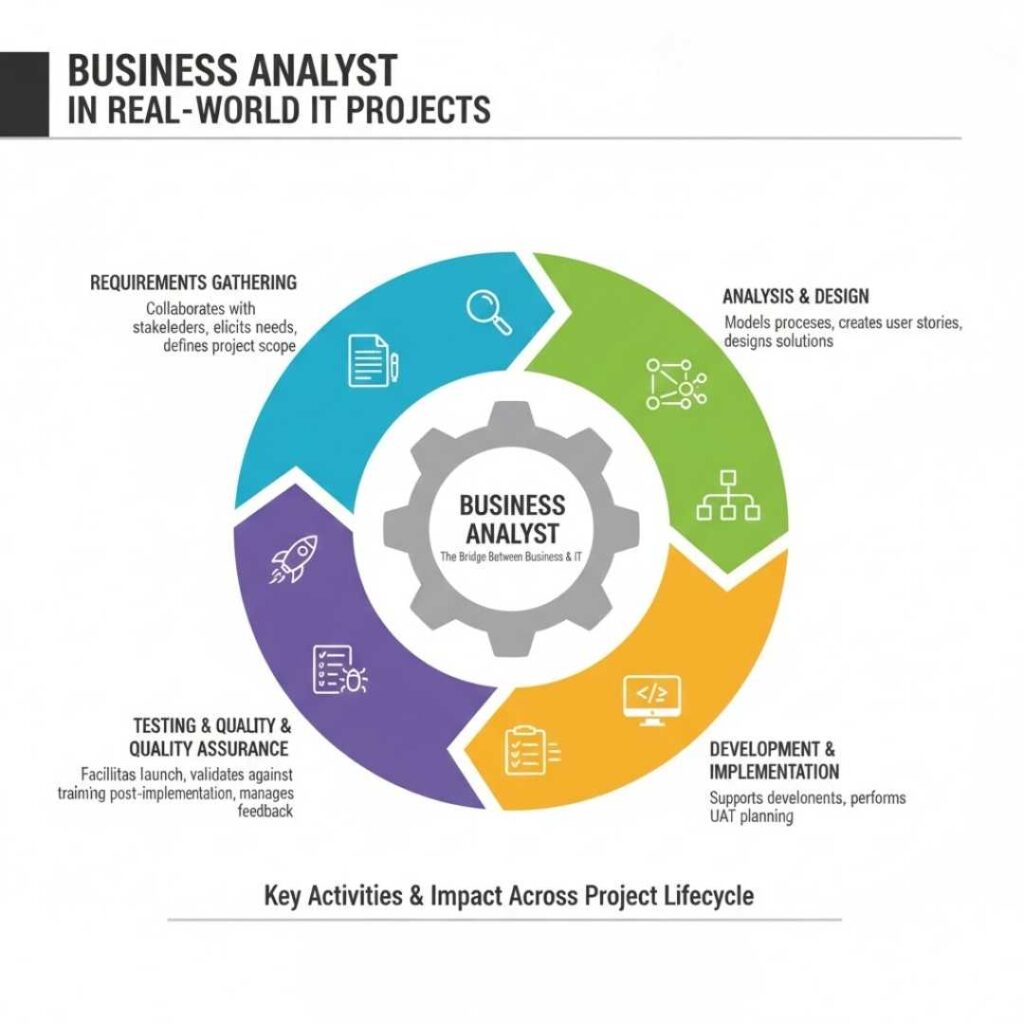
In real companies, business analysts are often the bridge. They sit between business stakeholders and technical teams. Honestly, sometimes they also act like translators when both sides speak totally different “languages.”
A typical requirement flow might look like this:
- Talk to stakeholders and understand what they need
- Convert those needs into structured documentation
- Review and validate requirements with business teams
- Support developers during implementation
- Help QA teams understand expected outcomes
Most Business Analyst Training programs focus heavily on this lifecycle because this is exactly where analysts spend most of their time.
Tools You Will Actually Use:
| Tool | Why It Matters | How Teams Use It |
|---|---|---|
| JIRA | Requirement tracking | Managing Agile sprints |
| Confluence | Documentation | Sharing requirement details |
| SQL | Data checks | Validating reports |
| Excel | Data analysis | Business trend insights |
| Power BI / Tableau | Visualization | Executive dashboards |
Students commonly use these tools in guided exercises and project laboratories during online business analysis courses.
Why is Online Business Analyst Training Important for Working Professionals?
Many companies today run on data, automation, and digital workflows. Because of this, they need professionals who understand both business logic and technology systems.
Business Analyst Training helps people:
- Move into IT from non-technical backgrounds
- Improve how teams communicate requirements
- Reduce project delays caused by misunderstandings
- Support Agile delivery environments
Some learners specifically choose BA training and placement programs because they want structured support when moving into new career paths.
What Skills Do You Actually Need for Business Analyst Courses?
Technical Foundations
- Requirement gathering methods
- Process flow design
- Basic SQL queries
- Data interpretation
- Reporting tools
Professional Skills
- Communication (honestly, this matters a lot)
- Problem-solving mindset
- Documentation clarity
- Stakeholder handling
Most Business Analyst Training programs spend equal time on technical and communication skills because real projects demand both.
If someone is planning to get ba certification, they usually need to show both technical understanding and business thinking.
How Business Analyst Skills Are Used in Enterprise Companies
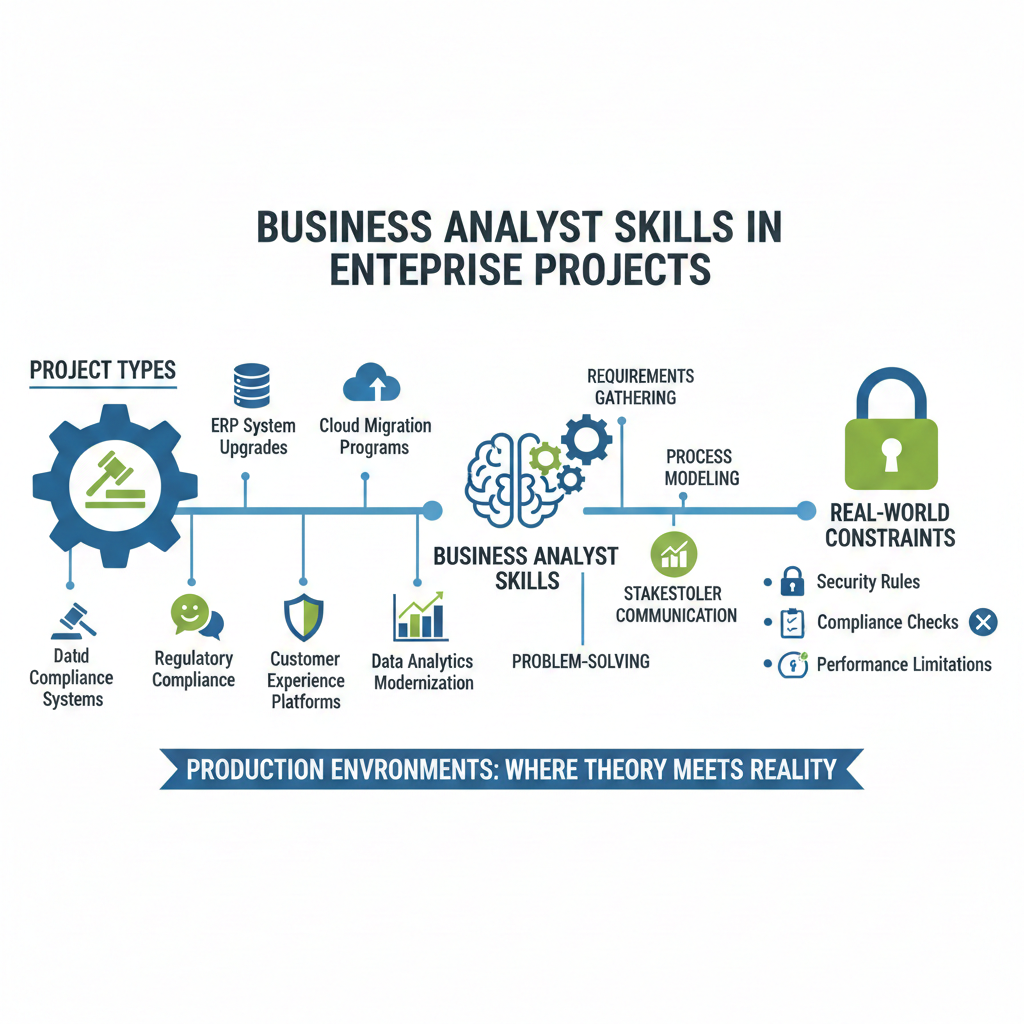
Large organizations use analysts in many types of projects, such as:
- ERP system upgrades
- Cloud migration programs
- Data analytics modernization
- Customer experience platforms
- Regulatory compliance systems
Business Analyst Training often introduces learners to real constraints like security rules, compliance checks, and performance limitations. These are things beginners usually do not think about — but they matter a lot in production environments.
Most business analyst classes now simulate these enterprise challenges through case-based projects.
Which Job Roles Use Business Analysis Daily?
| Role | What They Do Daily | Core Strength |
|---|---|---|
| Business Analyst | Gather and document requirements | Communication |
| Product Owner | Manage product backlog | Business decision making |
| Data Analyst | Analyze reports | Data interpretation |
| Functional Consultant | Configure systems | Domain knowledge |
Business Analyst Training often helps learners transition into adjacent roles too, especially in Agile teams.
How BA Training Typically Progresses
Beginner Phase
- Business basics
- SDLC and Agile introduction
- Basic documentation
Intermediate Phase
- Tool practice
- Requirement workshops
- Data exercises
Advanced Phase
- Full project simulation
- Stakeholder scenario practice
- Release lifecycle understanding
Most modern Business Analyst Training programs now focus on project-based learning. Lecture-only training is slowly fading out.
Many learners combine this with business analyst certification online for added credibility.
Example of a real project: Updating an e-commerce platform
Let’s imagine an online store wants to speed up the checkout process.
Some of the things that business analysts do are:
- Getting together with the marketing and operational teams
- Writing down changes to the checkout process
- Helping QA during testing
- Checking the accuracy of dashboard reports
This is exactly the kind of situation that Business Analyst Training labs and project activities handle.
Career Options After Business Analyst Training
Common career directions include:
- Junior Business Analyst
- Functional Analyst
- Product Analyst
- Entry Data Analyst
- Process Improvement Analyst
Business Analyst Training is flexible because business process understanding is needed across almost every industry.
Many professionals start with BA Training and later move into product, data, or consulting roles.
Where Business Analysts Fit in Project Lifecycle
| Phase | Analyst Contribution |
|---|---|
| Discovery | Understand business needs |
| Planning | Define project scope |
| Development | Clarify requirements |
| Testing | Support UAT |
| Deployment | Prepare stakeholders |
Business Analyst Training teaches how analysts stay involved across the full delivery lifecycle, not just at the beginning.
Real Challenges Business Analysts Face
This part is often underrated.
Common issues include:
- Requirements changing mid-project
- Stakeholders not agreeing with each other
- Missing or messy data
- Communication gaps between teams
Good Business Analyst Training prepares learners to handle these situations calmly and systematically.
Frequently Asked Questions: Online Business Analyst Training in 2026
Is coding required?
Usually no. Basic SQL helps, but full programming is rarely mandatory.
How long does training take?
Typically 3 to 6 months depending on program depth.
Is certification required?
Not mandatory, but ba certification helps build credibility.
Can non-IT professionals learn this?
Yes. Many people transition through business analysis online training programs.
Do courses include projects?
Most modern business analyst courses include real-world project simulations.
key points
- Business analysts link what a business needs with how to make it happen.
- Theory alone isn’t as important as real project experience.
- Standard tools include JIRA, SQL, and BI systems.
- Certification helps you seem good in your career.
- In 2026, online learning is the most popular way to learn how to be a business analyst.
Look into H2K Infosys classes to learn about structured, hands-on ways to learn how to be a business analyst.
If you want to get real-world experience that is in line with how businesses run and help your career flourish, think about H2K Infosys.