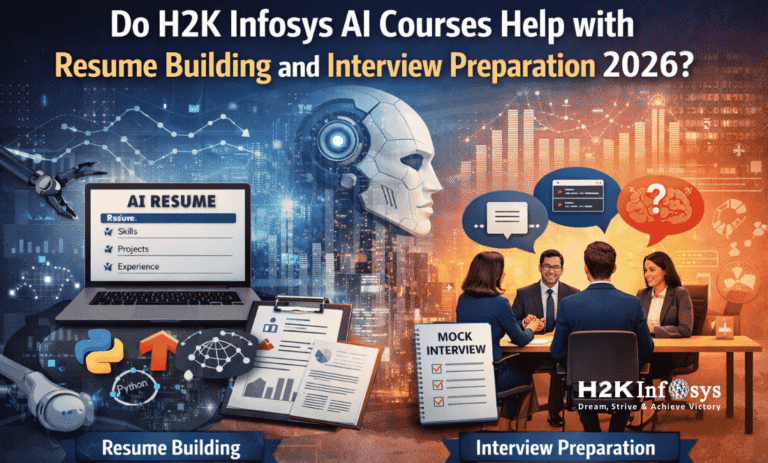
H2K Infosys Artificial Intelligence Online Training help professionals build job-ready resumes and prepare effectively for technical interviews by providing hands-on project experience, exposure to enterprise tools, and structured interview preparation. These programs typically include portfolio development, technical skill validation, resume optimization aligned with AI job roles, and mock interview simulations. As organizations increasingly evaluate candidates based on applied skills rather than theoretical knowledge, structured AI training plays a key role in helping professionals demonstrate practical competence during hiring processes.
What Is Artificial Intelligence Online Training and How Does It Support Career Preparation?
Artificial Intelligence Online Training refers to structured educational programs that teach machine learning, deep learning, data processing, and AI deployment using industry-standard tools and workflows. These programs focus not only on technical knowledge but also on preparing learners for real-world job responsibilities.
In enterprise environments, AI professionals must demonstrate the ability to:
- Work with real datasets
- Build and evaluate machine learning models
- Deploy AI models into production environments
- Collaborate with engineering and business teams
Structured ai training programs address these requirements by combining technical education with career preparation components such as resume building and interview readiness.
Why Is Resume Building Important in AI Career Preparation?
Resume building is a critical component of AI career preparation because hiring managers evaluate candidates based on their ability to demonstrate applied technical experience, tool familiarity, and project implementation.
What Do Employers Look for in AI Resumes?
AI resumes are evaluated based on several key criteria:
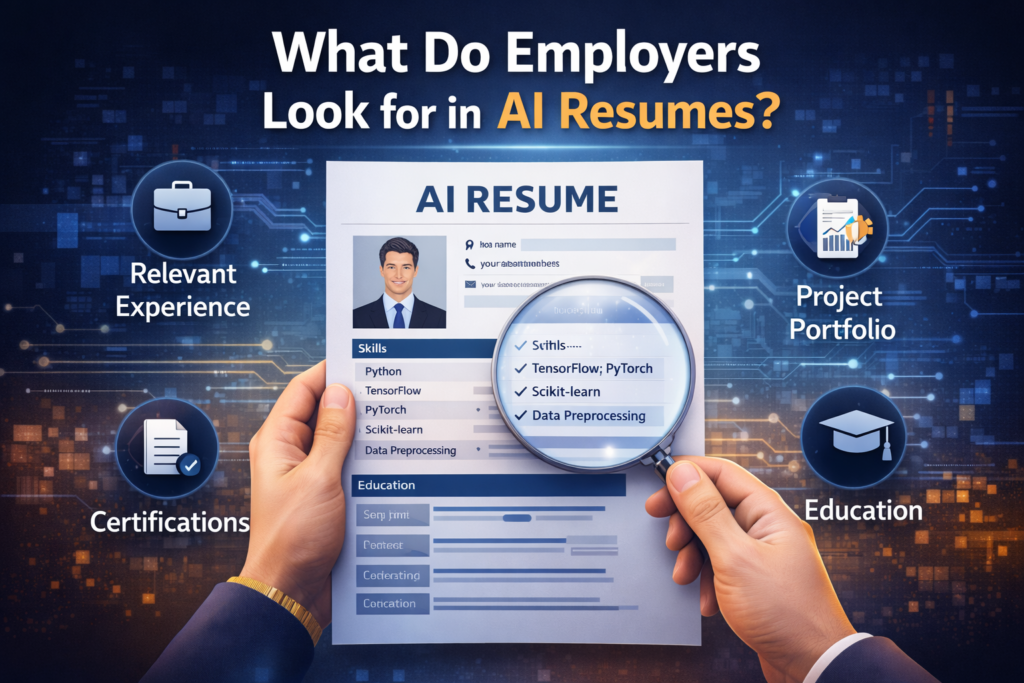
| Resume Component | What Employers Evaluate | Example |
|---|---|---|
| Technical Skills | Programming languages and tools | Python, TensorFlow, PyTorch |
| Project Experience | Real-world implementation ability | Fraud detection model |
| Data Handling | Data preprocessing and analysis | Pandas, NumPy |
| Model Deployment | Understanding of production workflows | REST APIs, Docker |
| Problem-Solving | Ability to address business problems | Customer churn prediction |
Many candidates fail to present their experience effectively because they lack structured guidance on organizing technical projects and skills.
Artificial Intelligence Online Training programs help learners convert project experience into structured resume content aligned with industry expectations.
How Do AI Training Programs Help Build Strong Technical Resumes?
AI training programs help learners develop resumes that reflect applied skills rather than theoretical understanding.
Step 1: Identifying Relevant Technical Skills
Learners typically develop skills in:
- Python programming
- Machine learning algorithms
- Neural networks
- Data preprocessing
- Model evaluation
These skills are mapped directly to job requirements.
Example resume skill section:
Technical Skills:
Languages: Python, SQL
Libraries: TensorFlow, Scikit-learn, Pandas
Tools: Jupyter Notebook, Git, Docker
Concepts: Supervised learning, feature engineering
Step 2: Converting Projects into Resume Experience
Enterprise hiring managers prioritize project experience.
Example project entry:
Machine Learning Project: Customer Churn Prediction
- Processed customer dataset using Python and Pandas
- Applied classification algorithms such as logistic regression
- Evaluated model performance using accuracy and confusion matrix
- Improved prediction accuracy through feature engineering
Structured ai training programs guide learners on presenting projects in this format.
Step 3: Creating Industry-Aligned Resume Structure
A typical AI resume includes:
- Summary
- Technical skills
- Projects
- Tools and technologies
- Education
- Certifications
This structure improves readability for hiring managers and applicant tracking systems (ATS).
How Does Artificial Intelligence Online Training Help with Interview Preparation?
Interview preparation focuses on technical skills validation, problem-solving ability, and communication skills.
AI interviews typically include:
- Technical questions
- Coding challenges
- Machine learning concepts
- Project discussions
AI training programs help learners prepare through structured mock interview workflows.
What Types of Interviews Are Common in AI Hiring?
AI hiring processes typically involve multiple interview stages.
| Interview Stage | Focus Area | Example Questions |
|---|---|---|
| Screening interview | Basic technical knowledge | What is supervised learning? |
| Coding interview | Programming skills | Write Python code to clean data |
| Machine learning interview | Algorithm understanding | Explain overfitting |
| Project discussion | Practical implementation | Describe your ML project |
| Behavioral interview | Communication skills | Explain technical decisions |
Preparation across these stages improves hiring success rates.
How Do Mock Interviews Help AI Learners Prepare for Real Hiring Processes?
Mock interviews simulate real interview environments.
They help learners:
- Practice explaining technical concepts
- Improve confidence
- Identify knowledge gaps
- Improve communication clarity
Example mock interview scenario:
Interviewer question:
Explain how you handled missing data in your machine learning project.
Candidate response preparation:
- Identify missing values
- Apply imputation techniques
- Evaluate impact on model performance
This preparation improves interview performance.
What Real-World AI Projects Help Strengthen Resume and Interview Readiness?
Projects provide evidence of technical competence.
Common beginner-to-intermediate AI projects include:
Project 1: Spam Detection System
Workflow:
- Collect email dataset
- Preprocess text data
- Apply classification algorithm
- Evaluate model performance
Tools used:
- Python
- Scikit-learn
- NLP libraries
Project 2: Image Classification Model
Workflow:
- Load image dataset
- Train neural network
- Evaluate accuracy
- Improve model performance
Tools used:
- TensorFlow
- Keras
Project 3: Recommendation System
Workflow:
- Analyze user behavior data
- Apply recommendation algorithm
- Deploy model
Tools used:
- Python
- Collaborative filtering
Projects such as these strengthen resumes and improve interview readiness.
How Is AI Used in Enterprise Environments?
AI systems are integrated into enterprise workflows.
Common enterprise AI applications include:
| Industry | AI Application |
|---|---|
| Healthcare | Disease prediction |
| Finance | Fraud detection |
| Retail | Recommendation engines |
| Manufacturing | Predictive maintenance |
| Software | Automation and analytics |
Understanding enterprise workflows helps candidates answer interview questions effectively.
What Skills Are Required to Prepare for AI Job Interviews?
AI job interview preparation requires technical and practical skills.
Core Technical Skills
- Python programming
- Data preprocessing
- Machine learning algorithms
- Model evaluation
Tool Skills
- TensorFlow
- PyTorch
- Jupyter Notebook
- Git
Supporting Skills
- Problem solving
- Debugging
- Data analysis
Artificial Intelligence Online Training provides structured practice with these tools.
How Do AI Training Programs Help Build Job-Ready Portfolios?
Portfolios demonstrate applied skills.
Portfolio examples include:
- GitHub repositories
- Project documentation
- Model implementation code
Example GitHub project structure:
Project:
    data/
    notebooks/
    model/
    README.md
Recruiters review portfolios during hiring.
What Common Resume Mistakes Do AI Candidates Make?
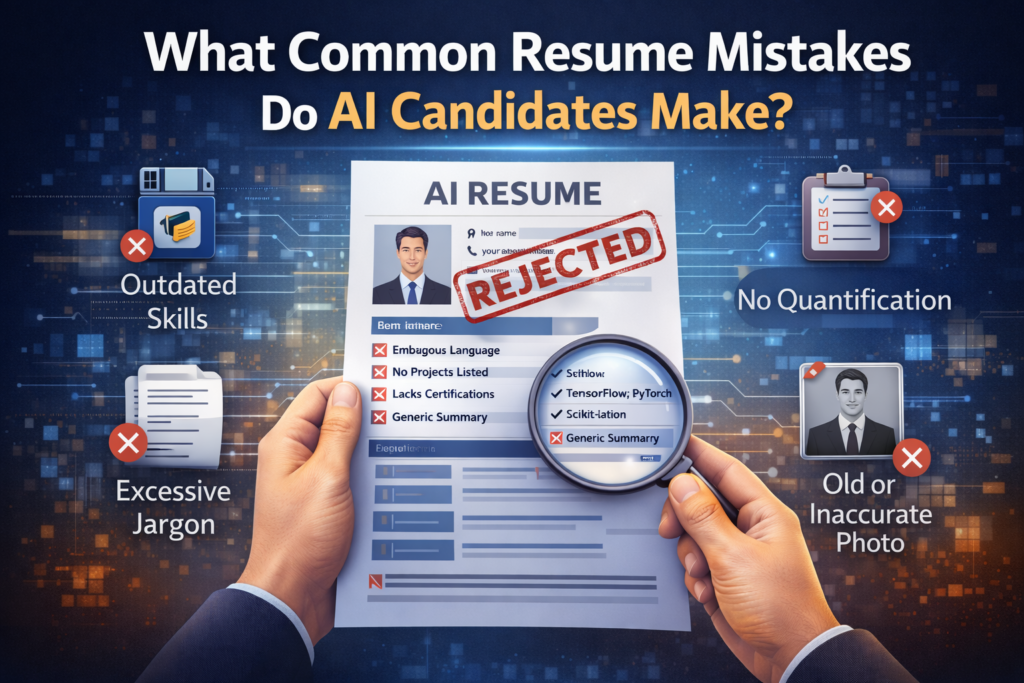
Common mistakes include:
- Listing tools without project experience
- Lack of implementation examples
- Poor project descriptions
- Lack of measurable results
AI Training Programs help learners avoid these mistakes.
What Job Roles Require AI Resume and Interview Preparation?
AI training prepares candidates for multiple roles.
| Job Role | Responsibilities |
|---|---|
| Machine Learning Engineer | Build and deploy ML models |
| AI Engineer | Develop AI applications |
| Data Scientist | Analyze and model data |
| AI Analyst | Apply AI insights |
How Do Enterprise AI Teams Evaluate Candidates During Interviews?
Enterprise AI teams evaluate candidates based on:
Technical competence
- Algorithm knowledge
- Coding ability
Project experience
- Implementation workflows
- Problem solving
Communication ability
- Ability to explain technical concepts clearly
These factors determine hiring decisions.
Learning Path for Resume and Interview Preparation
| Stage | Skills Learned |
|---|---|
| Beginner | Python, data handling |
| Intermediate | Machine learning |
| Advanced | Model deployment |
| Career preparation | Resume and interview readiness |
How Do AI Training Programs Help Professionals Transition into AI Careers?
Professionals from backgrounds such as QA, software development, or data analysis can transition into AI roles through structured learning and practice.
Training programs help learners:
- Develop technical skills
- Build projects
- Prepare resumes
- Practice interviews
This structured preparation improves career readiness.
FAQ: Resume Building and Interview Preparation in AI Training
Do AI training programs help create technical resumes?
Yes. They provide project experience and guidance on presenting technical skills aligned with job requirements.
Do AI training programs include interview preparation?
Yes. They include mock interviews, technical practice, and project discussions.
Are projects important for AI job interviews?
Yes. Interviewers often ask candidates to explain project workflows.
Do recruiters evaluate AI portfolios?
Yes. Recruiters review GitHub repositories and project implementations.
What tools should be included in an AI resume?
Common tools include Python, TensorFlow, PyTorch, and Git.
Key Takeaways
- Artificial Intelligence Online Training helps professionals build industry-aligned resumes
- ai training programs provide hands-on projects that strengthen job readiness
- Resume preparation focuses on presenting technical skills and project experience
- Interview preparation includes mock interviews and technical skill practice
- Enterprise hiring evaluates applied knowledge, not just theoretical understanding
- Portfolio development improves interview performance
Explore H2K Infosys Artificial Intelligence Online Training to build real-world AI projects, strengthen your resume, and prepare for technical interviews.
Structured ai training programs help professionals develop practical skills aligned with enterprise AI career requirements in 2026.