Introduction
Many students from non technical backgrounds think automation testing is only for programmers. That belief stops them from exploring good career options. The truth is simple. TOSCA for Non Technical Students is not only possible, but it is also practical and achievable. At H2K Infosys, many learners from arts, commerce, and management backgrounds have successfully completed TOSCA Training and started careers in automation testing.
This blog will explain everything in clear and simple language. You will understand what TOSCA is, why it is beginner friendly, how the learning process works, and how you can prepare for Tricentis Certification through a structured TOSCA Automation Course.
If you are worried about coding, technical terms, or software knowledge, keep reading. This guide will answer your doubts step by step.
What Is TOSCA?
TOSCA is a test automation tool developed by Tricentis. Companies use it to test software applications automatically instead of testing manually.
TOSCA stands for “Topology and Orchestration Specification for Cloud Applications,” but you do not need to remember that to learn the tool.
TOSCA focuses on:
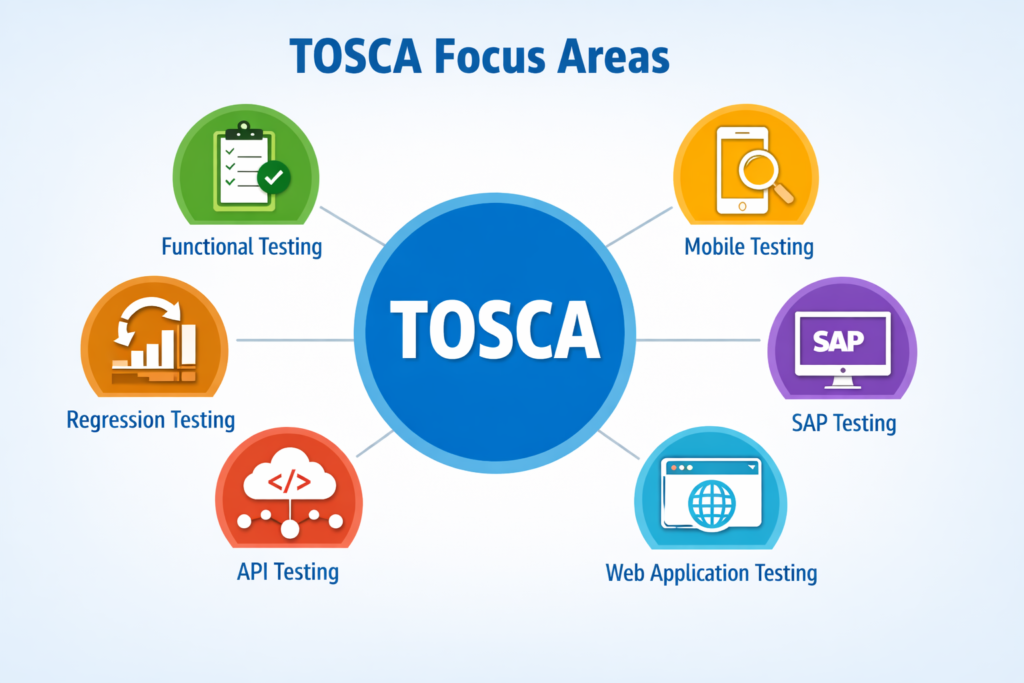
- Functional testing
- Regression testing
- API testing
- Mobile testing
- SAP testing
- Web application testing
The most important feature is this: TOSCA uses a model-based testing approach.
This means:
- You do not need to write long code scripts.
- You create test cases using modules and reusable components.
- You work mostly with drag-and-drop features.
This is why TOSCA for Non Technical Students becomes easier compared to other automation tools.
Why Is TOSCA Beginner Friendly?
Many automation tools require programming knowledge like Java or Python. Tools such as Selenium need coding skills.
TOSCA is different.
1. No Heavy Coding Required
TOSCA reduces the need for programming. You create test steps using predefined modules.
Example:
Instead of writing:
driver.findElement(By.id("username")).sendKeys("Admin");In TOSCA, you:
- Scan the application
- Select the field
- Enter the value in a simple form
This visual method helps TOSCA for Non Technical Students become manageable.
2. Model-Based Testing
TOSCA separates:
- Test logic
- Test data
- Test execution
This structure makes learning organized and clear.
3. Reusable Components
You create modules once and reuse them many times. This reduces confusion and saves time.
Is Automation Testing Growing?
Yes. Automation testing demand is increasing every year.
Industry reports show that:
- The global test automation market continues to grow steadily.
- Many IT companies prefer automation over manual testing.
- Companies want faster software releases.
Automation testing improves:
- Accuracy
- Speed
- Cost efficiency
This demand creates strong job opportunities for trained professionals. That is why many students choose TOSCA Training Online to enter the IT industry.
Can Non Technical Students Really Learn TOSCA?
Yes. Let us break this down clearly.
Skills You Actually Need
You do not need coding knowledge.
You need:
- Basic computer skills
- Logical thinking
- Willingness to learn
- Attention to detail
That is all.
Many students from:
- B.Com
- BBA
- BA
- MBA
- Non-IT backgrounds
have completed TOSCA Automation Course programs successfully.
This proves that TOSCA for Non Technical Students is practical and realistic.
Step-by-Step Learning Path for Beginners
Here is a clear roadmap.
Step 1: Understand Software Testing Basics
Before automation, you must understand:
- What is software testing?
- What is a test case?
- What is a defect?
- What is SDLC?
- What is STLC?
These concepts are simple. Most training programs include them at the start.
Step 2: Learn TOSCA Architecture
You will learn:
- TOSCA Commander
- Workspaces
- Modules
- TestCases
- TestCase Design
- Execution Lists
Each component has a clear function.
Step 3: Scanning Applications
You will:
- Scan web applications
- Identify elements
- Create modules
This process is mostly visual.
Step 4: Create Test Cases
You drag modules into test cases.
You assign:
- Input values
- Expected results
This method helps TOSCA for Non Technical Students feel confident early.
Step 5: Execute and Analyze Results
You run tests.
You check pass or fail status.
You generate reports.
Real-World Example
Imagine a banking website login page.
Manual Testing:
- Enter username
- Enter password
- Click login
- Check result
Automation in TOSCA:
- Scan login page
- Create module for username field
- Create module for password field
- Create module for login button
- Combine them into one test case
- Execute automatically
This process is structured and easy to repeat.
Because of this design, TOSCA for Non Technical Students becomes less stressful.
What Is Tricentis Certification?
Tricentis offers certification exams for TOSCA professionals.
Common certification levels include:
- AS1 (Automation Specialist Level 1)
- AS2 (Advanced Level)
Tricentis Certification proves:
- You understand TOSCA concepts
- You can create test cases
- You can manage automation projects
Employers value certified professionals.
Many students prepare through structured TOSCA Training Online programs.
How Long Does It Take to Learn TOSCA?
For beginners:
- Basics: 2–3 weeks
- Practical training: 4–6 weeks
- Certification preparation: 2–3 weeks
In total, around 2 to 3 months of focused learning is enough.
Consistency matters more than background.
With regular practice, TOSCA for Non Technical Students becomes comfortable within weeks.
Common Fears and Honest Answers
Fear 1: “I do not know coding.”
You do not need heavy coding in TOSCA.
Fear 2: “I am from a commerce background.”
Many commerce students now work in automation testing.
Fear 3: “IT is too technical.”
Automation testing focuses more on logic than coding.
These facts show why TOSCA for Non Technical Students is achievable.
Key Features Covered in a TOSCA Automation Course
A complete course usually covers:
- Introduction to automation
- TOSCA installation
- Module creation
- Test case design
- Test data management
- Execution lists
- Reporting
- Integration basics
Good programs also include:
- Real-time projects
- Mock interviews
- Resume guidance
Structured TOSCA Training Online helps students learn step by step without confusion.
Hands-On Practice Structure
Practical learning is important.
Example Practice Flow:
- Scan e-commerce website
- Create modules for product search
- Create test case for add to cart
- Execute regression test
- Analyze report
This practical style supports TOSCA for Non Technical Students by building confidence.
Career Opportunities After Learning TOSCA
After completing training and Tricentis Certification, you can apply for:
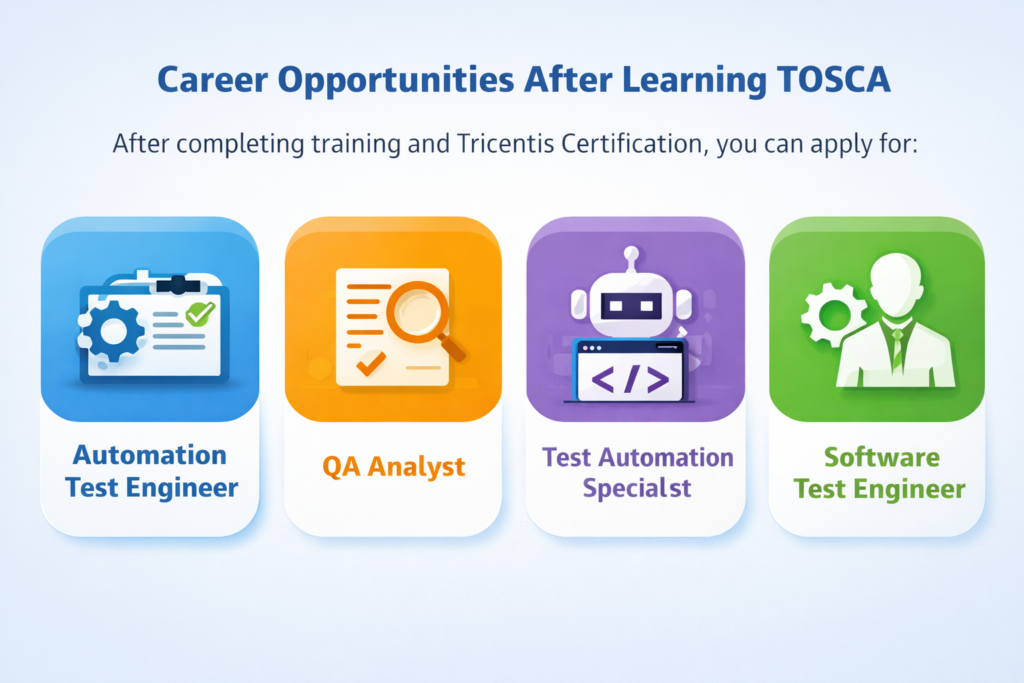
- Automation Test Engineer
- QA Analyst
- Test Automation Specialist
- Software Test Engineer
Entry-level salaries in automation testing are often higher than manual testing roles.
Companies prefer automation knowledge because:
- It saves time
- It reduces human error
- It improves software quality
Long-Term Career Growth
Automation testing leads to:
- Senior Automation Engineer
- QA Lead
- Test Architect
- Automation Consultant
As you gain experience, your salary increases.
Learning TOSCA early gives a competitive advantage.
That is why TOSCA for Non Technical Students can become a strong career decision.
Why Choose TOSCA Training Online?
Online training provides:
- Flexible schedule
- Recorded sessions
- Live instructor support
- Real project exposure
Students can:
- Learn from home
- Practice daily
- Balance job and study
Structured TOSCA Training Online programs simplify learning for beginners.
Study Tips for Non Technical Students
Follow these simple tips:
- Practice daily for 1–2 hours
- Focus on understanding, not memorizing
- Create small projects
- Review execution reports
- Take mock tests
If you follow this plan, TOSCA for Non Technical Students becomes easy and clear.
Mistakes to Avoid
Avoid these common mistakes:
- Skipping basics
- Avoiding hands-on practice
- Ignoring certification preparation
- Not revising modules
Regular practice makes learning smooth.
Case Study Style Example
A student from a B.Com background joined a TOSCA Automation Course.
Initial concerns:
- No coding knowledge
- No IT background
After 3 months:
- Completed practical projects
- Cleared Tricentis Certification
- Secured automation job
This example shows that TOSCA for Non Technical Students works when training is structured.
Comparison with Other Tools
| Tool | Coding Required | Beginner Friendly |
| Selenium | High | Medium |
| UFT | Moderate | Medium |
| TOSCA | Low | High |
This comparison explains why TOSCA for Non Technical Students is often recommended.
What Makes Learning Easy?
Three main reasons:
- Visual interface
- Modular design
- Structured training
When students follow a guided TOSCA Automation Course, confusion reduces.
Confidence grows with execution practice.
Key Takeaways
- TOSCA does not require heavy coding.
- Automation testing demand is growing.
- Tricentis Certification improves job chances.
- Structured TOSCA Training Online supports beginners.
- Non technical students can succeed with practice.
Most importantly, TOSCA for Non Technical Students is realistic, practical, and career-focused.
FAQs
Can non-technical students learn TOSCA without coding experience?
Yes. TOSCA is designed with a model-based, low-code approach that allows users to create automated test cases using visual modules instead of writing complex code. This makes it a suitable automation testing tool for students from non-technical backgrounds.
How long does it take to learn TOSCA for beginners?
Most beginners can learn the fundamentals of TOSCA in 2–3 weeks and become job-ready within 2–3 months through consistent practice, hands-on projects, and structured TOSCA training.
What jobs can I get after completing a TOSCA Automation Course?
After completing a TOSCA Automation Course, you can apply for roles such as Automation Test Engineer, QA Analyst, Software Test Engineer, Test Automation Specialist, and other entry-level automation testing positions.
Is Tricentis Certification worth it for a career in automation testing?
Yes. Tricentis Certification validates your TOSCA skills and demonstrates your ability to design, execute, and manage automated test cases. It can improve your credibility and increase your chances of securing automation testing roles.
Why should beginners choose TOSCA over other automation testing tools?
TOSCA is beginner-friendly because it requires minimal coding, offers a visual interface, supports reusable test components, and simplifies automation through model-based testing. These features make it an excellent choice for non-technical learners starting a career in software testing.
Final Thoughts
If you are from a non technical background and want to enter IT, automation testing is a smart option. The structure of TOSCA makes learning smooth and logical. With the right guidance and consistent practice, you can build a strong automation career.
TOSCA for Non Technical Students is not just possible. It is achievable with the right training and mindset.Start your automation journey today with professional TOSCA Training Online at H2K Infosys.
Enroll now and move one step closer to earning your Tricentis Certification.