
If you’re finishing graduation in 2026 and feeling a bit unsure about where to start, you’re honestly not alone. The smartest move right now is getting into practical, career-focused Business Analyst Training, something that teaches you how real teams actually work. Not just slides, definitions, and theory that sound good in exams but disappear the moment an interview starts.
The industry’s changed quite a bit lately. Companies expect freshers to understand tools, project workflows, communication… even how Agile meetings function day to day. And yeah, that can feel overwhelming at first. But training that includes live projects, real business scenarios, and hands-on practice usually makes the learning curve way less intimidating.
That’s exactly why many graduates are now leaning toward structured programs like H2K Infosys instead of random short tutorials stitched together from YouTube or outdated PDFs.
Why Business Analysis Is Still One of the Strongest Career Choices in 2026
A lot of students assume AI will replace analyst roles. Funny thing is, it’s actually doing the opposite in many companies.
Businesses now have more data, more software systems, and more automation tools than ever before. Someone still has to figure out:
- What problem is the business trying to solve
- Which requirements matter
- How teams should prioritize work
- Whether the final solution actually helps customers
That “someone” is often the business analyst.
In sectors like healthcare, banking, retail tech, logistics, and insurance, business analysts are becoming central to digital transformation projects. Even startups that once skipped BA roles are hiring analysts because failed product launches are expensive now.
A recent trend many training institutes have noticed, including H2K Infosys, is that employers increasingly prefer entry-level candidates who already understand Agile workflows, Jira, SQL basics, and documentation standards before joining.
Not necessarily experts. Just work-ready.
That’s a huge difference.
What Does a Business Analyst Actually Do?
People hear the title and imagine endless Excel sheets. There’s some truth there, sure. But the role is much broader now.
A business analyst typically:
- Talks to stakeholders about business problems
- Documents requirements
- Works with developers and QA teams
- Creates process flows and user stories
- Analyzes reports and trends
- Helps companies improve efficiency or revenue
One graduate I spoke with recently described it perfectly:
“You’re basically the translator between business people and technical teams.”
That’s surprisingly accurate.
And because every industry uses software now, analysts are needed almost everywhere.
Step-by-Step: How to Start Business Analyst Training After Graduation
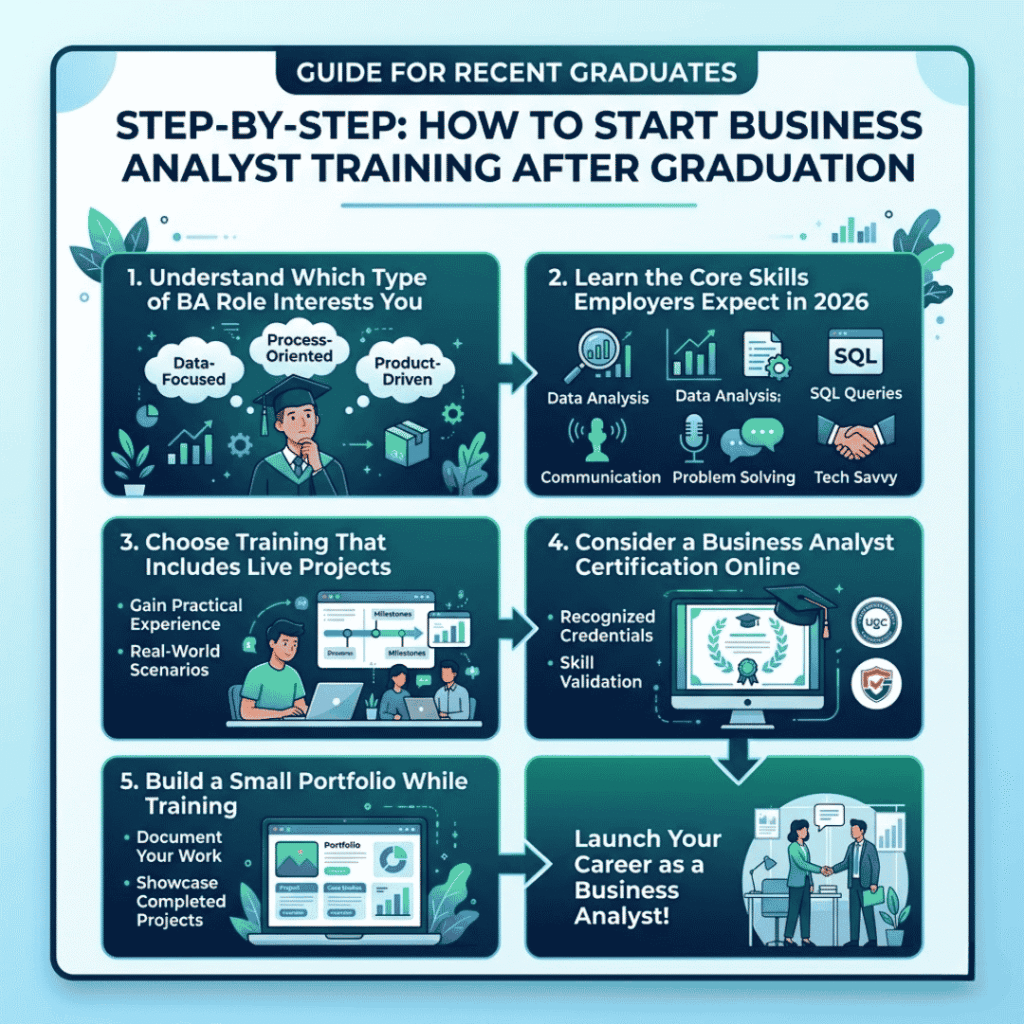
1. Understand Which Type of BA Role Interests You
Before joining Business Analyst Training After Graduation, any business analyst course, spend a little time figuring out where you fit.
Some analysts focus heavily on:
- Data and reporting
- Agile product environments
- Banking and finance systems
- Healthcare workflows
- IT project management
Others work closer to operations or customer experience.
This matters because your training path changes slightly depending on the domain.
For example, healthcare BAs often need HIPAA-related awareness, while fintech companies care more about compliance systems and workflow mapping.
Good training programs explain these differences early instead of throwing everyone into the same generic syllabus.
2. Learn the Core Skills Employers Expect in 2026
The market has changed quite a bit. A plain certification alone doesn’t guarantee interviews anymore.
Today’s employers generally expect freshers to be aware of at least:
- Basics of Agile and Scrum
- Jira or Azure DevOps
- Gathering requirements
- Basic SQL
- Wireframe ideas
- Excel, reporting
- Documentation Methods
- Communication and presentation skills
Some companies also want exposure to:
- Power BI
- Tableau
- Analytics tools powered by AI
- Business workflow prompt engineering
That last one really threw a lot of people off in the 2025 hiring cycles. Analysts who know how to use AI tools productively are getting noticed more quickly.
These modern workflows should be part of a practical Business Analyst Training program and not just textbook BABOK concepts.
3. Choose Training That Includes Live Projects
This is where many graduates make mistakes.
They join cheap recorded courses with no mentorship, no projects, and no interview preparation. Then six months later, they still don’t know how a real BA meeting works.
Live project exposure matters because recruiters often ask:
- “Tell me about a requirement conflict you handled.”
- “How did you document user stories?”
- “What tools did you use?”
Without practical exposure, answering these becomes awkward pretty quickly.
Programs from H2K Infosys have become popular partly because they combine:
- Instructor-led sessions
- Real-time project simulations
- Resume guidance
- Mock interviews
- Placement-oriented preparation
And honestly, that structure helps fresh graduates stay consistent. Self-learning sounds great until motivation disappears after two weeks.
4. Consider a Business Analyst Certification Online
A good Business Analyst Training certification online can absolutely help if it’s recognized and skills-focused.
But here’s the thing, people don’t always say openly:
Certification matters most when paired with practical ability.
Recruiters often value:
- Portfolio projects
- Internship experience
- Mock case studies
- Communication confidence
…sometimes even more than the certificate itself.
That said, certifications still help you:
- Build credibility as a fresher.
- Pass initial HR screening.
- Learn structured BA methodologies.
- Strengthen LinkedIn profiles
The better online programs now include:
- Real-world case studies
- Agile simulations
- Interactive assignments
- Industry mentorship
That’s far more useful than passive video learning.
5. Build a Small Portfolio While Training
This step gets overlooked constantly.
Even simple portfolio projects can make you stand out.
For example:
- Create sample BRD documentation.
- Build a requirement traceability matrix.
- Make a mock Jira sprint board.
- Analyze a business case study.
- Create workflow diagrams using Lucidchart.
You don’t need Fortune 500 experience as a fresher. Recruiters mostly want proof that you understand the process.
One candidate I saw recently landed interviews mainly because they uploaded structured BA case studies on LinkedIn. Not fancy. Just clear and practical.
That kind of initiative works surprisingly well.
Why Many Graduates Prefer H2K Infosys for Business Analyst Training
There are thousands of online Business Analyst Training courses now, so students naturally get overwhelmed.
What makes H2K Infosys stand out for many graduates is that the training feels aligned with actual hiring expectations instead of academic theory alone.
Some practical benefits students often mention:
- Instructor support (live)
- Training on live projects
- Flexible, online schedules
- Resume optimisation
- Practice interview
- Updates to the curriculum relevant to the industry
Their programs are ideal for recent grads trying to bridge the gap between what they learned in college and what they’re expected to know in the corporate world.
And that gap is real. Employers rarely train from scratch anymore.
Common Mistakes Fresh Graduates Should Avoid
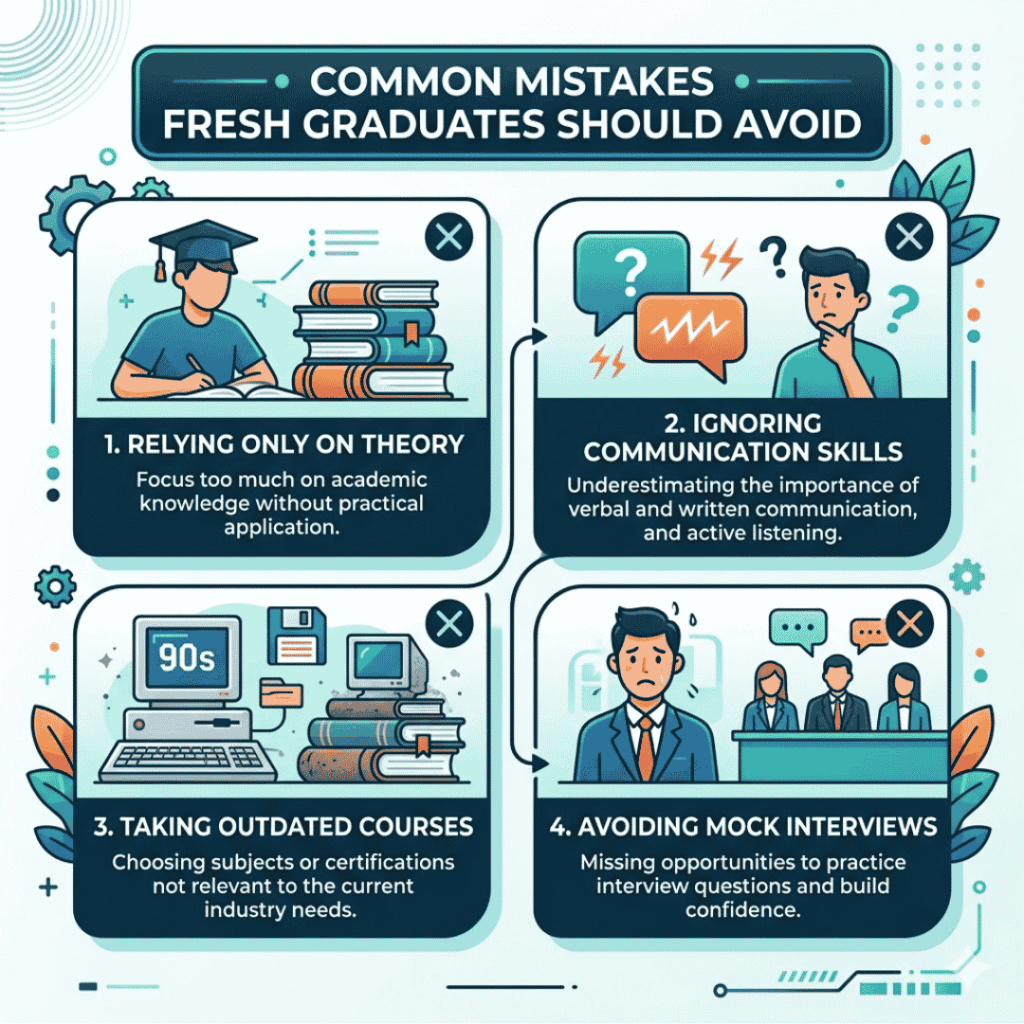
Relying Only on Theory
Knowing definitions without understanding workflows won’t help much during interviews.
Ignoring Communication Skills
Business analysts spend a huge amount of time talking to teams, clients, and managers. Communication matters almost as much as technical skills.
Taking Outdated Courses
Some courses still teach workflows that companies stopped using years ago. Always check whether the curriculum includes Agile, Jira, AI tools, and modern documentation practices.
Avoiding Mock Interviews
Interview preparation is a separate skill. Practice makes a massive difference.
Freshers Salary 2026: What to Expect
Starting salaries can vary depending on location, domain, and technical exposure.
In the U.S., junior business analysts often start with:
$65,000 to $90,000/year
In India, freshers with good project exposure and certification can look for:
Initially 4-8 LPA, higher in product companies
Candidates with SQL, Power BI, and Agile who really have project experience tend to do better in the hiring rounds.
Final Words
If you enjoy problem-solving, communication, and working with technology but don’t want to be a hardcore programmer, business analysis is a smart move after graduating in 2026.
The trick is to choose the right Business Analyst Training After Graduation from the get-go, something practical, industry-focused, and in alignment with what hiring managers are looking for right now.
A good Business Analyst Training with project experience, interview preparation, and a good business analyst certification online will go a long way to get you interviews faster.
If you want a structured path with live mentoring and job-oriented learning, H2K Infosys is one of the training providers that many graduates are seriously considering in 2026.