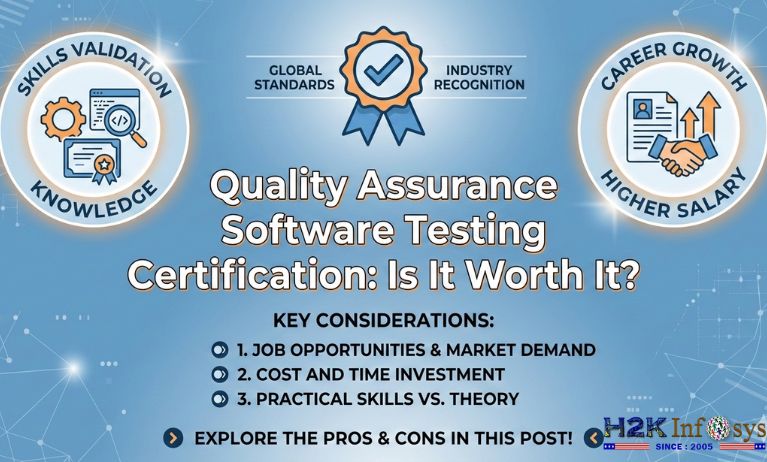
In the ever-evolving tech landscape, quality assurance (QA) is a crucial component of software development. QA ensures that applications and systems perform as intended, are free from defects, and offer an exceptional user experience. As demand for flawless software grows, so does the need for skilled QA professionals. Among the ways to demonstrate one’s competence in this field is through certification in software testing. But the question remains: Is pursuing a Quality Assurance Software Testing Certification worth it?
In this blog post, we will explore the value of QA certifications, their potential impact on career prospects, and whether they are worth the time, effort, and cost involved.
Understanding Quality Assurance Software Testing
Quality Assurance (QA) in software testing is an essential practice aimed at ensuring the quality of software by preventing defects, identifying issues, and improving the overall user experience. The process includes activities such as test planning, test execution, defect management, and test reporting. QA is integral to the software development lifecycle, especially in agile environments where continuous testing is essential for meeting user expectations and maintaining high-quality releases.
QA professionals may use various techniques and tools, ranging from manual testing to automated testing, ensuring that software functions as expected and adheres to quality standards. With this in mind, QA certifications can help professionals stay up-to-date on best practices, enhance their skills, and increase their employability.
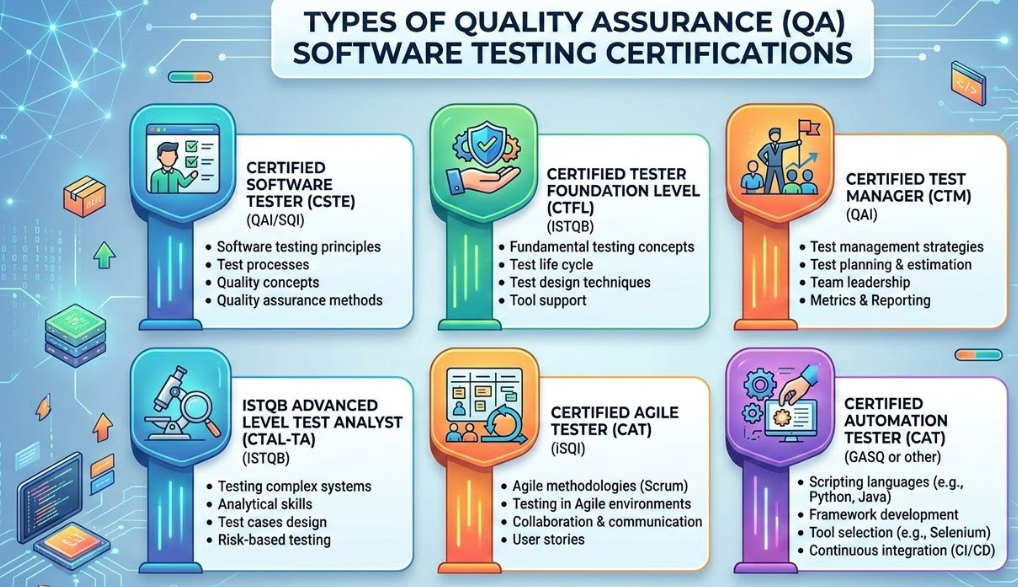
Types of Quality Assurance Software Testing Certifications
There are various QA software testing certifications available, each catering to different levels of expertise, skills, and testing methodologies. Below are some of the most recognized certifications in the industry:
Certified Software Tester (CSTE):
The CSTE certification, offered by the Quality Assurance Institute (QAI), is one of the most popular certifications for QA professionals. This certification focuses on the fundamentals of software testing, including testing principles, methodologies, and best practices. It is ideal for professionals with a few years of experience who want to demonstrate their proficiency in software testing.
Certified Tester Foundation Level (CTFL):
The CTFL certification, offered by the International Software Testing Qualifications Board (ISTQB), is widely recognized as an entry-level certification for software testers. The exam covers a broad range of topics such as testing principles, test management, and test tools. This certification is ideal for beginners in the software testing industry.
Certified Test Manager (CTM):
The CTM certification is aimed at professionals in leadership roles or those aspiring to manage QA teams. This certification focuses on test management, risk-based testing, test planning, and project management. It is best suited for experienced testers who want to enhance their managerial skills.
ISTQB Advanced Level Test Analyst (CTAL-TA):
The ISTQB Advanced Level Test Analyst certification targets professionals who already have experience in software testing and want to expand their knowledge in advanced testing techniques. It covers test design, risk analysis, and defect management, among other topics.
Certified Agile Tester (CAT):
With the rise of Agile methodologies in software development, the Certified Agile Tester certification focuses on testing in Agile environments. This certification covers Agile principles, methods, and practices, including test automation, test-driven development (TDD), and continuous integration.
Certified Automation Tester (CAT):
As automation testing becomes increasingly critical, the Certified Automation Tester certification equips professionals with the skills necessary to work with test automation tools and frameworks. The exam tests proficiency in scripting, automation frameworks, and automated testing strategies.
Why Pursue a QA Certification?
Now that we’ve covered the types of QA certifications, let’s explore why pursuing a certification in software testing may be beneficial:
1. Enhanced Career Opportunities
One of the most compelling reasons to pursue QA certification is the potential to enhance your career prospects. Many organizations prioritize candidates with certifications, as they indicate a certain level of expertise and a commitment to professional development. For individuals looking to advance in their careers or transition into a QA role, a certification can act as a powerful differentiator.
Moreover, certifications can help individuals enter the job market more quickly, especially for those new to the field. For example, a certification such as ISTQB’s CTFL can serve as a credible indicator of a beginner’s understanding of software testing, opening doors to entry-level positions.
2. Higher Earning Potential
QA professionals with certifications tend to earn higher salaries compared to their non-certified counterparts. According to a report from the International Software Testing Qualifications Board (ISTQB), certified testers are typically compensated more than non-certified testers, with an average salary increase of 10-20%. This salary bump is often attributed to the specialized knowledge and skills certified testers bring to the table, making them more valuable to employers.
3. Increased Knowledge and Skill Development
Pursuing a certification often involves in-depth study of testing principles, techniques, and tools. Whether it’s learning new testing methodologies, exploring advanced test management strategies, or mastering automation tools, a certification helps expand your knowledge base. This not only improves your technical skills but also enhances your ability to make informed decisions in real-world testing scenarios.
Furthermore, staying current with certifications can keep you ahead of industry trends and emerging technologies. This continuous learning process ensures that certified professionals can adapt to changes and contribute effectively to their organizations.
4. Credibility and Industry Recognition
In the highly competitive world of software testing, having a recognized certification can help build credibility and establish trust with employers, colleagues, and clients. Certifications such as ISTQB’s CTFL or CSTE are internationally recognized, and their value is acknowledged by organizations worldwide. Earning such credentials can validate your expertise and demonstrate that you have met rigorous standards in the field of QA.
5. Networking Opportunities
Certification programs often provide access to communities of professionals, forums, and events. By becoming certified, you gain membership in exclusive networks where you can connect with industry experts, learn from peers, and expand your professional circle. Networking through certification programs can open doors to job opportunities, collaborations, and mentorship.
Are QA Certifications Worth It?
While the benefits of QA certifications are undeniable, the question remains: Are they worth it? Ultimately, the value of a certification depends on your career goals, current skill set, and personal aspirations. Let’s break it down further:
1. For Entry-Level Testers:
If you are just starting in the software testing field, obtaining a certification such as ISTQB’s CTFL or a similar entry-level certification can be a great way to establish your credibility. Employers may prefer candidates with certifications, as they demonstrate that you possess foundational knowledge and a commitment to learning.
For beginners, QA certifications serve as an excellent starting point to build your skillset and gain recognition. However, hands-on experience in software testing remains essential for career growth, so it’s important to complement certifications with practical experience.
2. For Experienced Testers:
If you already have significant experience in software testing, certifications like ISTQB’s Advanced Level or Certified Test Manager (CTM) can help you gain deeper knowledge and move into leadership roles. These certifications provide valuable insights into advanced testing techniques, risk management, and test planning, which are highly sought after by employers.
For seasoned professionals, certifications can also help demonstrate your commitment to continuous improvement and industry standards, positioning you for higher-paying and more senior positions.
3. For Those Seeking Specialization:
QA certifications also offer specialized training in areas like automation testing, Agile testing, and test management. If you wish to specialize in a specific area, certifications in those fields can help you build expertise and gain a competitive edge. For example, a Certified Automation Tester (CAT) certification would be an excellent choice for testers interested in automation, while a Certified Agile Tester (CAT) certification would be ideal for professionals working in Agile teams.
Conclusion
In conclusion, Quality Assurance Software Testing Certification can be a valuable investment for anyone looking to enhance their career in software testing. While certification may not be mandatory in all cases, it can certainly increase employability, earning potential, and knowledge in the field. Whether you are just starting your career or looking to advance, QA certifications offer a structured path to success.
However, it is essential to balance certifications with hands-on experience and continuous learning. QA professionals should also stay up-to-date with industry trends and technological advancements to maintain their edge. Ultimately, the decision to pursue a QA certification depends on your career aspirations and the value you place on formal recognition of your skills.
For anyone seeking a well-established, credible certification program, H2K Infosys offers a range of courses that can help you prepare for exams like ISTQB’s CTFL, CSTE, and others. These programs equip professionals with the knowledge and skills needed to excel in the competitive world of software testing. If you’re serious about advancing your career in QA, pursuing a certification may very well be worth it.