Introduction
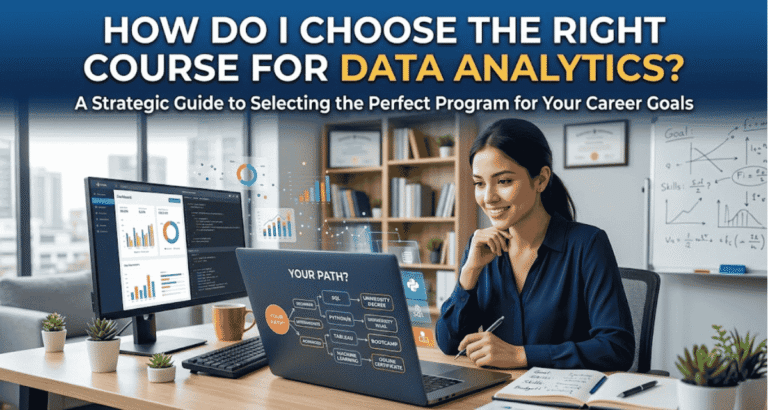
Choosing a course for data analytics today feels a bit overwhelming.
There are so many options. Bootcamps, self-paced videos, university programs, short certifications… It’s easy to get caught up in the question, “Which one is the best?”
But after seeing a lot of people go through these programs (and making a few wrong choices myself early on), I’ve realized something:
There isn’t one perfect course. There’s only the right course for you right now.
Start With a Simple Question: Where Are You Starting From?
Before even looking at course for data analytics, pause for a second.
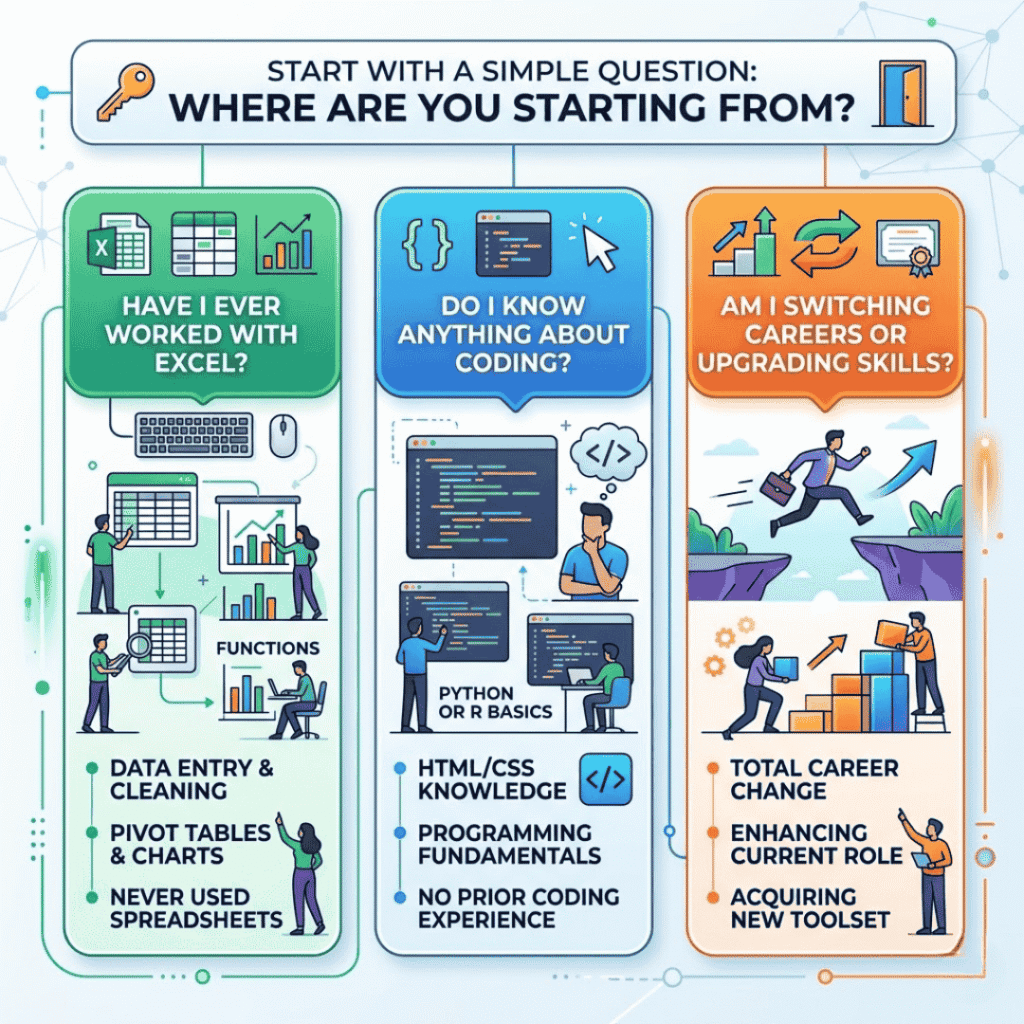
Ask yourself:
- Have I ever worked with Excel?
- Do I know anything about coding?
- Am I switching careers or just upgrading skills?
course for data analytics are designed differently from those for intermediates.
I’ve seen beginners jump into advanced Python-heavy programs and get completely stuck within a week. Not because they weren’t capable, but because the starting point was wrong.
What a Good Course Actually Looks Like (Beyond Marketing)
Every course promises “job-ready skills.” But here’s what actually matters.
1. It Teaches Tools You’ll Really Use
A solid course for data analytics should include the following:
- Excel (yes, still very relevant)
- SQL (non-negotiable at this point)
- At least one visualization tool (Power BI or Tableau)
- Basics of Python (optional but useful in 2026)
If a course skips SQL, that’s a red flag. Seriously.
2. It Includes Real Projects (Not Just Guided Demos)
This area is where many course for data analytics fall short.
Some only show you how to do things… without letting you try on your own.
Look for:
- Open-ended projects
- Case studies based on real scenarios.
- Assignments where you make decisions
Because in actual jobs, no one gives you step-by-step instructions.
3. It Helps You Build a Portfolio
This is huge right now.
In 2026, hiring managers often check the following:
- GitHub profiles
- Project portfolios
- Even LinkedIn posts
A certificate alone? Not enough anymore.
The best course for data analytics guides you toward building something you can show.
Don’t Ignore This: How the Course Teaches Matters
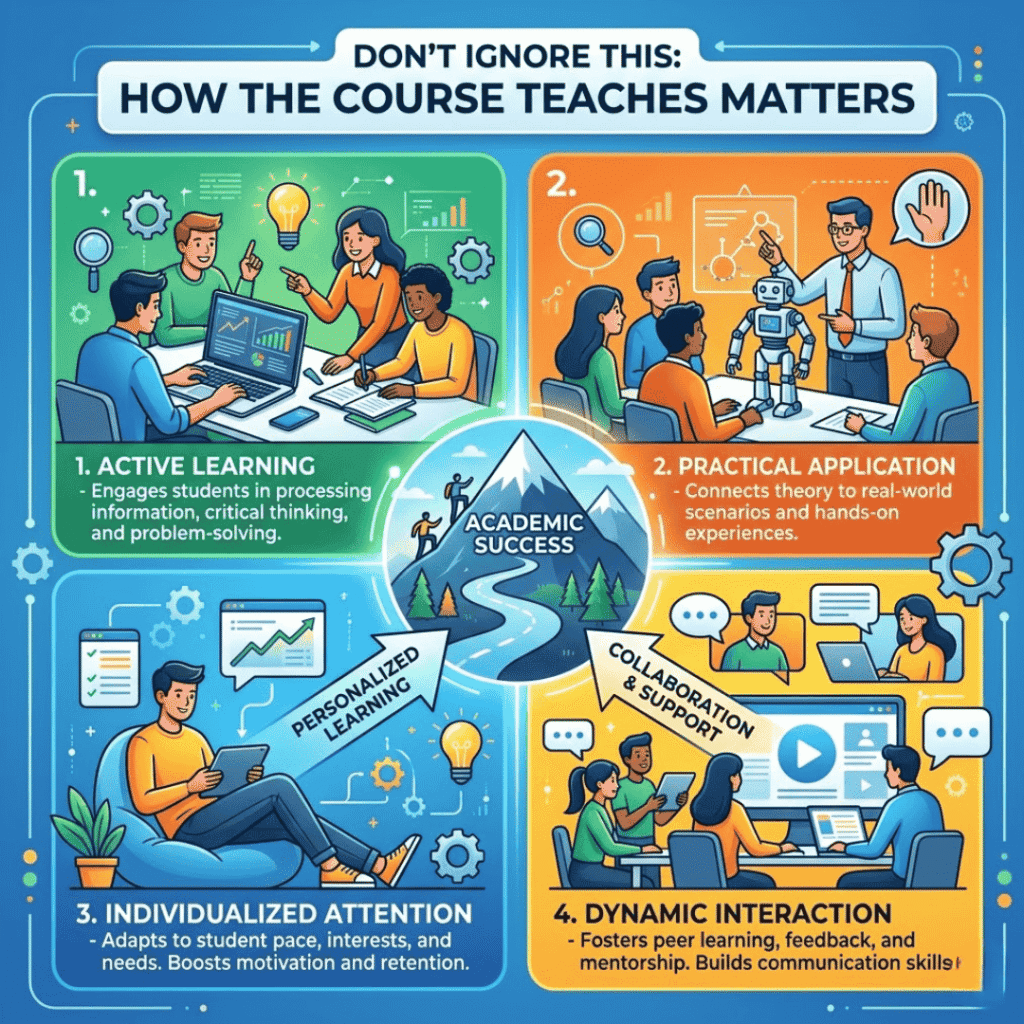
Two courses can cover the same topics but feel entirely different.
Some are:
- Dry, lecture-heavy, and hard to follow
Others feel like
- Someone walking you through real problems step by step.
Personally, I’ve always learned faster from courses that felt a bit… human. Where instructors explain why something matters, not just how to do it.
If possible, watch a preview before enrolling. You’ll get a feel immediately.
Placement Support: Be a Little Skeptical
Many data analytics certification courses advertise placement assistance.
Here’s what that usually means:
Resume templates
Interview tips
Maybe access to job boards
Well, this is helpful, but it is not quite the same as guaranteed placement.
Programs that are more effective tend to offer:
- Mock interviews
- Mentor feedback
- Networking opportunities
Still, your effort plays a bigger role than the course for data analytics itself.
Budget vs. Value
Expensive doesn’t always mean better.
I’ve seen:
- People land jobs after affordable data analytics courses for beginners.
- Easy to struggle after paying so much for premium bootcamps
What matters more:
- Are you practicing regularly?
- Are you building projects beyond the course?
That’s where the real value comes from.
A Practical Way to Choose
If you’re confused, which is completely normal, try this simple approach:
Step 1: Pick a Beginner-Friendly Course
Start with something structured and not too overwhelming.
Step 2: Complete It Fully
Not halfway. Not, “I’ll come back later.” Finish it.
Step 3: Build 2–3 Personal Projects
This is where learning becomes real.
Step 4: Then Decide Your Next Step
Advanced course? Specialization? Job applications?
Most people try to skip straight to step 4. That’s where the problems arise.
What’s Changed Recently
The data analytics space has evolved quite a bit.
Now:
- AI tools help with coding and analysis.
- Employers expect faster problem-solving
- Practical skills matter more than theoretical knowledge.
So a modern course for data analytics should reflect less theory and more application.
A Small Personal Thought
If I had to start again, I wouldn’t spend weeks comparing courses.
I’d pick a decent one, start learning, and adjust along the way.
Because honestly, clarity doesn’t come from research; it comes from doing the work.
Final Thought
Choosing the right course isn’t about finding something perfect.
It’s about finding something:
- you can actually complete
- that teaches real skills
- and pushes you to build something of your own
That’s what makes the difference.