Choosing the right certification can shape your entire career path. Many professionals feel confused when they compare Business Analyst Certification vs PMP because both paths offer strong career growth, good salaries, and global demand. The real question is simple. Which one fits your goals, your skills, and your future plans?
This guide gives you a clear answer. It explains each option in detail. It shows real use cases. It helps you decide with confidence.
Introduction to Career Paths
Before you decide between Business Analyst Certification vs PMP, you need to understand what each role does.
A business analyst focuses on business needs. They gather requirements. They work with stakeholders. They help teams build the right solution.
A project manager focuses on execution. They plan projects. They manage budgets. They ensure delivery on time.
Both roles are important. Both roles exist in almost every industry.
What Is a Business Analyst Certification?
A business analyst certification proves that you can analyze business needs and suggest solutions. It validates your ability to bridge the gap between business and technology.
Key Skills You Learn
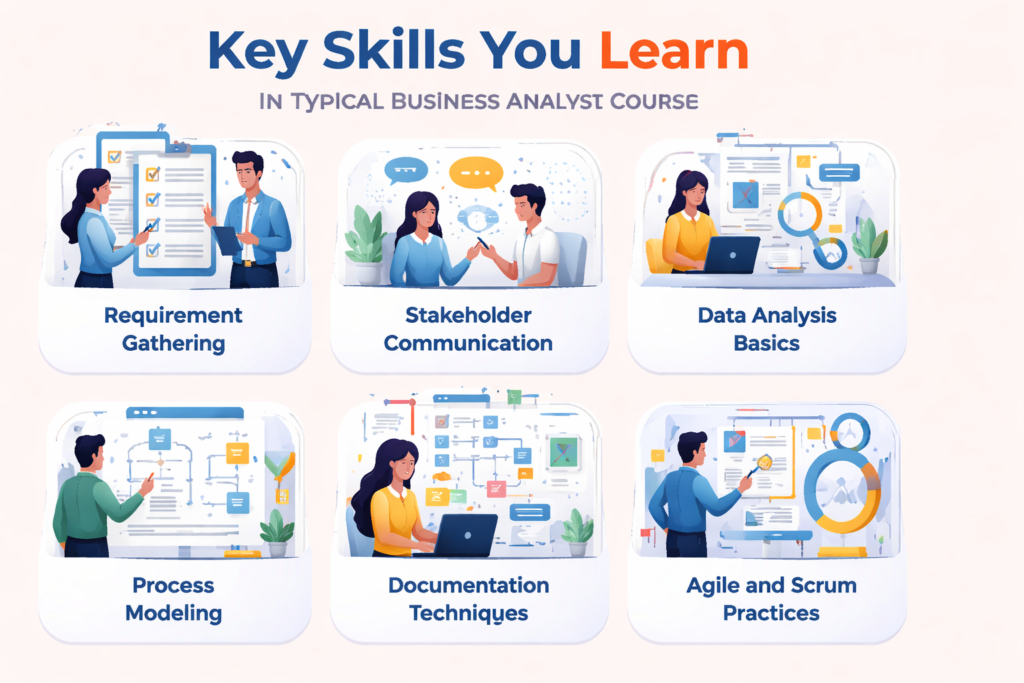
A typical business analyst course covers:
- Requirement gathering
- Stakeholder communication
- Data analysis basics
- Process modeling
- Documentation techniques
- Agile and Scrum practices
Real World Example
A retail company wants to improve online sales. A business analyst studies user behavior. They identify problems in the checkout process. They suggest improvements. Developers implement changes. Sales increase.
This example shows how business analysts drive results.
What Is PMP Certification?
PMP stands for Project Management Professional. It focuses on managing projects from start to finish.
Key Skills You Learn
PMP training includes:
- Project planning
- Risk management
- Budget control
- Team leadership
- Quality assurance
- Project lifecycle management
Real World Example
A company launches a new mobile app. A project manager creates timelines. They assign tasks. They track progress. They manage risks. The app launches successfully.
This example shows how PMP professionals ensure delivery.
Business Analyst Certification vs PMP: Core Differences
Understanding the differences helps you make a better choice.
Focus Area
- Business Analyst: Focus on requirements and analysis
- PMP: Focus on execution and delivery
Daily Tasks
- Business Analyst: Gather data, create reports, interact with stakeholders
- PMP: Plan schedules, manage teams, track progress
Skill Type
- Business Analyst: Analytical and communication skills
- PMP: Leadership and management skills
Career Path
- Business Analyst: Moves toward product roles or consulting
- PMP: Moves toward senior project management roles
When you compare Business Analyst Certification vs PMP, the biggest difference lies in what you enjoy doing every day.
Industry Demand and Job Trends
Both roles show strong demand in the global job market.
Business Analyst Demand
- Companies need data driven decisions
- Digital transformation increases demand
- Demand grows in IT, finance, healthcare
According to industry reports, business analyst roles grow steadily due to data usage.
PMP Demand
- Large projects need structured management
- Infrastructure and IT sectors require project managers
- Organizations prefer certified professionals
When you compare Business Analyst Certification vs PMP, both paths offer stable careers.
Salary Comparison
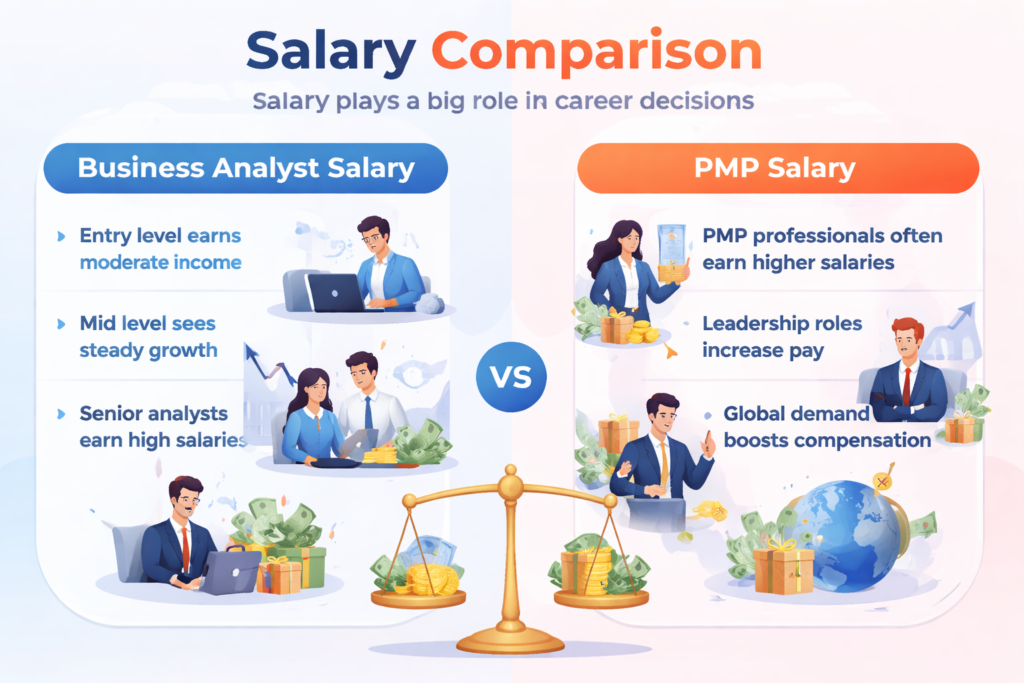
Salary plays a big role in career decisions.
Business Analyst Salary
- Entry level earns moderate income
- Mid level sees steady growth
- Senior analysts earn high salaries
PMP Salary
- PMP professionals often earn higher salaries
- Leadership roles increase pay
- Global demand boosts compensation
In many regions, PMP salaries are slightly higher. But experienced business analysts also earn competitive pay.
This makes Business Analyst Certification vs PMP a close comparison in terms of earnings.
Eligibility Requirements
Business Analyst Certification
- Open to beginners
- No strict experience needed
- Suitable for fresh graduates
PMP Certification
- Requires project experience
- Requires training hours
- Needs documentation
This is a key difference in Business Analyst Certification vs PMP. Business analyst paths are easier to start.
Learning Curve and Difficulty
Business Analyst Learning Path
- Easier to start
- Focus on practical skills
- Less technical complexity
PMP Learning Path
- Requires structured study
- Includes complex frameworks
- Needs strong understanding of processes
If you compare Business Analyst Certification vs PMP, PMP demands more preparation.
Business Analyst Training with Placement: Why It Matters
Many learners prefer business analyst training with placement because it provides job support.
Benefits
- Real project exposure
- Resume building support
- Interview preparation
- Industry level skills
Practical Example
A learner completes training. They work on case studies. They attend mock interviews. They secure a job faster.
This practical approach makes business analyst training with placement very effective.
Tools Used in Each Role
Business Analyst Tools
- Excel
- SQL
- Power BI
- Jira
- Visio
PMP Tools
- MS Project
- Primavera
- Gantt charts
- Risk management tools
Sample Workflow Diagram
Business Analyst Flow:
Requirement → Analysis → Documentation → Validation → Delivery
Project Manager Flow:
Planning → Execution → Monitoring → Control → Closure
This comparison adds clarity to Business Analyst Certification vs PMP.
Which Certification Is Better for Beginners?
If you are new to the industry:
- Business analyst certification is easier
- It requires less experience
- It offers faster entry
So in Business Analyst Certification vs PMP, beginners usually choose business analyst roles.
Which Certification Is Better for Experienced Professionals?
If you already have experience:
- PMP adds value to leadership roles
- It increases credibility
- It opens senior positions
For experienced professionals, Business Analyst Certification vs PMP often favors PMP.
Career Growth Opportunities
Business Analyst Growth
- Senior Business Analyst
- Product Owner
- Product Manager
- Consultant
PMP Growth
- Senior Project Manager
- Program Manager
- Portfolio Manager
- Operations Head
Both paths offer strong growth. Your interest decides the better option in Business Analyst Certification vs PMP.
Work Environment Comparison
Business Analyst
- Works closely with users
- Focuses on problem solving
- Involves documentation
PMP
- Works with teams
- Focuses on delivery
- Involves leadership
When comparing Business Analyst Certification vs PMP, think about your daily work preference.
Certification Cost and ROI
Business Analyst Certification
- Lower cost
- Faster completion
- Quick return on investment
PMP Certification
- Higher cost
- Longer preparation
- High long term value
The ROI depends on your career goals. This is another important factor in Business Analyst Certification vs PMP.
Real World Case Study
Case Study 1: Business Analyst
A banking firm improves loan approval time. A business analyst studies the process. They remove delays. Approval time reduces by 40 percent.
Case Study 2: PMP Professional
A construction project faces delays. A PMP professional restructures the schedule. They manage risks. The project completes on time.
These examples highlight the practical value of both roles in Business Analyst Certification vs PMP.
How to Choose the Right Path
Ask yourself these questions:
- Do you enjoy analyzing problems?
- Do you like working with data?
- Do you prefer communication over management?
Choose business analyst certification.
Or ask:
- Do you enjoy leading teams?
- Do you like planning projects?
- Do you prefer structured work?
Choose PMP.
This self analysis helps you decide on Business Analyst Certification vs PMP.
Step by Step Guide to Start
Step 1: Identify Your Goal
Decide your career direction.
Step 2: Choose the Right Course
Select a structured business analyst course or PMP training.
Step 3: Learn Core Skills
Focus on tools, concepts, and real projects.
Step 4: Practice with Projects
Apply your knowledge to real scenarios.
Step 5: Prepare for Certification
Study exam patterns and practice questions.
Step 6: Apply for Jobs
Use your skills and certification to get opportunities.
This structured approach helps you succeed regardless of your choice in Business Analyst Certification vs PMP.
Key Takeaways
- Business analyst certification focuses on analysis and requirements
- PMP focuses on project execution and leadership
- Business analyst paths are easier for beginners
- PMP offers higher leadership roles
- Both certifications provide strong career growth
- Your interest should guide your decision
Conclusion
Choosing between Business Analyst Certification vs PMP depends on your skills and career goals. Both paths offer strong opportunities, but the right choice is the one that matches your interests and strengths.
Start learning today and take the first step toward a successful career.