
Yes you can build job-ready skills through H2K Infosys cybersecurity training, but it really depends on how actively you engage with the hands-on work, not just the lessons themselves.
What “job-ready” actually means in cybersecurity training
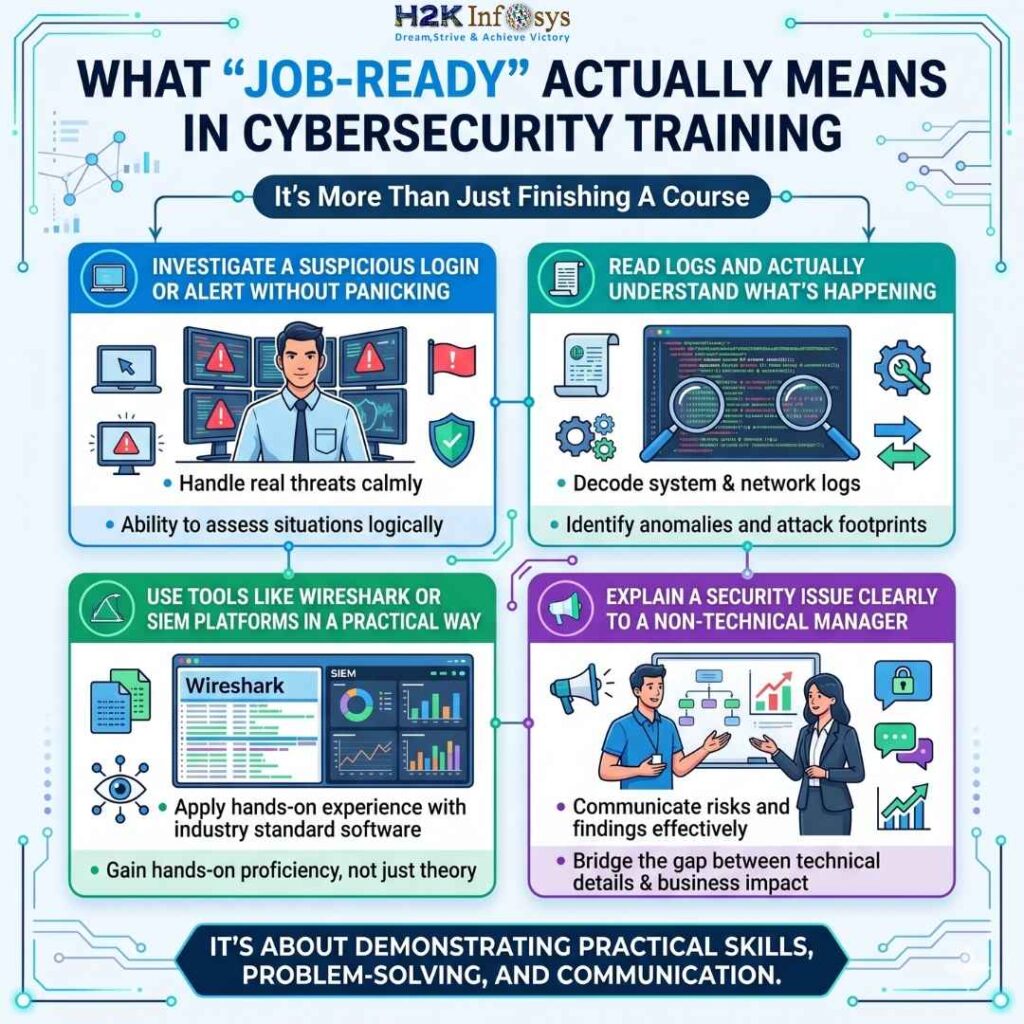
A lot of people assume finishing a course equals being job-ready. That’s… not quite how it plays out in real life. In cybersecurity training, being job-ready usually means you can:
- Investigate a suspicious login or alert without panicking
- Read logs and actually understand what’s happening
- Use tools like Wireshark or SIEM platforms in a practical way
- Explain a security issue clearly to a non-technical manager
That last one? Surprisingly important and often overlooked.
From what I’ve seen, cyber security training and job placement programs that focus on real-world scenarios (instead of just theory slides) make a noticeable difference here.
How H2K Infosys bridges the gap (where many courses fall short)
One thing that stands out in H2K Infosys cybersecurity training is how they try to simulate real job environments. It’s not just “learn this tool” it’s more like:
“Here’s a scenario: a company detects unusual outbound traffic. What do you do next?”
That shift from learning tools to thinking like an analyst is where job readiness starts to click.
Midway through the cybersecurity training, many learners begin working with:
- Simulated SOC (Security Operations Center) environments
- Realistic datasets (logs, alerts, incident reports)
- Tools commonly used in enterprises
And honestly, that’s the part that sticks. Watching videos is easy. Handling messy, imperfect data? That’s where you grow.
This is also where cybersecurity training with job placement programs like H2K Infosys tend to stand out. They don’t just prepare you to pass interviews, but to survive your first few weeks on the job, which is usually the hardest phase.
A quick real-world scenario (this is what employers expect)
Let’s say you’re applying for a SOC Analyst role.
In interviews today (especially in 2025–2026 hiring trends), you might get questions like:
- “What would you do if you see multiple failed login attempts from different geolocations?”
- “How do you investigate a phishing email incident?”
If your answer sounds like textbook definitions, it shows. But if you’ve actually worked through similar scenarios during cybersecurity training, your response feels… different. More grounded. More confident.
That’s typically what cyber security training and placement programs try to prepare you for practical thinking under pressure.
Industry trends you should be aware of
Cybersecurity training hiring has changed a bit recently. Companies aren’t just looking for certifications anymore, they’re looking for proof of hands-on ability.
Some current trends:
- Increased demand for SOC analysts and cloud security roles
- More emphasis on SIEM tools like Splunk
- Real-time incident response skills becoming a must-have
- Entry-level roles expecting some lab or project experience
So if your cybersecurity training includes labs, mock interviews, and resume prep aligned with these trends, you’re already ahead of many candidates.
The part most people underestimate
Here’s something I’ve noticed: the cybersecurity training gives you the environment, but becoming job-ready depends on consistency.
People who get the most out of it usually:
- Revisit labs multiple times (not just once)
- Try breaking things and fixing them (seriously, this helps)
- Ask questions during sessions instead of staying passive
- Practice explaining concepts out loud
It’s a bit like learning to drive; you don’t become confident by watching someone else do it.
So… is it enough on its own?
Short answer: it can be but only if you treat it like preparation for a real job, not just a course to complete.
H2K Infosys does a solid job of creating a structure where you can become job-ready:
- Hands-on labs
- Real-world scenarios
- Placement-oriented support
But the final step turning those into confidence and skill comes from how you use the training.
Final thought
If you go in expecting passive learning, you’ll probably feel underprepared. But if you treat it like your first cybersecurity training job in disguise, you’ll walk out with skills that actually translate into interviews and more importantly, into the job itself.