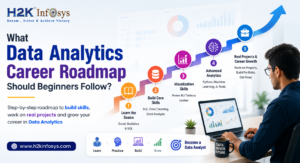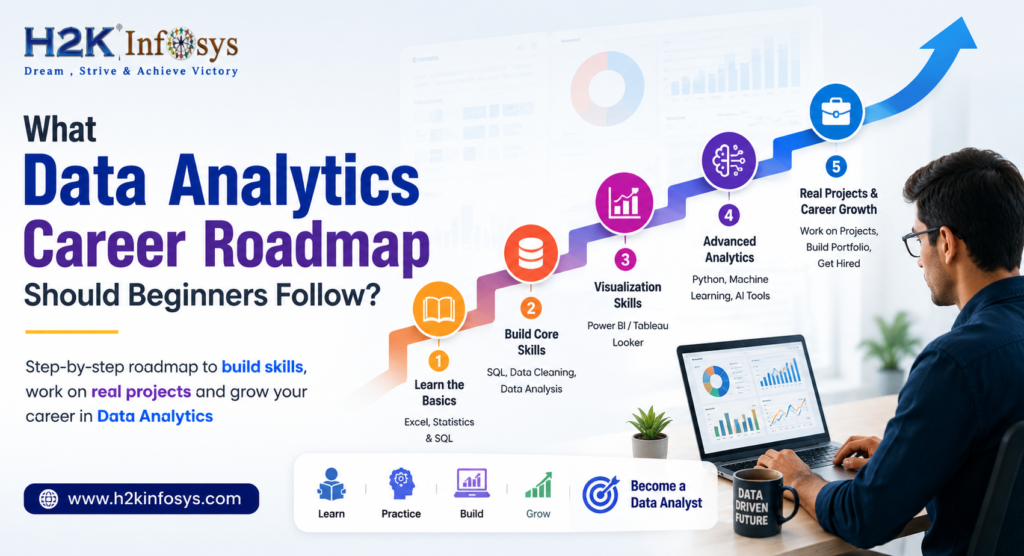
At its core, a solid Data analytics course usually covers statistics, data cleaning, visualization, SQL, and tools like Python or Excel basically everything you need to turn raw data into meaningful insights. But honestly, the way these modules are taught (and practiced) is what really shapes how useful the learning becomes in real life.
Why the structure of a Data analytics course actually matters
If you’ve ever looked into Data analytics training, you’ve probably noticed that most courses list similar modules. On paper, they all seem the same. But when you actually start learning, you realize something some programs just click, while others feel like you’re memorizing things without knowing why.
From what I’ve seen (and heard from others switching careers recently), the best courses are the ones that walk you through problems the way analysts face them in real jobs. Not just “learn this tool,” but here’s why you need it.
Core modules you’ll usually find (and what they really teach you)
1. Fundamentals of Data analytics
This is where everything begins. You learn what Data analytics actually means in a business context—how companies use data to make decisions.
It’s not just theory. Think of it like understanding why Netflix recommends shows or how e-commerce sites predict what you might buy next. That curiosity-driven angle makes a big difference early on.
2. Data cleaning and preparation
Honestly, this is the least glamorous but most real part of Data analytics.
Raw data is messy. Missing values, duplicates, weird formatting you name it. This module teaches you how to fix all that using tools like Excel or Python.
A friend of mine once said, “80% of my job is cleaning data.” That sounded exaggerated at first… but turns out, it’s pretty accurate.
3. Excel for analysis
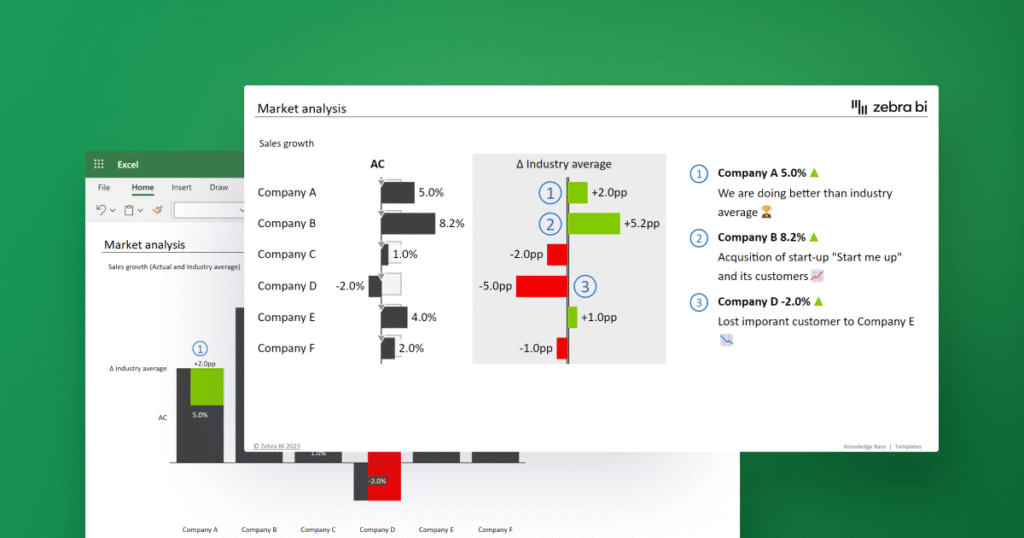
Even in 2026, Excel hasn’t gone anywhere.
You’ll learn pivot tables, formulas, and dashboards. It might feel basic, but many companies still rely heavily on Excel for quick analysis. A good Online data analytics certificate program doesn’t skip this it builds on it.
4. SQL (Structured Query Language)
This is where things start to feel more “techy,” but don’t worry it’s manageable.
SQL helps you pull data from databases. Instead of scrolling through spreadsheets, you write queries to extract exactly what you need. Once you get comfortable, it actually feels pretty satisfying… almost like solving small puzzles.
5. Statistics and probability
This is the backbone of Data analytics, even if it sounds intimidating.
You’ll cover concepts like mean, median, correlation, and hypothesis testing. But in a good course, it’s not just formulas it’s about understanding what the numbers are telling you.
For example, if a marketing campaign performs better, is it actually significant… or just random variation? That’s where statistics comes in.
6. Data visualization
This is the “storytelling” part of Data analytics.
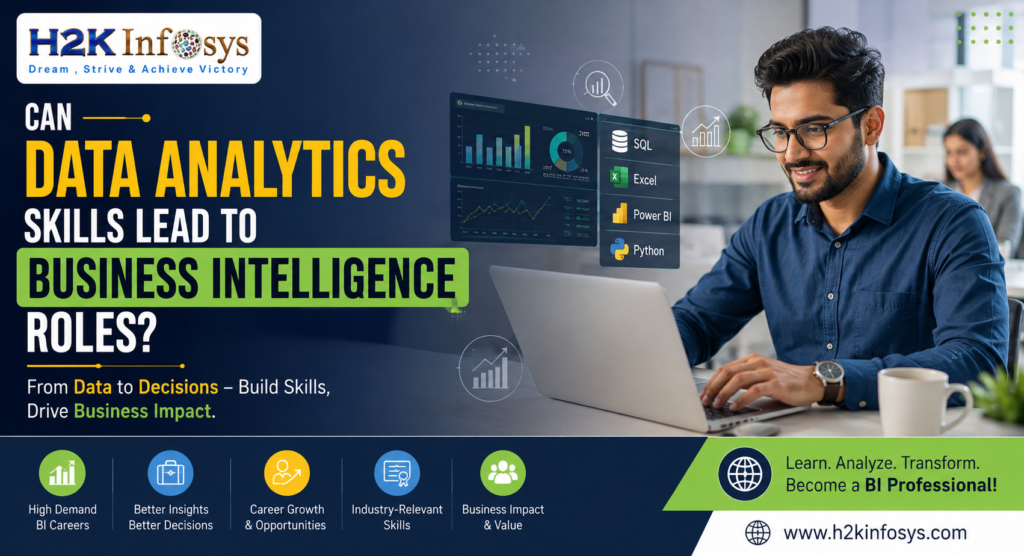
Tools like Tableau or Power BI help you turn numbers into visuals charts, dashboards, reports. Because let’s be real, most stakeholders don’t want raw data… they want clear insights.
And honestly, this is one of the most enjoyable modules. You start seeing patterns come to life.
7. Python or R for Data analytics
Not every beginner loves this part, but it’s incredibly useful.
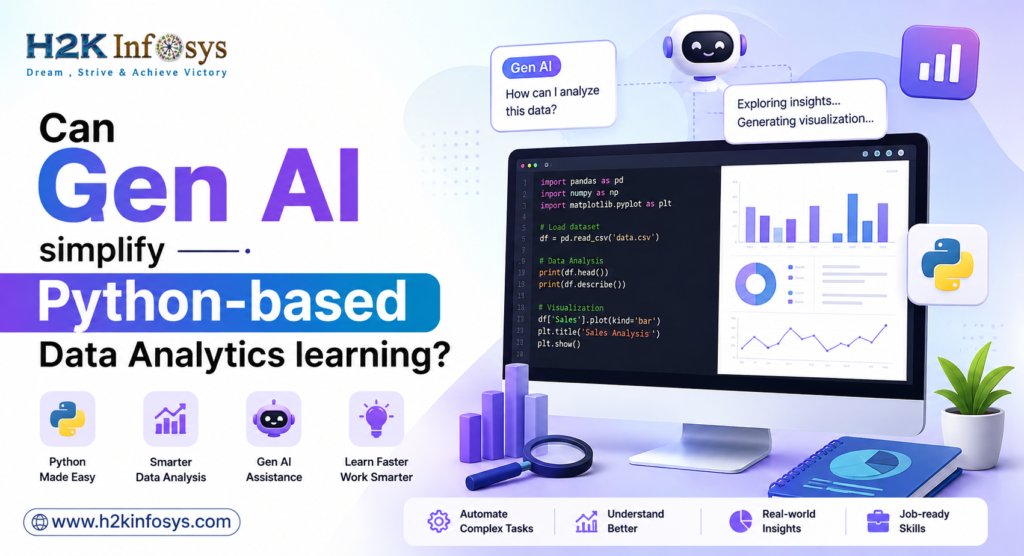
Python, especially, has become a go-to tool in Data analytics training. You’ll use it for data manipulation, analysis, and even basic automation.
The good thing? Most courses ease you into it. You’re not expected to be a programmer you’re learning just enough to work with data effectively.
8. Real-world projects and case studies
This is where everything comes together.
You might analyze sales data, customer behavior, or even social media trends. And this part matters a lot because employers don’t just ask what you know they ask what you’ve done.
With the rise of AI-driven analytics in 2025–2026, many projects now include working with automated insights or predictive trends. So the learning stays relevant.
How H2K Infosys approaches these modules differently
Practical learning at H2K Infosys
One thing that stands out about H2K Infosys is how they integrate these modules with real-time scenarios instead of teaching them in isolation.
During their Data analytics training, learners don’t just go through theory they actually work on business-style problems. For example, instead of just learning SQL commands, you might analyze customer churn data or sales performance.
That shift from “learning tools” to “solving problems” is what makes the modules stick.
Industry-focused modules that feel current
Another interesting thing is how H2K Infosys aligns its curriculum with current industry expectations.
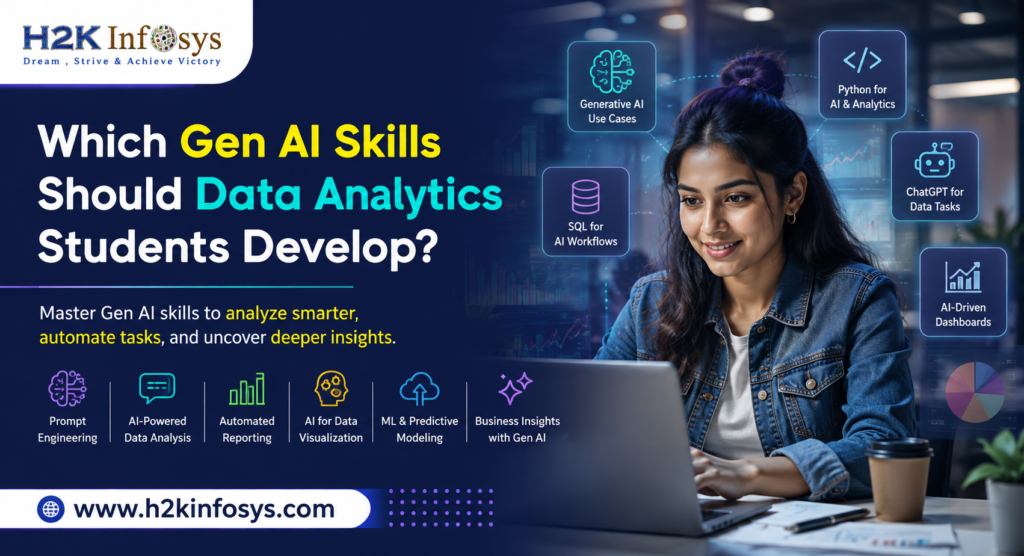
With companies increasingly relying on dashboards, automation, and AI-assisted analytics, their training includes exposure to modern tools and workflows. So when someone completes an Online data analytics certificate, they’re not stuck with outdated methods.
It feels closer to what companies are actually doing right now.
Support and guided practice
Let’s be honest learning Data analytics on your own can feel overwhelming at times.
What helps in structured programs like those offered by H2K Infosys is the guided approach. You’re not just watching lessons you’re practicing, getting feedback, and gradually building confidence.
And that consistency is often what separates people who finish the course from those who drop off midway.
A quick reality check before you start
If you’re thinking about jumping into Data analytics, here’s something worth knowing:
It’s not about mastering every tool perfectly. It’s more about understanding how to approach data problems.
Some days you’ll feel like everything makes sense. Other days… not so much. That’s normal.
But with the right Data analytics training, especially one that focuses on practical exposure, things start connecting over time.
Final thoughts
So yes, most Data analytics course include similar modules Excel, SQL, statistics, visualization, and programming. But the real difference lies in how those modules are taught and applied.
Programs like those from H2K Infosys tend to stand out because they bridge the gap between learning and doing. And in a field like this, that gap matters more than anything.
If you approach it with patience and curiosity, the learning curve feels less like a barrier… and more like a path you gradually grow into.