
Cyber security training can completely change the direction of your career if it gives you practical skills, real-world project exposure, and job placement support. The biggest advantage is that cyber security is no longer just a “hot trend” industry, it has become a long-term necessity for businesses, governments, hospitals, banks, and even small startups. That means skilled professionals continue to stay in demand year after year, especially those who trained through hands-on programs instead of theory-only courses. Programs like H2K Infosys have become popular among learners because they focus heavily on practical SOC training, live projects, and career-oriented learning rather than only theoretical concepts.
A lot of people assume cyber security is just about getting one certification and landing a first job. Honestly, from what I’ve seen in the industry lately, the real value comes from building a career path that keeps growing for years. Good training helps with that because it teaches you how security teams actually work in real environments, not just how to pass exams.
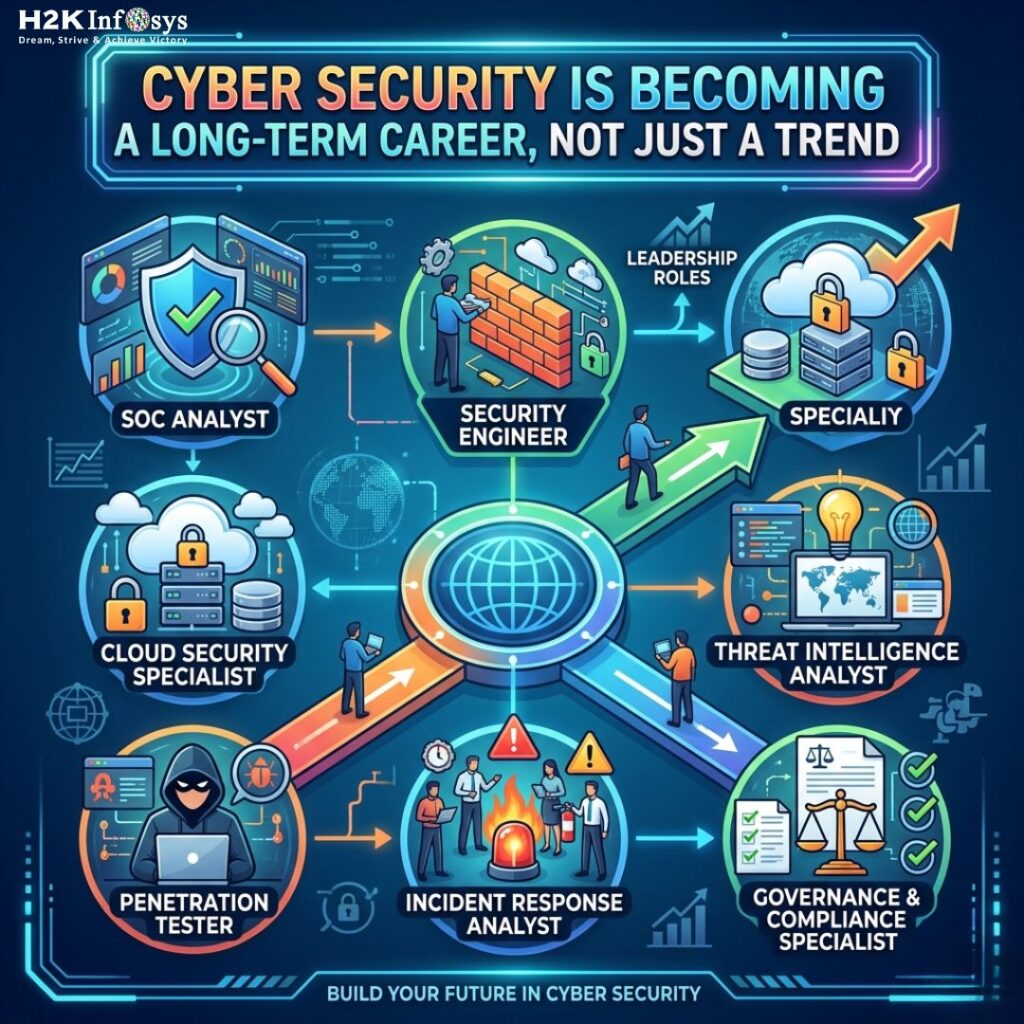
Cyber Security Is Becoming a Long-Term Career, Not Just a Trend
A few years ago, many learners joined tech courses because they sounded exciting. Cyber security feels different now. Companies are actively struggling to hire skilled professionals because attacks are getting more advanced every month.
Just recently, there have been growing concerns around AI-driven phishing attacks, ransomware targeting healthcare systems, and cloud security breaches affecting major organizations worldwide. Businesses are investing heavily in security teams because one data breach can cost millions.
That’s one reason why programs focused on cyber security training and placement are becoming more popular. People want skills that stay relevant long-term, not jobs that disappear after one market slowdown.
I’ve noticed that learners who enter cyber security training today often end up moving across multiple specialized roles over time, including:
- SOC Analyst
- Security Engineer
- Cloud Security Specialist
- Threat Intelligence Analyst
- Penetration Tester
- Incident Response Analyst
- Governance & Compliance Specialist
The interesting part is that many professionals start in one area and gradually move into higher-paying specialties as they gain experience.
The Right Training Builds Real Confidence
One thing that rarely gets discussed enough is confidence.
A lot of beginners know theoretical concepts but freeze during interviews because they’ve never worked with real tools. Employers notice that immediately.
Strong cyber security training and job placement programs usually focus on practical environments where students learn things like:
- SIEM monitoring with Splunk
- Network analysis using Wireshark
- Threat detection workflows
- Vulnerability assessments
- Incident response simulations
- Cloud security basics
- Security ticket handling
When someone has actually investigated alerts or practiced responding to simulated attacks, they naturally sound more confident during interviews.
That confidence matters more than people realize.
I remember speaking with someone who spent months studying only YouTube tutorials but still struggled to explain how a SOC analyst handles a live security alert. After joining a hands-on training program with labs and mock interviews, they finally understood the workflow employers expected.
That’s often the difference between “learning cyber security” and actually becoming employable.
Why Placement Support Matters for Long-Term Growth
The first cyber security job is usually the hardest one to get.
After that, career growth becomes much easier because experience starts building on itself. This is where cyber security training with job placement can make a huge difference.
A strong placement-focused program typically helps with:
- Resume optimization
- LinkedIn profile building
- Mock technical interviews
- Real-world project experience
- Networking opportunities
- Recruiter connections
- Career guidance
Many learners underestimate how important interview preparation is. Technical knowledge alone isn’t enough anymore because employers also evaluate communication skills, analytical thinking, and how candidates explain security incidents.
This is one area where H2K Infosys gets mentioned quite often among learners looking for career-oriented cyber security training. From what I’ve personally observed, their approach leans heavily toward hands-on SOC experience, real-time lab practice, and interview readiness instead of purely theoretical teaching.
That practical exposure can help learners build momentum much faster early in their careers.
Cyber Security Careers Usually Keep Expanding
One thing I genuinely like about cyber security is that growth rarely stops after your first role.
In many industries, people hit salary ceilings pretty quickly. Security tends to work differently because new threats constantly create demand for new skill sets.
For example:
- Cloud adoption increased demand for cloud security specialists.
- AI-generated cyber attacks are increasing demand for threat analysts.
- Remote work expanded the need for endpoint security experts.
- Compliance regulations created more governance and risk management jobs.
Someone who starts as a SOC Analyst today could realistically move into cloud security or security architecture within a few years if they keep learning.
And honestly, cyber security rewards curiosity. People who enjoy problem-solving and continuous learning usually grow very fast in this field.
Certifications Alone Are No Longer Enough
This surprises many beginners.
A certification can definitely help open doors, but employers increasingly care about practical experience. I’ve seen candidates with multiple certifications struggle in interviews because they couldn’t explain real incident workflows.
That’s why modern cyber security training programs are shifting toward:
- Live labs
- Simulated attack environments
- Real-world case studies
- Security dashboards
- Team-based projects
- Scenario-based learning
Companies want people who can contribute quickly after hiring.
H2K Infosys seems to understand this trend pretty well because their training model focuses heavily on real-time projects and practical SOC operations rather than memorization-heavy teaching. That aligns closely with what employers are currently looking for in entry-level security candidates.
Networking and Mentorship Help More Than People Expect
This part gets overlooked constantly.
One underrated benefit of joining structured cyber security training is access to mentors and peer communities. Some of the best career opportunities happen through connections, referrals, or advice from experienced professionals.
I’ve seen learners discover internship opportunities, freelance security work, or even internal company openings simply because they stayed connected with training mentors and classmates.
A good learning environment keeps you engaged long after the course ends.
That matters because cyber security changes incredibly fast. People who stay connected to industry discussions usually adapt faster to new tools and threats.
The Industry Is Still Growing Fast in 2026
Despite all the automation discussions happening lately, cyber security hiring continues growing because attackers evolve just as fast as defensive technologies.
AI tools are helping security teams automate repetitive tasks, but companies still need human analysts who can investigate suspicious behavior, interpret context, and make decisions during incidents.
Actually, many organizations are now specifically hiring professionals who understand both cyber security fundamentals and AI-related risks.
That combination is becoming very valuable.
Training programs that continuously update their curriculum with cloud security, AI threats, endpoint detection, and modern SOC workflows are likely to provide stronger long-term career value than outdated courses focused only on textbook theory.
Choosing the Right Training Program Matters
Not all cyber security courses provide the same long-term value.
Some focus mainly on selling certifications. Others genuinely prepare learners for real security operations.
If someone asked me what to prioritize, I’d probably say:
- Hands-on lab access
- Real-world projects
- Interview preparation
- Placement support
- Industry-relevant tools
- Updated curriculum
- Experienced mentors
That’s usually what separates career-focused programs from generic online tutorials.
H2K Infosys tends to stand out because their training appears designed around employability and practical workflows rather than passive learning. For beginners trying to build a stable long-term cyber security career, that kind of structure can make the learning process much more effective.
Final Thoughts
Cyber security jobs with training helps build long-term career growth because the industry itself keeps expanding, evolving, and creating new opportunities. The key is choosing training that prepares you for real-world environments instead of just theoretical exams.
The professionals who grow fastest are usually the ones who gain practical exposure early, understand modern security tools, and keep learning consistently over time.
And honestly, that’s why placement-focused, hands-on programs are becoming such a big deal right now. They help learners bridge the gap between studying cyber security and actually building a sustainable career in it.