Introduction
Yes, it absolutely can if the program focuses on practical work instead of just theory slides and quizzes. A well-structured Data Analytics Program gives you exposure to the tools, workflows, and problem-solving methods companies already use every day. That’s the part many people don’t realize until they start interviewing.
A few years ago, learning analytics mostly meant understanding reports and spreadsheets. Now? Companies expect analysts to work with dashboards, automation tools, business metrics, and AI-assisted reporting systems. The field evolved fast. Really fast.
That’s exactly why more people are searching for a reliable Data Analytics Program instead of trying to piece everything together from random videos.
And honestly, after watching how hiring trends changed recently, structured learning makes more sense than ever.
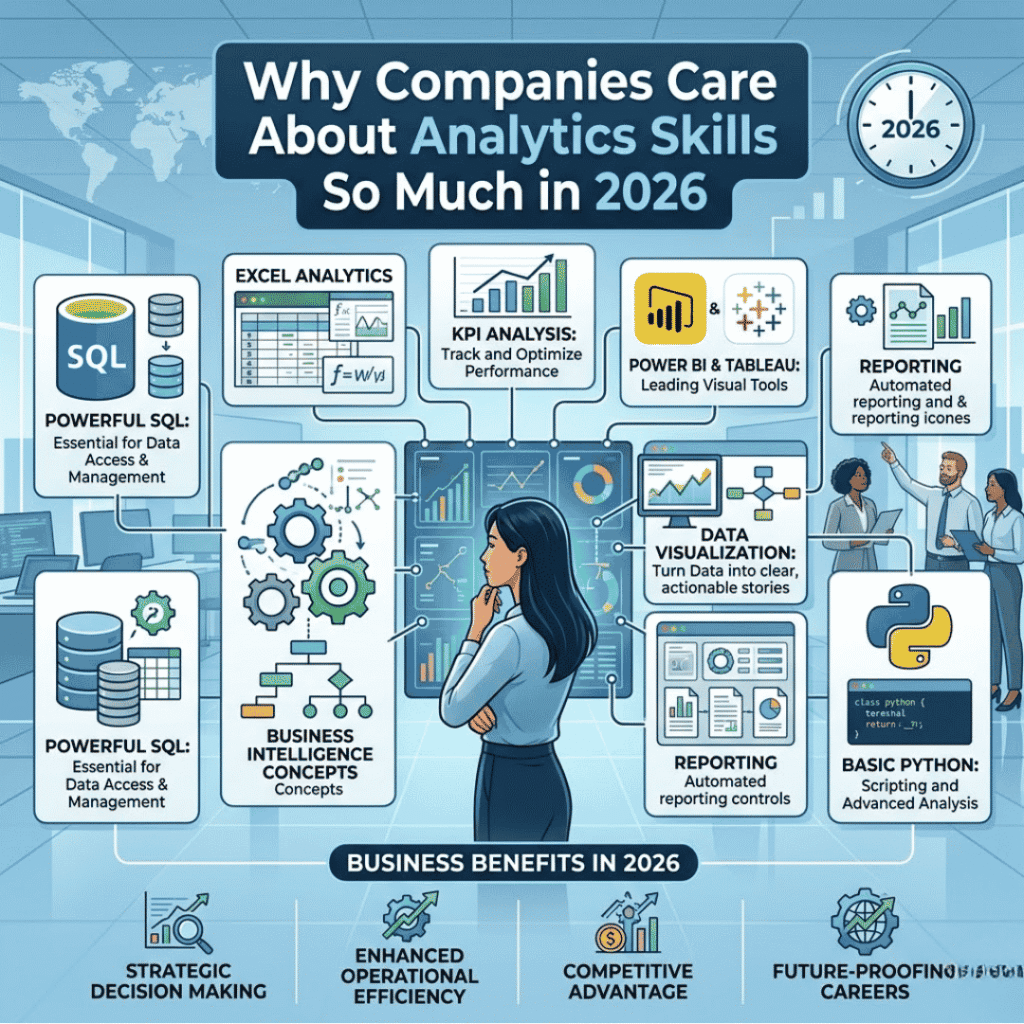
Why Companies Care About Analytics Skills So Much in 2026
Every business runs on a data analytics program now. Retail stores track customer behavior. Hospitals monitor operational efficiency. Logistics companies optimize delivery routes using analytics. Even sports franchises rely heavily on performance data before making decisions.
What changed recently is how businesses use that information.
Companies are no longer impressed by someone who only knows formulas or theoretical concepts. They want professionals who can look at messy data, figure out what matters, and explain it clearly to decision-makers.
That’s where a solid data analytics program becomes useful.
Instead of spending six months wondering what to learn first, you follow a roadmap that usually includes:
- SQL
- Excel analytics
- Power BI
- Tableau
- Reporting
- Data visualization
- Basic Python
- KPI analysis
- Dashboard building
- Business intelligence concepts
Those are real workplace skills, not just resume keywords.
I’ve personally seen learners from banking support, customer service, HR, and even pharmacy backgrounds transition into analytics roles after focusing on practical projects instead of memorizing theory.
That shift happens more often than people think.
The Biggest Difference Between “Learning Analytics” and “Working in Analytics”
This is where beginners usually get surprised.
Watching tutorials feels productive at first. But real analytics work is messy.
Data is incomplete. Reports break unexpectedly. Stakeholders ask vague questions like:
“Why did conversions suddenly drop this month?”
Nobody hands you perfect spreadsheets in an actual company.
A proper Data Analytics Program trains you to deal with those situations. That’s what makes industry-focused learning valuable.
You start learning how to:
- clean data,
- identify patterns,
- build dashboards,
- explain trends,
- and communicate findings without sounding overly technical.
That last part matters more than most people expect.
Communication Skills Matter More Than Beginners Realize
A lot of aspiring analysts focus only on technical tools.
SQL. Python. Power BI.
Important? Definitely.
But employers also want analysts who can explain insights in plain language.
If leadership teams cannot understand your findings, the analysis loses value.
Good training programs usually include:
- reporting practice,
- presentation exercises,
- business case studies,
- and stakeholder communication scenarios.
That combination tends to separate job-ready candidates from people who only completed online lessons.
Why Online Analytics Training Became More Accepted
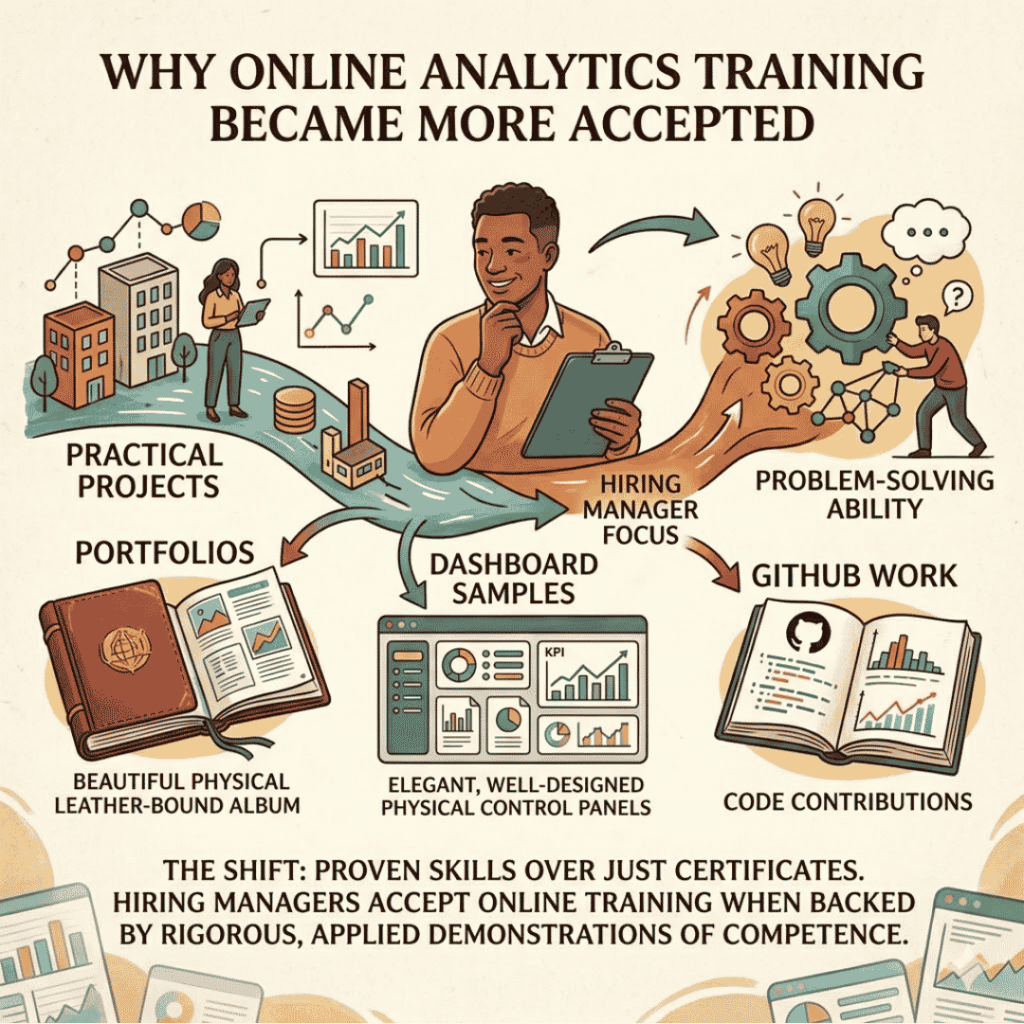
Not long ago, some employers preferred traditional classroom certifications.
That mindset shifted after remote work exploded globally.
Now, hiring managers often care more about:
- practical projects,
- portfolios,
- dashboard samples,
- GitHub work,
- and problem-solving ability.
In many cases, a strong Data Analytics Program actually works better for working professionals because it allows flexible learning while building real project experience.
That flexibility is one reason career-switchers are moving into analytics at such a high rate right now.
A Mistake Many Beginners Make
This happens constantly.
People try learning:
- machine learning,
- deep learning,
- cloud analytics,
- AI engineering,
- and advanced Python…
…before understanding basic analytics workflows.
That usually creates confusion instead of progress.
Most successful analysts start with:
- Excel
- SQL
- Visualization tools
- Reporting
- Business analysis
- Then advanced analytics later
The strongest programs follow that natural progression.
What Makes a Training Program Actually Useful?
Not every course helps equally. Some are overloaded with theory but offer almost no hands-on experience.
A useful Data Analytics course online should include:
- real-world datasets,
- dashboard projects,
- interview preparation,
- resume guidance,
- mock scenarios,
- and practical business cases.
That practical side is important because interviews changed recently too.
Recruiters increasingly ask candidates to:
- explain dashboards,
- analyze business problems,
- or walk through projects they built themselves.
That’s why platforms like H2K Infosys are gaining attention among learners looking for job-focused analytics training rather than purely academic instruction.
Their approach leans heavily toward practical implementation, which aligns much better with current hiring expectations.
The career opportunities are bigger than most people expect.
One misconception still floating around is that analytics only leads to “data analyst” jobs.
That’s outdated now.
People with analytics training often move into positions like:
- Business Analyst
- Reporting Analyst
- BI Developer
- Product Analyst
- Operations Analyst
- Marketing Analyst
- Financial Analyst
And demand keeps expanding because businesses are collecting more operational data than ever before.
Even mid-sized companies now rely heavily on dashboards and reporting systems.
What Employers Notice During Hiring
This part is interesting.
Many hiring managers care less about advanced technical jargon than people assume.
They often notice:
- project quality,
- dashboard clarity,
- communication ability,
- SQL confidence,
- and analytical thinking.
Someone who can clearly explain customer retention trends using Power BI may outperform a candidate who memorized complex theory but struggles with practical analysis.
That’s becoming increasingly common in interviews.
Is a Data Analytics Program Worth It for Career Changers?
For many people, yes.
Especially if you:
- feel overwhelmed learning alone,
- want structure,
- need project experience,
- or want career guidance.
Self-learning can work, but it often becomes chaotic because beginners don’t know which skills employers actually prioritize.
A structured Data Analytics Program reduces that uncertainty.
And honestly, having mentorship during the learning phase helps more than people expect.
Things to Check Before Joining Any Program
Before enrolling, look carefully at whether the course offers:
- hands-on projects,
- Power BI or Tableau training,
- SQL practice,
- internship-style assignments,
- resume support,
- mock interviews,
- and instructor guidance.
If those pieces are missing, you may finish the course without feeling prepared for real-world analytics work.
That’s usually where learners get frustrated.
Related Topics You Can Explore Next
If you want to build stronger expertise in analytics, you can also explore:
- SQL Interview Questions for Data Analysts
- Power BI Projects for Beginners
- Business Intelligence vs Data Analytics
- Data Visualization Best Practices
- How AI Is Changing Data Analytics Careers
These topics connect naturally with Data Analytics Program and help build deeper industry understanding.
FAQs
Can a beginner join a Data Analytics Program?
Yes. Many programs are designed specifically for beginners and start with foundational tools like Excel and SQL.
Is a Data analyst course online enough for job preparation?
It can be especially if the course includes real projects, portfolio building, and interview preparation.
Which analytics tools are most important in 2026?
SQL, Power BI, Tableau, Excel, and basic Python remain highly valuable across industries.
How long does it take to become job-ready in analytics?
Most learners can build strong foundational skills within 4–8 months of consistent learning and project practice.
Is analytics still a strong career with AI growing?
Definitely. AI tools still require analysts who understand business context, validate insights, and communicate findings effectively.
Final Thoughts
It’s not about getting certificates, it’s about understanding how businesses really use data to make decisions and develop analytics skills.”
That’s why hands-on learning is so important.
A robust Data Analytics Program can help you build real-world skills, build confidence with business tools, and prepare for analytics roles that continue to grow across industries.
If you’re serious about entering this field, then structured training from providers like H2K Infosys Data Analytics Training can make the process much more organized and career-focused.
Most often the smartest approach is the most simple:
Master the fundamentals, practice consistently and develop projects that address actual business challenges.