Introduction
If you want a straight answer up front: the most valuable course for data analytics in the USA is one that combines hands-on, project-driven learning with current industry tools, real mentorship, and strong career support. In my experience, it’s not just about what you learn; it’s about how you learn, who you learn from, and the type of projects you actually get to work on.
Let’s dig in, because there’s a lot of noise out there. Plenty of data analytics bootcamp online ads promise you a dream job in six weeks, but trust me, only some deliver the goods. I’ve worked with dozens of aspiring analysts (and been one myself!), so I’ve seen what works and what doesn’t. If you’re thinking about taking course for data analytics or enrolling in a course for data analytics, here’s what you should know from someone who’s watched the field change in real time.
Why Data Analytics Skills Are So Valuable Right Now
Here’s a quick story: last year, a friend of mine got laid off from retail management. She wasn’t sure where to go next, but she’d always loved numbers and patterns. She decided to try an course for data analytics. Fast-forward just eight months, and she’s now working remotely as a junior data analyst for a logistics company making nearly double her old salary. That’s the kind of career pivot that’s possible in 2026.
The reason? course for data analytics. Almost every industry healthcare, finance, e-commerce, sports needs people who can understand and interpret data. The explosion of AI tools, the boom in remote work, and the ongoing shift toward “data-driven decision-making” means companies are desperate for talent. The U.S. Bureau of Labor Statistics expects the demand for data analysts and related roles to grow much faster than average for the next several years.
So, what actually makes a course for data analytics valuable in this fast-moving environment? It comes down to these five elements:
1. Real-World Projects, Not Just Lectures
I remember slogging through my first analytics class years ago. Lots of theory. Not much action. It wasn’t until I got my hands dirty working on a real company’s sales data that things clicked. That’s why the best course for data analytics programs build their curriculum around actual business problems. You’re not just crunching fake numbers you’re analyzing a real marketing campaign, cleaning up messy customer data, or tracking web traffic spikes after a viral event.
Current trends? Courses that partner with companies for “live case studies” are a big win. For example, some programs let students analyze recent data from startups or nonprofits, which feels way different than just reading about analytics in a textbook.
2. Hands-On Tools That Companies Actually Use
Let’s be honest: Excel is still the king for a lot of entry-level work, but recruiters these days want to see more. Here’s what a valuable course for data analytics should cover (and what I see on almost every job posting):
- SQL: For digging through databases. No way around it.
- Python: For automation, advanced analysis, and data cleaning. (R is good too, but Python’s a bit more universal.)
- Data visualization: Tableau, Power BI, or even Google Data Studio being able to “tell the story” with charts is huge.
- Soft skills: Communicating insights, asking the right questions, and translating tech talk into business talk.
Some course for data analytics even give you access to the actual software, so you’re not just watching someone else work you’re building your own dashboards and scripts.
3. Mentorship and Community
This is the big one a lot of folks overlook. When I hit a roadblock in my first bootcamp, having a mentor (a real person, not a chatbot!) made all the difference. The course for data analytics offer:
- 1-on-1 coaching or office hours
- Slack or Discord communities for peer support
- Feedback on your projects from instructors who’ve actually worked in analytics
A quick aside: I once spent two days stuck on a SQL JOIN problem. Quick 15-minute call with a mentor, and suddenly it all made sense. Don’t underestimate the value of a supportive learning community.
4. Career Support That Goes Beyond “Good Luck!”
This one’s critical if you want a job after you graduate. A valuable course should help with:
- Resume and LinkedIn profile makeovers (seriously, these make a difference)
- Mock interviews with people who know what hiring managers are looking for
- Networking with employers some bootcamps have direct hiring partnerships
The best programs even help you build a project portfolio that you can share with future employers. I’ve seen people land interviews just because their Tableau dashboard impressed a hiring manager!
5. Curriculum That Stays Current (and Isn’t Stuck in 2018)
The data world moves fast. A course that was cutting-edge three years ago might be missing half the tools recruiters want now. For example, newer courses cover data privacy issues, cloud data platforms, and AI-powered analytics. Even just last year, I saw a shift toward teaching students how to use generative AI tools (like GPT) to automate basic analysis tasks.
If the course doesn’t mention up-to-date topics or trends (think: AI, real-time dashboards, cloud data storage), you might want to keep looking.
What Skills and Outcomes Should You Expect?
Let’s get concrete. If you finish a solid course for data analytics, you should walk away with:
- The ability to clean, process, and analyze raw data
- Experience with SQL, Python, and advanced Excel
- A knack for visualizing data and telling a story with your findings
- Understanding of business analytics concepts (A/B testing, forecasting, KPI tracking)
- Confidence to present your results to a team, not just code in a vacuum
Typical Career Outcomes
- Entry-level jobs: Data Analyst, Business Intelligence Analyst, Reporting Analyst
- Mid-level roles: Analytics Consultant, Operations Analyst, Marketing Data Analyst
- Salary range: Most folks start in the 70,000–95,000 range, with room to grow quickly (six figures is very doable within a few years, especially if you specialize)
Why Demand Keeps Growing
Companies don’t just want someone who can run reports they want people who can use data to solve real problems. For example, a healthcare company might hire a fresh analytics grad to find patterns in patient data that improve treatment outcomes. Or a retailer might want to know which products will be hot next season, using last year’s sales numbers and social media data.
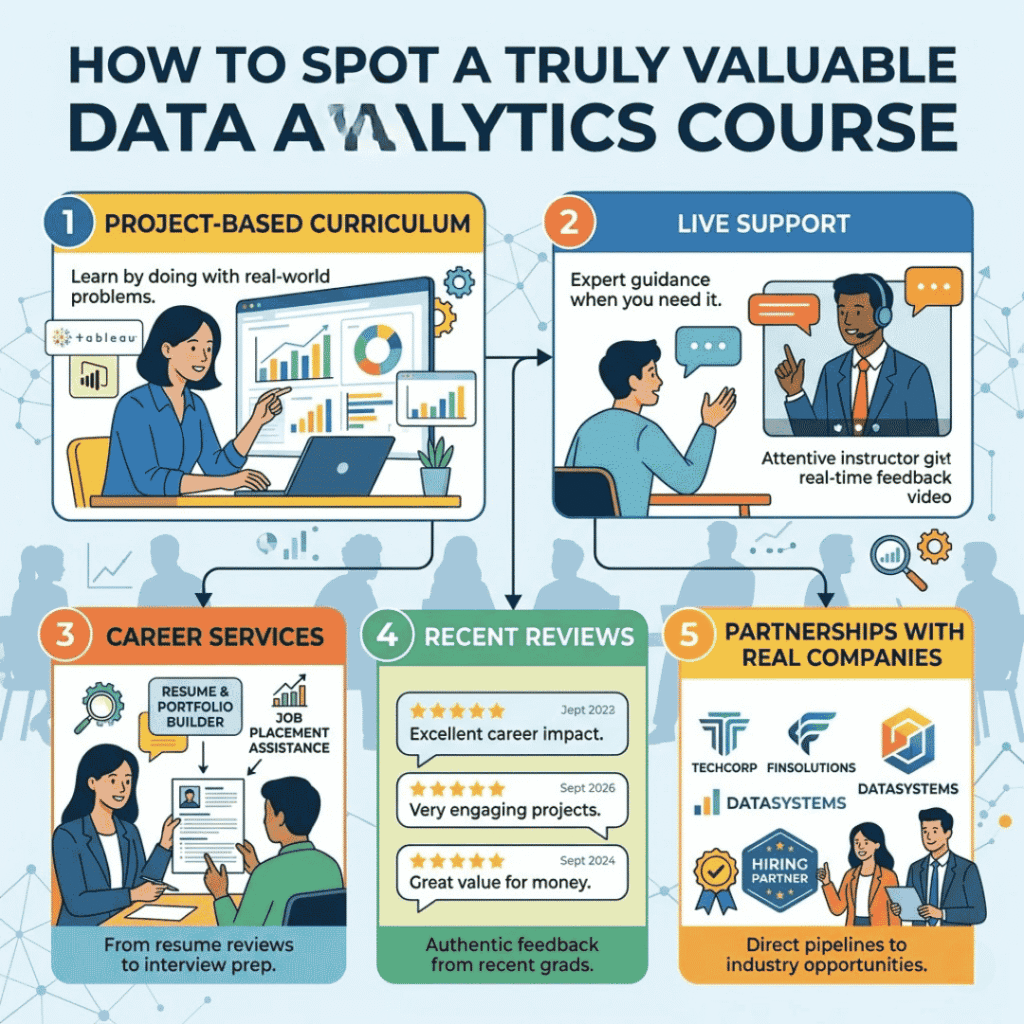
How to Spot a Truly Valuable Data Analytics Course
I’ve seen a lot some great, some… not so much. Here’s what to look for (and what to avoid):
Red Flags (Steer Clear If You See These)
- No real projects (just quizzes and slide decks)
- Instructors with zero industry experience
- No mention of SQL or Python
- Vague promises like “Become a data scientist in 4 weeks!”
- No alumni success stories or career placement stats
Green Flags (Go for It If You See These)
- Project-based curriculum with real datasets
- Live support (not just old forums)
- Career services and interview prep
- Recent reviews from students who found jobs
- Partnerships with real companies for capstone projects
Practical Tips for Getting the Most Out of Analytics Online Classes
Let me share a few things I wish I’d known earlier:
- Don’t skip the basics: Advanced stuff is cool, but you need a strong foundation in data cleaning and Excel.
- Build a portfolio: Every project you do save it! Employers want to see your work.
- Ask for feedback: Don’t be shy. The best learning happens when you get real, honest feedback.
- Join communities: LinkedIn groups, Discord servers, online meet-ups you’ll learn a ton from peers.
- Stay curious: The tools will change, but curiosity and problem-solving never go out of style.
Common Mistakes Beginners Make (And How to Avoid Them)
- Focusing only on tools, not on business problems. Employers want you to think like a problem-solver, not just a coder.
- Ignoring the “storytelling” side of analytics. Being able to explain your findings to a non-expert is a critical skill.
- Choosing the cheapest course. Sometimes you get what you pay for invest where it counts.
- Trying to learn everything at once. Pick a path, master the basics, then branch out.
A Glimpse at the Current Job Market and Future Trends
- Remote work is here to stay. Many data analytics roles are now fully remote or hybrid.
- AI is changing the game. Learning how to use AI tools for data prep and visualization is becoming a must.
- Data privacy is a hot topic. Courses that touch on compliance (GDPR, HIPAA) will give you an edge.
- Soft skills are more important than ever. Communication, adaptability, and teamwork matter just as much as technical know-how.
Related Topics You Might Want to Explore
You can also check out:
- How to Pass Data Analytics Job Interviews (With Real Questions)
- Best Free Datasets for Analytics Practice
- Switching Careers: Success Stories from Data Analytics Bootcamp Grads
Thinking About Taking the Leap? Here’s a Soft Nudge
If you’re serious about building a future-proof career in analytics, structured training is a smart move. I’ve seen firsthand how programs like H2K Infosys stand out they offer project-focused learning, mentorship from real industry pros, and a curriculum that evolves with the trends. Plus, their career support doesn’t end when the course does they help you actually land interviews and build a real portfolio.
FAQ
1. Are online data analytics bootcamps respected by employers?
Absolutely, as long as the program is hands-on, up-to-date, and has a track record of student job placements.
2. How much time should I budget for an analytics bootcamp?
Most bootcamps require 10–20 hours per week and can be completed in 3–6 months.
3. Is prior coding experience needed for analytics online classes?
Nope many programs start with the basics, although being comfortable with numbers helps.
4. What’s the best way to showcase my analytics skills to employers?
Create a project portfolio (with real data!) and share it on LinkedIn and during interviews.
5. What industries hire data analysts in 2026?
Tech, healthcare, finance, retail, sports, and even government agencies all need skilled data analysts.
Wrapping Up: What Actually Makes a Course Valuable?
Here’s my honest take: course for data analytics is valuable if it helps you confidently tackle real business problems, connect with mentors, and actually land a job not just memorize formulas. If you’re ready to level up, look for a course for data analytics that checks all the boxes: recent curriculum, hands-on projects, supportive mentors, and strong career help. I’ve seen programs like H2K Infosys make a real difference for people from all backgrounds sometimes, all it takes is that one step to launch a whole new career.
So, if you’re on the fence, maybe it’s time to take the leap. Your future in data analytics could start with just one well-chosen course.