


Introduction to TensorFlow, TensorFlow Architecture with Example
Artificial intelligence is no longer limited to research labs. It now drives search engines, recommendation systems, medical diagnostics, fraud detection, and autonomous systems. At the core of many of these solutions is TensorFlow, a widely used open-source framework for machine learning and deep learning. For learners starting AI and machine learning courses, understanding how TensorFlow works internally creates strong technical foundations. This guide explains TensorFlow from the ground up, with a detailed focus on TensorFlow Architecture and practical examples aligned with real-world industry needs.
This blog is designed for beginners exploring AI courses for beginners, Artificial intelligence and machine learning, and professionals aiming for an artificial intelligence certificate online.
What Is TensorFlow?
TensorFlow is an open-source machine learning framework developed by Google. Developers use it to design, train, evaluate, and deploy machine learning models across platforms and devices. TensorFlow supports numerical computation using data flow graphs, which makes it suitable for both simple models and large-scale production systems.
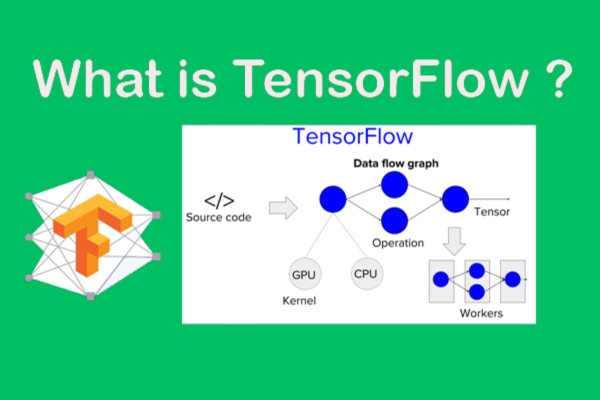
TensorFlow is commonly used in:
- Image recognition
- Natural language processing
- Predictive analytics
- Recommendation systems
Many AI and machine learning courses introduce TensorFlow early because it balances flexibility with scalability.
Why TensorFlow Matters in Artificial Intelligence
TensorFlow plays a key role in artificial intelligence because it allows models to move from experimentation to production smoothly. Organizations choose TensorFlow because it supports efficient computation and consistent deployment.
Key reasons TensorFlow is important:
- It handles large datasets efficiently
- It runs on CPUs, GPUs, and TPUs
- It supports cloud, mobile, and edge deployment
- It integrates well with Python-based data tools
Most AI machine learning courses list TensorFlow as a core technical skill.
Understanding TensorFlow Architecture at a Conceptual Level
At a high level, TensorFlow Architecture defines how data flows through operations to generate results. TensorFlow uses a graph-based model where computations are represented as nodes and connections.
The main idea behind TensorFlow Architecture is simple:
- Data enters as tensors
- Operations transform the data
- Results flow through a defined structure
This design allows TensorFlow to optimize performance and scale across hardware environments.
Core Components of TensorFlow Architecture
To understand how TensorFlow works internally, it is important to break down TensorFlow Architecture into its core components.
1. Tensors as the Fundamental Data Unit
Tensors are multi-dimensional arrays that store data. They can represent single values, lists, tables, or higher-dimensional structures.
Examples of tensors:
- Scalar: a single number
- Vector: a list of values
- Matrix: rows and columns of data
Every computation in TensorFlow Architecture operates on tensors.
2. Computational Graphs
A computational graph defines how operations are connected. Each node represents an operation, and each edge carries data.
Benefits of using graphs:
- Clear execution order
- Parallel processing
- Efficient memory usage
The graph-based execution model is a defining feature of TensorFlow Architecture.
3. Operations and Functions
Operations perform computations on tensors. Examples include addition, multiplication, activation functions, and matrix operations.
Operations form the execution backbone of TensorFlow Architecture, enabling both training and inference.
4. Execution Engine
The execution engine decides how and where operations run. It manages hardware resources such as CPUs and GPUs.
This flexibility allows TensorFlow Architecture to scale from local development to enterprise systems.
5. APIs and Abstraction Layers
TensorFlow offers multiple API layers. High-level APIs simplify model building, while low-level APIs provide control.
These layers make TensorFlow Architecture accessible to beginners while remaining powerful for advanced users.
TensorFlow Workflow Explained Step by Step
Understanding workflow helps learners see how TensorFlow Architecture functions in practice.
Typical workflow steps:
- Define input tensors and variables
- Build the computation graph
- Specify a loss function
- Choose an optimizer
- Train the model
- Evaluate performance
Each step relies on the structured flow defined by TensorFlow Architecture.
A Simple TensorFlow Example for Beginners
The example below demonstrates how TensorFlow executes operations using its internal design.
import tensorflow as tf

x = tf.constant([[1.0, 2.0]])
w = tf.Variable([[0.5], [0.5]])
b = tf.Variable([0.1])

y = tf.matmul(x, w) + b
print(y)
This example shows:
- Tensors holding data
- Operations applied in sequence
- Output generated through computation
Even in simple scripts, TensorFlow Architecture manages execution automatically.
Eager Execution and Graph Execution
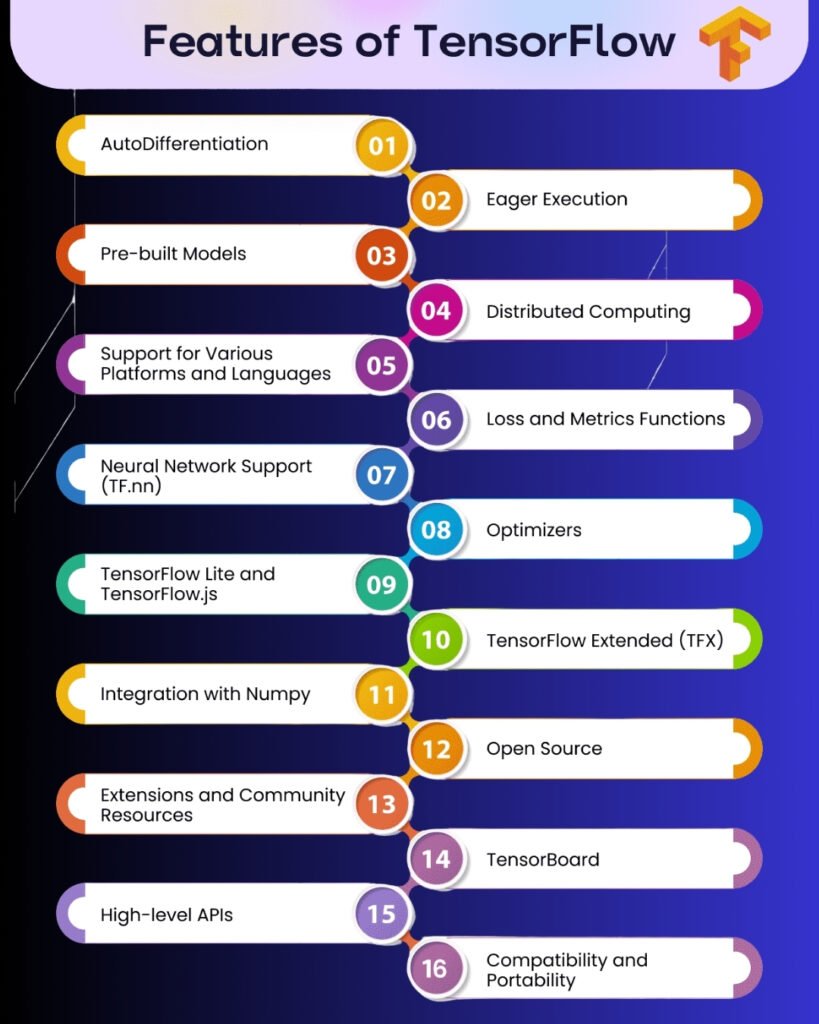
Modern TensorFlow uses eager execution by default, which makes learning easier.
Eager Execution
- Runs code immediately
- Simplifies debugging
- Ideal for beginners
Graph Execution
- Optimizes performance
- Enables parallel processing
- Used in production systems
Both modes operate within the same TensorFlow Architecture framework.
Role of Keras in TensorFlow Architecture
Keras is a high-level API built into TensorFlow. It allows developers to create models using simple and readable code.
Example:
model = tf.keras.Sequential([
    tf.keras.layers.Dense(16, activation='relu'),
    tf.keras.layers.Dense(1)
])
Keras hides low-level complexity while still relying on TensorFlow Architecture underneath.
TensorFlow Architecture in Deep Learning Models
Deep learning models involve multiple layers and large parameter sets. TensorFlow Architecture supports these models through efficient computation and automatic differentiation.
Key processes include:
- Forward propagation
- Error calculation
- Backpropagation
- Weight updates
These steps are handled seamlessly by TensorFlow Architecture.
Real-World Applications of TensorFlow
TensorFlow is widely used across industries, which makes it central to AI and machine learning courses.
Common applications:
- Healthcare image analysis
- Financial fraud detection
- Recommendation engines
- Speech recognition
In all these cases, TensorFlow Architecture ensures reliable and scalable execution.
TensorFlow in Artificial Intelligence Free Course with Certificate Paths
Many learners begin with an Artificial intelligence course with certificate before advancing to professional programs. TensorFlow often appears as the main practical tool in these learning paths.
TensorFlow suits beginners because:
- It has strong documentation
- It has a large community
- It aligns with industry needs
These qualities make TensorFlow Architecture a valuable learning foundation.
Training and Optimization in TensorFlow
Model training involves reducing prediction errors. TensorFlow handles this through automatic gradient calculation.
Common optimizers:
- Stochastic Gradient Descent
- Adam
- RMSprop
All optimizers operate within the structure defined by TensorFlow Architecture.
Model Deployment Using TensorFlow
Deployment is a critical stage in real-world projects. TensorFlow supports multiple deployment options.
Deployment methods include:
- Server-based deployment
- Mobile deployment
- Edge device deployment
Each method leverages the flexibility of TensorFlow Architecture.
Performance and Scalability Features
TensorFlow supports:
- Distributed training
- Multi-device execution
- Hardware acceleration
These features are built directly into TensorFlow Architecture, making it suitable for enterprise AI systems.
Common Challenges for Beginners
Learners in AI machine learning courses often face challenges such as:
- Understanding tensor shapes
- Debugging model errors
- Optimizing performance
A solid understanding of TensorFlow Architecture helps overcome these issues.
Skills You Gain by Learning TensorFlow
By mastering TensorFlow, learners gain:
- Practical model-building skills
- Data processing experience
- Deployment knowledge
- Debugging confidence
These skills are essential for careers in artificial intelligence and machine learning.
Why TensorFlow Is Central to AI Machine Learning Courses
Training programs focus on TensorFlow because it:
- Reflects real industry tools
- Scales from beginner to advanced projects
- Supports complete ML workflows
Learning TensorFlow Architecture prepares learners for real-world job roles.
Future of TensorFlow in Artificial Intelligence
TensorFlow continues to evolve with improved tools, better performance, and broader deployment support. Professionals who understand TensorFlow Architecture remain relevant as AI systems grow in complexity.
Key Takeaways
- TensorFlow is a core framework in AI and ML
- TensorFlow Architecture defines how computation flows
- Beginners benefit from understanding internal design
- Real-world applications rely on TensorFlow scalability
- Structured learning accelerates career growth
Conclusion
TensorFlow knowledge bridges theory and real-world AI development by combining strong architecture with practical execution.
Enroll in H2KInfosys courses to gain hands-on TensorFlow experience and build career-ready artificial intelligence skills.

























2 Responses