Artificial Intelligence is revolutionising the way businesses function, but machine learning is the engine that drives most modern AI systems. If you want to build an AI Career, then knowledge of machine learning is a must. Machine learning is the base that drives everything from recommendation systems to chatbots, fraud detection to predictive analytics.
A few years ago AI felt like a sci-fi thing. It’s part of everyday life today. Whether it’s asking a virtual assistant for directions, receiving personalised Netflix recommendations, or using an AI-powered coding tool, machine learning is at work behind the scenes.
Why Is Everyone Talking About Artificial Intelligence?
AI is one of the fastest growing areas in tech. The emergence of generative AI, large language models, intelligent automation, and AI-enabled business applications has prompted organisations to invest heavily in AI talent.
What’s interesting is that a lot of people treat AI and machine learning as the same thing. They are not quite the same thing.
Artificial intelligence is the big picture . Think of intelligence in machines . We want machines to do things that normally involve intelligence .
Machine learning is one of the key technologies behind AI systems that allows them to learn from data, identify patterns, and improve over time without being explicitly programmed for every scenario.
It’s like seeing a high performance sports car and appreciating the design. AI is the car everyone sees. Machine learning is the driving engine behind everything.
Machine Learning – The Real Power of Modern AI
Most real-world applications of AI are based on machine learning models trained on massive quantities of data.
For instance:
- Content recommendations are based on viewing behaviour on streaming services.
- Banks use predictive models to identify suspicious transactions.
- Machine learning speeds up the detection of disease risk for health care organizations.
- Retail firms predict customer demand and manage inventory.
- Autonomous cars are continuously learning from their environment.
These are not science fiction experiments any more. These are mission-critical systems that are delivering tangible results.
This increasing demand is the reason why an increasing number of professionals are actively searching for artificial intelligence training programs that offer practical machine learning experience rather than theoretical knowledge alone.
The Skills Employers Really Want
In going through a bunch of job descriptions in the AI world, one thing I’ve noticed is that employers very rarely just ask for AI knowledge.
They typically want candidates who can:
- Develop machine learning models
- Tools for Python and Data Science
- Analysis of datasets
- Train and tune algorithms
- Deploy AI in real world environment
- Understand AI platforms on the cloud
Companies want people who can use data to solve business problems, not explain AI concepts.
And that’s why hands-on learning is so important.
Why Online Learning Is The Path Of Choice
Not everyone can afford to quit their job and go to a full-time university program. This is a major reason why the demand for a quality online machine learning course is growing.
Online learning offers several advantages:
Flexibility:
Professionals can learn and still retain their current jobs and responsibilities.
Real World Projects
The best programs feature industry-based projects, not just classroom exercises.
Faster Skill Acquisition
Learners can build the skills they need for a job in months rather than years in a traditional academic environment.
Industry Orientated Curriculum
Technology changes fast. Many of the best online programs update their curriculum regularly to stay on top of the latest trends in AI and employer needs.
Many people I have spoken to have successfully transitioned from business analysis, software development, quality assurance and even non-technical backgrounds into AI-related roles with a combination of structured online training and project experience.
AI in 2026: What’s Fuelling Demand?
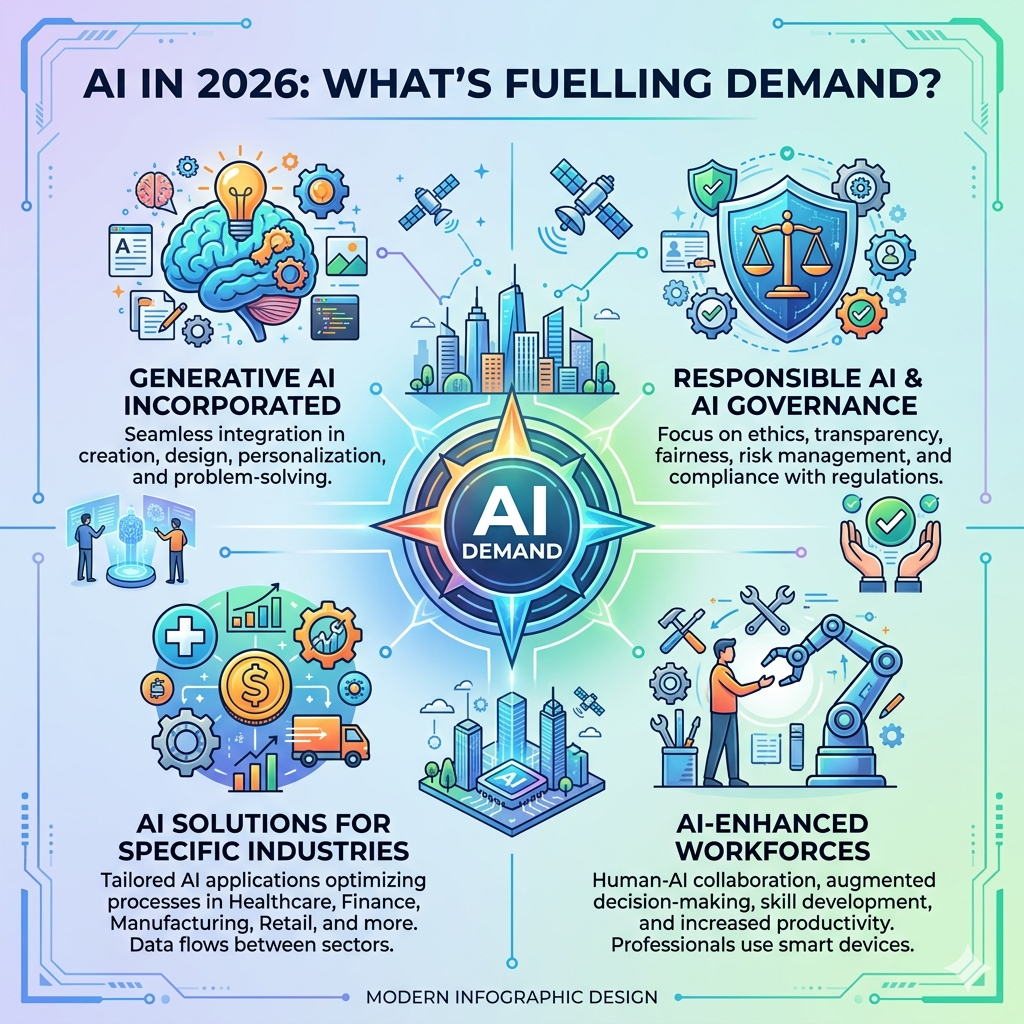
The AI landscape continues to evolve rapidly.
Here are some of the top trends affecting the industry:
Generative AI Incorporated
Companies are integrating AI assistants into customer service, software development, marketing, and business operations.
Responsible AI & AI Governance
As AI adoption grows, companies need professionals who understand ethical implementation, transparency, and regulatory considerations.
AI Solutions for Specific Industries
Healthcare, finance, manufacturing, logistics and cybersecurity are increasingly deploying specialised AI models built for their industries.
AI-Enhanced Workforces
AI is frequently deployed to improve productivity and decision-making, not to eliminate workers.
This is creating opportunities for people who have machine learning skills and real business sense.
How to Choose AI Machine Learning Courses
Not all training programs are created equal.
Keep in mind the following when searching for ai machine learning courses:
Learning by Doing
Theory is good but employers don’t care about your theory, they care about what you can build.
Search for programs that offer:
- Actual data
- Senior Projects
- Case studies and
- Model deployment exercises
- Experience of Instructor
Working with industry professionals who have worked on real AI implementations will often teach you things that you can’t learn from books.
Career Assistance
Resume writing, interview preparation and project portfolio development advice can all lead to better job outcomes.
Industry Tools
Training should include commonly used technologies in the field like:
- Python ML libraries Visualization tools
- Cloud AI Platforms .
- Deep Learning Frameworks A Practical Learning Option To Look At
H2K Infosys has earned a name for imparting structured learning with practical project experience for professionals when it comes to industry relevant AI skills.
One thing that is very noticeable is that the emphasis is on practical application, not just academic teaching. Students participate in hands-on exercises that simulate business situations and can help establish a link between training and employment.
Their programs are especially attractive for:
- Career switchers moving into AI and data science
- IT professionals who want to specialise
- For professionals with flexible schedules
- People looking for a full artificial intelligence training
In an industry where employers are increasingly seeking demonstrable skills, practical exposure can be a real differentiator.
A Real Life Viewpoint
A pattern I see over and over again is that the successful AI professionals rarely begin as experts.
Most start with curiosity.
They take a course on machine learning, build a few projects, struggle with model errors, learn how data behaves in the real world and build confidence one step at a time.
Initially the learning curve can seem steep. It is normal.
What counts is lots of practice and experience of real business problems.
The people getting AI-related jobs today are often the ones who went beyond watching tutorials and started to build things.
Concluding Words
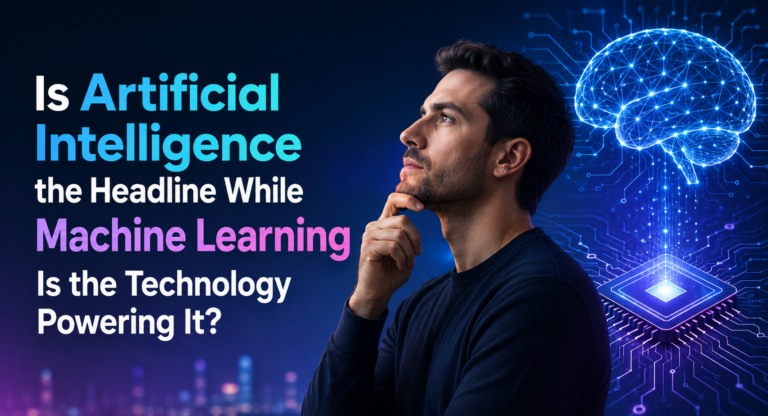
Artificial intelligence may be dominating headlines, investor conversations and tech conferences, but machine learning is the underlying technology that makes modern AI possible.
Demand for skilled professionals is expected to remain strong as companies continue investing in AI-driven solutions. The smartest approach is to emphasise practical machine learning expertise, hands-on projects, and industry-ready training.
If you’re looking for a first machine learning course on the web or trying to decide between the different machine learning course online , the goal should be simple : learn the concepts, apply them to real problems, and build experience that employers can trust.
This is where quality artificial intelligence training programs, especially those that focus on practical application, such as those provided by H2K Infosys Training Programs, can be a great starting point to build a future-ready AI career.
FAQs:
1. What is the difference between artificial intelligence and machine learning?
Artificial intelligence is the broader concept of creating machines that can perform tasks requiring human-like intelligence. Machine learning is a branch of AI that enables systems to learn from data, identify patterns, and improve their performance without being explicitly programmed for every situation.
2. Is machine learning a part of artificial intelligence?
Yes. Machine learning is one of the major technologies used within artificial intelligence. Many modern AI applications, including recommendation systems, fraud detection tools, predictive analytics, and AI assistants, rely on machine learning models.
3. Why is machine learning important for artificial intelligence?
Machine learning allows AI systems to analyze large amounts of data, recognize patterns, make predictions, and improve over time. It powers many practical artificial intelligence applications used by businesses today.
4. Should I learn artificial intelligence or machine learning first?
For most beginners, learning machine learning fundamentals is a good starting point for building an AI career. Skills such as Python, statistics, data analysis, machine learning algorithms, and model evaluation provide a strong foundation for advanced AI topics.
5. What skills are needed for a career in AI and machine learning?
Common skills include Python, data analysis, statistics, machine learning algorithms, model training, deep learning, cloud platforms, and model deployment. Practical project experience is also valuable when applying for AI and machine learning roles.