Yes, if you’re just starting, a well-structured BA Course like the one from H2K Infosys generally covers the core skills you actually need to step into a business analyst role, not just theory, but a practical, job-ready understanding.
Let me explain this the way I wish someone had explained it to me when I first looked into Business Analyst Training.
When you hear “business analyst,” it sounds broad. Almost confusing. Are you working with data? Talking to stakeholders? Writing documents? The answer is kind of all of it. That’s why choosing the right BA Course matters more than people realize. Somewhere in the middle of researching programs, I came across H2K Infosys, and what stood out wasn’t just the curriculum, it was how grounded it felt in real work scenarios.
So, what does a beginner actually need?
A beginner doesn’t need overwhelming theory. You need clarity.
A solid BA Course should walk you through:
- How businesses actually function
- How to gather and document requirements
- How to communicate between technical and non-technical teams
- How to think through problems, not just solve them
From what I’ve seen, a good business analysis training program (including this one) tries to simulate what happens on the job. And honestly, that’s where most courses either win or fail.
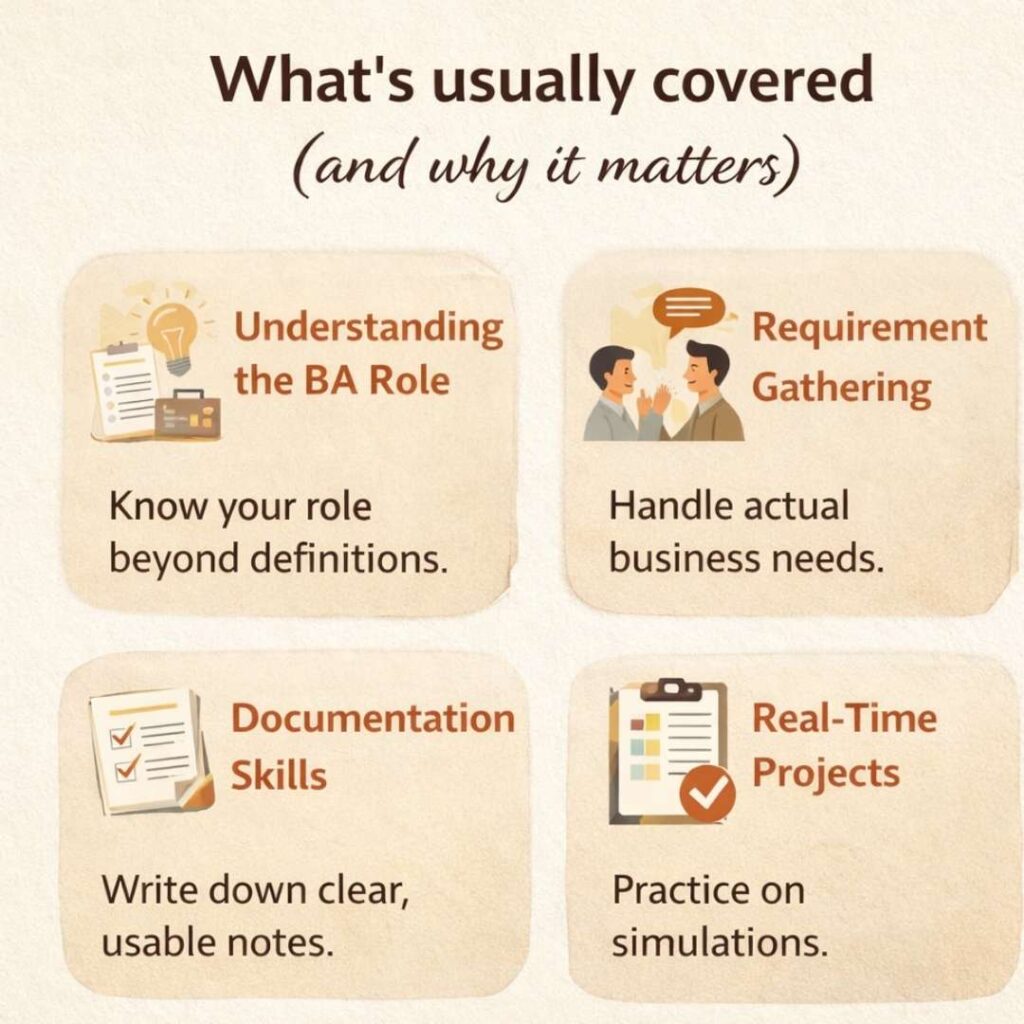
What’s usually covered (and why it matters)
Let’s break it down in a real-world way.
1. Understanding the BA Role (not just the definition)
Most beginners think a BA writes documents. That’s not quite right.
A proper BA Course introduces you to the role through scenarios like how a retail company improves its checkout process or how a bank reduces customer complaints. These examples stick way better than definitions.
I remember seeing a case where a BA helped reduce delivery delays just by identifying a communication gap. Simple, but powerful.
2. Requirement Gathering (this is where things get real)
This is the backbone of any business analyst training and placement program.
You’ll learn:
- How to talk to stakeholders (and what questions to ask)
- How to avoid vague requirements (which happen a lot in real life)
- How to translate business needs into structured documentation
A beginner-friendly BA Course usually includes mock sessions or role-play. And yeah, it feels awkward at first, but it’s exactly what happens in meetings.
3. Documentation Skills
This part sounds boring, but it’s where you build credibility.
In most business analyst classes, you’ll practice:
- Writing requirement documents
- Creating use cases
- Structuring clear workflows
The difference between average and good BAs? Clarity. A strong BA Course trains you to write so that even someone outside the project understands what’s going on.
4. Real-Time Project Exposure
This is where things start clicking.
A beginner doesn’t just need lessons they need context. A well-designed BA Course includes project-based learning where you:
- Work on a simulated business problem
- Go through the full lifecycle
- Make mistakes (and fix them)
I’ve seen people struggle for weeks with concepts, then suddenly “get it” during a project. That’s not a coincidence.
5. Communication & Stakeholder Management
This part is often underestimated.
A practical business analysis online training program teaches you how to:
- Handle conflicting requirements
- Ask better follow-up questions
- Keep discussions productive
Honestly, this is the skill that separates someone who “completed a course” from someone who can actually do the job.
Does it prepare you for certification?
Short answer: yes, if done right.
A structured business analyst certification online path is usually aligned with industry-recognized frameworks. The good thing about combining certification prep with a BA Course is that you don’t just memorize, you understand.
And that matters because certification questions today are more scenario-based than ever. They test judgment, not just definitions.
Is it beginner-friendly or overwhelming?
This is where experience kicks in.
Some business analyst courses throw too much at you too quickly. A good BA Course, on the other hand, builds gradually:
- First, understanding the role
- Then, practicing individual skills
- Finally, applying everything together
From what I’ve seen, that layered approach makes a huge difference for beginners.
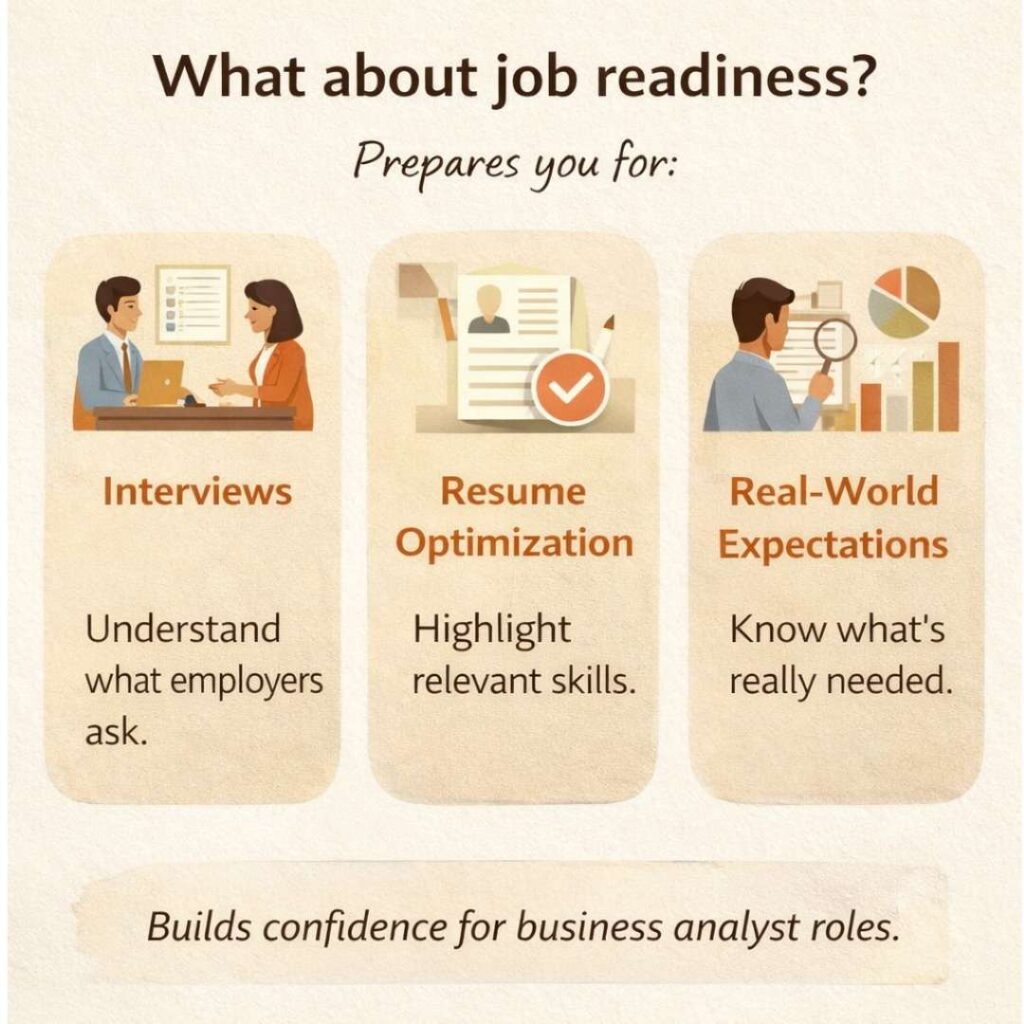
What about job readiness?
Let’s be honest, this is what most people care about.
A strong BA Course tied to business analyst training and placement doesn’t just teach it prepares you for:
- Interviews
- Resume building
- Real-world expectations
In recent hiring trends (especially post-2024), companies are leaning more toward candidates who can demonstrate practical understanding rather than just certifications. That’s why project exposure inside a BA Course is becoming non-negotiable.
A quick real-world example
A friend of mine switched careers from operations to business analysis last year. No tech background.
What helped wasn’t just theory it was:
- Practicing requirement sessions
- Working through messy, real-life case studies
- Getting feedback on mistakes
That’s exactly what a good BA Course aims to replicate.
And honestly, that transition would’ve been much harder with a purely theoretical approach.
So does it really cover “all essentials”?
If we’re being practical, yes, a well-designed BA Course covers what a beginner actually needs:
- Core concepts
- Practical application
- Communication skills
- Project experience
But here’s the honest part: no course alone makes you perfect.
What it does is give you a solid, realistic starting point.
Conclusion
A BA Course is only as useful as how you engage with it.
You can watch every session and still feel lost,
Or you can actively practice, ask questions, and treat it like real work, and suddenly things start making sense.
That’s usually the turning point.
If you’re considering stepping into business analysis, starting with a structured BA Course isn’t just helpful it saves you months of confusion. And if the course focuses on real scenarios instead of just slides, you’re already ahead of most beginners.