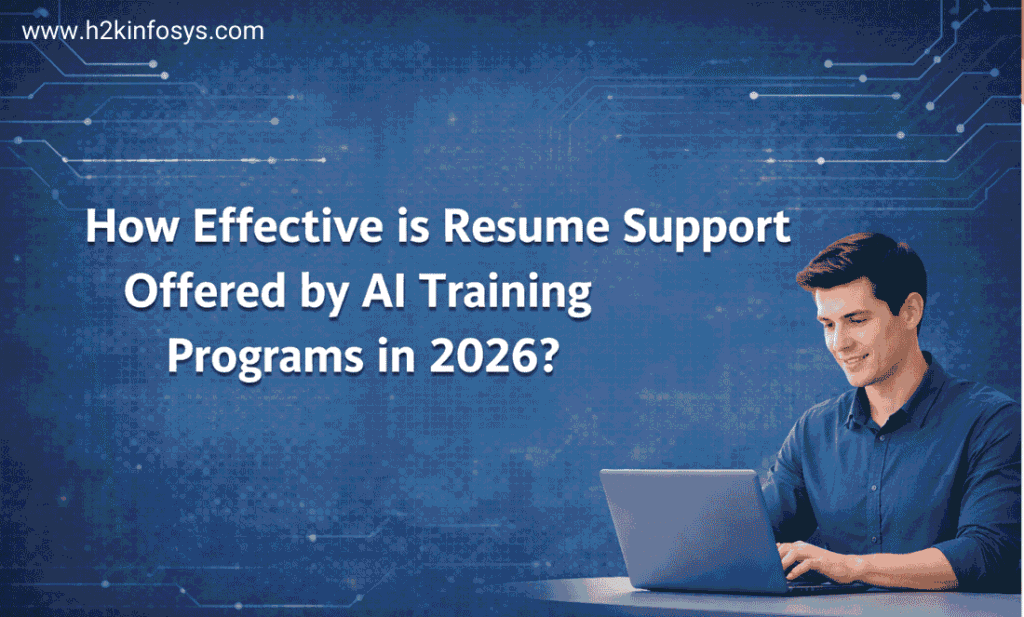
In 2026, AI powered resume support in training programs is becoming an essential resource for working professionals aiming to enhance their career prospects in the field of artificial intelligence (AI) and machine learning (ML). These programs, including those offered by H2K Infosys, provide a combination of automated tools, personalized feedback, and data-driven insights to optimize resumes for job search success. By leveraging AI to tailor resumes to specific job roles and industry requirements, these programs assist professionals in aligning their skills with current market demands, ensuring they stand out to employers in the competitive AI job market.
What is AI-Driven Resume Support in 2026?
AI driven resume support refers to the application of artificial intelligence tools and technologies to assist in creating, refining, and optimizing resumes for job seekers. These tools analyze the job market, identify key industry specific keywords, and assess the alignment of a candidate’s experience with job descriptions. In 2026, AI-powered platforms go beyond simple keyword matching by offering advanced features such as:
- Personalized Recommendations: AI tools suggest tailored changes based on individual experiences and targeted job roles.
- Optimization for ATS (Applicant Tracking Systems): Resumes are optimized to pass through ATS software, increasing the likelihood of human recruiters reviewing the resume.
- Performance Insights: AI systems analyze job trends, salary benchmarks, and employer preferences to suggest improvements that make a resume more competitive.
These features are designed to bridge the gap between job seekers and employers by ensuring that resumes meet the current demands of the market, improving chances for a higher response rate from recruiters and hiring managers.
How Does AI Resume Support Work for AI and ML Professionals?
AI resume support for AI and ML professionals is designed to help individuals in these specialized fields effectively present their technical skills and project experiences. Here’s how AI-powered resume support typically works for these professionals:
1. Skill Identification and Categorization
AI tools analyze job descriptions for specific job roles like “Data Scientist,” “AI Engineer,” or “ML Researcher,” identifying core technical skills such as Python, TensorFlow, or deep learning techniques. The system then categorizes these skills into relevant sections of the resume, ensuring that the most valuable technical competencies are showcased prominently.
2. Keyword Optimization
AI tools use natural language processing (NLP) to extract job-related keywords and compare them against the resume content. By adjusting the resume to mirror these terms, professionals increase the likelihood of being flagged by Applicant Tracking Systems (ATS).
3. Project and Experience Enhancement
For AI and ML professionals, showcasing real-world projects, open-source contributions, or academic research is crucial. AI tools help structure these experiences in a manner that aligns with industry needs, focusing on measurable outcomes such as improved model accuracy, data processing speeds, or cost reductions achieved through AI/ML implementations.
4. ATS Compatibility
Since ATS is a common tool used by companies to filter resumes, AI powered platforms ensure that resumes are formatted correctly for these systems. They optimize layout, font choice, and structure to enhance visibility, ensuring that the system doesn’t discard the resume due to formatting errors.
Why is Resume Support Important for Working Professionals in AI?
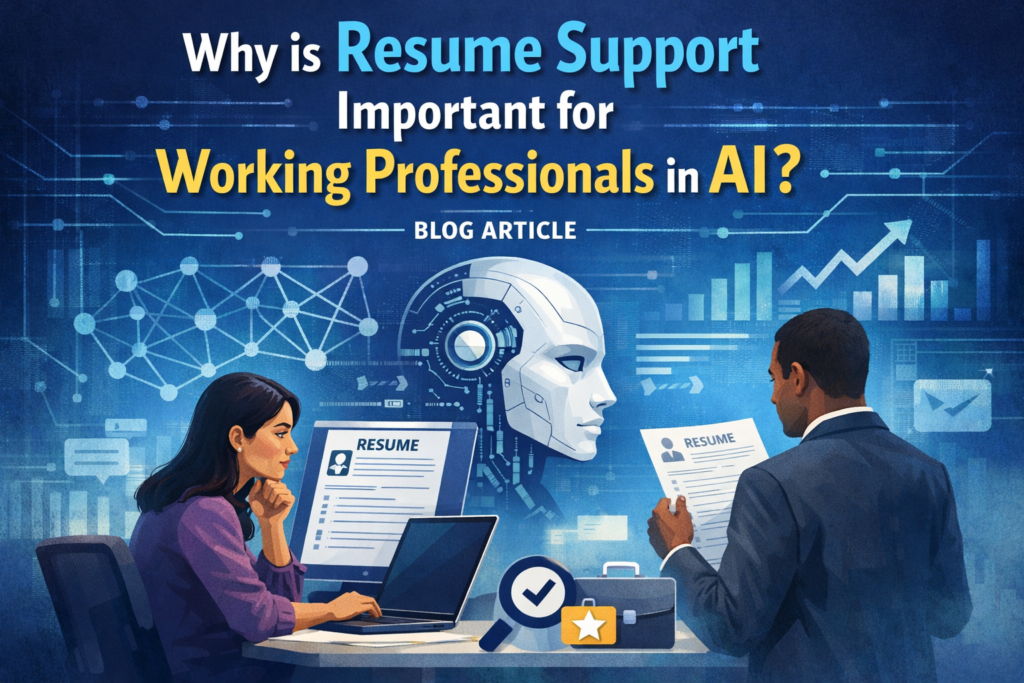
As the demand for AI and machine learning professionals continues to rise, job seekers need to distinguish themselves in a competitive market. Resume support becomes crucial for several reasons:
- High Competition in AI Fields: AI and ML fields are rapidly growing, attracting a large pool of qualified professionals. AI-driven resume tools help candidates stand out by presenting their skills and experiences in the most effective manner.
- Specialized Skill Sets: AI and ML professionals need to demonstrate their proficiency with specific tools, frameworks, and technologies, such as Python, R, Keras, and PyTorch. AI resume support helps organize and highlight these skills to meet the expectations of hiring managers in the AI sector.
- Improved Alignment with Job Descriptions: AI resume support helps job seekers tailor their resumes to the specific job roles they are applying for, ensuring that their expertise aligns with the company’s needs.
How Does AI Resume Support Improve Job Search Success?
The primary objective of AI-driven resume support is to increase a candidate’s chances of landing an interview. This is achieved in several ways:
1. Enhancing ATS Compatibility
As many companies use ATS to filter resumes before human recruiters ever see them, AI-driven resume support ensures that resumes are optimized for these systems. This increases the likelihood that resumes will be reviewed by hiring managers.
2. Optimizing for Industry-Specific Roles
AI platforms tailor resumes based on the specific job functions and industry expectations. For instance, AI and ML job roles often require expertise in machine learning algorithms, statistical analysis, and data visualization. AI tools ensure these elements are properly emphasized.
3. Improving Resume Structure and Readability
AI-powered tools suggest changes to improve the clarity and effectiveness of resumes. Whether it’s adjusting the wording, reformatting bullet points, or reorganizing sections, AI tools ensure that resumes communicate skills and experience in the most impactful way.
4. Data-Driven Insights
Some AI platforms provide data-driven insights on the job market, helping job seekers understand which skills are in high demand. This guidance allows candidates to focus on the most relevant skills and improve their chances of securing interviews.
What Skills Are Required to Learn AI and ML Courses?
AI and machine learning professionals require a diverse set of technical and soft skills. Here’s a breakdown of key competencies required for success in Ai learning for Beginners:
1. Programming Skills
- Python: The most widely used language for AI/ML development due to its simplicity and extensive libraries.
- R: Commonly used for data analysis and statistical computing.
- Java or C++: Used in performance-critical applications.
2. Mathematics and Statistics
- Linear Algebra: Essential for understanding machine learning algorithms and deep learning models.
- Calculus: Required for optimization techniques, particularly in deep learning.
- Probability and Statistics: Necessary for working with data and developing predictive models.
3. Data Handling Skills
- Data Preprocessing: Cleaning and preparing data for model building.
- Data Visualization: Using tools like Matplotlib and Tableau to present data and results effectively.
4. Machine Learning Techniques
- Supervised and Unsupervised Learning: The foundation of ML algorithms.
- Neural Networks: Core to deep learning models.
- Natural Language Processing (NLP): Important for AI applications that involve text data.
How is AI Used in Real-World IT Projects and Job Roles?
In real-world enterprise environments, AI and machine learning are applied across various sectors to solve complex problems and improve business operations. Some common applications include:
- Customer Support Automation: AI-driven chatbots and virtual assistants help automate customer service tasks, reducing operational costs and improving response times.
- Predictive Analytics: Businesses use AI to forecast trends and make data-driven decisions, whether in sales forecasting, inventory management, or predictive maintenance.
- Fraud Detection: AI algorithms analyze patterns in financial transactions to detect potential fraudulent activities.
- Personalized Recommendations: AI-driven recommendation engines, such as those used by e-commerce and streaming services, personalize user experiences by analyzing customer data.
Job Roles Using AI in Enterprise Environments:
- Data Scientist: Focuses on collecting, analyzing, and interpreting large datasets to generate insights for business decisions.
- Machine Learning Engineer: Designs and implements machine learning models to solve real-world problems.
- AI Research Scientist: Works on developing cutting-edge AI techniques, algorithms, and tools for furthering AI research.
- Business Intelligence Analyst: Uses AI-driven tools to generate business insights from complex datasets.
What Are the Career Paths After Learning AI and ML Skills?
After completing Ai machine learning courses, professionals can pursue several career paths, depending on their interests and expertise. Some of the top career roles include:
- AI Engineer: Designs and develops AI-based applications and solutions.
- Data Scientist: Works on analyzing and interpreting large datasets to generate actionable insights.
- Machine Learning Engineer: Focuses on developing machine learning models that can automate tasks and solve specific problems.
- AI Researcher: Conducts research to develop new AI algorithms and improve existing technologies.
Frequently Asked Questions (FAQ)
1. How effective is AI resume support for beginners in AI?
AI resume support tools can be very effective for beginners, as they provide guidance on how to showcase skills and knowledge. The tools help beginners identify which skills are most relevant and guide them in structuring their resumes in a way that appeals to recruiters.
2. Can AI tools help with career path recommendations?
Yes, some AI powered platforms provide career path recommendations based on the individual’s skills, interests, and job market trends. These insights can help guide professionals in their learning journey and job search.
3. How does AI optimize resumes for ATS?
AI tools analyze job descriptions and ensure that the resume contains relevant keywords and is formatted in a way that is compatible with ATS systems, increasing the chances that the resume will be reviewed by a recruiter.
Conclusion
Key Takeaways:
- AI-driven resume support is becoming increasingly important for AI and ML professionals in 2026.
- These tools optimize resumes for ATS, enhance keyword usage, and structure content for maximum impact.
- Professionals can rely on AI powered platforms to improve their chances of securing interviews and landing jobs in the competitive AI and ML fields.
Explore H2K Infosys courses to gain hands on experience and advance your AI and ML career. Our training programs provide the necessary skills to succeed in this evolving field.