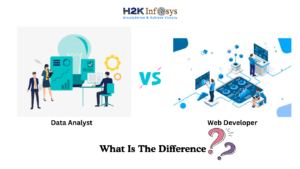
not really just different. Data analytics isn’t “easier” or “harder” than software development; it depends on how you think, what you enjoy, and the kind of problems you like solving.
Let’s Talk Honestly About Difficulty
I’ve seen people switch from coding-heavy developer roles into data analytics and say, “This feels more practical.” And I’ve also seen others struggle because analytics demands a different mindset less about building systems, more about interpreting messy real-world data.
So the real question isn’t difficulty.
What Makes Data Analytics Feel Challenging?
When people say “data analytics is hard,” they’re usually talking about these parts:

1. Working With Messy, Real Data
Unlike textbook examples, real datasets are… chaotic. Missing values, duplicates, weird formats you name it. Cleaning data can take more time than analysis itself.
And honestly, that surprises beginners.
2. Thinking Beyond Tools
Learning Excel, SQL, or Python isn’t the hardest part. The tricky bit is knowing what question to ask.
For example:
- Why did sales drop last quarter?
- Which customer segment is most profitable?
That kind of thinking takes practice.
3. Communicating Insights
You don’t just analyze you explain. Sometimes to non-technical stakeholders. Turning numbers into clear stories? That’s a skill many underestimate.
What Makes Software Development Feel Hard?
On the other side, software development has its own complexity:
- Writing scalable, efficient code
- Debugging tricky issues that take hours (or days)
- Understanding frameworks, architecture, and system design
A developer might spend hours fixing a bug that turns out to be a single misplaced character. It’s mentally intense in a very different way.
Real-World Trend: Why Data Analytics Is Growing Fast
Here’s something interesting—over the past couple of years, companies have been hiring more analysts because data-driven decisions are no longer optional.
Even startups now track:
- User behavior
- Marketing performance
- Revenue patterns
This shift is why programs like Google Data Analytics Certification and practical data analyst online classes are getting so much attention. People want skills they can apply quickly in real business scenarios.
A Practical Comparison (From Experience)
Let me put it simply:
| Factor | Data Analytics | Software Development |
|---|---|---|
| Learning curve | Moderate | Steeper initially |
| Daily work | Data exploration, reporting | Coding, debugging |
| Creativity | High (in insights) | High (in building systems) |
| Tools | Excel, SQL, Python, BI tools | Java, Python, JS, frameworks |
| Output | Business insights | Functional applications |
Neither is “easy.” They just challenge different parts of your brain.
Why Many Beginners Prefer Data Analytics Today
I’ve noticed a pattern people from non-technical backgrounds often feel more comfortable starting with data analytics.
Why?
- Faster entry into the job market
- Less focus on heavy coding
- More business-oriented thinking
That’s where structured learning really matters. Random tutorials only get you so far.
H2K Infosys: Bridging the Gap Between Learning and Real Jobs
One thing worth mentioning learning data analytics in isolation can feel confusing. You learn tools, but you don’t always know how they connect in real jobs.
This is where training providers like H2K Infosys come in.
What Makes H2K Infosys Stand Out?
- Hands-on projects using real-world datasets
- Guidance that feels closer to workplace scenarios, not just theory
- Structured Data analyst online classes that build skills step by step
- Exposure to tools aligned with the Google Data Analytics Certification path
Instead of just learning “how SQL works,” you actually use it to solve business problems which is what employers care about.
So… Which One Should You Choose?
Here’s a simple way to decide:
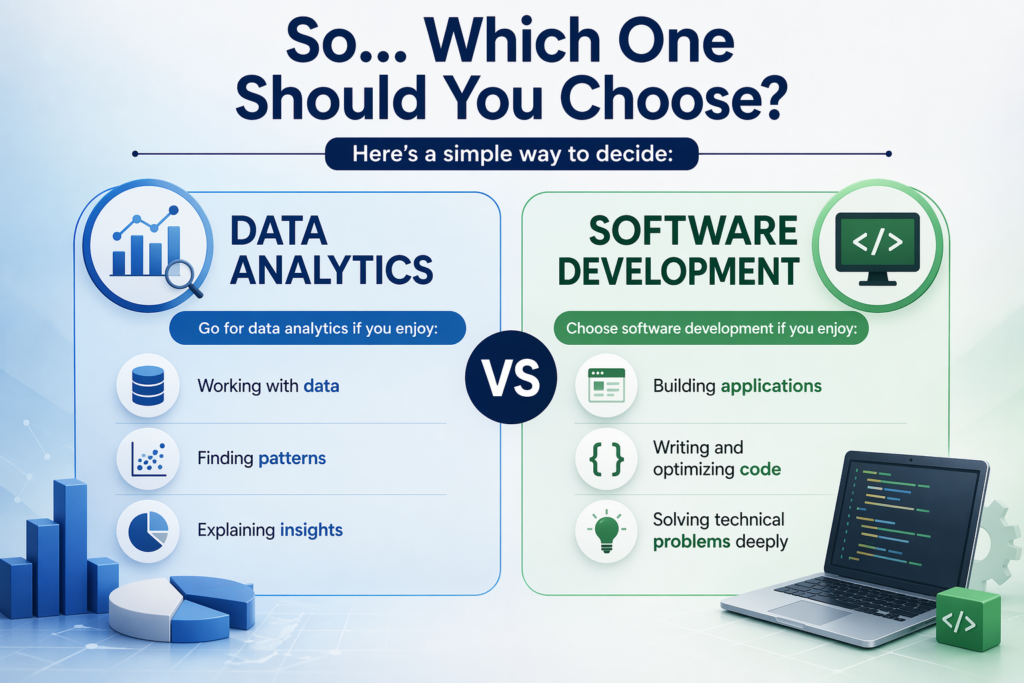
- Go for data analytics if you enjoy:
- Working with data
- Finding patterns
- Explaining insights
- Choose software development if you enjoy:
- Building applications
- Writing and optimizing code
- Solving technical problems deeply
Final Thought
If I’m being real data analytics doesn’t feel “hard” once you start thinking in questions instead of answers. That shift changes everything.
And with the right guidance, especially through structured programs like those from H2K Infosys, the learning curve becomes much more manageable.
At the end of the day, both careers are valuable. But the one that feels interesting to you? That’s the one that will feel easier in the long run.