For the U.S. to maintain its leadership in artificial intelligence, it must aggressively prioritise scaling a highly skilled, production-ready workforce that can deploy complex enterprise artificial intelligence systems. Capital matters. Chips matter. But building dominance is about quickly turning beginners, QA software testers and non-IT professionals into engineering talent through applied learning.
I have been following this space closely and, to be perfectly honest, the conversation about keeping the competitive edge in tech always boils down to raw computing power. You hear about data centers, power grids, and massive billion-dollar GPU clusters. But tech stacks are changing every six months. What’s the real bottleneck to unlocking real economic and strategic value? It’s human beings. In particular, people who know what to do with the technology after it’s built.
The Core Deficit: We Don’t Need More Thinkers, We Need More Builders
The problem is not that there is a lack of theoretical researchers writing papers. There is a severe lack of practitioners who can build a custom retrieval-augmented generation (RAG) pipeline, secure an artificial intelligence workflow against prompt injection, or deploy a machine learning model to production without crashing the server.
The industry is coming to terms with this reality. If you look at typical job postings these days, companies aren’t just looking for abstract math PhDs. We need engineers to work on infrastructure, pre-processing the data, fine tuning models.
| AI Capability | What Academics Think It Is | What the Enterprise Actually Needs |
| Data Mastery | Sourcing neat, pre-cleaned public datasets | Scraping, cleaning, and structuring messy, fragmented enterprise data |
| Model Deployment | Running a local python script in a notebook | Building containerized pipelines with Docker, Kubernetes, and REST APIs |
| System Reliability | Reaching a higher validation metric score | MLOps monitoring for data drift, token usage costs, and cloud scaling |
Where the Traditional Education Pipeline Breaks Down
The traditional way to train tech people tends to put people into long degree tracks with high overhead, focusing heavily on abstract math proofs and textbook theory. If you spend two years just calculating linear algebra matrices on paper you miss out on the practical, frantic pace of how engineering actually happens in the industry right now.
A view from the real world: I have spoken with a lot of computer science graduates who know the backpropagation formula backward and forward but haven’t the foggiest idea how to pull data from an API, run it through an open-source Hugging Face model, or build an autonomous agent workflow with LangChain.
We have to do targeted, specialised training to fill this gap and compete in the global economy. And this is exactly where the search for a comprehensive artificial intelligence course for beginners is a very strategic pivot, not only for individuals, but for the industry as a whole.
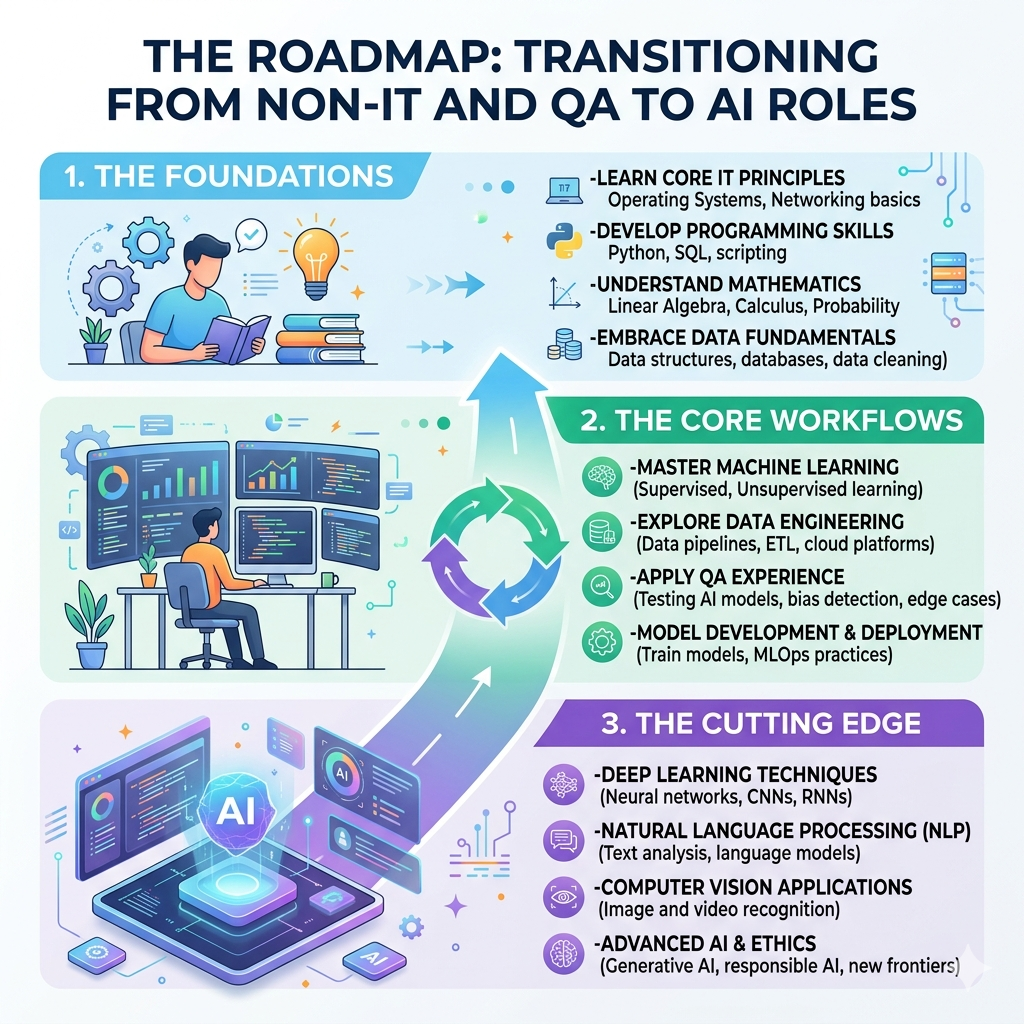
The Roadmap: Transitioning from Non-IT and QA to AI Roles
Some of the best talent coming into the field today is not from a traditional coding path. But we are seeing a huge wave of QA automation testers, data analysts and non-IT professionals successfully moving into these spaces.
Why? Because QA engineers already know system architecture and edge-case testing, and business analysts know user behaviour. When you train these professionals in a structured way, they know right away how to apply those skills to intelligent automation systems.
If you want to make this exact career move, the trick is to find a structured artificial intelligence engineer course that closes the technical gap. This is where a good training provider such as H2K Infosys can make a big difference.
Their training path emphasises the direct, hands-on tools that are actually used by modern tech teams, rather than bombarding you with just academic theories.
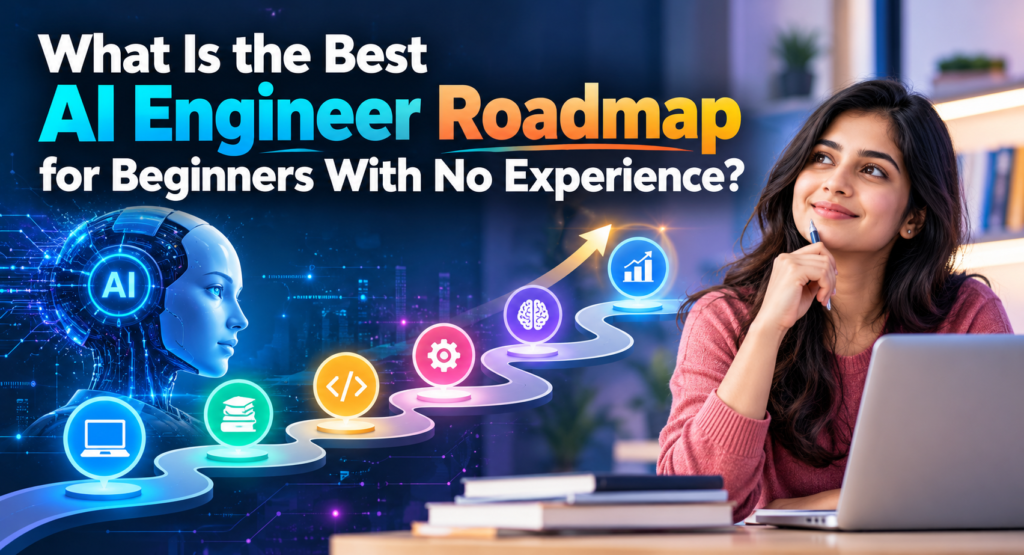
- The Foundations: Establish a solid base in Python programming, data structures, and key data manipulation libraries such as NumPy and Pandas.
- The Core Workflows: Get started with applied machine learning and learn about supervised and unsupervised learning algorithms using Scikit-learn.
- The Cutting Edge: You get a crash course in natural language processing (NLP), deep learning, vector databases and real Generative AI implementations.
H2K Infosys is so effective because they focus on live, expert-led instruction, combined with real-time projects in a cloud test lab. They know learning doesn’t stop at coding, and they complement their technical curriculum with intensive job placement assistance, resume optimisation and rigorous mock interview preparation to ensure you are truly market-ready.
Upskilling at Scale is the Only Way Ahead
There needs to be a constant influx of operational talent to maintain long-term technology leadership. We can no longer just rely on niche engineering specialists; we need general software developers, infrastructure engineers and tech professionals across all domains to know how to design and monitor intelligent applications.
If you are actively considering your next steps, investing time in ai and machine learning courses that align with the industry is easily one of the most stable career bets you can make. The world is practical and the world demands practical execution. Whoever can deliver on production workflows will continue to hold the keys to the future.