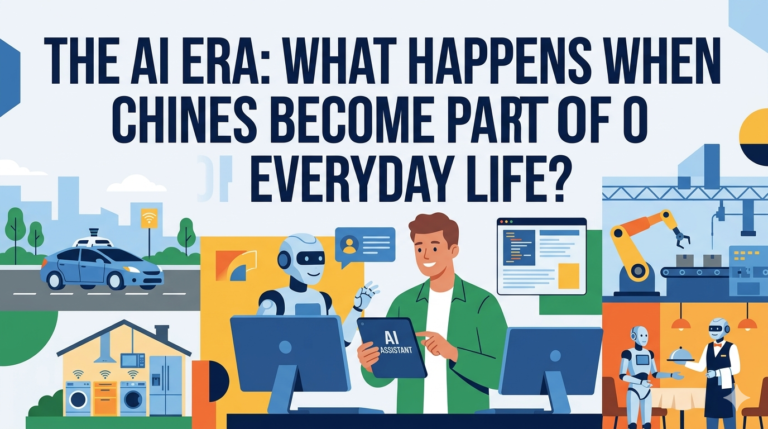
ArtificiaI Intelligence is no longer some futuristic concept sitting inside tech labs or sci-fi movies. It’s already part of everyday life from the way people shop online and drive cars to how doctors detect diseases and students learn new skills. And honestly, most people interact with ArtificiaI Intelligence several times a day without even realizing it.
A few years ago, AI felt like something big companies use. Now? It’s quietly shaping daily routines in ways that feel almost normal. Your Netflix recommendations, spam filters, voice assistants, customer support chats, banking fraud alerts all powered by ArtificiaI Intelligence in one form or another.
What’s interesting is how fast this shift happened.
One moment businesses were experimenting with automation. The next, AI tools became part of office meetings, hiring decisions, classrooms, hospitals, and even small local businesses trying to compete online. It feels less like a tech trend now and more like a permanent layer added to modern life.
AI Isn’t Replacing Everyday Life – It’s Blending Into It
There’s this common fear that ArtificiaI Intelligence will suddenly replace everything humans do. In reality, what’s happening is more subtle.
Machines are becoming collaborators.
Marketing teams could use ArtificiaI Intelligence to brainstorm content ideas, doctors might use machine learning models to identify patterns in scans and logistics companies might use predictive AI to prevent delivery delays. Teachers use AI-powered learning tools to personalize lessons.
The human is still involved.
That part matters.
The companies succeeding with ArtificiaI Intelligence right now aren’t the ones trying to remove people entirely. They’re the ones figuring out how humans and intelligent systems work together efficiently.
And honestly, that’s where the biggest career opportunities are opening up.
Why AI Skills Suddenly Matter in Almost Every Industry
A lot of people still assume AI careers are only for hardcore programmers or data scientists.
Not true anymore.
Businesses now need:
- AI analysts
- Machine learning support specialists
- AI-enabled project managers
- Prompt engineers
- Automation consultants
- Data professionals
- AI operations teams
- Business analysts who understand machine learning
Even non-technical professionals are being expected to understand how AI tools work.
That’s exactly why searches for an artificial intelligence course for beginners have exploded recently. People aren’t just curious anymore they’re trying to future-proof their careers.
I’ve noticed this especially among working professionals. Someone in banking wants to understand predictive analytics. A QA tester wants to move into AI testing. Marketing professionals are learning AI automation because they can already see the industry changing.
And to be fair they’re right to pay attention.
The Rise of Machine Learning in Everyday Systems
Machine learning is basically the engine driving modern AI.
Instead of programming every rule manually, machine learning systems learn from data patterns. That’s why apps seem to get smarter over time.
Take e-commerce as an example.
If you browse running shoes online, suddenly your feeds start showing sports gear, fitness watches, workout plans, and similar products. That’s not random advertising anymore. Machine learning models analyze behavior patterns to predict what users might want next.
Banks use machine learning to detect suspicious transactions.
Healthcare systems use it to identify early disease risks.
Streaming platforms use it to keep people engaged.
Even traffic navigation apps now predict congestion before it fully happens.
The interesting part? Most industries are still early in adoption.
That means demand for professionals with practical AI skills keeps growing.
Why Beginners Are Entering AI Faster Than Ever
Five or six years ago, learning AI felt intimidating.
You needed advanced math, deep coding knowledge, and often a computer science background just to get started.
Today, the learning curve is far more approachable.
Existing training platforms break up AI concepts into practical and digestible modules. Most students begin with a simple project based machine learning AI course instead of a theory heavy course with lectures.
That approach changes everything.
When learners build projects like:
- Chatbots
- Recommendation systems
- Predictive models
- Fraud detection simulations
- AI-powered dashboards
they start understanding how AI actually works in business environments.
And honestly, project experience matters more than memorizing definitions.
Recruiters increasingly look for applied skills.
AI in Workplaces: The Shift Is Already Happening
One thing people underestimate is how quickly AI adoption accelerated after generative AI tools entered mainstream business workflows.
Now companies are experimenting with:
- AI-assisted coding
- Automated reporting
- Customer support bots
- AI-driven cybersecurity
- Predictive maintenance
- AI-powered HR systems
- Intelligent document analysis
Even small businesses are adopting tools that were previously available only to enterprise companies.
I recently spoke with a small retail business owner who uses AI forecasting tools to manage inventory. A few years ago, that kind of technology would have required an expensive enterprise setup.
Now it’s available through affordable cloud platforms.
That democratization of AI is creating a huge wave of demand for practical learning.
Which explains why machine learning training courses are becoming popular among:
- College graduates
- Career switchers
- IT professionals
- Business analysts
- QA testers
- Cloud engineers
- Working professionals trying to stay relevant
AI Careers Are Expanding Beyond Silicon Valley
This is another important shift.
The AI opportunities are no longer limited to the big tech companies.
Healthcare providers, manufacturing companies, insurance firms, banks, telecom companies, logistics providers, and even government organizations are investing in AI systems.
In India especially, AI hiring has increased significantly across Hyderabad, Bengaluru, Pune, Chennai, and Gurgaon.
A lot of global companies now outsource AI development, automation testing, and data operations to skilled professionals worldwide.
So the barrier isn’t geography anymore.
The bigger challenge is skill readiness.
What Makes a Good AI Training Program?
This is where many beginners get stuck.
There are thousands of online AI courses now. Some are excellent. Some are honestly just recycled theory with flashy marketing.
A useful training program should focus on:
Practical Learning
Watching endless slides about algorithms doesn’t prepare someone for real work.
Hands-on labs, projects, and implementation exercises matter far more.
Industry-Relevant Tools
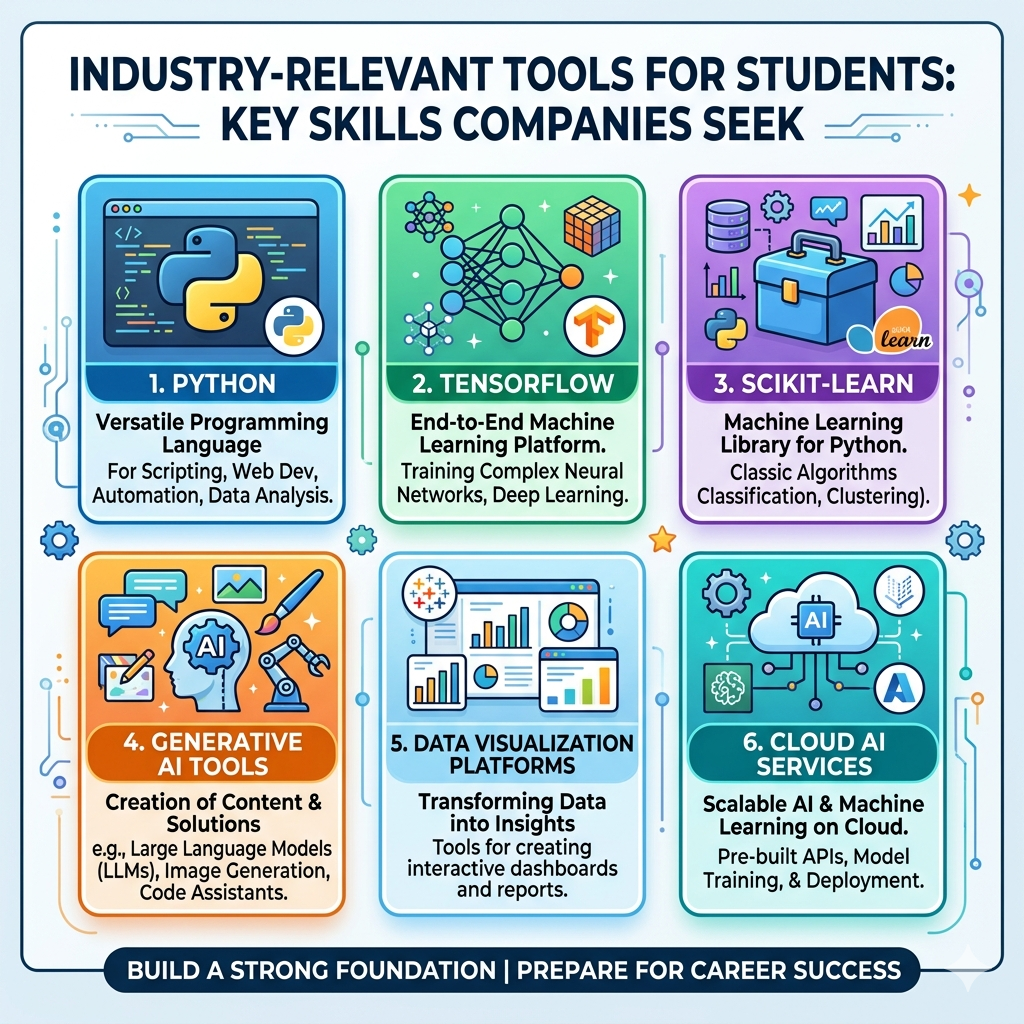
Students should learn tools companies actually use:
- Python
- TensorFlow
- Scikit-learn
- Generative AI tools
- Data visualization platforms
- Cloud AI services
Real Business Scenarios
The best learning happens when students solve realistic business problems.
For example:
- Predicting customer churn
- Building recommendation engines
- Fraud detection
- AI-powered analytics
- NLP-based automation
Career Guidance
A lot of learners don’t just want knowledge.
They want employability.
Resume support, interview preparation, project mentoring and certification guidance makes a huge difference.
Why Many Learners Choose H2K Infosys for AI Training
One thing that stands out about H2K Infosys is the focus on career-oriented learning instead of purely academic instruction.
Their programs are aimed at people at the beginning of their careers and working professionals who want to transition to roles in AI and machine learning.
The training approach is hands-on because of the mixture of:
- Instructor-led live sessions
- Real-time projects
- Job-oriented curriculum
- Flexible online learning
- Use cases from industry
- Support for interview preparation
Most students searching for an artificial intelligence course for beginners seek something structured yet not too intimidating.
That’s where H2K Infosys tends to connect well with learners.
Instead of throwing advanced theory immediately, the learning path gradually introduces concepts in a business-focused way.
For professionals exploring a machine learning AI course, that practical structure becomes valuable because it mirrors how AI projects actually happen in companies.
And honestly, mentorship matters more than many people realize.
Having instructors who explain why a model matters in a real business situation not just how the algorithm works mathematically makes the learning process much easier.
The Human Side of the AI Era
One thing people rarely talk about is how emotional this technology shift feels for many workers.
Some people are excited.
Others are nervous.
A lot of professionals quietly wonder:
“Will my current skills still matter in five years?”
That’s a very real concern.
But history usually shows the same pattern during major technology transitions.
The people who adapt early tend to create new opportunities for themselves.
We saw it during the rise of cloud computing.
We saw it with cybersecurity.
Now AI is creating another major shift.
The difference is the speed.
AI adoption is happening much faster than previous tech waves.
AI and Everyday Decision-Making
Another subtle change happening right now is how ArtificiaI Intelligence influences decision-making.
Recommendation systems shape what people watch.
Navigation systems influence where people drive.
AI hiring tools impact recruitment.
Financial algorithms affect loan approvals.
Healthcare AI systems support diagnostic decisions.
That’s why ethical AI discussions are becoming increasingly important.
Questions around:
- Data privacy
- Bias in AI models
- Transparency
- Responsible automation
- Human oversight
…are now part of mainstream business conversations.
The professionals who understand both ArtificiaI Intelligence technology and ethical implementation will likely become extremely valuable over the next few years.
Generative AI Changed Public Awareness Overnight
Before tools like ChatGPT became mainstream, many people barely interacted directly with AI.
Now millions of users generate text, images, code, presentations, and research assistance daily.
That public exposure changed how businesses think.
Executives suddenly realized AI wasn’t just a backend technology anymore.
It became customer-facing.
That’s why AI budgets increased dramatically across industries.
And because businesses move where ROI exists, companies are now aggressively looking for employees with AI literacy.
Even basic understanding can create advantages during hiring.
Should Beginners Start Learning AI Now?
Honestly, yes.
Not because everyone needs to become a machine learning engineer.
But because ArtificiaI Intelligence literacy is slowly becoming similar to digital literacy.
People don’t necessarily need to build complex neural networks.
But understanding:
- how AI works,
- where it’s used,
- what its limitations are,
- and how businesses apply it
…will become increasingly important across careers.
The good news is that modern machine learning training courses make the field far more accessible than before.
Many learners now start from completely non-technical backgrounds.
Some transition from manual testing into AI testing.
Others move from business analysis into AI analytics.
Some simply want to understand how AI impacts their industry.
That curiosity alone is becoming valuable.
Final Thoughts
The ArtificiaI Intelligence era isn’t arriving someday in the future.
It’s already here woven quietly into daily routines, workplaces, education systems, healthcare, finance, entertainment, and business operations.
Machines are becoming part of everyday life not by replacing humanity entirely, but by reshaping how humans work, learn, and make decisions.
And honestly, we’re probably still in the early chapters.
The people who understand AI today even at a foundational level are putting themselves in a much stronger position for tomorrow’s job market.
That’s why learning through a structured artificial intelligence course for beginners or a practical machine learning AI course can become more than just education. It can become career insurance.
For learners looking for flexible, career-focused guidance, H2K Infosys has become one of the recognized options helping professionals build real-world AI skills through hands-on machine learning training courses designed around current industry needs.
The technology will continue evolving.
That part is guaranteed.
The bigger question is whether people choose to stay observers… or become part of the transformation themselves.