The business analyst’s primary tools in 2026 include requirement management systems, data visualization programs, workflow modeling systems, collaboration dashboards, and project management tools. H2K Infosys is instrumental in assisting analysts in crystallizing multifaceted business problems. The current business analyst’s main focus is on leveraging the most effective tools to capture and address the business needs of their organization. The most effective tools focus on artificial intelligence, data visualization, and collaboration. The most important factors in tool selection are artificial intelligence, real-time data, and collaboration improvements for remote work. These tools enable analysts to work more quickly and more intelligently.
If you’re exploring BA Training, or already enrolled in business analyst courses, you’ll quickly notice that the role today is less about theory and more about using the right tools to translate business needs into actionable solutions.
Why Tools Matter for Business Analysts in 2026
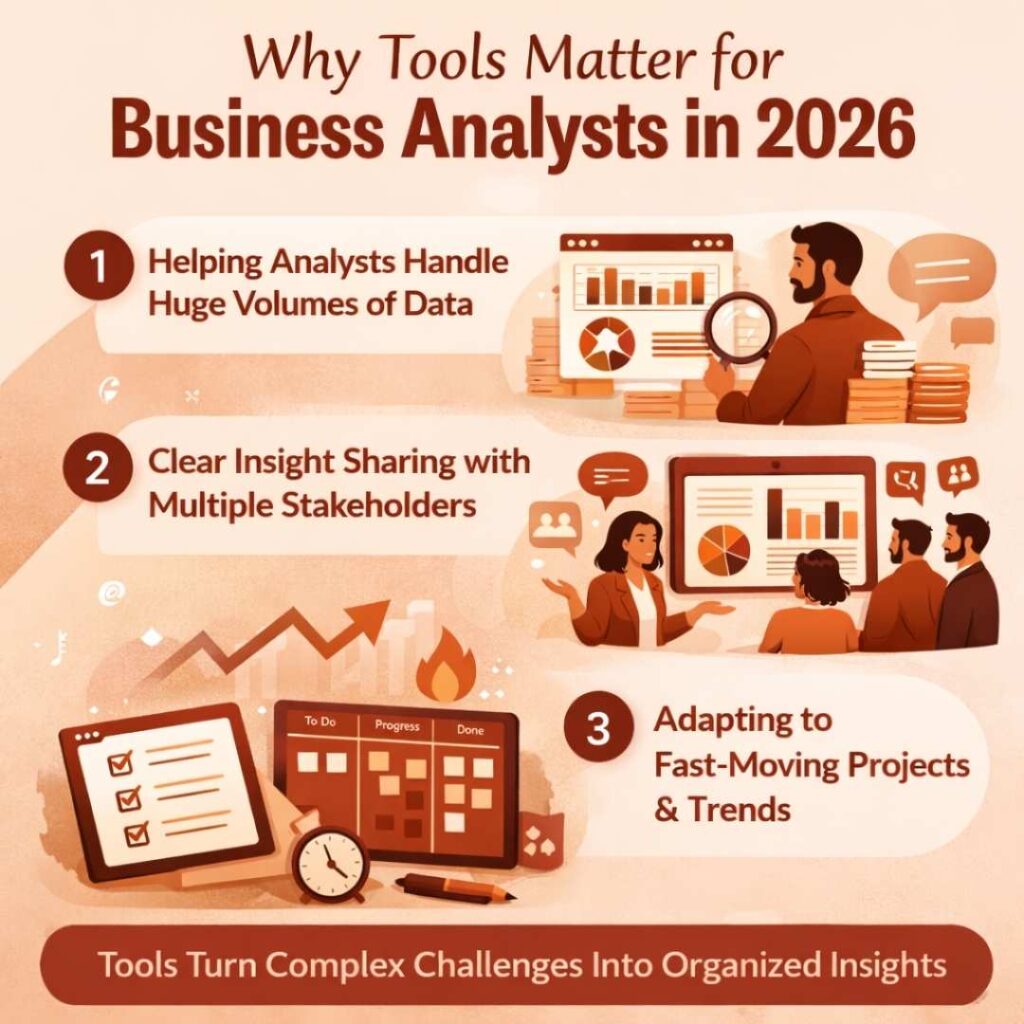
Here’s the reality: business analysts today deal with huge volumes of data, multiple stakeholders, and fast-moving projects. Doing everything manually? That’s almost impossible now.
In my experience working with analysts and students in business analysis online training, the difference between a beginner and a strong BA is often tool proficiency. The good ones know how to organize requirements, visualize trends, and communicate insights clearly.
And companies hiring for roles after business analyst training and placement programs expect candidates to be comfortable with these tools from day one.
1. Requirement Management Tools
One of the first tools every BA learns during business analyst classes is a requirement management platform.
These tools help you:
- Collect business requirements
- Track requirement changes
- Manage stakeholder feedback
- Maintain documentation in one place
Think about a real scenario. A retail company wants to launch a new mobile shopping feature. Without a structured requirement tool, conversations happen across emails, spreadsheets, and meetings. Details get lost.
With a proper requirement management system, everything from user stories to acceptance criteria stays organized.
Many learners pursuing ba certification say this is the first tool category that truly makes their work easier.
2. Data Visualization and Reporting Tools
Modern business analysts don’t just collect data they explain it.
A visualization tool helps transform raw data into dashboards and visual reports that stakeholders can understand in seconds.
For example:
Instead of sending a 20-page spreadsheet to executives, a BA can present a dashboard showing:
- Sales trends
- Customer behavior patterns
- Revenue performance
During business analyst training, many instructors emphasize that storytelling with data is now one of the most valuable BA skills.
Honestly, when you see decision-makers react to a clear visual report, you realize how powerful these tools are.
3. Process Modeling Tools
Another essential category analysts rely on is process modeling tools.
These tools allow business analysts to create diagrams that explain how a business process works.
Common diagrams include:
- Workflow diagrams
- Business process models
- System interaction flows
Imagine a bank trying to improve its loan approval process. The process currently takes seven days.
A BA can map the entire workflow visually, identify delays, and recommend automation steps. Suddenly, approval time drops to three days.
Students taking business analyst certification online programs often say process modeling is where everything “clicks” because they can finally see the business logic visually.
4. Collaboration and Documentation Platforms
Business analysis isn’t a solo job. It’s a communication role.
Analysts constantly interact with:
- Project managers
- Developers
- Business stakeholders
- Product teams
Collaboration platforms help everyone stay aligned by keeping notes, documentation, and updates in one shared workspace.
In real projects, I’ve seen analysts spend nearly half their time coordinating conversations and clarifying requirements. Without a central collaboration tool, things become chaotic very quickly.
That’s why most business analyst courses now include collaboration workflow training as part of their curriculum.
5. Tools for Tracking Projects and Managing Agile Workflows
An Agile approach has become standard practice for project management in most modern businesses, especially those in the product space.
Project tracking applications are beneficial for BAs to:
- Organize user stories
- Measure the progress of sprints
- Manage items in the backlog
- Collaborate with the dev team
- These abilities become crucial in Agile ecosystems because of the rapid and constant changes to the requirements.
Many participants of the business analyst training and placement program comment that Agile project management tools are some of the most frequently encountered tools in real-world jobs.
And to be truthful, once you become accustomed to them, you get the feeling that managing complicated projects is much more organized.
How Learning These Tools Helps Your BA Career
If you’re planning a career in business analysis, mastering these tools early gives you a big advantage.
Most hiring managers today look for candidates who have completed:
- ba training
- Business Analyst Certification Online
- Practical Business Analysis Online Training
Because they want analysts who can immediately contribute to projects.
I’ve spoken to many professionals who transitioned into the BA role after taking structured business analyst classes, and the common feedback is this: tools made them confident.
They could analyze problems faster, present insights clearly, and collaborate with teams smoothly.
The Increasing Need for Business Analysts
Business analysts are in demand across all sectors from finance and healthcare to e-commerce and logistics due to the roles expansion into areas beyond documentation. Current trends for 2025–2026 show ongoing recruitment of business analysts for all aforementioned sectors.
Today’s business analysts are involved in:
- data analysis
- development of product strategy
- user experience (UX) enhancement
- digital transformation initiatives
It’s no surprise that professionals are enrolling in business analyst courses and obtaining ba certification.
Conclusion
The top business analysts for 2026 will therefore not only be adept at communication but will also be proficient in the use of various tools that will assist them in converting business issues into decisions supported by data.
If you intend to pursue a career through business analyst training, developing skills in requirement management, data visualization, process modeling, collaboration tools, and project management tracking software will be critical to your success.
Whether you begin with online business analyst certifications, business analyst training courses, or online training in business analysis, your knowledge of these tools will be your best preparation for actual projects.