Introduction
Most US students today are looking for hands-on experience, real job preparation, and practical skills when choosing the best data analytics courses, not just certificates or theory-heavy lessons.
If you’ve ever tried searching for a best data analytics courses,, you’ll notice something pretty quickly… they all kind of sound the same.
“High-paying career.”
“Job-ready skills.”
“Industry demand.”
And yeah, those things are true, but they don’t really help you decide which course is actually worth your time.
I’ve spoken to a few people (and honestly made this mistake myself early on) who enroll in something that looks impressive… but halfway through, you realize you still wouldn’t know what to do if someone handed you a real dataset.
That’s exactly why students in the US are getting more selective now.
1. They Want Real Work Experience, Not Just Lessons
This is probably the biggest shift.
Students aren’t satisfied with just “learning SQL” anymore. Some learners even begin with basic statistics exercises and math worksheets before transitioning into real analytics projects. They want to use it like they would on the job.
For example:
- Working with messy datasets (because real data is never clean)
- Building dashboards that actually make sense to business teams
- Solving problems that feel like something a company would pay for
I’ve noticed that the best data analytics courses now include full projects that take you from raw data → insights → presentation.
That process matters more than memorizing syntax.
2. The Tools Need to Match What Companies Actually Use
There’s no point in learning tools that aren’t relevant anymore.
Students are paying attention to what’s being used in real jobs, especially with how fast things are changing post-2024, with AI and automation becoming part of analytics workflows.
Most good programs now include the following:
- SQL (still unavoidable)
- Python (especially for data cleaning and automation)
- Power BI or Tableau
- Excel (yes, still everywhere)
And something I personally find interesting is some best data analytics courses, are now slowly introducing AI-assisted analytics. Not deeply, but enough to show how tools are evolving.
A solid best data analytics course should connect these tools together, not teach them in isolation.
3. Job Support Is a Huge Deal Now
Let’s be honest, most people aren’t taking these best data analytics courses just out of curiosity.
They want:
- A job
- A career switch
- Better pay
So naturally, students look for programs that help with:
- Resume building
- Mock interviews
- Real-world project explanations (this is big in interviews)
I’ve seen candidates struggle not because they didn’t know the tools but because they couldn’t explain their work clearly.
That’s where structured programs like H2K Infosys come in. They don’t just teach you; you actually get exposure to real-time projects and guidance on how to present your experience.
And that part makes a noticeable difference when applying.
4. Flexibility Still Matters (Probably More Than Ever)
A lot of learners aren’t full-time students.
They’re:
- Working professionals
- People switching careers
- Sometimes managing family responsibilities.
So yeah, flexibility isn’t just a “nice feature”; it’s necessary.
The best data analytics courses usually offer a mix of
- Self-paced learning
- Live sessions
- Weekend batches
But here’s the thing: not all flexible best data analytics courses are effective.
Some just leave you on your own with videos. The better ones actually include mentor support, which helps you stay on track.
5. Mentorship Makes a Bigger Difference Than People Expect
This is one of those things you don’t realize you need… until you don’t have it.
You can watch tutorials all day, but when you’re stuck on something small, it can slow you down for days.
Having someone experienced explain:
“Here’s how this actually works in a company.”
That shortcut is incredibly valuable.
That’s why more students now prefer the best data analytics courses, where mentorship is part of the program, not something extra you have to pay for later.
6. Certifications Are Still Important but Not Alone
A certificate helps, sure.
But students are starting to realize the following:
It’s not the certificate that gets you hired; it’s what you can do.
So now they look for:
- Project-based proof
- Real scenarios
- Something they can actually talk about in interviews
The best data analytics courses combine certification with real experience, which is what employers actually care about.
7. What Are Students Really Hoping to Achieve?
At the end of the day, it comes down to outcomes.
Most learners are aiming for roles like the following:
- Data Analyst
- Business Analyst
- Reporting Analyst
And yes, salaries are still attractive; entry-level roles in the US can range roughly between $65K and $85K, depending on skills and location.
But here’s the reality: those roles go to people who can demonstrate real ability, not just course completion.
Why Learning Data Analytics Still Makes Sense in 2026
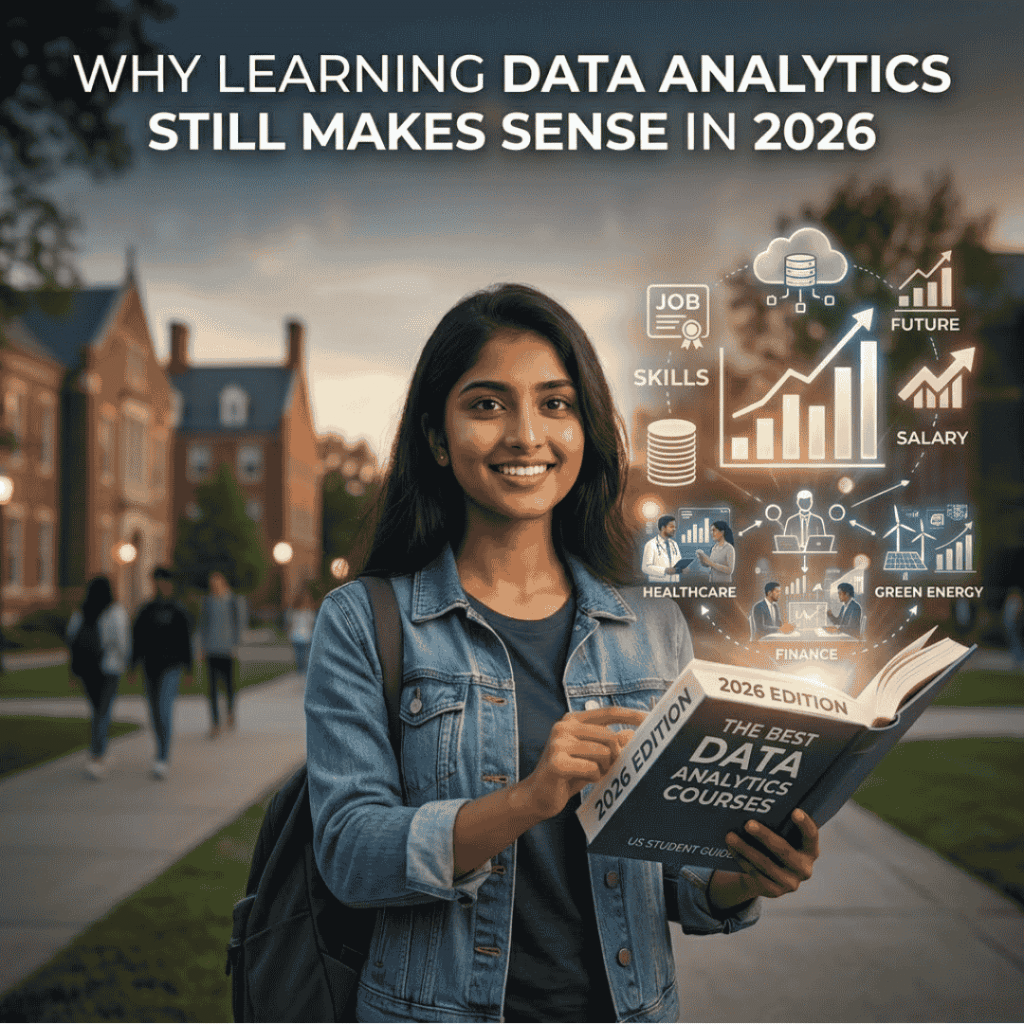
A few reasons it continues to grow:
- Companies rely more on data than ever.
- Decision-making is becoming data-driven across industries.
- AI is increasing the demand for people who understand data, not replacing them.
If you’re serious about getting into this field, structured training can really speed things up especially programs that include real-time projects and job support, like H2K Infosys.
Common Mistakes (I’ve Seen This Too Often)
A few things people tend to get wrong:
- Choosing courses that are too theoretical
- Skipping projects because they feel “hard.”
- Not preparing for interviews early.
- Thinking of finishing a course = job-ready
That last one catches a lot of people off guard.
Related Topics You Can Explore
You can also explore topics like:
- How to build a data analytics portfolio that actually gets noticed
- Beginner roadmap for becoming a data analyst
- Real interview questions for data analyst roles
These help connect the dots beyond just learning tools.
FAQs
1. What should I look for in the best data analytics courses?
Focus on hands-on projects, real tools, and job support, not just theory.
2. Are the best data analytics courses still worth it in 2026?
Yes, demand is strong, especially with businesses relying heavily on data.
3. How quickly can I become job-ready?
Usually, around 3–6 months if you practice consistently and work on projects.
4. Do I need coding experience?
No, many courses start from the basics and build up gradually.
5. Which tools are most important?
SQL, Excel, Python, and visualization tools like Power BI or Tableau.
Final Thoughts
If you’re trying to choose from the best data analytics courses, don’t just go by reviews or marketing claims.
Look at what you’ll actually be able to do after finishing.
Because that’s what matters when you’re sitting in an interview.
And if you want a smoother path from learning to actually getting hired, programs that combine training, real-world experience, and career support (like H2K Infosys) tend to make that transition a lot easier.
Take your time choosing… but choose something that prepares you for real work, not just completion.