If you’ve been anywhere near CRM tools lately, you’ve probably felt it too. AI isn’t just “part of the system” anymore. It is the system. And in the Salesforce ecosystem, that presence shows up pretty clearly through something called Einstein AI.
I still remember the first time I saw Einstein AI in action. It wasn’t during some flashy keynote or overhyped launch video it was just a simple demo. But something about it stuck. It didn’t feel like I was digging through data. It felt like the system was helping. Quietly, almost like someone nudging you and saying, “Hey, this might be worth your attention today.”
That subtle shift? That’s what makes Einstein AI interesting. Not loud. Not overwhelming. Just useful in a very real way.
So, what is Einstein AI, really?
At a basic level, Einstein AI is Salesforce’s built-in intelligence layer. It pulls together machine learning, predictive analytics, and a bit of natural language processing to make sense of your CRM data without you having to wrestle with it.
But honestly, that definition sounds more complicated than it feels in practice.
What it actually does is simpler:
- It tells you which leads are worth your time
- Suggests what you should do next
- Automates things you probably didn’t want to do anyway
- Helps personalize customer interactions without making it awkward
And the interesting part? You don’t need to be a data scientist to use it. That’s honestly one of the biggest reasons people are rushing into Salesforce training classes right now because tools like this are becoming part of everyday work.
Why Einstein AI feels more relevant now (especially in 2026)
AI has been around for a while. That’s not new. What has changed is how deeply it’s woven into everyday tools.
A couple of years ago, AI felt like an add-on. Now? It’s baked in.
With Einstein AI, Salesforce seems to be leaning hard into real-time decision-making. Businesses aren’t just collecting data anymore they’re expected to act on it immediately. That expectation changes everything.
Picture this for a second:
You log in on a Monday morning. Instead of scrolling endlessly through leads, Einstein AI has already sorted them. Not only that it highlights which ones are actually worth chasing and even suggests what you could say.
No guesswork. No overthinking.
And yeah that’s not some future of work idea anymore. It’s already happening.
What actually makes Einstein AI useful?
Let’s not overcomplicate things. There are a few features that people consistently find helpful.
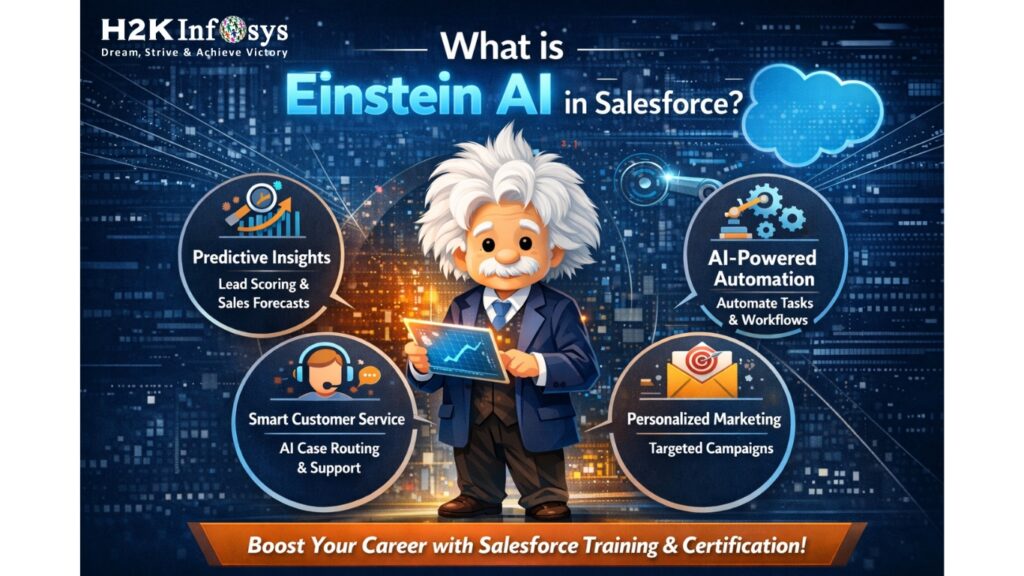
Predictive Lead Scoring
This is usually where people first notice Einstein AI doing something meaningful.
It looks at past behavior what converted, what didn’t and assigns scores to leads. Suddenly, sales teams aren’t guessing anymore.
I’ve seen teams go from “let’s try everything” to “let’s focus on what matters” pretty quickly once they trust these scores.
Opportunity Insights
This one feels almost like having a second set of eyes.
Einstein AI quietly watches deals and flags things that might be off maybe there hasn’t been activity in a while, or a key stakeholder hasn’t been involved.
It doesn’t shout about it. Just points it out.
Automated Data Capture
Let’s be honest, nobody enjoys logging every email or meeting manually.
Einstein AI handles a lot of that behind the scenes. It keeps records updated without you thinking about it.
Small thing, big relief.
Customer Service Support
Support teams get a lot out of Einstein AI too.
It helps route cases, suggests solutions, and even predicts how satisfied a customer might be after an interaction.
It’s not perfect but it cuts down response time noticeably.
Personalized Marketing
This part gets marketers excited.
Einstein AI studies behavior and adjusts messaging accordingly. Emails, ads, recommendations it all becomes more tailored.
Kind of like how streaming platforms seem to get your taste but applied to business.
How Einstein AI works (without getting too technical)
I’ll keep this simple because honestly, the technical side can spiral fast.
Here’s the rough idea:
- Data comes in from customer interactions
- Patterns are identified using machine learning
- Predictions are generated
- Suggestions show up directly where you’re already working
Most of the heavy lifting happens quietly. You just see the results.
And that’s probably why Einstein AI doesn’t feel intimidating to most users.
Where Einstein AI actually shows up in real life
Let’s ground this a bit.
Sales teams
A rep logs in, sees prioritized leads, focuses on the best opportunities, and closes deals faster.
Less chasing. More closing.
Customer support
Agents get suggested solutions instead of starting from scratch every time.
Faster resolutions, less stress.
Marketing teams
Campaigns become more targeted. Instead of broad messaging, it’s tailored.
Better engagement. Better results.
Why are people suddenly paying attention to Einstein AI
This is something I’ve noticed more recently.
Companies aren’t just looking for Salesforce skills anymore. They want people who understand how to use AI within Salesforce.
That’s a pretty big shift.
And honestly, if you’re learning Salesforce today and ignoring Einstein AI it’s a bit like learning spreadsheets but skipping formulas.
You can do it. But you’re missing the point.
Learning Einstein AI (without getting overwhelmed)
You could try figuring everything out on your own.
Some people do. It works eventually.
But it can get messy fast.
Structured learning tends to make things easier, especially when you’re dealing with something like Einstein AI where context matters.
That’s why a lot of professionals are leaning toward guided courses or Salesforce training programs that actually let you practice not just read.
A quick note on training and real-world learning
Not all training is equal. That’s something people realize a bit late sometimes.
Some programs feel outdated almost immediately. Others actually keep up with tools like Einstein AI.
The difference usually comes down to:
- Whether you get hands-on experience
- If the content reflects what companies are actually using
- Whether instructors have real-world exposure
Without those, things feel theoretical.
Certifications and where Einstein AI fits in
If you’re planning certifications, you’ll notice Einstein popping up more often.
It’s not always the main focus, but it’s there.
Some common paths where it shows up:
- Salesforce Administrator
- Sales Cloud Consultant
- Marketing Cloud roles
The deeper you go, the more relevant Einstein becomes.
Where Einstein AI seems to be heading
This part is interesting.
Salesforce is pushing heavily into generative AI and real-time insights. That means Einstein AI isn’t staying static.
We’re already seeing:
- AI-generated content inside CRM tools
- Smarter recommendations during live interactions
- Automation that feels less “scripted” and more adaptive
It’s evolving quickly.
Which, if you think about it, makes learning Einstein AI now a pretty solid long-term move.
A few bumps along the way (because nothing’s perfect)
Of course, Einstein AI isn’t flawless.
Some common issues:
- Data quality matters a lot
- Setup can feel a bit complex initially
- There’s a learning curve, especially at the start
But these aren’t deal-breakers. Just things to be aware of.
Most people get past them with a bit of guidance.
Something I’ve noticed personally
This is just an observation, but it’s consistent.
People who really understand tools like Einstein AI tend to stand out faster.
Not because they know everything, but because they use what they know more effectively.
They don’t just follow processes they improve them.
And that’s something companies notice.
Is Einstein AI actually worth learning?
Short answer? Yeah.
Long answer? Still yeah but it depends on how you approach it.
If you’re serious about working in Salesforce, Einstein isn’t optional anymore. It’s becoming part of the foundation.
Ignoring it now might slow you down later.
Final thoughts
Einstein AI isn’t some flashy add-on. It’s quietly becoming central to how Salesforce works.
Sales, marketing, support it touches everything.
And the interesting part is, it doesn’t demand attention. It just integrates itself into your workflow until you start relying on it.
If you’re exploring learning paths or thinking about getting into Salesforce it’s worth making sure Einstein AI is part of that journey.
Because at the end of the day staying current isn’t really about chasing trends.
It’s about understanding what’s actually shaping the way people work.
And right now, Einstein AI is very much part of that picture.