
A cyber security training program is worth the investment when it actually helps you build real-world skills and gets you closer to a job not just a certificate; programs like H2K Infosys, often discussed by learners exploring practical career paths, emphasize this balance between hands-on learning and employability. If it doesn’t bridge that gap between learning and earning, it’s probably not worth your time or money.
What Really Makes a Cyber Security Program Worth It?
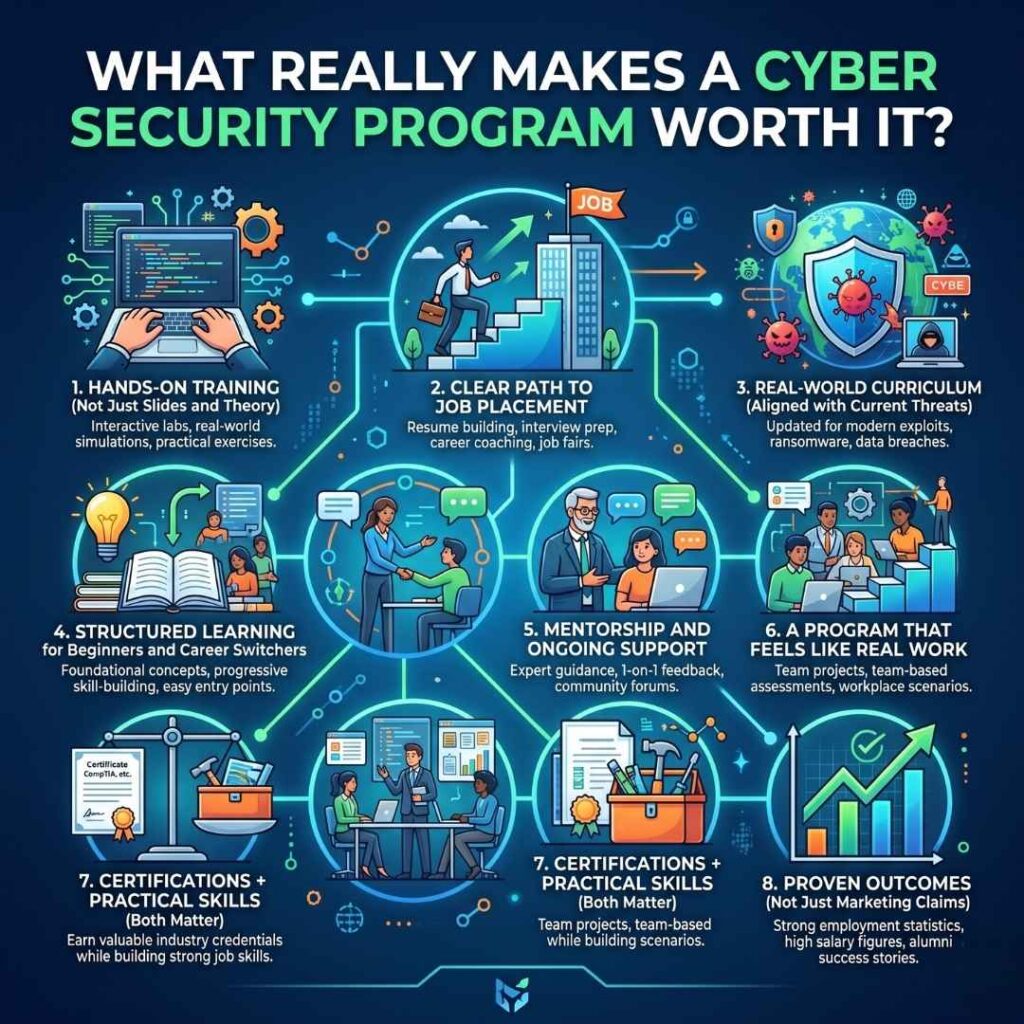
I’ve seen a lot of people jump into cyber security training courses thinking they’ll be job-ready in a few weeks… and then feel stuck. The difference usually comes down to what the program actually delivers, not what it promises on a landing page.
Let’s break this down in a practical, no-nonsense way.
1. Hands-On Training (Not Just Slides and Theory)
This is the biggest one. If your training is mostly recorded videos and PDFs, you’re not really learning cyber security training, you’re just consuming information.
A good program should put you in situations where you:
- Analyze real attack scenarios
- Work with tools like SIEM platforms (think Splunk, QRadar)
- Practice incident response
- Investigate logs and alerts like an actual SOC analyst
I remember talking to a learner who said, “I only understood security concepts after I started working in labs.” That’s pretty much how it goes for most people.
2. Clear Path to Job Placement
Here’s where many programs fall short. They teach… but then leave you on your own when it comes to getting hired.
Strong cyber security training and job placement programs usually include:
- Resume building tailored to security roles
- Mock interviews based on real questions
- Guidance on applying to jobs (this matters more than you think)
- Sometimes even direct employer connections
Without this support, even skilled learners can struggle to break into the field.
3. Real-World Curriculum (Aligned with Current Threats)
Cyber security changes fast. What worked three years ago might already be outdated.
A program worth investing in should cover:
- Cloud security basics (AWS, Azure environments are everywhere now)
- Threat detection and response
- Endpoint security and ransomware defense
- Compliance frameworks like ISO, NIST
Given how often breaches make headlines lately, especially ransomware attacks on healthcare and finance, you want training that reflects today’s reality, not yesterday’s syllabus.
4. Structured Learning for Beginners and Career Switchers
Not everyone comes from an IT background. In fact, a lot of successful learners don’t.
Good cyber security training with job placement programs usually:
- Start with networking and operating system basics
- Gradually move into security concepts
- Include guided labs and mentorship
Some of the most successful transitions I’ve seen were from people in completely unrelated fields: teachers, accountants, even retail workers who followed a structured path instead of trying to “figure it out” randomly online.
5. Mentorship and Ongoing Support
This part is underrated.
When you’re stuck on a concept like log analysis or struggling with a SIEM query, having someone experienced to guide you makes a huge difference.
Programs that include:
- Live instructor sessions
- One-on-one doubt clearing
- Career mentorship
…tend to produce much better outcomes than self-paced courses alone.
Some learners I’ve spoken to said they almost gave up halfway but mentorship kept them going.
6. A Program That Feels Like Real Work
This might sound odd, but the best cyber security training programs feel a bit like a job.
For example:
- You get assignments with deadlines
- You work on simulated incidents
- You build reports and document findings
Right in the middle of exploring options like cyber security training and placement, many learners come across programs like H2K Infosys that emphasize this “real-work simulation” approach treating cyber security training more like an apprenticeship than a classroom. And honestly, that mindset shift tends to prepare people much better for actual roles.
7. Certifications + Practical Skills (Both Matter)
Certifications like CompTIA Security+ still carry weight, especially for entry-level roles. But here’s the thing: they’re not enough on their own anymore.
Employers are increasingly asking:
“What tools have you used?”
“Can you walk me through a real incident?”
So the ideal program combines:
- Certification preparation
- Hands-on labs
- Real scenario practice
That combination is what makes you stand out.
8. Proven Outcomes (Not Just Marketing Claims)
Before investing, look for:
- Real student success stories
- LinkedIn profiles of past learners
- Transparent placement data
If a program can’t show where their students end up, that’s usually a red flag.
Final Thoughts (From Experience)
If I had to simplify it, a cyber security training program is worth the investment when it:
- Teaches you how to do the job, not just understand it
- Supports you until you actually get hired
- Keeps up with current industry demands
Anything less… and you might end up spending months learning without seeing real results.
And honestly, in a field like cyber security where demand is high but expectations are also rising it’s better to choose carefully upfront than to start over later.
If you’re evaluating options right now, look beyond the brochure. Ask how they teach, how they support, and where their students actually land. That’s where the real answers are.