
I’ve seen quite a few people jump into cyber security training with job placement promises, only to realize halfway through that they’re mostly just watching slides and jotting down notes. It feels productive at first… until it doesn’t. Somewhere in that mix, programs like H2K Infosys do try to lean more toward hands-on practice but even then, you really have to look closely at how much actual “doing” is involved. Because that’s the thing this field doesn’t reward passive learning anymore. Not in 2026. Employers want proof you can actually handle real situations, not just talk about them.
So yeah, here’s what I’d personally pay attention to: I wish more people caught early instead of realizing too late.
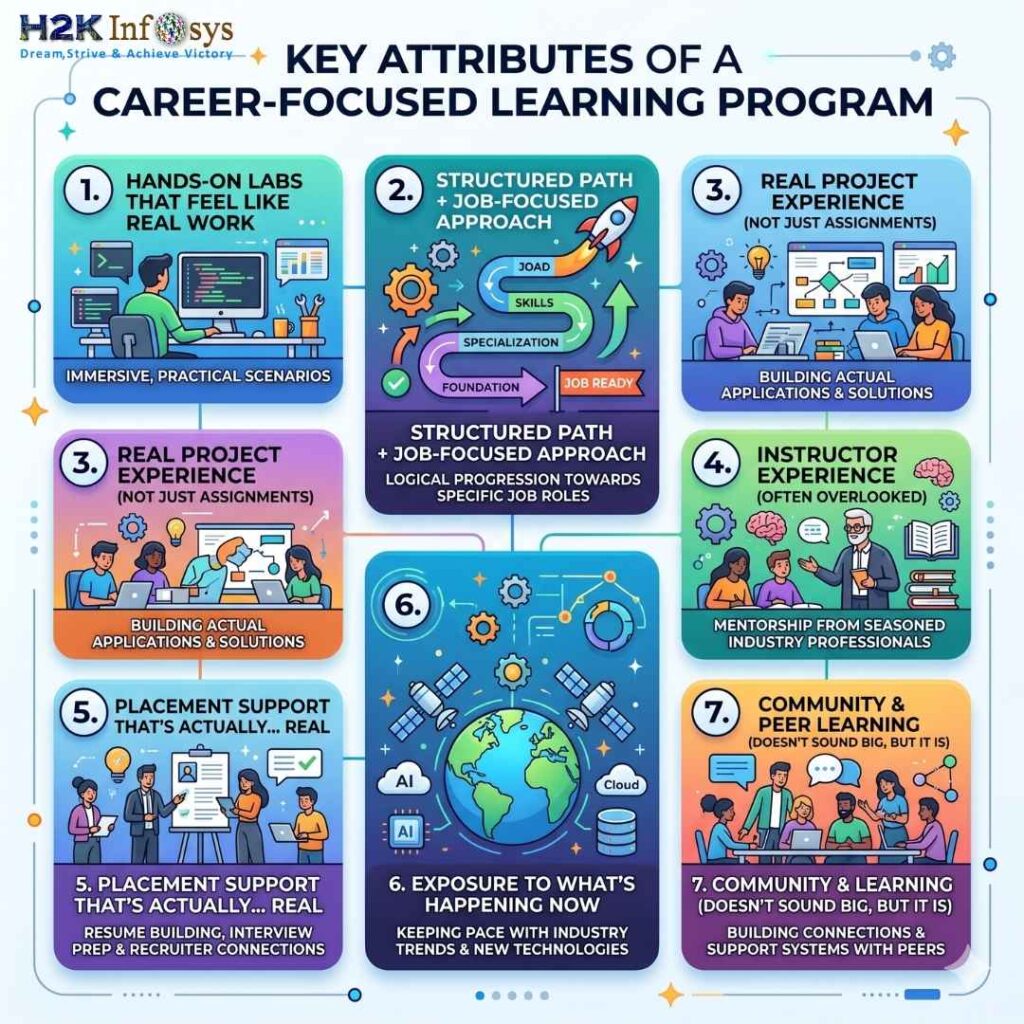
1. Hands-On Labs That Feel Like Real Work
This one? Completely non-negotiable.
If your cyber security training doesn’t involve real tools, SIEM platforms, network analyzers, incident simulations you’re basically stuck in theory land. And theory alone won’t get you hired. It just won’t.
A solid program should let you:
- Dig into logs from simulated attacks
- Work with tools like Splunk or Wireshark
- Actually investigate suspicious activity, not just read about it
I remember hearing from a learner who said everything clicked the moment they had to analyze a fake phishing attack and explain what went wrong. Please do not modify it. That shift? That’s where real learning happens.
2. Structured Path + Job-Focused Approach
Cyber security training can feel all over the place if you don’t have a clear path. One day it’s networking, the next day it’s threat analysis… and suddenly you’re wondering what connects any of it.
Good cyber security training and job placement programs don’t leave you guessing. They build things step by step:
- Networking basics → security fundamentals → tools → real-world scenarios
- Resume prep and interview guidance woven in along the way (not dumped at the end)
Some programs, including H2K Infosys, try to follow this kind of structure so you’re not constantly asking, “Wait, what should I learn next?” And honestly, that clarity makes a bigger difference than people expect.
3. Real Project Experience (Not Just Assignments)
There’s a big gap between:
“Finish this quiz”
and
“Investigate this breach and write a report on it”
Guess which one employers care about?
You’ll hear questions like:
“Can you walk me through a security incident you handled?”
If your answer is purely theoretical, it shows.
Look for programs that include:
- Capstone projects
- Case studies based on real breaches
- Documentation practice (seriously, this is underrated but critical)
This is what actually bridges the gap between learning and landing cyber security training jobs with training that leads somewhere.
4. Instructor Experience (Often Overlooked)
Not all instructors bring the same value. Some are great at explaining concepts but haven’t worked in a real security environment in years. And yeah, you can feel that difference.
You want someone who:
- Has recent, hands-on industry experience
- Explains the “why” behind things, not just the steps
- Shares real situations like how alerts are handled inside an SOC
Those little off-script stories? The “this actually happened once” moments? They tend to stick way longer than any slide deck.
5. Placement Support That’s Actually… Real
A lot of programs talk about cyber security training with job placement, but what that actually means can vary a lot.
Real support looks like:
- A resume tailored specifically for security roles
- Mock interviews that feel like the real thing
- Guidance on where and how to apply (not just “apply everywhere”)
- Some level of networking or recruiter insight
If it’s just a list of job links… that’s not really supported.
6. Exposure to What’s Happening Now
Cyber security training doesn’t sit still. What worked a couple of years ago can already feel outdated.
Training today should include:
- Cloud security basics (AWS, Azure, that whole ecosystem)
- Modern threat detection approaches
- SOC workflows and automation
- Current attack trends ransomware, evolving phishing tactics, AI-driven threats
Lately, with AI being used in attacks more aggressively, the landscape has shifted a bit. cyber security Training needs to reflect that. Otherwise, you’re preparing for yesterday’s problems.
7. Community and Peer Learning (Doesn’t Sound Big, But It Is)
This part gets overlooked all the time.
Learning alongside others where people:
- Ask questions
- Share what they’re stuck on
- Help each other debug labs
…that environment matters more than you’d expect. Cyber security training isn’t a solo job. You’ll be working with teams, bouncing ideas, figuring things out together. Getting used to that early helps.
Final Thought (Keeping It Real)
If I had to boil it down:
Pick a program that treats you like someone who’s going to do the job, not just study it.
The best cyber security jobs with training and job placement programs don’t just teach, they push you into situations where you have to think, figure things out, maybe even struggle a bit. And yeah, it can feel uncomfortable at times.
But that’s kind of the point.
Because that’s exactly what the job feels like and that’s exactly what employers are looking for now.