In 2026, BA Training programs, H2K Infosys, that successfully lead to jobs are those built around real-world application, hands-on tools, and AI-enabled business analysis rather than theory-heavy classroom learning. Employers now expect candidates to demonstrate skills in SQL, Python, Power BI, Agile delivery models, and data-driven decision-making through project portfolios and practical case studies.
The most effective programs combine technical skill-building, exposure to digital transformation, and real-business scenario simulations. Certifications like IIBA ECBA, CCBA, CBAP, and PMI-PBA continue to provide strong credibility, but they work best when paired with applied project experience.
Modern BA Training that leads to employment typically includes AI-assisted requirement analysis, dashboard development projects, BRD creation, and Agile tool usage such as Jira. Strong mentorship, resume preparation, and mock interview practice also significantly improve hiring success.
From industry observation, employers now prioritize candidates who can solve real business problems immediately, making practical, tool-based BA training the most valuable career investment.
Why BA Roles Are Still Growing in 2026
Business analysis isn’t slowing down. If anything, it’s expanding because companies rely more on data, automation, and AI-driven decision making. Even smaller companies now need analysts who can translate business needs into technical solutions.
What’s changed recently is how companies hire. They don’t just look for someone who completed business analyst courses. They want proof you can:
- Write real BRDs and FRDs
- Work inside Agile teams
- Communicate with both business and tech teams
- Analyze dashboards and data trends
The best BA Training Programs focus heavily on these skills instead of textbook theory.
What Makes BA Training Programs Job-Focused in 2026
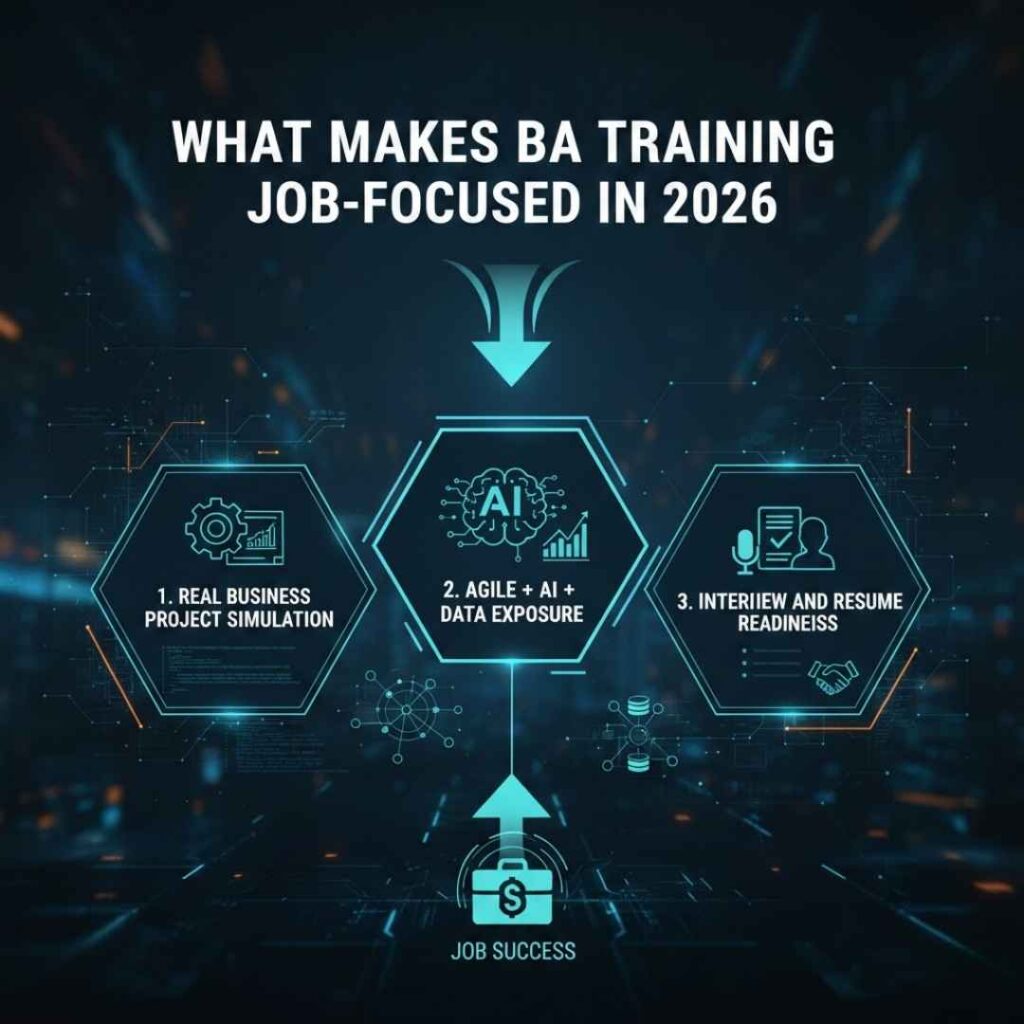
Here’s something I noticed when reviewing resumes last year. Candidates who completed project-based business analyst certification online programs got interview calls faster than theory-only learners.
The strongest BA Training Programs now include:
1. Real Business Project Simulation
You should work on real business analyst classes style projects like:
- Banking requirement analysis
- Healthcare workflow improvement
- Retail data reporting dashboards
I’ve seen candidates confidently explain projects during interviews when they came from strong BA Training Programs.
2. Agile + AI + Data Exposure
2026 BA roles are hybrid now. Good BA Training Programs include:
- Agile and Scrum workflow tools
- AI-driven reporting basics
- Data visualization exposure
Companies want analysts who understand how automation and AI affect business workflows. Basic understanding already gives candidates an edge.
3. Interview and Resume Readiness
Honestly, this part is underrated. Some BA Training Programs skip interview training, which is a mistake.
Strong business analyst training and placement models include:
- Mock interviews
- Resume storytelling based on projects
- Real scenario interview questions
And yes, hiring managers can easily tell who practiced vs who memorized.
Real Example: What Hiring Teams Actually Ask Now
I recently spoke with a hiring manager from a healthcare tech company. Their biggest complaint? Candidates knew theory but couldn’t explain requirement gathering conversations.
The candidate who got selected had completed the BA Training Programs that required:
- Stakeholder mock meetings
- Requirement workshops
- Conflict resolution simulations
That’s exactly what modern business analyst courses should include.
How Business Analyst Certification Online Fits in 2026
Certifications still matter, but only when combined with experience. The best BA Training Programs integrate certification preparation with real project exposure.
Employers usually look at certification as:
- Proof of structured learning
- Proof you understand BA frameworks
- Not proof you can do the job alone
That’s why layered business analyst training is winning right now.
Warning Signs of Weak BA Training Programs
This might sound blunt, but it’s true. Avoid BA Training Programs that only offer:
- Recorded theory videos only
- No real project files or documentation
- No real tool usage
- No placement or interview preparation
These usually produce candidates who struggle in real job environments.
What Good Business Analyst Classes Feel Like
Good business analyst classes feel messy sometimes and that’s a good thing.
Real business analysis work is not clean or perfect. Good BA Training Programs let you:
- Ask confusing stakeholder questions
- Handle changing requirements
- Work with incomplete data
That “imperfect learning” actually mirrors real job situations.
How BA Training Programs Help Career Switchers
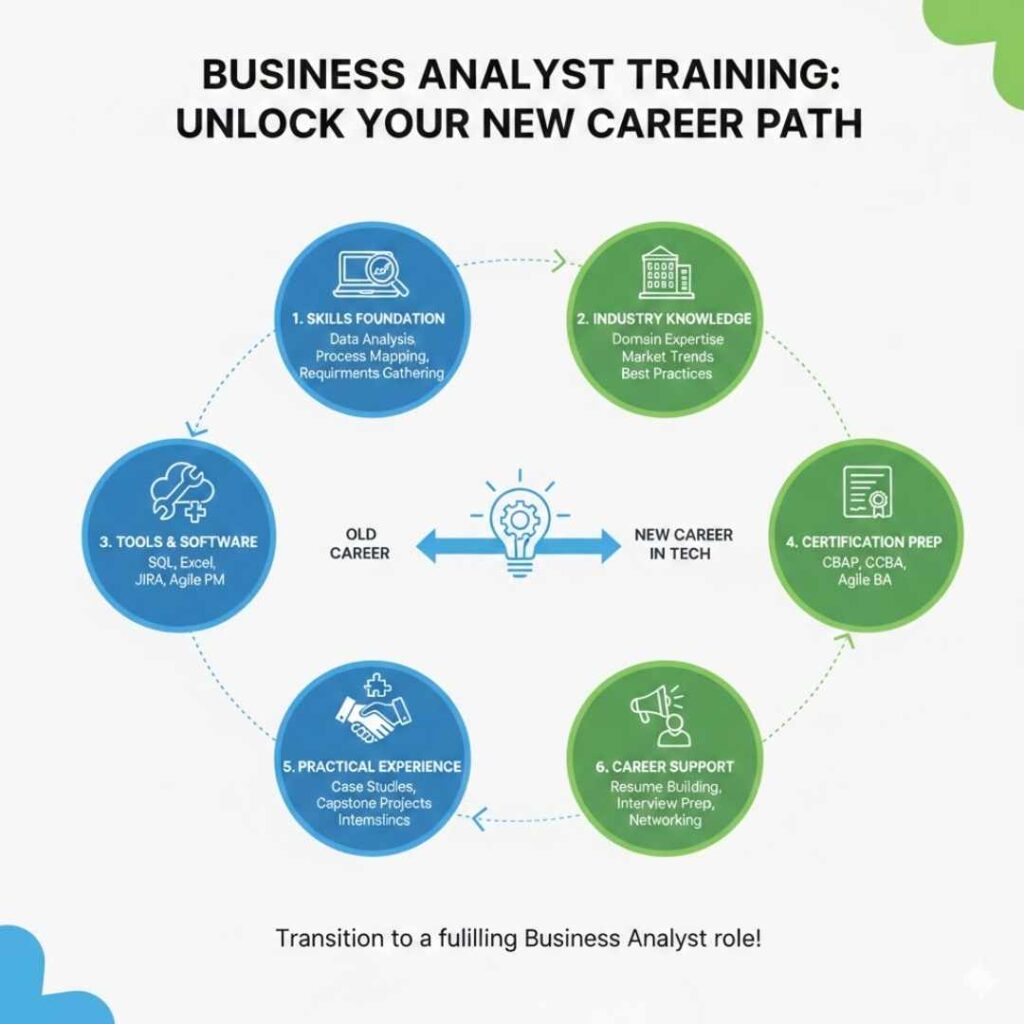
I’ve personally seen QA testers, support engineers, and even non-IT professionals move into BA roles through structured BA Training Programs.
Why? Because business analysis is about:
- Communication
- Logical thinking
- Process understanding
The right business analyst training and placement path bridges technical gaps step-by-step.
Current Trends Shaping Business Analyst Training in 2026
Some trends I’m seeing across top BA Training Programs:
AI-Assisted Requirement Analysis
Analysts now use AI tools to summarize meetings and generate draft requirement documents.
Data Storytelling
Business analyst courses now include storytelling with dashboards.
Domain-Based Learning
Healthcare, Finance, and E-commerce specialization inside BA Training Programs is becoming common.
How to Choose the Right BA Training Programs
If someone asked me casually over coffee, I’d say check these first:
- Does the BA Training Programs include real projects?
- Does it cover Agile tools and business workflows?
- Does it include interview prep and resume help?
- Does it provide placement support or job guidance?
If yes to most, you’re probably looking at a strong program.
The Reality Nobody Talks About
Even the best BA Training Programs won’t guarantee a job unless you:
- Practice projects multiple times
- Understand business context deeply
- Practice explaining your work
I’ve seen average candidates become strong hires simply because they practiced explaining project impact clearly.
Conclusion
In 2026, companies don’t just want certified analysts. They want problem solvers. The BA Training Programs that truly lead to jobs combine business analyst classes, real project experience, certification preparation, and strong business analyst training and placement support. If your learning mirrors real workplace scenarios, you’re already ahead of most candidates finishing basic business analyst certification online courses.