People who explore AI certifications or structured training especially through providers like H2K Infosys usually aren’t doing it just to “learn concepts. Most are trying to get closer to real work the kind they can actually use in a job later. That’s where as project-based learning starts to matter… a lot more than it might seem at first.
Platforms like H2K Infosys and a few other industry-focused provider really lean into this idea. Their courses tend to revolve around scenarios that feel pretty close to actual workplace situations using real datasets, familiar tools, and workflows you’d likely run into on the job. So instead of just reading about predictive models or NLP, you end up building them. That shift makes a difference.
What is an AI Engineer course with real-world projects?
At a basic level, an Ai Certified Courses teaches you how to design and deploy intelligent systems—machine learning models, deep learning networks, and so on.
But once real-world projects are part of the mix, the whole experience changes.
It stops being passive. You’re not just watching tutorials or going through slides you’re actually doing the work. And that includes dealing with messy data, bugs that don’t make sense at first, or models that just… don’t perform the way you expected.
A bit frustrating? Sure. But that’s also where things start to click.
Most project-based courses involve:
- Working with datasets that feel realistic (not overly polished)
- Following workflows similar to real companies
- Using tools like Python, TensorFlow, and cloud platforms
- Solving problems that tie back to actual business needs
You might build something like a churn prediction model, a recommendation engine, or even a simple NLP chatbot. These aren’t just exercises—they’re closer to real tasks you’d handle in a job.
How AI works in real-world IT projects
In practice, AI isn’t just “train a model and you’re done.” There’s a full lifecycle behind it and good training programs try to mirror that.
It usually goes something like:
- Data collection – pulling data from different sources
- Preprocessing – cleaning and shaping it (this part can get messy fast)
- Model building – training models using ML or deep learning frameworks
- Evaluation – checking if the results are actually useful
- Deployment – exposing the model via APIs or services
- Monitoring – tracking performance over time
Take a loan default prediction example. You’d gather financial data, clean it up, train a classification model, evaluate it using metrics like precision or recall, and deploy it. But even then—you’re not done. Models drift. Performance drops. So you keep monitoring and adjusting.
That ongoing loop is something many beginners don’t expect.
Why project-based learning matters (especially for working professionals)
Reading about AI can only take you so far. It might make sense while you’re learning it but without applying it, it fades pretty quickly.
That’s where projects help:
- You actually use what you learn
- You build a portfolio (which employers do look at)
- You get better at solving real problems, not textbook ones
- You become familiar with tools and workflows used in industry
- You start seeing how everything connects end-to-end
Without that kind of exposure, transitioning into an AI role can feel overwhelming especially in the beginning.
Skills you’ll need along the way
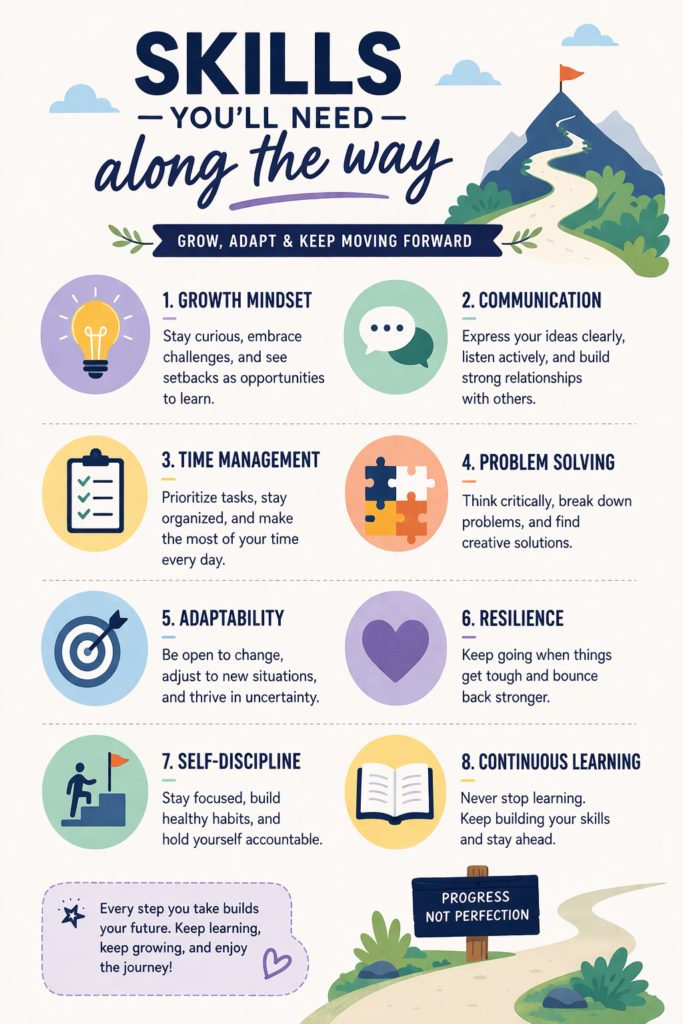
Most programs guide you step by step, but it helps to know what’s coming.
Core basics:
- Python programming
- Statistics and probability
- Some linear algebra (nothing too intense)
- Data analysis and visualization
- Machine learning fundamentals
As you go deeper:
- Deep learning (CNNs, RNNs, etc.)
- NLP techniques
- Model deployment (APIs, services)
- Cloud platforms like AWS or Azure
- Model tuning and optimization
And then there are the less-talked-about skills like debugging, thinking through problems, and explaining your results clearly. Those tend to matter more than people expect.
AI in enterprise environments
In real companies, AI isn’t about hype it’s about solving problems efficiently.
You’ll see it used in:
- Fraud detection (finance)
- Disease prediction (healthcare)
- Recommendation systems (retail, e-commerce)
- Resume screening (HR)
- Customer segmentation (marketing)
But there’s always more going on behind the scenes data privacy rules, system constraints, performance requirements, integration challenges. Good training programs try to expose you to at least some of this, so it doesn’t feel completely new later.
Roles that use AI daily
Once you’ve built some experience, AI shows up in different roles:
- AI Engineer – builds and deploys systems
- Data Scientist – analyzes data and creates models
- Machine Learning Engineer – focuses on scaling and optimization
- Data Analyst – interprets and communicates insights
- NLP Engineer – works on text-based systems
There’s overlap, of course. The boundaries aren’t always strict.
Career paths after learning AI
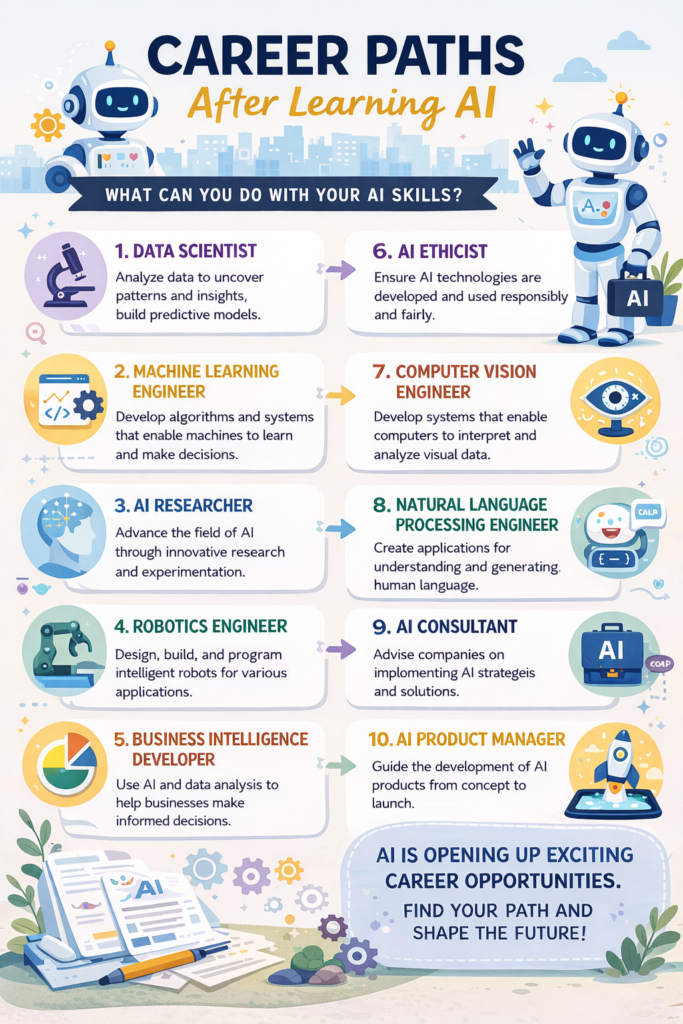
Where you land depends on your background and how deep you go.
- Entry-level – Junior Data Analyst, AI Associate
- Mid-level – Data Scientist, ML Engineer
- Advanced – AI Architect, Research Scientist
And it’s not just tech companies anymore. AI is being used across fintech, healthcare, e-commerce, cybersecurity even autonomous systems.
Who offers AI courses with real-world projects?
Different providers approach this differently.
Industry-focused platforms (like H2K Infosys)
- Strong focus on job readiness
- Capstone projects
- Mentorship and guidance
- Simulated enterprise workflows
MOOC platforms
- Good theoretical coverage
- Structured assignments
- Limited real-world simulation
Bootcamps
- Fast-paced
- Project-heavy
- Career-focused
University programs
- Strong fundamentals
- Some research-oriented projects
- Less focus on deployment in many cases
Types of projects you’ll usually work on
Most programs include a mix, like:
- Predictive analytics (churn, forecasting)
- Computer vision (image classification, detection)
- NLP (chatbots, sentiment analysis)
- Recommendation systems
- Time series forecasting
This variety helps you understand how AI applies across different domains.
How projects are typically structured
There’s a general flow most projects follow:
- Define the problem
- Explore the data
- Perform feature engineering
- Train and select models
- Validate results
- Simulate deployment
- Present findings
On paper, it looks simple: load → clean → train → evaluate → deploy.
In reality… something always breaks or needs tweaking. That’s just part of the process.
Tools you’ll keep seeing
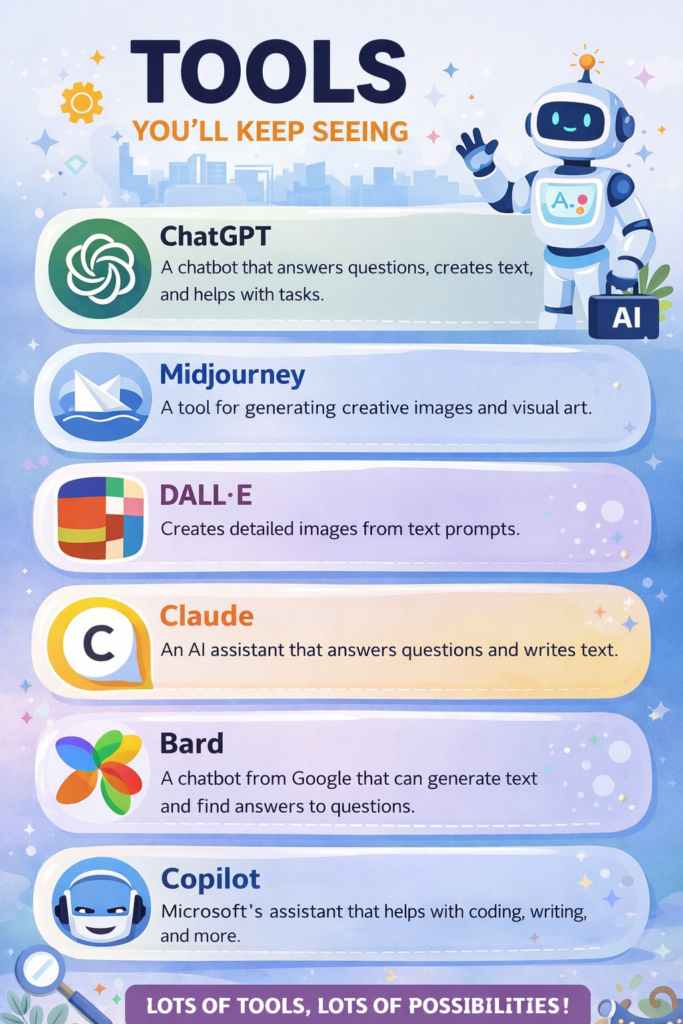
You’ll get familiar with tools like:
- Python, NumPy, Pandas, Scikit-learn
- TensorFlow, PyTorch
- Matplotlib
- Docker, Flask, FastAPI
- AWS, Azure, Google Cloud
Spending time with these builds confidence more than anything else.
Challenges learners usually face
Real-world projects aren’t always smooth.
Some common issues:
- Messy or incomplete data
- Picking the right model
- Overfitting problems
- Handling large datasets
- Deployment hurdles
Simple practices like version control (Git), proper documentation, and testing help more than people expect.
Quick FAQ
Who offers real-world AI projects?
Industry-focused platforms, bootcamps, and some universities. H2K Infosys is one example that emphasizes hands-on learning.
Why do projects matter so much?
They help you apply concepts and build something you can actually show employers.
What tools are commonly used?
Python, TensorFlow, Scikit-learn, Docker, and cloud platforms like AWS.
Are projects necessary to get hired?
Not mandatory, but they make a big difference in proving your skills.
How many projects are typical?
Usually 3–10, often including a capstone.
Final thoughts
If you had to narrow it down, the biggest difference between an average Artificial intelligence training program and a useful one is the project work.
You go from understanding ideas to actually building something sometimes messy, sometimes frustrating, but real. And honestly, that’s what makes you job-ready in the end. Programs that focus on hands-on projects, like those from H2K Infosys, tend to make that transition feel a lot more natural.