Yes, TOSCA for Freshers is absolutely a good career choice, even without prior testing experience. Many beginners starting with structured programs like those offered by H2K Infosys find that the right guidance makes all the difference in understanding how the industry actually uses TOSCA in real projects.
When you learn it the right way, focusing on practical scenarios, enterprise workflows, and real-time automation use cases, breaking into automation becomes much more realistic than most people think.
Now let’s talk honestly.
Over the past few years, I’ve seen a noticeable shift in how companies approach automation hiring. Earlier, fresh graduates were told to “learn manual testing first.” Today? Enterprise companies adopting Tricentis tools care more about whether you understand automation logic and model-based testing than whether you’ve written manual test cases for five years.
And that changes the game.
Why Companies Are Hiring Freshers in TOSCA Now
The rise of low-code and model-based automation tools like Tricentis TOSCA has made automation more accessible. Unlike Selenium, which demands strong coding skills, TOSCA is scriptless. That makes it friendlier for beginners.
I recently spoke with a QA manager at a fintech company in Bangalore. Their team implemented TOSCA to automate SAP and Salesforce workflows. Guess what? Two of their automation testers were freshers trained through Tricentis TOSCA Online Training programs.
Why did they hire them?
- They understood business flows.
- They knew how to design reusable modules.
- They were comfortable with test case design logic.
- They didn’t come with rigid “manual testing only” habits.
That’s where TOSCA for Freshers becomes interesting. Companies aren’t just hiring experience anymore. They’re hiring adaptability.
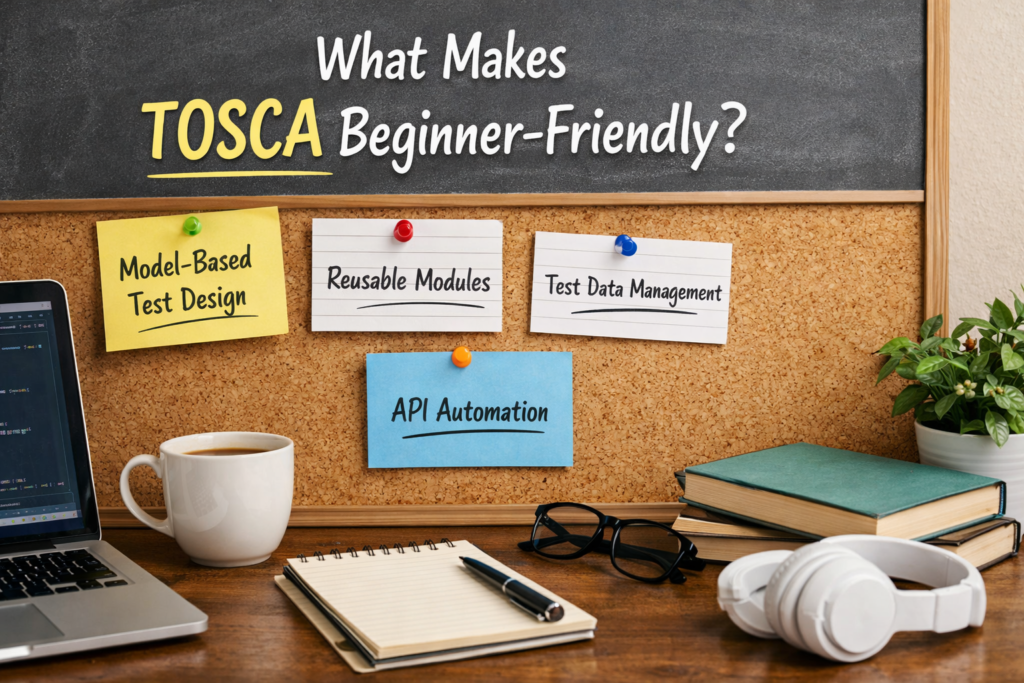
What Makes TOSCA Beginner-Friendly?
Let’s break this down in practical terms.
A traditional automation path:
Manual Testing → Learn Java → Learn Selenium → Framework → Projects → Job
A TOSCA path:
Understand testing basics → Learn tool architecture → Practice model-based automation → Project work → Job
The learning curve is flatter. A structured TOSCA Automation Course focuses on:
- Model-based test design
- Reusable modules
- Test data management
- API automation
- SAP & enterprise application testing
- CI/CD integration
And here’s the important part: companies adopting digital transformation (especially banking, insurance, healthcare) prefer enterprise-ready tools. That’s where Tricentis TOSCA shines.
This is why TOSCA for Freshers is becoming more visible in job postings.
But Let’s Be Real , Is It Easy?
Not exactly.
The tool is scriptless, yes. But it’s not “click and done.”
You still need to understand:
- What is regression testing?
- How does risk-based testing work?
- What’s a business-critical flow?
- How do reusable components reduce maintenance?
If someone jumps into TOSCA for Freshers thinking it’s a shortcut without learning fundamentals, they struggle. I’ve seen that happen.
The freshers who succeed treat it seriously. They practice real-time scenarios. They build small automation projects. They simulate interview questions.
That’s the difference.
Industry Trend: Why TOSCA Demand Is Growing
Since 2023–2025, more enterprises have moved toward:
- Cloud migrations
- SAP S/4HANA upgrades
- Salesforce automation
- Continuous testing in DevOps pipelines
Tools like Tricentis TOSCA integrate smoothly into enterprise CI/CD environments. Many global organizations have publicly shared their move from legacy automation to model-based tools.
Because of this, TOSCA for Freshers is no longer niche; it’s aligning with enterprise modernization.
If you check job portals, you’ll notice something interesting:
“Automation Tester – TOSCA (0–2 years experience)” listings are increasing.
That wasn’t common five years ago.
What Skills Should Freshers Build Alongside TOSCA?
Here’s something I always tell beginners: don’t rely only on the tool.
To make TOSCA for Freshers truly powerful, combine it with:
- Basic SQL knowledge
- API testing concepts
- Agile & Scrum understanding
- SDLC fundamentals
- Jira usage
When recruiters interview candidates trained in Tricentis TOSCA Online Training, they often test scenario thinking more than tool navigation.
Can you design a test case for a banking loan workflow?
Can you identify risk areas?
Can you modularize efficiently?
That’s where TOSCA for Freshers becomes impressive when it’s paired with logical thinking.
Salary Expectations for Freshers
Let’s talk numbers realistically.
In India:
- Entry-level TOSCA testers: ₹3.5 LPA – ₹6 LPA
- With 1–2 years experience: ₹6 LPA – ₹10 LPA
In the US:
- Entry automation roles using TOSCA: $70K+ (depending on region)
Of course, it depends on company and skill depth. But compared to generic manual testing, TOSCA for Freshers often positions you slightly higher because automation is valued more.
Who Should Choose TOSCA?
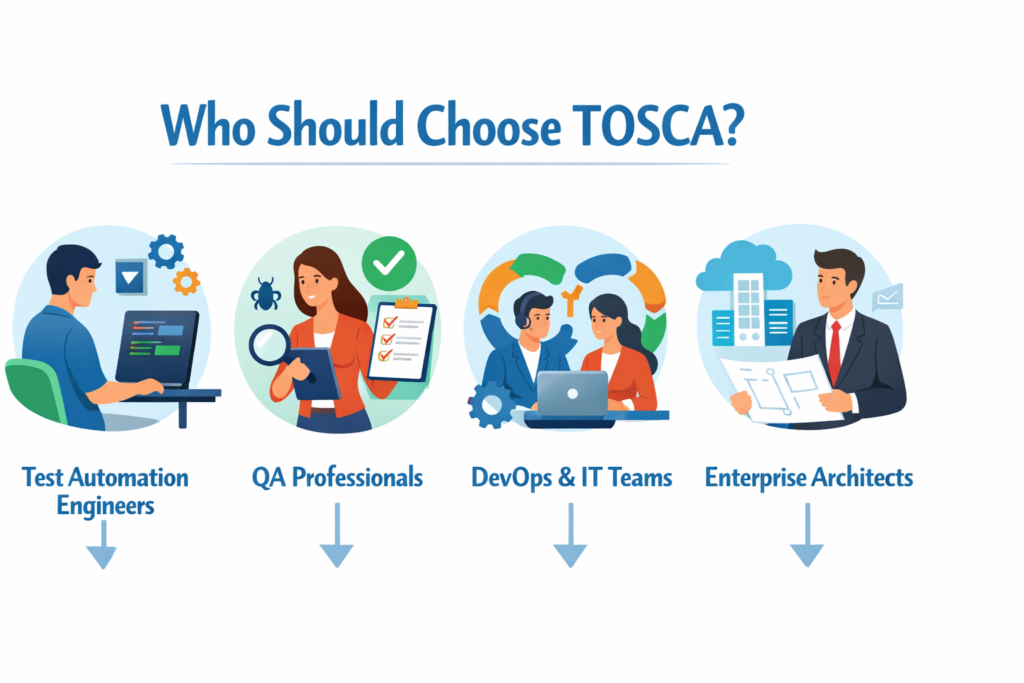
TOSCA for Freshers works well if you are:
- A non-coding background graduate
- Switching from support roles
- From commerce or non-IT fields
- Not comfortable diving deep into programming
But if you love coding and want hardcore development, Selenium + programming might suit you better.
See, it’s not about which tool is superior. It’s about alignment.
Real Example: A Fresher Transition Story
One of my students (mechanical engineering background) struggled with Java. After enrolling in a structured TOSCA Automation Course, he focused on business process automation instead of programming.
He built a mini project automating an e-commerce checkout workflow. During interviews, he confidently explained:
- Module creation
- Test case reusability
- Data-driven testing
Within four months, he landed an automation role.
That’s when I realized how practical TOSCA for Freshers can be when applied correctly.
Common Myths About TOSCA
Let’s clear a few things:
❌ “It’s only for experienced testers.”
Not true anymore.
❌ “You need coding experience.”
Helpful, but not mandatory.
❌ “It’s outdated.”
Completely false. Enterprise adoption is expanding.
Because of these myths, many students hesitate. But the reality? TOSCA for Freshers is more accessible today than ever.
Challenges You Should Prepare For
I won’t sugarcoat this.
- Tool licensing environments can be complex.
- Enterprise projects demand documentation discipline.
- Interviewers expect scenario-based answers.
But these are professional growth challenges, not blockers.
And honestly, learning Tricentis TOSCA gives exposure to enterprise-level automation architecture early in your career.
That’s powerful.
So, Is It Worth It?
If you’re asking whether TOSCA for Freshers is a safe and scalable career move in 2026 ? Yes, it is.
It aligns with:
- Enterprise automation demand
- Low-code testing trends
- DevOps and continuous testing models
- SAP and Salesforce digital transformation projects
But treat it seriously. Choose structured Tricentis TOSCA Online Training. Practice real scenarios. Build confidence beyond just tool navigation.
Because ultimately, TOSCA for Freshers isn’t just about learning software.
It’s about positioning yourself in enterprise automation where stability, scalability, and long-term demand exist.
And if you approach it with that mindset, it can absolutely become a strong launchpad for your career.
FAQs
1.What is TOSCA?
TOSCA is a test automation tool developed by Tricentis that enables scriptless test automation for web, desktop, mobile, API, and enterprise applications.
2.Can freshers learn TOSCA without testing experience?
Yes. TOSCA is beginner-friendly because it uses a model-based, low-code approach, making it easier for freshers to start learning without prior manual or automation testing experience.
3.Is TOSCA a good career choice for freshers?
Yes. With the growing demand for test automation professionals, learning TOSCA can open entry-level opportunities in software testing, quality assurance (QA), and automation engineering.
4.Do I need programming knowledge to learn TOSCA?
Basic programming knowledge is helpful, but it is not mandatory. TOSCA’s scriptless automation features allow beginners to create automated test cases with minimal coding.
5.Is TOSCA a long-term career option?
Yes. As organizations continue investing in test automation and digital transformation, TOSCA remains a valuable skill with strong long-term career prospects.
Conclusion
TOSCA is an excellent career choice for freshers, even if they have no prior testing experience. Its low-code, model-based approach makes it easier to learn than many traditional automation tools while providing access to a wide range of automation testing opportunities. However, combining TOSCA with a solid understanding of software testing fundamentals, SQL, Agile practices, and hands-on project experience will significantly improve your employability. By continuously upgrading your skills and earning relevant certifications, you can build a successful and rewarding career in test automation with TOSCA.