What is Artificial Intelligence in Business Artificial Intelligence in Business is the utilization of intelligent software and machine learning systems to automate tasks, digest data, improve decision making and boost customer experiences. Today it’s a real tool for businesses of all sizes that want to work smarter and grow faster.
If you’ve bought a product online and been given a personalised suggestion, talked to a customer service bot, or had your bank detect suspicious behaviour on your account, you’ve already seen business AI in action.
What is Business AI?
Artificial intelligence is about getting computers to do tasks that require human intelligence. These include learning from data, spotting patterns, understanding language, making predictions, and even creating content.
In the business world, AI supports businesses to:
- Automate boring work
- Enhance customer service
- Analyse big data
- Trends and demand forecasts
- Detect fraud and risks to security
- Improve marketing performance
- Support decision making on strategy
Just a few years ago, AI was an experimental technology for many companies. It is now becoming normal business practice. Something interesting I have observed recently is that AI conversations have moved from “Should we adopt AI?” to “How quickly can we implement it effectively?”
Why Businesses Are Spending Big on AI
The proliferation of generative AI, sophisticated machine learning models, and smart automation has spurred business adoption across industries.
Companies are not just using AI to reduce costs, they’re also using it to open up new revenue streams. AI is creating tangible business value, from healthcare providers analysing patient data to retailers predicting customer preferences and financial institutions enhancing risk management.
With the increasing need for talent in AI, there’s also been a growing interest in professional training programs such as an artificial intelligence course for beginners, specialised certifications, and advanced artificial intelligence engineer course options targeted towards helping professionals join this fast-growing field.
Key Benefits of Artificial Intelligence in Business
1. Improved Efficiency and Productivity
Most of the business processes have repeated tasks that consume the valuable time of the employees.
AI can replace:
- Data entry
- Invoicing
- Appointment scheduling
- Customer inquiries
- Document control
In fact, customer service teams can deploy AI-powered chatbots to answer routine questions quickly, freeing up human agents to focus on more complex issues.
And what happened? Faster operations, happier employees and less time on routine work.
2. Data Analysis for Better Decision-Making
Modern businesses generate massive quantities of data every day.
The problem isn’t getting the data, it’s making sense of it.
AI systems can analyse millions of data points within seconds, and identify trends that may be missed by humans.
For example:
- Retailers predict the inventory requirements.
- Banks assess lending risks.
- Providers are noticing trends in patient care.
- The manufacturers can forecast when the equipment will fail.
This ability to forecast gives leaders the confidence to make better decisions.
3. Better customer experiences
Customers are expecting a more personalised interaction.
AI enables businesses to deliver:
- Suggested for you
- Specific marketing campaigns
- Fast support replies
- Personalised user experiences.
Imagine the way streaming services recommend shows you’re likely to enjoy. Or how online retailers seem to know what you might want next.
That’s AI working quietly behind the scenes.
And truthfully, when done right, personalisation is so seamless that it’s almost invisible to the customer, who just feels like you get them.
4. Cost Savings
Cost optimisation is one of the strongest business cases for AI.
AI can reduce costs by:
- Automating labour intensive wor
- Better use of resources
- Reducing human errors
- Preventing fraud
- Supply chain optimization
Many organizations find that efficiencies alone make AI investments worthwhile.
5.Competitive Advantage
Companies that succeed in implementing AI will have a leg up on the competition.
This allows them to:
- react faster to changes in the market
- get products to market faster
- get a better understanding of customer behaviour
- innovate faster
This is especially the case with the increasing adoption of AI across many industries.
AI in Business: Real-Life Examples
Amazon Custom Shopping Experience
Amazon uses AI extensively to recommend products based on browsing history, purchasing behavior, and customer preferences.
These recommendation engines are a major contributor to customer engagement and sales performance.
Amazon doesn’t give everyone the same products. It makes shopping experiences personalised.
Netflix: Recommendations for content
Netflix is using machine learning algorithms heavily, to recommend content that viewers are likely to watch.
It uses your viewing habits, watch time, ratings and interactions with other users to tailor recommendations.
This keeps the users engaged and increases retention.
JPMorgan Chase: Managing Financial Risk
Financial institutions are increasingly deploying AI to identify fraud and to spot odd transaction patterns.
AI systems can analyse huge volumes of transaction data in real time, helping prevent financial losses and improve customer security.
Healthcare Organizations
Healthcare providers use AI to help with:
- Medical Image Analysis
- Disease prediction
- Recommendations for treatment
- Automation of administration
AI will not replace doctors, but it will help doctors make faster, better-informed decisions.
And that distinction is important because one of the biggest myths about AI is that it replaces expertise. Indeed, in many cases it amplifies it.
Production Companies
Manufacturers use AI-powered predictive maintenance systems.
Instead of waiting for machinery to fail, AI can predict potential problems before they occur.
The Results:
- Less downtime
- Lower maintenance costs
- Improved operational efficiency
- What AI Trends Businesses Are Paying Attention To Now
The AI landscape is changing fast.
Among the key trends are:
Adopting Generative AI
Companies are using AI tools to:
- Creating content
- Software engineer Customer support
- Marketing campaigns
- Knowledge management
Generative AI has become one of the most rapidly adopted business technologies in recent history.
AI-Driven Assistants
Organisations are deploying AI assistants to help employees:
- Reports summary
- Create draft emails
- Analyse the data
- Research
These tools are increasingly used in everyday workflows.
Ethical and Accountable AI
As AI adoption rises, businesses are increasingly looking to:
- Data privacy
- Openness
- Reducing bias
- Regulatory compliance
Companies recognise that trust is becoming as important as technological capability.
Skills For An AI Career
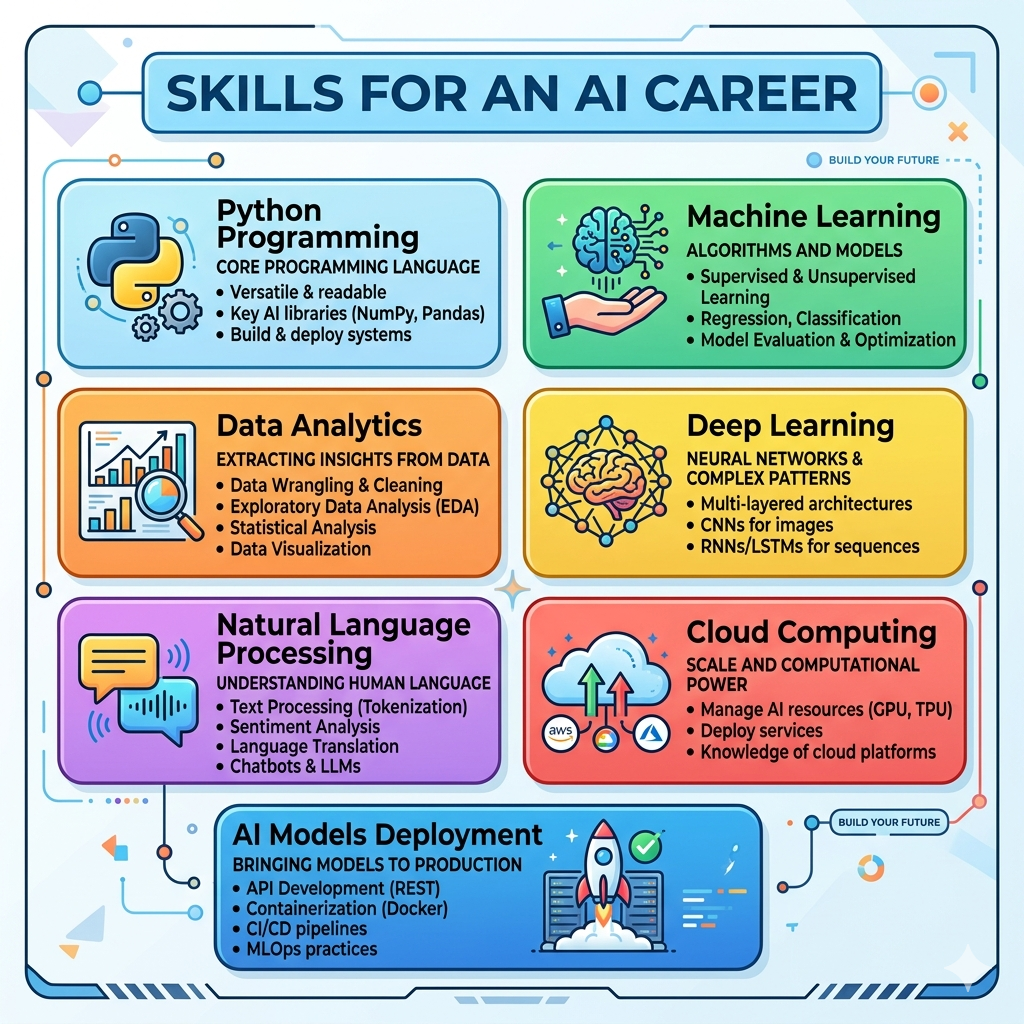
The growing use of AI in business has created a huge demand for skilled professionals.
Some of the valuable skills are:
- Python programming,
- machine learning,
- data analytics,
- deep learning,
- natural language processing,
- cloud computing, and
- AI models deployment.
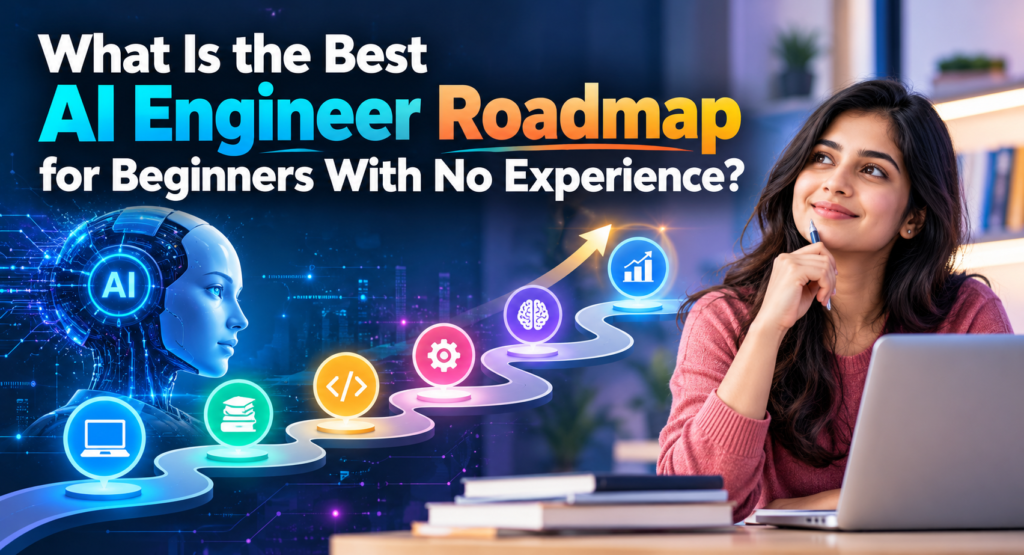
If you are a beginner and are entering this field then an artificial intelligence course for beginners is a good way to get a structured introduction to these concepts.
Professionals seeking to gain technical expertise often enrol in an artificial intelligence engineer course that teaches real-world AI implementation, model development, and deployment strategies.
Many learners also take ai machine learning courses for hands-on experience with algorithms, predictive analytics, and business applications.
How H2K Infosys Helps Professionals to Build AI Skills
H2K Infosys offers training courses based on real-time industry needs to those who want to switch to AI jobs or want to broaden their technical skills.
The practical aspect is what draws many learners towards H2K Infosys. Rather than merely learning theory, students work through real-world projects, business use cases and hands-on exercises that mirror the way AI is actually applied in today’s organisations.
Regardless of whether you’re new to the field and taking an artificial intelligence course for beginners or you’re already on your way to more advanced career paths and taking an artificial intelligence engineer course, structured training can dramatically cut down the learning curve.
Another advantage is that you get to take practical ai machine learning courses that connect the technical concepts to real-world business challenges, which is something that employers are increasingly looking for when they evaluate candidates.
Artificial intelligence in business: what’s next
AI is transitioning from a competitive advantage to a business imperative.
Across healthcare, finance, retail, manufacturing, logistics and technology organisations are integrating AI into their day-to-day operations. The companies that learn how to embed human expertise into AI-driven insights are likely to be the ones to adapt fastest to future market changes.
The chance is not only for corporations. For professionals, AI is one of the most important career growth areas of the decade.
With the increasing demand that is forecast, gaining relevant skills, practical training and hands-on experience can position individuals for success in an AI-driven economy for the long haul.
Conclusion
Artificial intelligence is changing the way business is conducted, the way companies compete, and the way they serve their customers. From automation and predictive analytics to personalised experiences and intelligent decision making, AI delivers measurable value across almost every industry.
The organisations that are most successful aren’t just adopting AI tools, they’re building teams that can use them effectively. For those who want to get started in the industry, this is the ideal time to acquire expertise through quality training programs, hands-on projects, and industry-focused learning paths like an artificial intelligence course for beginners, an artificial intelligence engineer course, or specialised ai machine learning courses by providers like H2K Infosys.
Technology is moving fast, but the real advantage still comes from people who know how to apply it to solve business problems. “That’s where the biggest opportunities are emerging today.”