Artificial intelligence certification programs in the U.S. are, at their core, structured learning paths but not the dry, theory-heavy kind people often expect. The better ones actually focus on helping for you build real, usable skills in areas like machine learning, data science, and deploying AI systems in production. That last part matters more than it sounds.
become an AI expert Training providers like H2K Infosys, for example, tend to emphasize hands-on projects, real-world workflows, and job-oriented skills rather than just concepts, which makes the learning feel a lot more practical and relevant.
Finding a course isn’t usually the problem. There are plenty. become an AI expert The hard part is figuring out which one actually fits you your current skill level, where you’re trying to get, and whether the program gives you enough hands-on work to feel confident doing this in a real job.
And honestly, that hands-on piece is where most of the learning sticks anyway.
What is an Artificial Intelligence Certified Course?
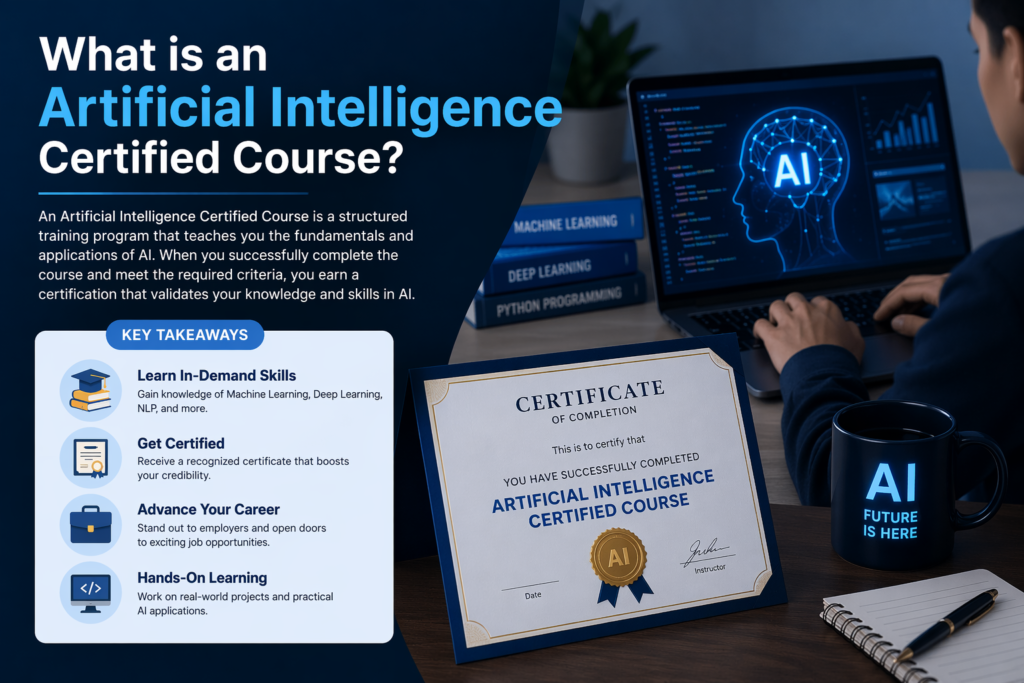
Think of an Artificial Intelligence Certified Course as a structured way to show you understand how AI works not just the ideas, but the tools and how they come together in practice.
Most of these are offered online by U.S.-based providers and are designed for working professionals. People who can’t just pause their careers, but still want to move into AI-related roles or at least get closer to that space.
What Do These Programs Usually Cover?
Every program has its own style, but the core topics tend to look pretty similar.
You’ll usually start with:
- Machine learning basics (how models actually learn, not just definitions)
- Data preprocessing and feature engineering (a lot of cleaning… more than expected)
- Model training and evaluation
- A bit of deep learning
- Deployment and monitoring though, to be fair, some courses rush this part
And then there are the tools. You’ll probably spend time with:
- Python (almost unavoidable)
- Libraries like TensorFlow, PyTorch, and Scikit-learn
- Pandas and NumPy for data handling
- Matplotlib or Seaborn for visualization
- Deployment tools like Docker, Flask, or FastAPI
It sounds like a lot. It kind of is but it becomes manageable once you start building things.
Why AI Training Matters (Especially Right Now)
AI isn’t some future concept anymore. become an AI expert It’s already baked into systems across industries finance, healthcare, retail, logistics… you name it.
If you’re in IT or anything data-related, you’ll probably run into it sooner or later. And without some exposure, it can feel like things are moving just a bit faster than you are.
People with AI skills often end up working on things like:
- Automating decisions that used to be manual
- Building predictive models (customer behavior, risk scoring, etc.)
- Improving how existing systems perform
Where AI Shows Up in Real Work
become an AI expert In real projects, AI isn’t sitting on its own it’s part of a bigger workflow.
A typical process looks something like:
- Define the problem (say, predicting customer churn)
- Gather data from different sources
- Clean and prepare it (this step… takes time)
- Train models
- Evaluate performance (accuracy, precision, recall, all that)
- Deploy into production
- Monitor and retrain over time
For example, in retail, become an AI expert might analyze purchase history and recommend products in real time. Most people interact with this kind of system daily without really noticing it.
How AI Fits into Enterprise Systems
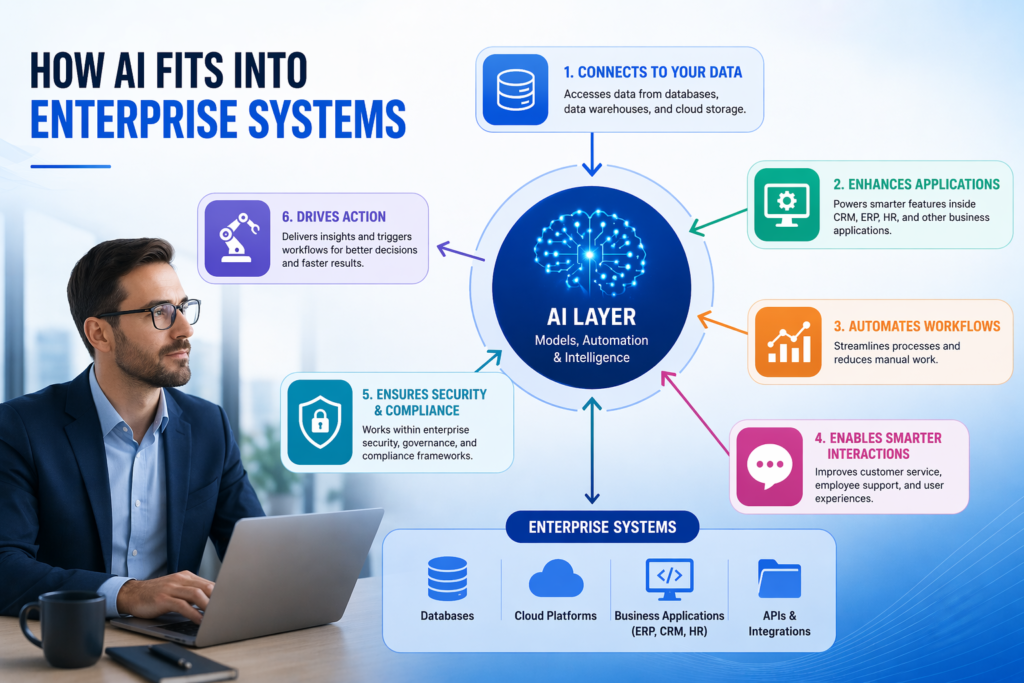
Things get more layered in enterprise environments. become an AI expert It’s not just about building a model that works it has to scale, stay secure, and fit into existing systems.
A few things that come into play:
- Data security (GDPR, HIPAA, depending on the domain)
- Scalability (handling large datasets and real-time traffic)
- Integration (connecting with ERP, CRM, cloud platforms)
- Monitoring (because models drift… and they do)
Usually, there are multiple layers involved data storage, pipelines, model building, APIs, and then the actual business application on top.
Skills You’ll Need (or Pick Up Along the Way)
become an AI expert isn’t one skill it’s more like a combination of a few different areas.
To get started:
- Basic Python
- Some understanding of statistics and probability
- Data analysis fundamentals
As you move forward:
- Machine learning algorithms
- Data visualization
- Model evaluation techniques
And later, if you go deeper:
- Deep learning (CNNs, RNNs)
- NLP
- Deployment and MLOps
It builds gradually. No one really starts with everything.
Roles That Use AI Regularly
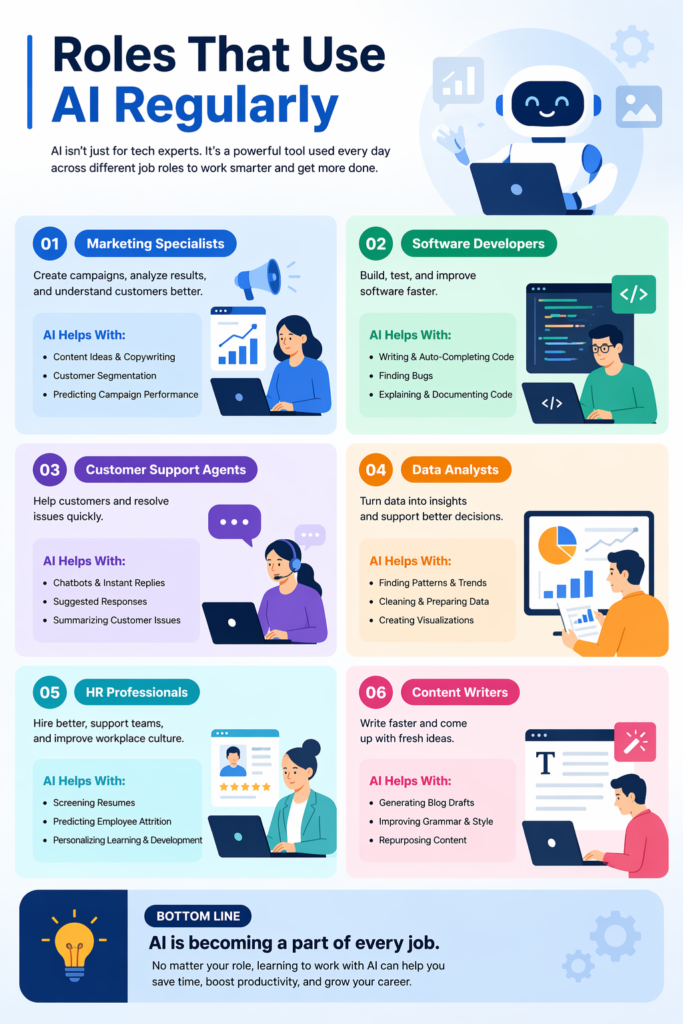
You don’t have to be an “AI Engineer” to work with AI.
It shows up across roles like:
- Data Scientist
- Machine Learning Engineer
- AI Engineer
- Data Analyst
- Business Analyst
The titles vary, but the underlying skills overlap more than people expect.
Career Paths After Certification
Once you’ve gone through a solid program and actually practiced, which is the key part you can move into roles like:
- Machine Learning Engineer
- Data Scientist
- AI Developer
- NLP Engineer
- Computer Vision Engineer
Salaries vary, of course. But generally, Ai Course Certification roles sit on the higher end, especially as you gain experience.
That said, what really makes a difference isn’t the certificate itself it’s the projects you’ve worked on.
Choosing the Right AI Program (This Part Really Matters)
Not all courses are equal, even if they look similar on the surface.
A few things worth paying attention to:
- Curriculum: Does it go beyond theory?
- Projects: Real datasets, or just simplified examples?
- Instructors: Industry experience matters here
- Tools: Are they actually used in real jobs?
- Flexibility: Can you realistically stick with it?
Rough timelines tend to look like:
- 2–3 months → basics
- 4–6 months → more job-ready
- 6–12 months → deeper specialization
Common Challenges (Most People Hit These)
Almost everyone runs into at least one of these:
- Not enough hands-on practice
- Weak math or stats foundation
- Feeling overwhelmed by too many tools
- Knowing how to build models… but not how to deploy them
None of these are deal-breakers. become an AI expert They just slow things down a bit if you don’t address them early.
What Actually Helps When Learning AI
Some things just work better than passive learning:
- Working with real (messy) datasets
- Building end-to-end projects
- Learning Git (surprisingly important)
- Getting familiar with cloud platforms like AWS or Azure
- Creating a small project portfolio
That last one matters more than people think.
Quick FAQ
What’s a good starting point for beginners?
Something that covers Python basics, simple machine learning, and guided projects.
Are U.S.-based certifications recognized become an AI expert globally?
Generally, yes—especially if they focus on practical tools and real-world work.
How long does it take?
Usually 2 to 6 months, depending on how deep you go.
Do you need coding skills?
Yes, mostly Python. Hard to avoid if you want to build anything meaningful.
Can you learn part-time?
Yeah, most programs are designed that way.
Key Takeaways
- AI certification programs are most useful when they balance theory with real project work
- AI is already part of enterprise systems—it’s not a future trend
- The become an AI expert depends more on hands-on experience than branding
- Real-world projects matter more than just completing modules
- AI career paths are flexible, but all rely on practical skills in some form
If there’s one thing people often underestimate it’s how much clarity comes after you start building things. That’s usually when it all clicks.