AI has made online learning faster, cheaper, and more accessible, but it has also exposed a serious problem : not every online course is teaching real skills anymore. The internet is flooded with thousands of AI-generated courses especially in tech education and many learners are now questioning what’s actually valuable versus what’s just clever marketing.
If you have recently searched for AI courses for beginners or artificial intelligence course for beginners, chances are you’ve noticed something strange. Hundreds of “experts” have appeared overnight. Suddenly, there’s an AI Engineer Course for everyone. Some are great, but surprisingly, many are… pretty shallow, to be honest.
And it’s obvious.
The Explosion of AI Courses – and the Trust Problem
Over the last two years, artificial intelligence has become the hottest job skill. Companies are hiring AI engineers, data specialists, prompt engineers, ML developers you name it. Education platforms quickly jumped on the bandwagon.
The outcome? A giant wave of online AI training courses.
That sounds good at first. More learning opportunities should mean more people entering the industry. But here’s the catch: parts of these courses are now being generated by AI itself.
Some course creators use ChatGPT and automation tools to generate lesson scripts, quizzes, coding examples, even whole modules over a weekend. When you take one, you can usually tell. A few skeptical students have even started running lesson transcripts through an AI detector just to confirm what they already suspected. The explanations are generic. The projects don’t actually work in real environments. The instructor never discusses practical debugging because they probably never built those systems themselves.
A friend of mine recently signed up for a cheap AI bootcamp that promised, “Become an AI Engineer in 30 Days.” Big promise. The course videos looked slick, the ads were everywhere, and the landing page had glowing testimonials.
Three weeks later, he still couldn’t articulate the difference between supervised and unsupervised learning in a practical business context.
That’s the real problem.
People won’t just buy information anymore. They’re looking for credibility, mentorship, and career change.
And AI-generated learning content often doesn’t include the human experience at all.
Why Students Are Becoming More Skeptical
Google’s latest Helpful Content updates and AI Overview systems are quietly shifting the way educational content is ranked online. Experience-based expertise is now the focus.
That’s important because students are tired of surface-level teaching.
They want:
- Projects from the real world
- Industrial applications
- Practical cloud environments
- CV/Resume building
- Interview tips
- Human mentoring
- AI workflows adopted in companies today
Not stolen or rehashed definitions from documentation.
A few years ago, people bought courses based on flashy ads or discounts. Today’s learners check faculty LinkedIn profiles, read Reddit threads, compare alumni outcomes, and ask practical questions such as:
“Did someone get a job out of this?”
That’s become the benchmark.
AI Is Lowering the Barrier to Fake Expertise
This part is uncomfortable, but necessary.
AI tools now make it so easy to sound like you know what you’re talking about online even with little to no industry experience.
AI assistants can generate blog posts, LinkedIn content, coding explanations, lesson plans, even webinar scripts. It all looks professional on the surface. But once learners ask deeper questions, the gaps are glaring.
We’re already seeing instances where:
- Course assignments are copied verbatim from GitHub
- AI-generated code examples are not production-ready
- “Mentors” lack enterprise-level experience
- Certifications have little employer recognition
- All student support is provided by bots
That last one is more annoying than you’d think.
When someone is stuck deploying an AI project at midnight, generic chatbot responses aren’t much help. Learners need guidance from someone who has actually solved these problems.
This is where credible institutions are outpacing content factories.
Content and Actual Training
There’s a massive difference between consuming AI content and receiving structured AI training.
Forty hours of videos doesn’t prepare someone for a machine learning role.
A good AI Engineer Course should include:
- Real-world datasets
- Experience in cloud deployment
- Exposure to MLOps
- Basics of Python programming
- Techniques for model evaluation
- Pipelines for prompt engineering
- Final projects
- Career coaching
- Interview preparation
And honestly, one thing that so many beginners miss is accountability.
Self-paced AI courses are nice until you lose motivation by week two. Structured mentoring still counts probably more than ever before.
That’s one reason institutions like H2K Infosys are gaining attention among serious learners. Instead of generic “learn AI fast” messaging, they focus on practical implementation, instructor-led sessions, real-time project work, and job-oriented training.
That difference is very evident during interviews.
Employers Are Beginning to See the Quality Gap
Hiring managers are changing too.
A recruiter recently posted on LinkedIn that many candidates list AI certifications on their resumes but can’t answer even simple implementation questions in technical screenings.
This is an increasing industry concern.
Companies don’t need people who have just taken an artificial intelligence course for beginners. They want professionals who can:
- Work with real business datasets
- Understand deployment pipelines
- Diagnose model performance problems
- Collaborate with engineering teams
- Ensure transparency of AI decisions
The hiring market is maturing.
In 2024 and 2025, having “AI Certified” on a resume was enough to turn heads. By 2026, employers will dig deeper, assessing project quality, real-world exposure, and actual problem-solving ability.
That’s changing how people choose training providers.
The Return of Human-Guided Learning
Ironically, the value of human instructors may actually be enhanced by AI.
It sounds a little backwards at first, but it makes sense.
When information is infinite and automated, guidance becomes more valuable.
Learners don’t need another AI explanation of neural networks. They need someone with experience to explain:
- Why some models fail
- How companies use AI differently from what tutorials claim
- What employers are really asking in interviews
- Which skills matter now
This is why mentor-heavy platforms are seeing better student retention.
People tend to trust programs with live classes, project reviews, mock interviews, and direct instructor interaction more than systems that are fully automated.
For example, H2K Infosys has taken a more pragmatic approach to training, as opposed to the “upload hundreds of videos and hope students finish” model many low-cost platforms follow.
That appears to be the way the market is heading.
Clarity Over Information for Beginners
One often-overlooked problem in AI education today is information overload.
If you search for AI courses for beginners, you’ll see:
- Conflicting roadmaps
- Inflated salary claims
- Unlimited tool suggestions
- Thousands of hours of random content
It can become overwhelming quickly.
A good beginner program should make learning easier.
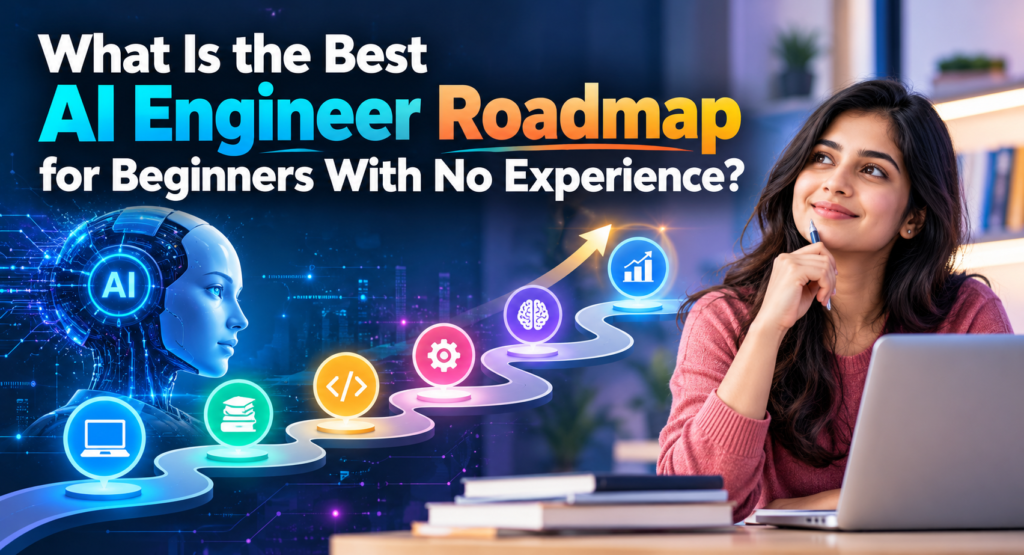
Not every learner needs advanced mathematical theory on day one. Most need a structured roadmap that introduces, step by step:
- Basic Python
- Data processing
- Concepts of machine learning
- AI tools
- Cloud platforms
- Real-time projects
The best courses teach confidence as well as technical skills.
It’s difficult to fully automate that human element.
AI-Generated Learning Isn’t Going Anywhere – But Quality Will Count
To be clear, the enemy here isn’t AI itself.
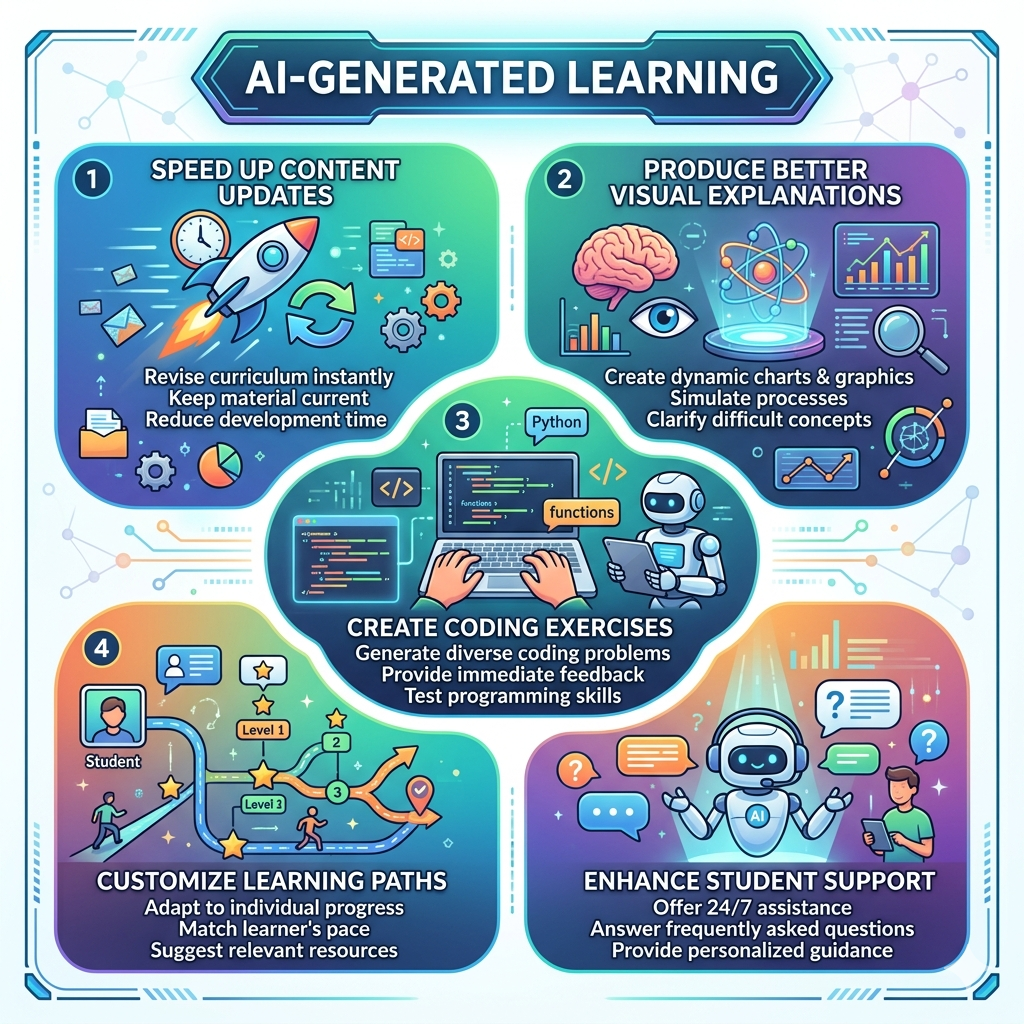
AI tools can be a positive force for education, if used responsibly. Many great instructors now use AI to:
- Speed up content updates
- Produce better visual explanations
- Create coding exercises
- Customize learning paths
- Enhance student support
The problem arises when AI substitutes expertise, rather than enhancing it.
Learners can usually feel the difference.
Google’s evolving ranking systems also increasingly reward real expertise. Content based on real experience performs better because it addresses real user concerns, not just search keywords.
That’s a major change in online education.
Conclusion
The online learning industry is at a crossroads of credibility.
The question is no longer: “Does this course contain AI content?”
The question is now: “Does this course develop real capability?”
The importance of that distinction grows every month.
With the proliferation of AI-generated courses, learners are becoming savvier in assessing training quality. They want teachers with real-world experience, hands-on projects, mentorship opportunities, and career-oriented learning paths.
That’s probably the best approach for anyone exploring an AI engineer course or searching for an artificial intelligence course for beginners.
Don’t just compare prices or marketing hype.
Compare results.
Because credibility has stealthily become the most valuable feature of all in AI teaching.