As organisations adopt artificial intelligence to automate workflows, improve decision making, and create intelligent applications, demand for AI engineers is on the rise. If you are looking to get into this field this AI Engineer Career Guide will help you understand which course of training can build practical, job-ready skills in the shortest period of time. H2K Infosys provides industry-oriented AI training with live instructor-led classes, hands-on projects, and real-world use cases that give learners the practical experience employers look for.
Choosing the perfect AI course involves more than just a certificate. It should help you master Python, machine learning, deep learning, Generative AI, cloud platforms, and model deployment via real projects. The best programs also offer opportunities to create a portfolio and provide advice on industry best practices.
This AI Engineer Career Guide explains the must-have skills, features of the course and the learning path to get you job-ready. Be it a newbie, a software professional or someone looking for a career change, you will learn how to choose a course that will prepare you for real AI engineering roles and long-term career growth.
What Is AI Engineer Career Guide: Which Course Builds Job-Ready Skills Fastest?
This AI Engineer Career Guide explains how working professionals can transition into or advance within an AI engineering role by choosing a learning path that prioritizes real-world job skills. It focuses on how machine learning and a structured AI map to actual enterprise responsibilities, tools, and workflows.
Rather than comparing brand names or platforms, this AI Engineer Career Guide evaluates:
- The technical competencies employers expect
- The types of projects AI engineers work on
- The tools and frameworks used in production
- How learning paths translate into job-ready capabilities
How Does AI Work in Real-World IT Projects?
In enterprise environments, AI Engineer Career Guide, AI systems are rarely standalone. They are part of larger software ecosystems that include databases, APIs, security controls, monitoring systems, and cloud infrastructure.
Typical Enterprise AI Workflow
- Data Ingestion
- Sources: databases, APIs, message queues, logs, IoT streams
- Tools: SQL, REST APIs, cloud storage, ETL pipelines
- Data Processing and Validation
- Cleaning, normalization, feature engineering
- Tools: Python, Pandas, Spark, data validation frameworks
- Model Development
- Algorithm selection, training, evaluation
- Tools: Scikit-learn, TensorFlow, PyTorch
- Model Deployment
- Serving models via APIs or batch systems
- Tools: Docker, Kubernetes, cloud ML services
- Monitoring and Maintenance
- Performance tracking, drift detection, retraining
- Tools: Prometheus, MLflow, logging platforms
Realistic Project Scenario
An AI Engineer Career Guide working in a financial services company might:
- Build a fraud detection model using historical transaction data
- Expose predictions through a secure REST API
- Deploy the model inside a containerized environment
- Monitor model accuracy and latency in production
- Schedule retraining pipelines based on new data
This type of workflow is rarely covered in purely theoretical courses. It is a core focus of job-oriented machine learning that emphasize production systems.
Why Is This AI Career Path Important for Working Professionals?
AI engineering roles often attract professionals from:
- Software development
- QA and automation
- Data analysis
- IT infrastructure and cloud engineering
For working professionals, the challenge is not just learning AI concepts but integrating them into existing IT skill sets.
Career-Relevant Advantages
- AI skills complement cloud, DevOps, and software engineering roles
- AI projects often involve cross-functional teams
- Demand exists across industries, not just technology companies
Professionals who follow the AI Engineer Career Guide, a structured AI program that includes deployment, security, and system integration are more prepared for enterprise environments than those who only learn model theory.
What Skills Are Required to Learn AI Engineering?
AI engineering brings together data science, software development, and infrastructure skills to create and deploy intelligent applications. A strong AI Engineer Career Guide helps learners understand these areas by covering machine learning, programming, data handling, model development, and deployment practices needed for real-world AI projects.
Core Technical Skills
| Skill Area | What You Need to Learn | Why It Matters |
|---|---|---|
| Programming | Python, basic data structures | Used in model development and pipelines |
| Mathematics | Linear algebra, probability, statistics | Underpins model behavior and evaluation |
| Data Handling | SQL, Pandas, data validation | Ensures training data quality |
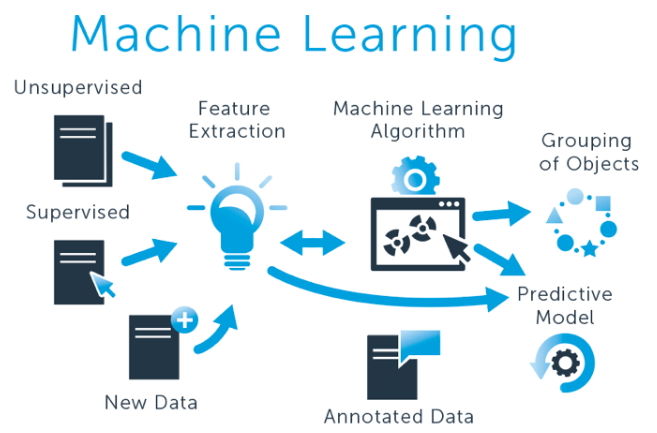
| Machine Learning | Supervised and unsupervised learning | Core of AI system logic |
| Deep Learning | Neural networks, CNNs, transformers | Used in vision and language systems |
| APIs & Integration | REST, JSON, authentication | Connects models to applications |
| Deployment | Docker, cloud platforms | Makes models usable in production |
| Monitoring | Logging, metrics, retraining | Maintains system performance |
Professional Skills
- Documentation and version control
- Model explainability and compliance
- Security awareness for data and APIs
- Performance optimization
Strong Machine Learning Training Courses integrate both technical and professional skills rather than focusing only on algorithms.
How Is AI Used in Enterprise Environments?
AI is commonly integrated into existing business systems to improve automation, decision-making, and operational efficiency. This AI Engineer Career Guide explains how AI solutions are applied in enterprises through applications like predictive analytics, intelligent automation, chatbots, and data-driven business processes.
Common Enterprise Use Cases
- Customer support automation
Chatbots integrated into CRM systems - Predictive analytics
Forecasting demand or system failures - Computer vision systems
Quality control in manufacturing - Recommendation engines
Content or product suggestions - Fraud and risk detection
Financial and cybersecurity applications
Integration Architecture Example
[User Interface]
     |
[Backend API]
     |
[AI Model Service] ---- [Model Registry]
     |
[Database / Data Lake]
AI engineers often work closely with backend developers, cloud engineers, and security teams to ensure AI services meet enterprise standards.
What Job Roles Use AI Daily?
AI Engineer Career Guide: AI-related job titles vary, but many share overlapping responsibilities.
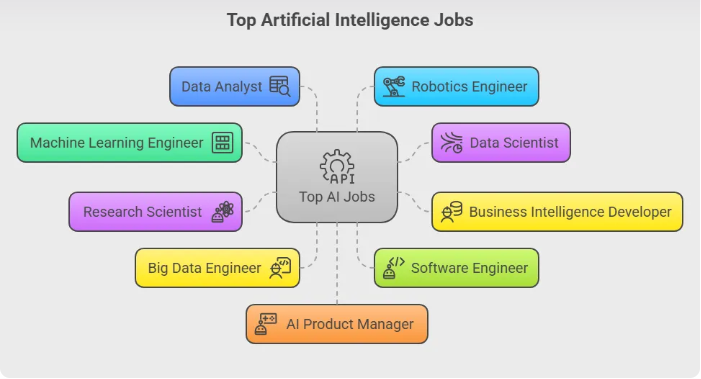
Common Roles
- AI Engineer
- Machine Learning Engineer
- Data Scientist (applied focus)
- MLOps Engineer
- AI Solutions Architect
Role vs Skill Mapping
| Role | Key Skills Used Daily |
|---|---|
| AI Engineer | Model development, APIs, deployment |
| ML Engineer | Training pipelines, optimization |
| MLOps Engineer | CI/CD, monitoring, automation |
| Data Scientist | Data analysis, feature engineering |
| AI Architect | System design, scalability |
A strong AI program should prepare learners for at least two of these roles, particularly AI and ML engineering.
What Careers Are Possible After Learning AI Engineering?
AI engineering skills open pathways into multiple IT and data-focused careers. AI Engineer Career Guide.
Career Paths
- AI Engineer in enterprise IT teams
- Machine Learning Engineer in SaaS companies
- Data Scientist in analytics teams
- Automation Engineer with AI specialization
- Cloud Engineer supporting AI platforms
Progression Example
- Junior AI Engineer
- AI Engineer
- Senior AI Engineer
- AI Solutions Architect or Technical Lead
Career progression depends on system-level understanding, not just model accuracy.
What Should You Look for in Machine Learning Training Courses?
Not all courses produce job-ready skills.
Evaluation Criteria
| Feature | Why It Matters |
|---|---|
| Hands-on Projects | Simulates real job tasks |
| Deployment Coverage | Models must run in production |
| Tooling Exposure | Reflects enterprise environments |
| Version Control | Required in team workflows |
| Documentation Skills | Needed for audits and handovers |
Red Flags
- Only theoretical lectures
- No deployment or API integration
- Limited or no project work
- No coverage of monitoring or retraining
What Makes an AI Training Program Job-Oriented?
A job-oriented program focuses on workflow mastery rather than isolated concepts.
Key Components
- End-to-end project lifecycle
- Cloud deployment exercises
- API integration labs
- Security and data compliance practices
- Team-based version control
Learning Path Overview
| Stage | Focus |
|---|---|
| Foundations | Python, statistics, ML basics |
| Applied ML | Feature engineering, evaluation |
| Systems | APIs, Docker, cloud |
| Production | Monitoring, retraining, scaling |
How Do Real-World AI Projects Look in Practice?
Example Project: Resume Screening System
Objective: Automatically classify resumes for job roles.
Steps: AI Engineer Career Guide
- Collect and label training data
- Clean and preprocess text
- Train a classification model
- Build an API endpoint
- Deploy to a cloud platform
- Monitor accuracy and response time
- Retrain based on new data
This type of project reflects what employers expect from candidates who complete advanced.
How Long Does It Take to Become Job-Ready?
Timelines vary based on prior experience.
| Background | Estimated Time |
|---|---|
| Software Developer | 4–6 months |
| Data Analyst | 5–7 months |
| QA / Automation | 6–8 months |
| Non-IT | 8–12 months |
Programs that combine theory with deployment tasks generally reduce onboarding time in professional roles.
Tool Comparison Table
| Category | Common Tools | Purpose |
|---|---|---|
| ML Frameworks | TensorFlow, PyTorch | Model training |
| Data Processing | Pandas, Spark | Data handling |
| Deployment | Docker, Kubernetes | Production systems |
| Monitoring | MLflow, Prometheus | Performance tracking |
| Cloud | AWS, Azure, GCP | Infrastructure |
What Challenges Do AI Engineers Face in Production?
Common Issues
- Data drift affecting model accuracy
- Performance bottlenecks in APIs
- Security vulnerabilities in endpoints
- Compliance and audit requirements
- Scaling systems under high load
Understanding these challenges is a major differentiator in advanced AI Training Program curricula.
Learning Path Table
| Phase | Topics | Outcome |
|---|---|---|
| Phase 1 | Python, data handling | Code proficiency |
| Phase 2 | Machine learning | Model building |
| Phase 3 | APIs, Docker | System integration |
| Phase 4 | Monitoring, scaling | Production readiness |
How Working Professionals Apply These Skills on the Job
AI Engineer Career Guide helps professionals understand the skills, tools, and learning path needed to build a successful career in artificial intelligence. Explore how AI engineers apply their knowledge to real-world projects, improve business solutions, and prepare for future job opportunities.
Daily Tasks
- Reviewing model performance reports
- Updating training pipelines
- Debugging API responses
- Coordinating with DevOps teams
- Documenting system changes
Workflow Example
- Receive performance alert
- Analyze recent data
- Retrain model
- Run validation tests
- Deploy updated model
- Monitor metrics
This operational focus is what separates job-ready professionals from academic learners.
Conclusion
This AI Engineer Career Guide shows that the right course can make a big difference in how quickly you become job-ready. Focus on a program that offers practical training, real-world projects, and guidance from experienced instructors rather than just theory. By following this AI Engineer Career Guide, building a strong portfolio, and continuing to improve your skills, you’ll be better prepared for AI job opportunities and long-term career growth.
FAQ: AI Engineer Career Guide
Which skills are required to become an AI engineer?
Key skills include Python programming, machine learning, deep learning, data preprocessing, SQL, cloud platforms (AWS, Azure, or GCP), Generative AI, and knowledge of frameworks like TensorFlow and PyTorch.
How long does it take to become job-ready as an AI engineer?
The timeline depends on your background. Beginners typically need 6–12 months of consistent learning and hands-on practice, while professionals with programming experience may become job-ready in 3–6 months through a structured AI engineer course.
Do I need a computer science degree to become an AI engineer?
No. Many AI engineers come from backgrounds such as software development, data analysis, mathematics, engineering, or even non-technical fields. Practical skills, projects, and continuous learning often matter more than a specific degree.
Is Python mandatory for AI engineering?
Yes. Python is the most widely used programming language for AI development because of its extensive libraries, including TensorFlow, PyTorch, Scikit-learn, Pandas, and NumPy.
Does an AI engineer course include real-world projects?
Quality AI training programs include hands-on projects such as predictive models, recommendation systems, chatbots, image classification, and Generative AI applications. These projects help you build a portfolio for job interviews.