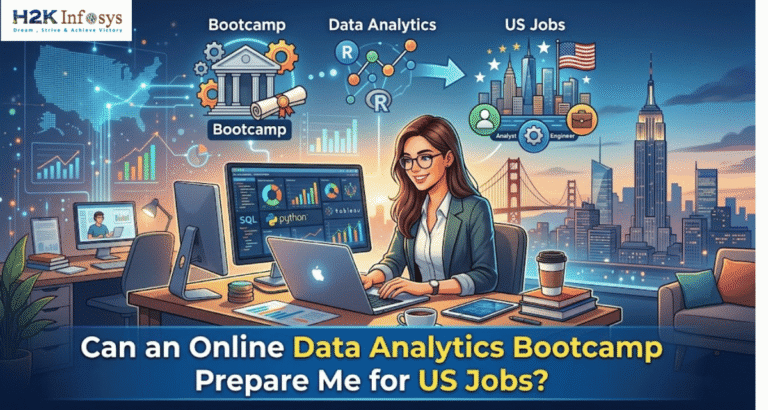
Introduction
Yes, it can but probably not in the way most ads promise.
A solid online data analytics bootcamp can definitely help someone break into the US job market, especially now when companies are hiring people who can actually work with data instead of just talking about it. But here’s the catch nobody mentions enough: watching a few recorded classes and collecting a certificate isn’t what gets people hired anymore.
What matters is whether you can solve problems.
Can you clean messy data? Can you explain why sales dropped? Can you build a dashboard a manager can understand in 30 seconds?
That’s the stuff employers care about.
I’ve spoken with learners who spent months hopping between random YouTube tutorials and free courses, only to realize they still froze during interviews. Then I’ve also seen people from structured programs, especially those with live projects and internship-style training, land interviews much faster because they knew how to talk through real business scenarios.
That difference is huge.
And honestly, the US market in 2026 still has strong demand for analysts. AI tools are everywhere now, but companies still need humans who understand what the numbers actually mean.
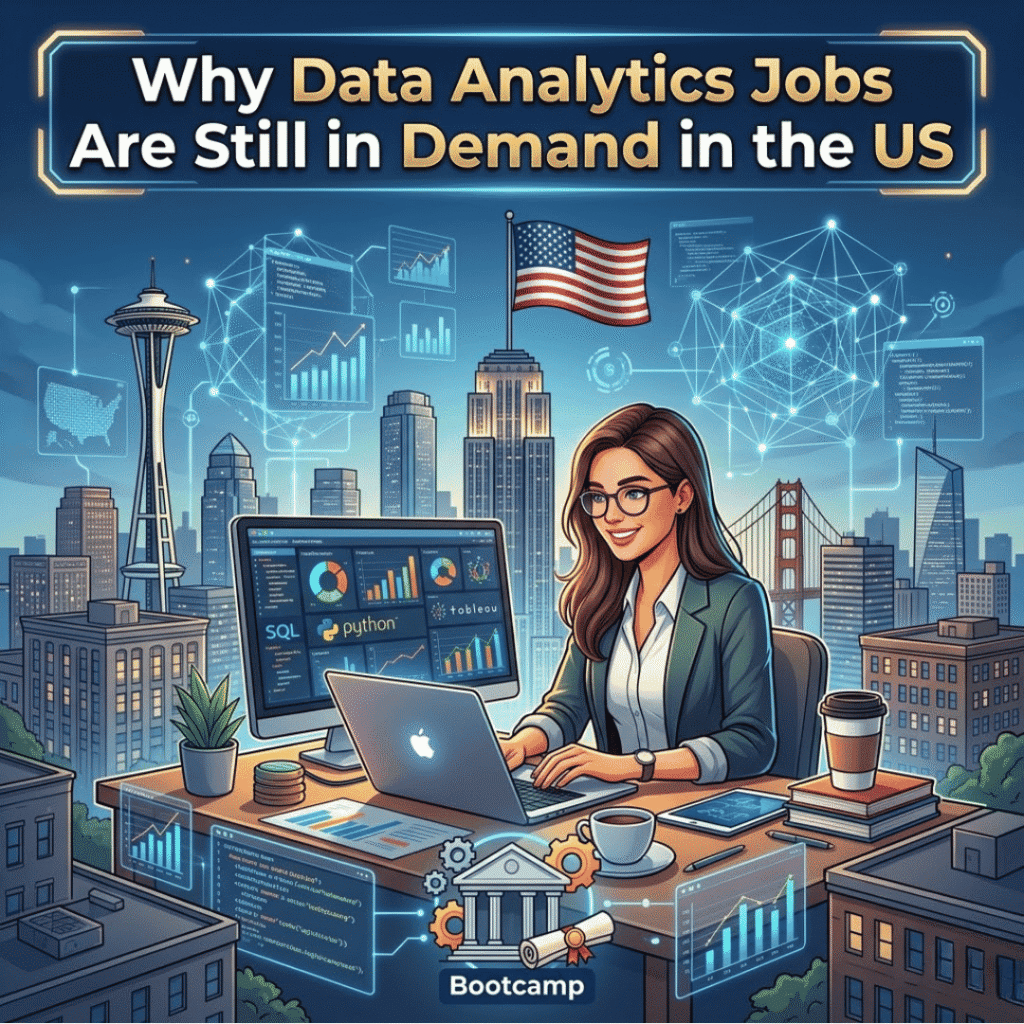
Why Data Analytics Jobs Are Still in Demand in the US
A lot of people assumed AI would completely replace entry-level analysts by now.
That didn’t really happen.
What actually happened is companies started expecting analysts to work with AI tools instead of competing against them. So now analysts use things like AI-powered reporting, automated dashboards, and Copilot-style assistants to move faster.
But businesses still need someone to:
- Understand the business problem
- Check whether the data even makes sense
- Spot patterns AI might misread
- Explain findings to teams and managers
- Turn raw numbers into decisions
That last part matters more than ever.
A retail company doesn’t just want a dashboard saying profits dropped. They want someone who can explain why it happened and what should be done next.
That’s why roles like these are still growing:
- Data Analyst
- Business Intelligence Analyst
- Reporting Analyst
- SQL Analyst
- Product Analyst
- Junior Data Analyst
A practical online data analytics bootcamp can help people prepare for these roles much faster than trying to learn everything alone.
Especially career changers.
I’ve seen nurses move into healthcare analytics, finance professionals transition into BI reporting, and even customer support employees pivot into operations analytics. The path is actually more common now than people think.
What US Employers Expect From Entry-Level Online data analytics bootcamp
This part surprises a lot of beginners.
Most employers are not expecting freshers to be machine learning experts.
They usually want someone reliable who understands the fundamentals and can work confidently with business data.
That means skills like:
SQL
SQL still sits at the center of analytics hiring.
Almost every interview includes questions about:
- Joins
- Group By
- Subqueries
- Window functions
- Data filtering
- Data cleaning
And yes… candidates still panic during SQL rounds all the time.
One hiring manager recently mentioned that many applicants can memorize syntax but struggle when asked simple business questions like:
“Find customers who purchased more than three times in the last 60 days.”
That’s why hands-on practice matters so much.
Excel
People love to act like Excel is outdated.
It’s not.
A surprising number of US companies still rely heavily on Excel for reporting, budgeting, quick analysis, and operational tracking.
Pivot tables, VLOOKUP/XLOOKUP, charts, conditional formatting these still show up constantly in analyst jobs.
Power BI or Tableau
Visualization skills are becoming almost mandatory.
Managers don’t want giant spreadsheets anymore. They want dashboards they can glance at during meetings.
Good analysts know how to create visuals that answer questions quickly.
Things like:
- Which products are underperforming
- Customer churn patterns
- Regional sales drops
- Marketing campaign results
- Inventory forecasting
Python Basics
Not every analyst role requires advanced coding.
But basic Python skills help with:
- Data cleaning
- CSV automation
- API handling
- Report automation
- Simple predictive analysis
And honestly, recruiters notice it.
Communication Skills
This one gets ignored constantly.
You can build the best dashboard in the world, but if you can’t explain it clearly during a meeting, companies hesitate.
A lot of successful online data analytics bootcamp are simply good communicators.
That sounds obvious, but it’s true.
Does an online data analytics bootcamp actually help?
Yes, if it comes with practical experience.
An online data analytics bootcamp alone probably won’t magically unlock job offers.
Recruiters have seen too many resumes filled with online data analytics bootcamp certificates and zero real projects.
But certifications still help in several ways:
- They add credibility
- They help resumes pass ATS systems
- They show structured learning
- They support career transitions
- They make beginners look more serious
The important part is what you build during the training.
For example, candidates who create projects around:
- Sales forecasting
- Healthcare reporting
- Banking analytics
- Customer segmentation
- HR dashboards
…usually perform much better in interviews because they can discuss actual business situations.
One learner I came across built a Power BI dashboard analyzing e-commerce return rates. During interviews, recruiters spent nearly the entire conversation discussing the project itself.
Not the certificate.
That says a lot about where hiring is heading.
What Makes an Online Bootcamp Worth It?
Not every online data analytics bootcamp is genuinely job-focused.
Some are basically giant libraries of prerecorded videos with quizzes at the end.
That setup rarely prepares someone for real interviews.
A strong online data analytics bootcamp should feel more like guided industry training.
Here’s what usually makes the biggest difference.
Live Training Sessions
Recorded content is helpful, but live classes matter because learners can ask questions immediately.
That becomes important when:
- SQL queries fail
- Dashboards break
- Data doesn’t match
- Business logic gets confusing
Real-time feedback speeds learning up a lot.
Real Projects
This is probably the most important piece.
Projects help learners understand what working with messy, big online data analytics bootcamp actually feels like.
And real data is messy.
Columns break.
Numbers don’t match.
Dates are inconsistent.
Half the records are incomplete.
That’s normal.
Good programs expose students to practical datasets from industries like:
- Healthcare
- Retail
- Banking
- Insurance
- Logistics
- E-commerce
Employers love hearing candidates explain project challenges because it sounds real.
Internship-Style Experience
This helps more than people realize.
Many companies still ask for “experience,” even for junior roles.
Internship projects or simulated work environments help learners talk more confidently about workflows, reporting processes, stakeholder requests, and business scenarios.
Resume and Interview Preparation
A lot of candidates fail because they:
- Add too many tools on resumes
- Can’t explain projects properly
- Memorize answers instead of understanding concepts
- Freeze during SQL interviews
Structured interview coaching genuinely helps here.
Why Many Learners Look at H2K Infosys
One reason many students explore online data analytics bootcamp programs like H2K Infosys is because the training focuses heavily on practical learning instead of just theory.
That combination matters more now than it did a few years ago.
Their programs usually include:
- Live instructor-led sessions
- Hands-on project work
- Internship-style exposure
- Resume guidance
- Mock interviews
- Job placement support
For people trying to enter the US market, especially career changers or professionals returning after a break, that structure can make the process feel less overwhelming.
Because honestly, starting an online data analytics bootcamp alone can feel chaotic.
There’s SQL.
Python.
Power BI.
Statistics.
ETL concepts.
AI tools.
Cloud reporting.
Most beginners don’t know where to start first.
Structured guidance helps simplify that path.
Common Mistakes Beginners Make
I keep seeing the same patterns over and over.
Trying to Learn Everything at Once
People open 15 browser tabs and suddenly try learning:
- Python
- R
- Machine Learning
- AI
- Spark
- Cloud Analytics
- Data Engineering
…all in the same month.
That usually backfires.
A better order is:
- SQL
- Excel
- Power BI/Tableau
- Python basics
- Advanced analytics
The fundamentals matter more than flashy tools.
Avoiding Projects
Watching tutorials feels productive.
Building projects is where the actual learning happens.
You remember mistakes far longer when you spend three hours debugging a broken SQL join at midnight.
Not fun at the time, but weirdly effective.
Ignoring Business Thinking
online data analytics bootcamp is not just charts and graphs.
Companies care about outcomes.
Questions like:
- Why are customers leaving?
- Which product is losing money?
- Why did conversions drop?
- Which region is underperforming?
The business context matters just as much as technical skills.
What Salary Can Beginners Expect?
Salaries vary depending on location, tools, and prior experience.
But generally speaking, entry-level analyst roles in the US still pay fairly well compared to many other beginner-friendly tech careers.
In 2026, many entry-level data analysts are landing somewhere around the following:
- $65,000–$90,000 annually
Business Intelligence and reporting-focused roles can go much higher with experience, especially for candidates skilled in:
- SQL
- Power BI
- Tableau
- Python
- Cloud reporting tools
Remote and hybrid opportunities still exist too, although companies have become more selective recently.
The strongest candidates usually have portfolios that demonstrate practical work.
Can Someone Without an IT Degree Become a Data Analyst?
Yes.
This is actually becoming pretty common now.
A lot of employers care more about practical ability than formal degrees for analyst roles.
I’ve personally seen people transition from:
- Accounting
- Banking
- Retail operations
- Customer service
- Healthcare administration
- Logistics
…into analytics positions after building strong project portfolios.
The key is consistency.
People who practice regularly and work on real datasets tend to improve surprisingly fast.
Skills You Build in a Good online data analytics bootcamp
A practical online data analytics bootcamp usually helps learners develop skills like:
- Data cleaning
- SQL querying
- Dashboard development
- Data visualization
- Business reporting
- Data storytelling
- Reporting automation
- Basic predictive analytics
- Business decision-making analysis
These skills transfer across industries, which is one reason analytics remains attractive even during uncertain job markets.
Related Topics You Can Also Explore
If you’re planning to build a long-term analytics career, you can also explore topics like:
- “How to Build a Data Analyst Portfolio for US Jobs”
- “Power BI vs Tableau for Beginners in 2026”
- “Top SQL Interview Questions for Data Analysts”
These topics connect naturally and help learners build a stronger understanding of the field.
FAQs
Is an online data analytics bootcamp worth it in 2026?
Yes, especially if it includes live projects, mentorship, and interview preparation. Employers care more about practical skills now than passive certificates.
Can beginners learn online data analytics bootcamp?
Absolutely. Many analysts started with non-technical backgrounds. Consistent practice and guided learning make a big difference.
Which tools should I learn first?
Start with SQL, Excel, and Power BI or Tableau. After that, move into Python and advanced analytics concepts.
How long does it take to become job-ready?
Most learners become interview-ready within 4–8 months, depending on consistency, project work, and prior experience.
Does an online data analytics certificate help with jobs?
Yes, especially when paired with practical projects and real-world portfolio work that can be discussed during interviews.
Final Thoughts
A good online data analytics bootcamp can absolutely prepare someone for US jobs, but realistic expectations matter.
The people who succeed usually treat learning like practice instead of passive watching.
They build projects.
They make mistakes.
They debug broken dashboards.
They improve communication skills.
They keep practicing.
That process matters more than simply collecting online data analytics bootcamp certificates.
If you’re serious about building a career in analytics, structured training can genuinely make the path smoother. Programs like H2K Infosys online data analytics bootcamp focus heavily on practical exposure, live learning, and job preparation aligned with current US market expectations.
And honestly, that practical experience is usually what helps people feel interview-ready.
At some point, the biggest step is just starting even if things feel confusing in the beginning. Most analysts you see working today were beginners once too.