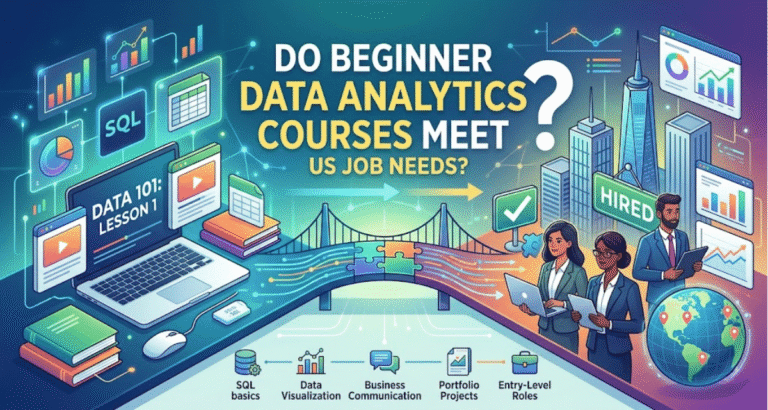
So… what’s actually going on here?
I’ve seen a lot of people jump into data analytics courses thinking it’s a straight path to a job. And honestly, I get why. The ads make it sound simple: learn a few tools, get certified, land a role.
But once you look at real job descriptions (or worse, sit in an interview), things feel… different.
Companies aren’t asking the following:
“Do you know what data analytics is?”
They’re asking:
“Can you figure out why our sales dropped in Q2 and explain it clearly?”
That’s a completely different level.
What US companies are actually looking for (based on recent hiring trends)
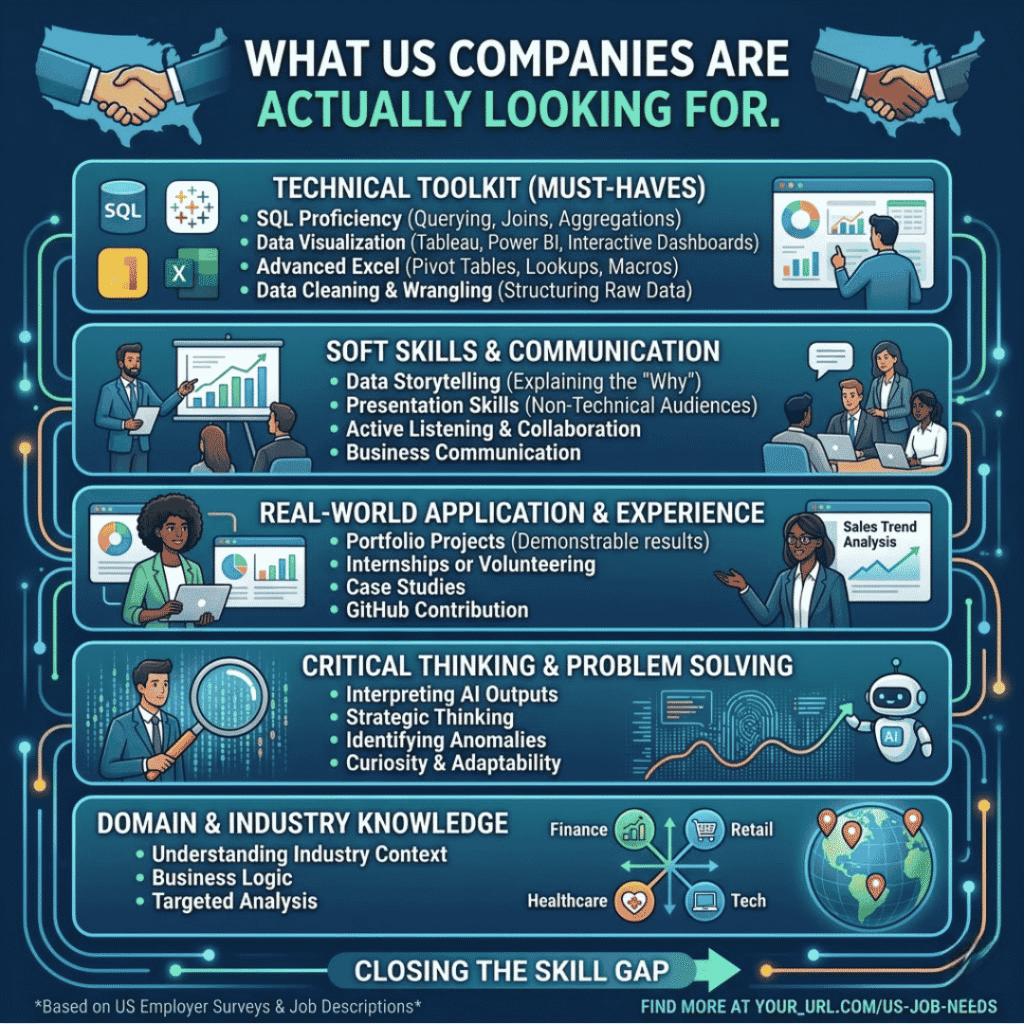
This part surprises a lot of beginners.
It’s not just about finishing data analytics courses. It’s about whether you can do something useful with what you learned.
Real example (this comes up a lot)
A retail company wants to know:
- Why are customers not coming back?
- Which products are underperforming?
- What should we fix?
If your training only covered:
- Basic Excel
- A few SQL commands
- Maybe a dashboard tutorial
…you’ll struggle to answer that in a real setting.
Where beginner courses help (and where they don’t)
Let me be fair; they’re not useless.
They do help with:
- Getting familiar with tools
- Understanding basic concepts
- Testing if you even like this field
But here’s where things fall apart a bit…
They usually don’t give you:
- Real project experience
- Confidence with messy, real data
- Business thinking
- Interview readiness
And that gap? That’s exactly what employers notice.
The part most people don’t realize early enough
You can complete 3–4 data analytics courses and still feel stuck.
I’ve seen it happen more than once.
People finish courses, collect certificates… and then pause because of the following:
“I don’t feel ready to apply yet.”
That’s usually a sign the course stayed too theoretical.
What actually makes you “job-ready”
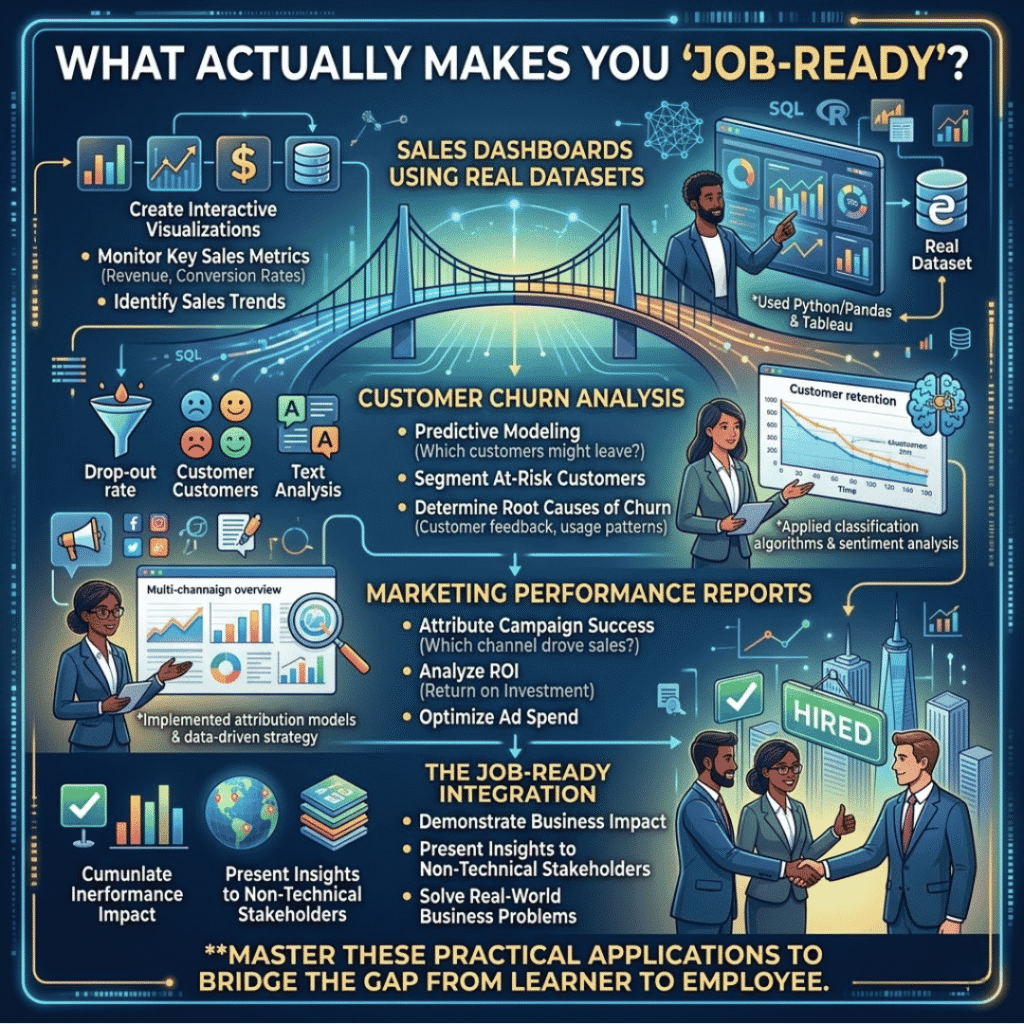
This is where things shift.
The candidates who do land roles usually have something extra not just course completion.
They’ve worked on things like:
- Sales dashboards using real datasets
- Customer churn analysis
- Marketing performance reports
Basically, they’ve done the job before getting the job.
And that’s exactly what structured programs (like H2K Infosys) try to simulate.
Why structured training makes a difference
Not to sound dramatic, but this is where most beginners either move forward… or stay stuck.
Programs like H2K Infosys don’t just stop at teaching tools. They push you into:
- Real-time project work
- Business-style problem solving
- Resume and interview prep
That combination matters more than people expect.
Because knowing SQL is one thing…
Explaining insights from SQL in an interview? Whole different story.
Career outcomes (what’s realistic right now)
If you go beyond just basic data analytics courses, the path looks much clearer.
Entry-level roles:
- Data Analyst
- Business Analyst
- Junior Reporting Analyst
Salary range (US, recent trends):
- Around $65K–$85K to start
- Crossing $90K+ with a bit of experience
Still a solid field, by the way. Data isn’t slowing down anytime soon.
Skills that actually move the needle
From what I’ve seen, these matter the most:
- SQL (seriously, don’t skip this)
- Excel (advanced not just basics)
- Power BI or Tableau
- Some exposure to Python
- And most importantly… thinking in terms of business problems
That last one is harder to teach but it’s what gets you hired.
A quick reality check
A lot of people assume:
“Once I finish a few data analytics courses, I’ll be ready.”
That’s… optimistic.
You’ll need:
- Practice
- Projects
- Feedback
- Some structure
Which is why self-learning alone doesn’t always work for everyone.
If you’re serious about this…
You don’t necessarily need more data analytics courses; you need the right kind of training.
Something that connects learning → practice → job readiness.
That’s where structured programs like H2K Infosys can actually help. They’re designed around what US employers expect, not just what looks good in a syllabus.
Common mistakes I keep seeing
Just so you don’t fall into the same loop:
- Taking too many beginner courses
- Avoiding SQL because it feels hard
- Not building a portfolio
- Waiting too long to start applying
Even fixing one or two of these can change things.
You can also explore topics like:
- How to build a data analytics portfolio from scratch
- Real SQL interview questions for beginners
- Data analyst vs business analyst (which one fits you better?)
These help you go beyond just learning and start thinking like someone in the field.
FAQs
1. Can I get a job with just beginner data analytics courses?
Not usually. They help you start, but you’ll need projects and practical experience to stand out.
2. What should I learn first?
Start with SQL and Excel, then move to visualization tools like Power BI.
3. How long does it take to become job-ready?
Roughly 3–6 months with consistent effort and the right training approach.
4. Are data analytics courses enough?
Only if they include hands-on projects and real-world scenarios. Otherwise, they’re too basic.
5. Is data analytics still a good career in 2026?
Yes, demand is still strong across industries.
Final thoughts (honestly speaking)
Data analytics courses aren’t the problem; it’s expecting them to do everything.
Use them as a starting point, not the finish line.
If you actually want to break into the field, focus on building real skills, working on real scenarios, and getting some structured guidance along the way.
That’s what tends to make the difference.