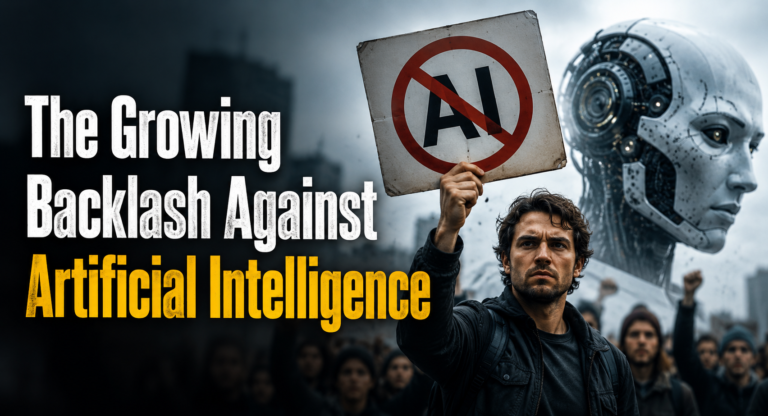
Artificial Intelligence is changing the way we work, learn, and make decisions but scepticism from the general public is rising. The anger at AI isn’t really over the technology itself. It’s about jobs, misinformation, privacy, bias, and whether AI is moving forward faster than society can realistically catch up.
In the past couple of years I’ve noticed a change in the conversations around AI. And not so long ago the atmosphere of most discussions was an excited one. Today, many professionals are asking tougher questions: Who owns AI? How about jobs for humans? Can we trust content created by AI? These are not fringe concerns anymore, they’re becoming mainstream.
Why is resistance to artificial intelligence growing?
It’s been impossible to ignore the rise of Artificial Intelligence. AI is now part and parcel of daily life, from AI-powered chatbots and content generators to automated coding assistants and customer service systems.
But the more AI expands, the more concerns arise.
1.Job Loss Anxiety
Perhaps the biggest source of resistance is job uncertainty.
Automation is creeping into pieces of the jobs of writers, designers, software developers, customer support representatives and even data analysts. AI is creating new opportunities, but many workers are anxious about what happens in the meantime.
A marketing professional who used to spend hours creating reports can now create them in minutes with AI tools. That is efficient but it raises questions about future staffing needs.
The reality is much more nuanced than “AI will take everyone’s job.” AI is replacing tasks in most industries, not whole jobs. But that distinction doesn’t always quell people’s fears.
2. Misinformation Generated by AI
Another big problem is the explosion of AI-generated content.
We can now create images, videos, articles and even voice recordings that are remarkably realistic. The technology is impressive, but has also made misinformation harder to spot.
Recent elections, online scams and public policy debates have brought to light the speed with which AI-generated content can be spread. People are growing increasingly wary of what they see online and they should be.
3. Concerns about Privacy and Data Collection
Many AI systems need a lot of data to work well.
Consumers are increasingly aware of how their information is collected, stored, and used. Surveillance, facial recognition and security of personal data are still being debated in the public sphere.
Even people who are actively using AI applications often wonder:
- What information is being collected?
- Who has access?
- How long is it stored for?
Those concerns aren’t going anywhere soon.
4. Issues of bias and fairness
AI systems can learn from the data of the past. If that data is biased, AI can end up unintentionally replicating it.
Although researchers, regulators and technology leaders continue to work to mitigate these issues, high-profile examples have left many organisations wary of adopting AI without proper oversight.
Once trust is lost, it is difficult to regain.
The Irony: AI Usage Keeps Expanding
Something neat.
Companies keep spending big on Artificial Intelligence despite the backlash.
Healthcare organisations are using AI to aid in diagnostics.
Institutions are getting better at fraud detection.
Predictive analytics is enhancing customer experiences for retail companies.
Manufacturers are using machine learning systems to optimise their operations.
In other words, criticism and adoption are happening at the same time.
That’s because most people aren’t rejecting AI outright. They want responsible implementation.
AI and Machine Learning Skills Are Becoming Mandatory
One thing that often gets missed in the backlash conversation is education.
A lot of professionals are scared of AI because they don’t really understand how it works. Once people get hands-on, the tech doesn’t feel as threatening, but more like a tool.
This is one of the reasons why the demand for an artificial intelligence and machine learning course has skyrocketed in recent years.
Increasingly, organisations want employees who can:
- Learn the fundamentals of AI
- Critically assess AI outputs
- Work with AI tools:
- Build and deploy ML models
- Use AI ethically and responsibly
Workforces are changing and knowledge of AI is becoming a valuable professional skill fast.
The Learning Gap: From Fear to Opportunity
I’ve talked to professionals from a variety of backgrounds business analysts, QA testers, project managers, software engineers and a common theme keeps coming up.
Many aren’t worried about AI.
They are scared of missing out.
That’s a whole different challenge.
Generally, those who are doing well in today’s market are actively learning how AI fits into their current roles rather than seeing it as a competitor.
The man was a stranger to me. He was a stranger to me.
Requirement analysis The business analyst can leverage AI for requirement analysis.
A QA engineer can use AI assisted test automation.
Machine learning models can help data analysts reach insights faster.
AI tools can be used by a project manager for forecasting and planning.
Technology is becoming less important than the skill gap.
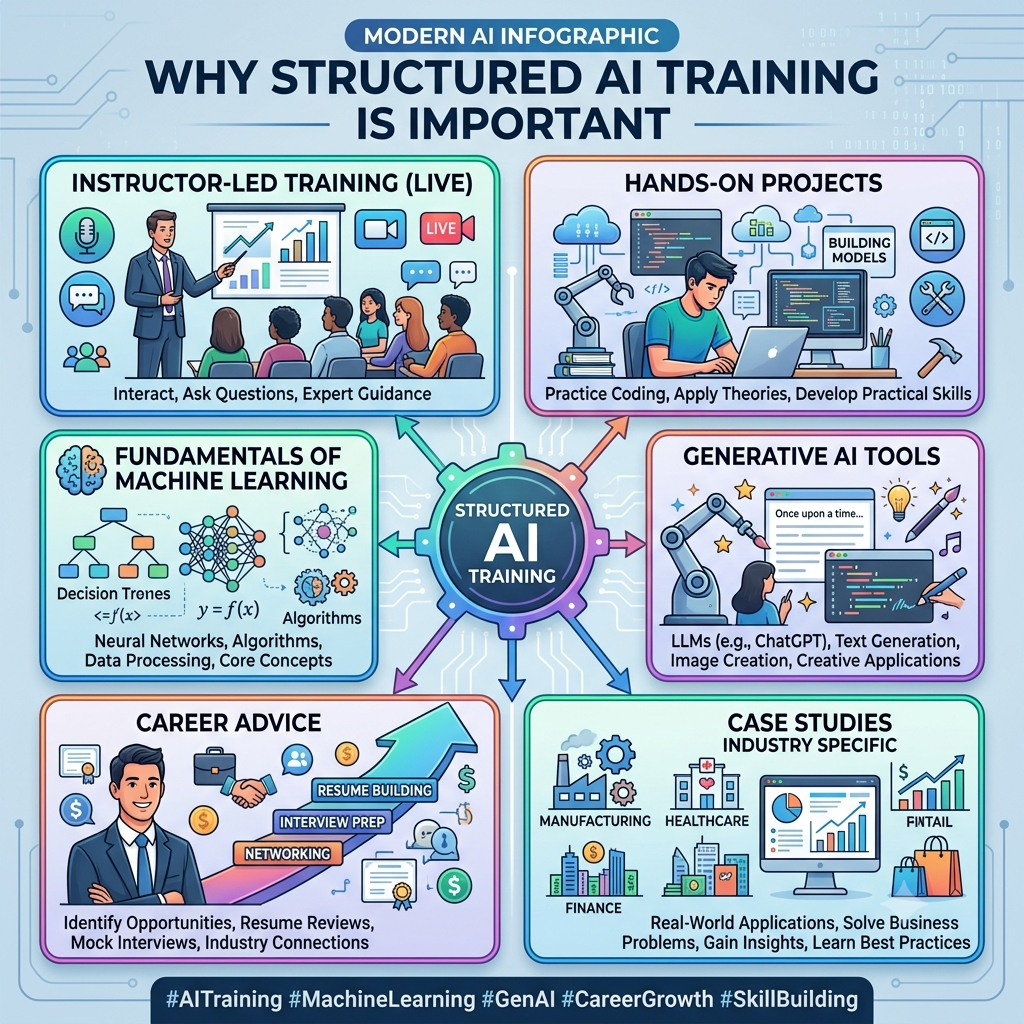
Why Structured AI Training is Important
Videos and blogs can be useful for self-learning, but AI is a big field.
Many professionals eventually come to a point where they need structured guidance, hands-on projects, mentorship, and real-world use cases.
That’s where a good artificial intelligence online training program can help.
Integrated Programs that include:
- Instructor-led training (live)
- Hands on projects
- Fundamentals of machine learning
- Generative AI tools
- Careers advice
- Case studies industry specific
tend to assist learners to move from theory into real workplace application.
In this space, one training provider making waves is H2K Infosys, which offers AI-centric programs for beginners and working professionals. The organization emphasises live online instruction, experiential learning, project experience, and career-oriented support for learners seeking to transition into AI-related roles or bolster their existing technical skills.
The Future of AI Will Rely on Trust
The increasing backlash against Artificial Intelligence is not a sign that AI is failing.
In many ways, this is a sign that the technology has become important enough that people are beginning to look at it seriously.
Every disruptive technology has been met with resistance.
The internet did.
It was social media.
And so did cloud computing.
Artificial Intelligence is currently going through a similar phase.
The organisations and professionals that thrive in the next decade will not be those who blindly embrace or reject AI. “They’ll get to know its strengths and weaknesses.”
Parting thoughts
The backlash against Artificial Intelligence is real, but it’s also reasonable. There is a need for a thoughtful discussion about jobs and privacy, misinformation and ethical use.
At the same time, AI is becoming deeply integrated into modern business operations, making AI literacy more valuable than ever before. Many professionals are finding that education is the best response rather than seeing AI as a threat.
Whether you are exploring an artificial intelligence and machine learning course to future-proof your career, or considering artificial intelligence online training to get hands-on expertise, building a strong foundation in AI can help turn uncertainty into opportunity.
Now the conversation around AI is not only about technology. It is about people, trust and how we choose to shape the future with increasingly intelligent systems.