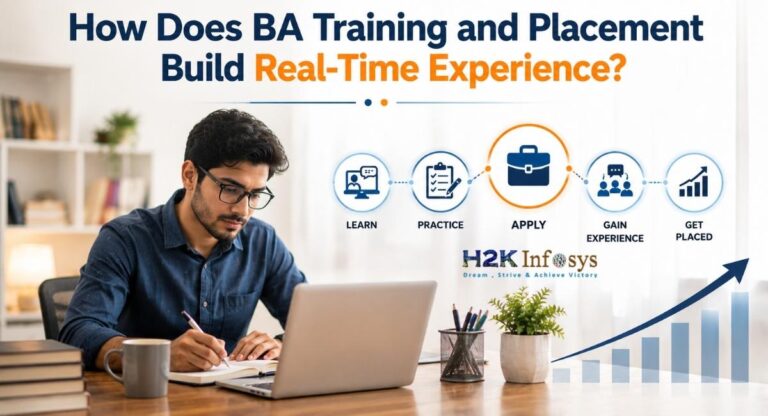
Yes, it actually does, but only if the training includes real projects, practical tasks, and proper placement support. A lot of people join a course thinking that BA Training and Placement, they’ll just learn definitions and tools. In reality, good Business Analyst training is supposed to make you think and work like a real Business Analyst, even before your first job.
I’ve seen many beginners struggle in interviews because they only knew theory. They could explain what Agile means, but when asked how they would handle a client’s changing requirements, they got stuck. That’s usually the difference between regular learning and proper BA Training and Placement programs like H2K Infosys.
The practical side matters more than people expect.
Business Analysis Is More Practical Than Most People Think
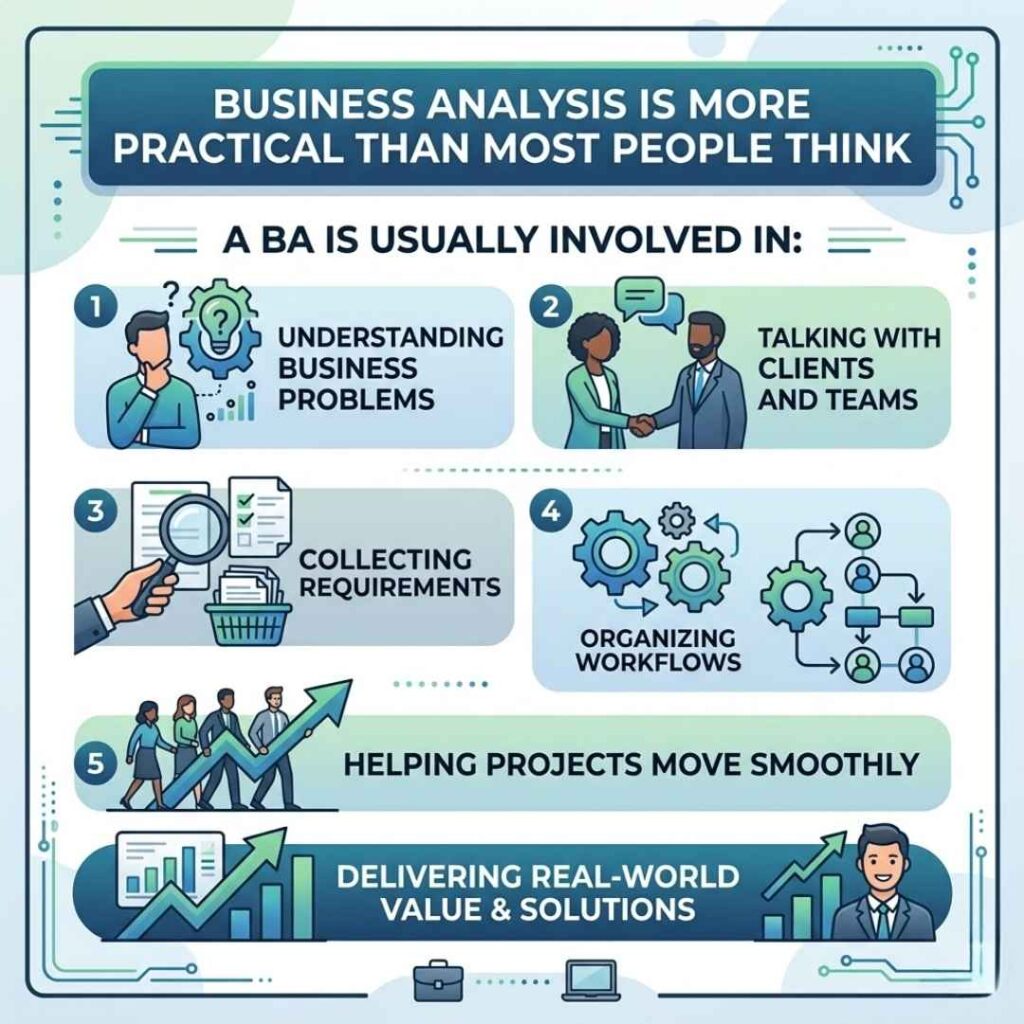
When people hear “Business Analyst,” they often imagine someone sitting in meetings and writing documents all day. That’s only a small part of the role.
A BA Training and Placement is usually involved in:
- Understanding business problems
- Talking with clients and teams
- Collecting requirements
- Organizing workflows
- Helping projects move smoothly
In many companies now, especially after the rise of remote work and AI-based systems, Business Analysts are expected to understand both communication and technology. That’s why companies prefer candidates with hands-on exposure instead of only certifications.
Good Business Analyst Online Training helps learners experience these situations before entering the job market.
Live Projects Change Everything
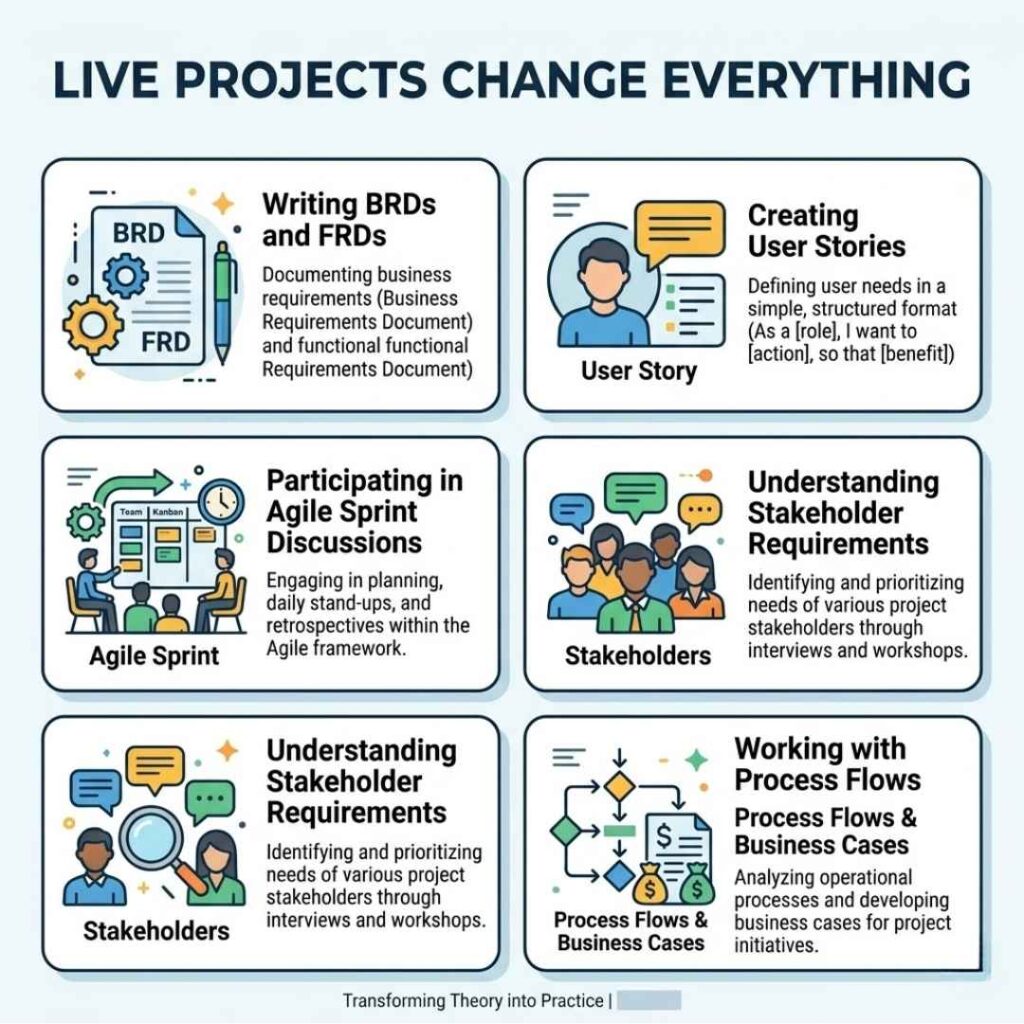
Honestly, live project practice is where most learners gain confidence.
Reading about Jira or user stories is one thing. Actually creating them during training feels completely different.
At H2K Infosys, students usually work on project-based assignments that resemble real company tasks. For example, learners may practice:
- Writing BRDs and FRDs
- Creating user stories
- Participating in Agile sprint discussions
- Understanding stakeholder requirements
- Working with process flows and business cases
That experience becomes very useful during interviews because candidates can talk about situations instead of memorized answers.
And interviewers notice that quickly.
Why Recruiters Care About Real-Time Experience
The hiring process for Business Analysts has changed a lot in recent years.
Now recruiters ask practical questions like:
- “How would you deal with unclear requirements?”
- “What would you do if stakeholders disagree?”
- “How do you prioritize tasks in Agile?”
- “How would you explain technical details to non-technical clients?”
These questions are difficult if someone has only studied theory from blogs or videos.
That’s one reason many learners choose business analyst training with placement programs. They want exposure to realistic project environments before attending interviews.
A friend of mine recently attended interviews after completing project-based BA Training and Placement, and almost every discussion revolved around practical scenarios instead of textbook concepts. That seems very common now.
Mock Interviews Help More Than People Realize
One thing people underestimate is interview preparation.
Sometimes learners know the concepts well but struggle to explain them confidently. Placement-focused training usually helps fix that problem.
At H2K Infosys, mock interviews and resume preparation are part of the learning process, which honestly helps many beginners feel less nervous. Students get practice explaining projects, answering scenario questions, and presenting themselves professionally.
That repeated practice slowly improves communication skills.
And for Business Analysts, communication is a huge part of the job.
The BA Role Is Changing in the Age of AI
Businesses are using AI tools, automation platforms, and advanced analytics, and the role of the Business Analyst is changing too.
Today, organizations typically expect BA Training and Placement to understand:
- AI-driven journalism
- Automate workflow
- Processes of digital transformation
- Collaboration tools for Agile
- Basics of data visualization
That sounds like a lot at first, but modern Business Analyst Online Training courses are adapting their curriculum to meet current industry expectations.
This is another reason why updated training is important. Some of the older courses are still teaching out date methods that companies hardly use anymore.
H2K Infosys concentrates on the latest tools and real business workflows making the learning more relevant to the current market.
Real Practice Builds Confidence Slowly
Confidence usually doesn’t come from watching recorded sessions alone.
It develops when learners repeatedly practice:
- Requirement gathering
- Sprint discussions
- Documentation
- Business communication
- Stakeholder interaction
Over time, students stop thinking like beginners and start approaching problems more professionally.
I think that’s the biggest benefit of proper BA Training and Placement programs. They help learners understand how work actually happens inside companies.
Not perfectly, of course. Training can’t replace years of experience. But it definitely helps people feel job-ready.
Online Training Has Become More Useful Now
A few years ago, many people preferred classroom training. Things changed after remote and hybrid work became common.
Now, online BA Training and Placement learning often feels closer to real work culture because teams themselves collaborate remotely.
That’s why many professionals choose business analyst training with placement options online. They can learn from home, attend live sessions, practice projects, and still prepare for interviews effectively.
It also provides flexibility to the working professionals who want to change their careers without quitting their jobs.
Final Thoughts
Real-time experience doesn’t always start when you get hired. Often it begins during the training itself.
The comprehensive BA Training and Placement program provides learners with hands-on experience with live projects, Agile workflows, requirement gathering, documentation, and interview preparation. That combo helps bridge the gap between learning and what the industry actually expects.
H2K Infosys and similar programs focus on hands-on learning and placement assistance, which helps many beginners to step into the job market after training.
And frankly, that confidence is just as important as technical knowledge in Business Analysis careers.